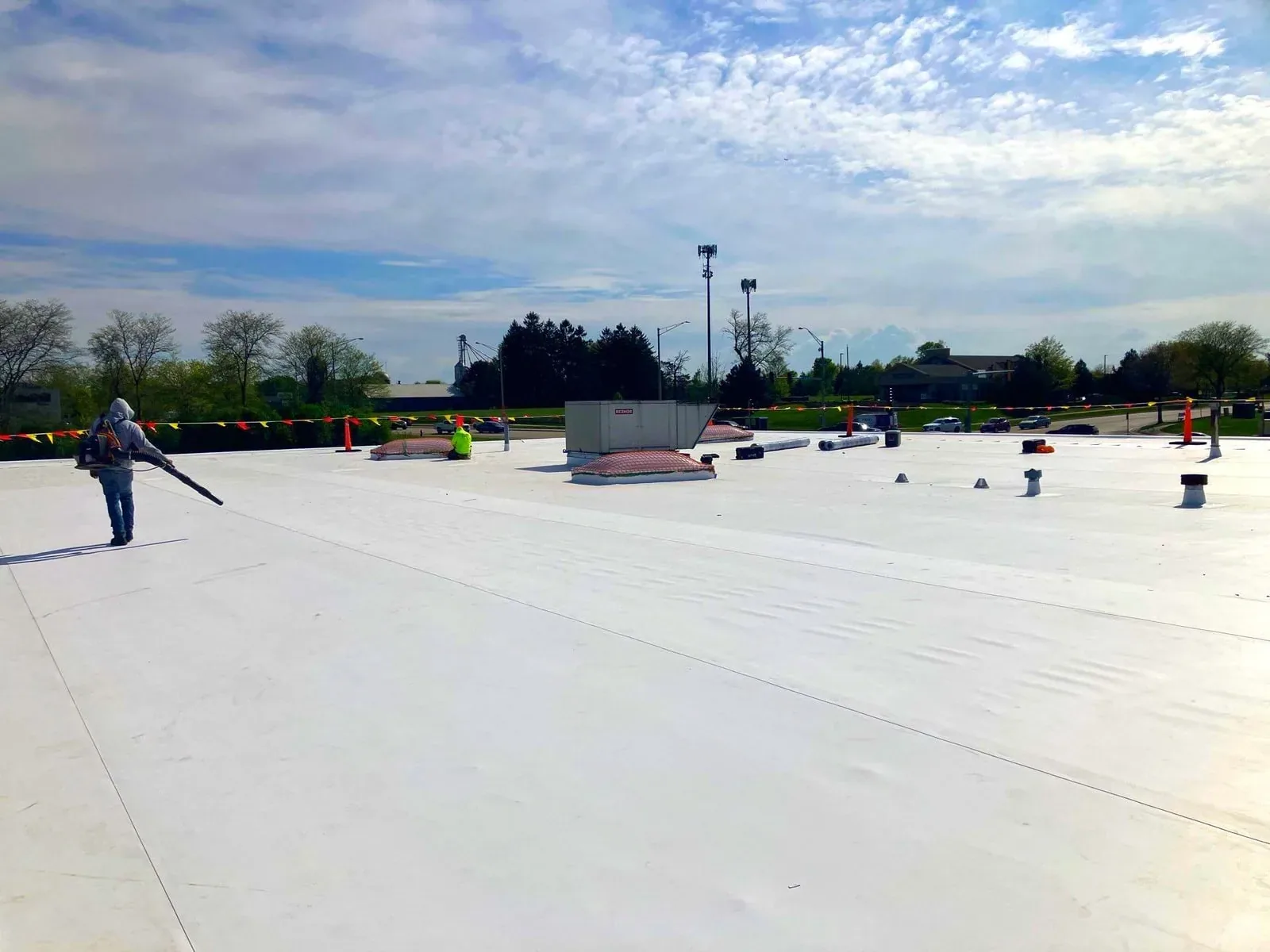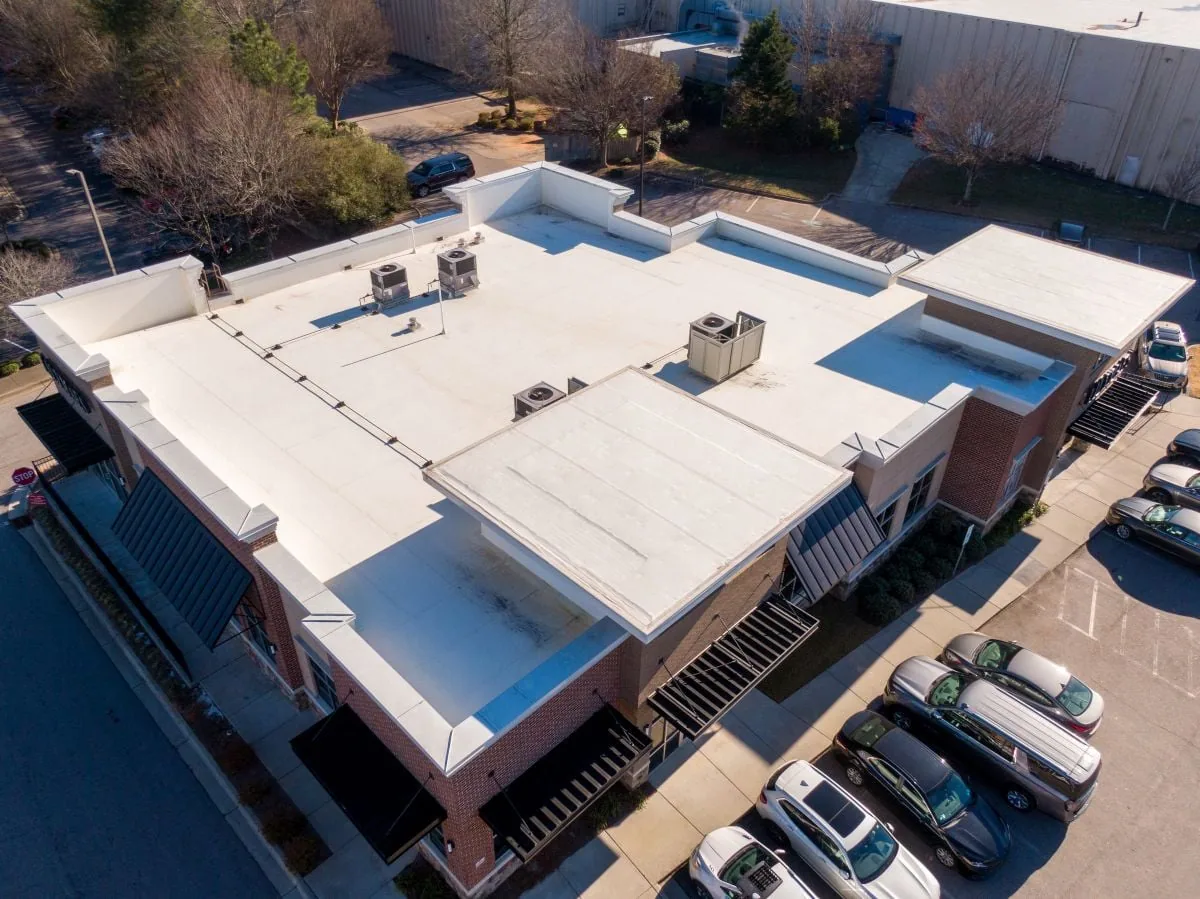
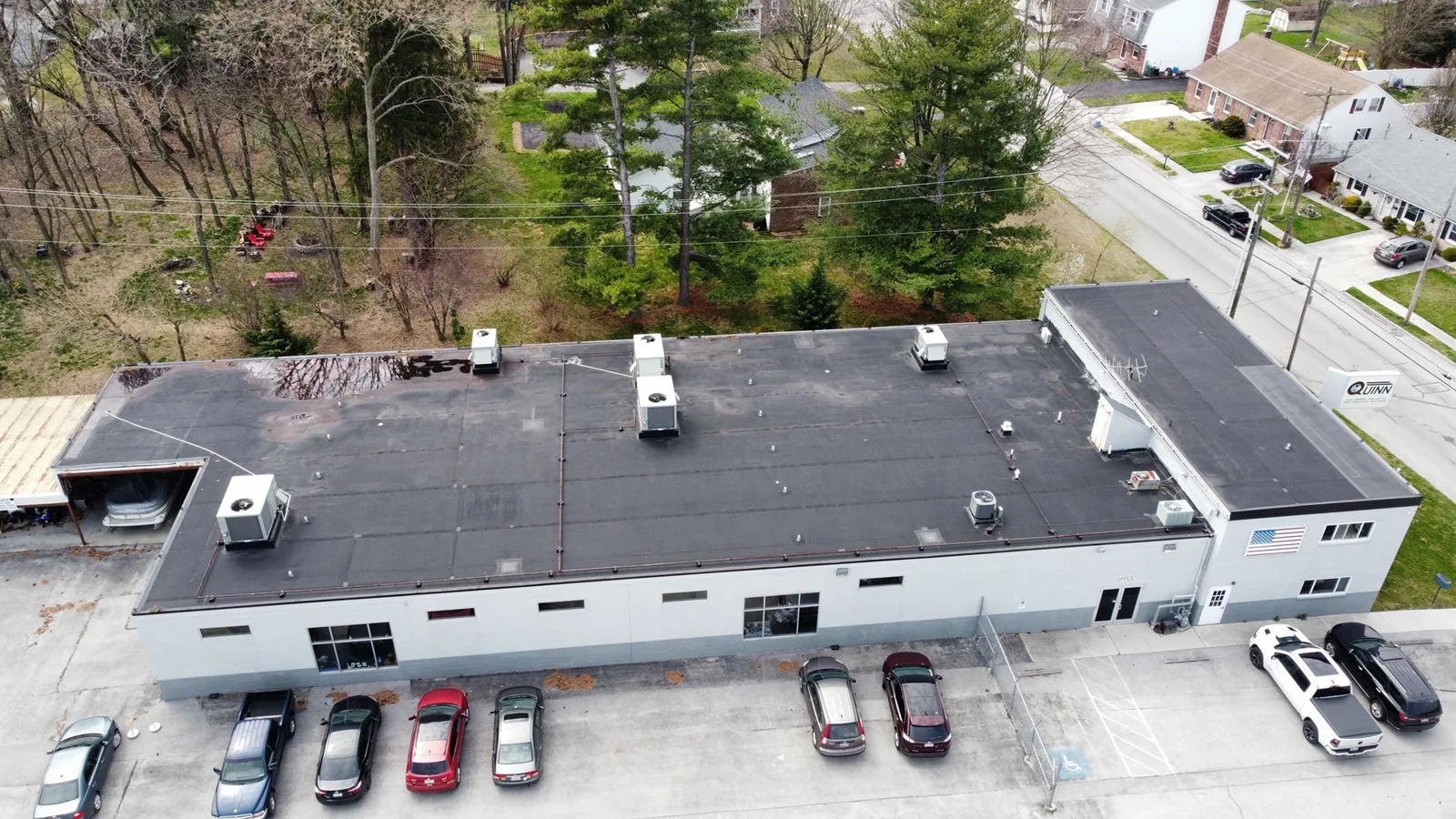
Commercial Storm Damage Roof Repair in Elgin, IL
Request a storm roof assessment
Share the affected building, reported area, current water status, roof access contact, and operating limits. We will confirm dispatch and the first approval point.
Commercial Storm Damage Roof Repair
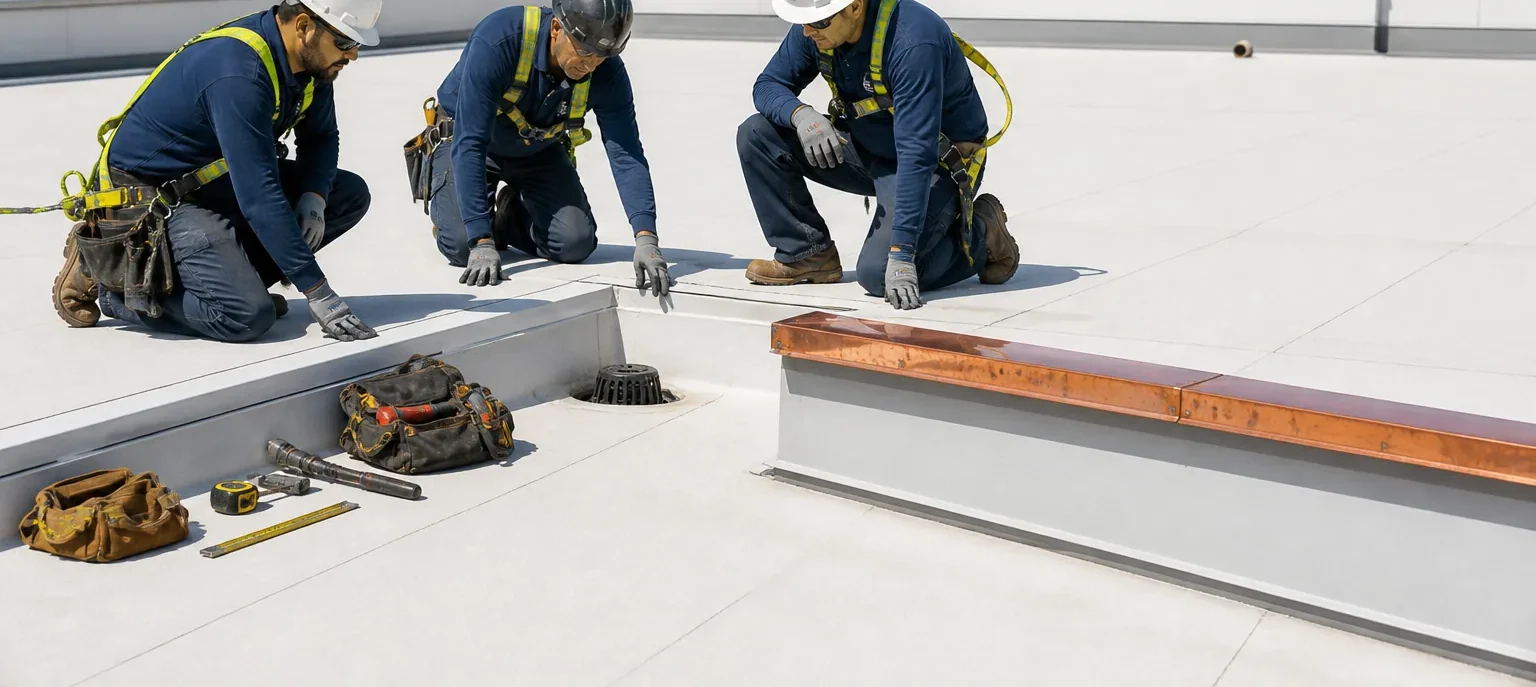
After a storm, the first decision is safe roof entry. We confirm the affected building, access contact, reported room, and active water path before dispatch. Elgin experienced a July 2023 tornado, and hail has also been recorded locally. Those events establish exposure across the market; they do not prove damage at a particular address. Our crew checks the roof, records observed conditions, and separates temporary protection from permanent repair. The first update names the affected zone, open questions, and next action.
Dispatch: establish the affected zone
We begin with the building and the report. Tell us which tenant or operation is affected, where water appeared, when the condition started, and whether it is still active. A ceiling stain can sit far from the roof opening. We use the interior report to guide inspection, then trace water uphill and across the assembly. The site contact identifies restricted areas, occupied entrances, lift rules, and any production or public-safety needs.
Before dispatch, we set a practical access window and confirm who can approve temporary work. An emergency roof response may be needed when water is entering or the roof cannot be secured. If conditions allow a scheduled visit, we still treat loose metal, open seams, and exposed insulation as priority findings. The report stays tied to one building and one roof zone, even when a portfolio manager oversees several properties.
Inspection: check edges, seams and penetrations
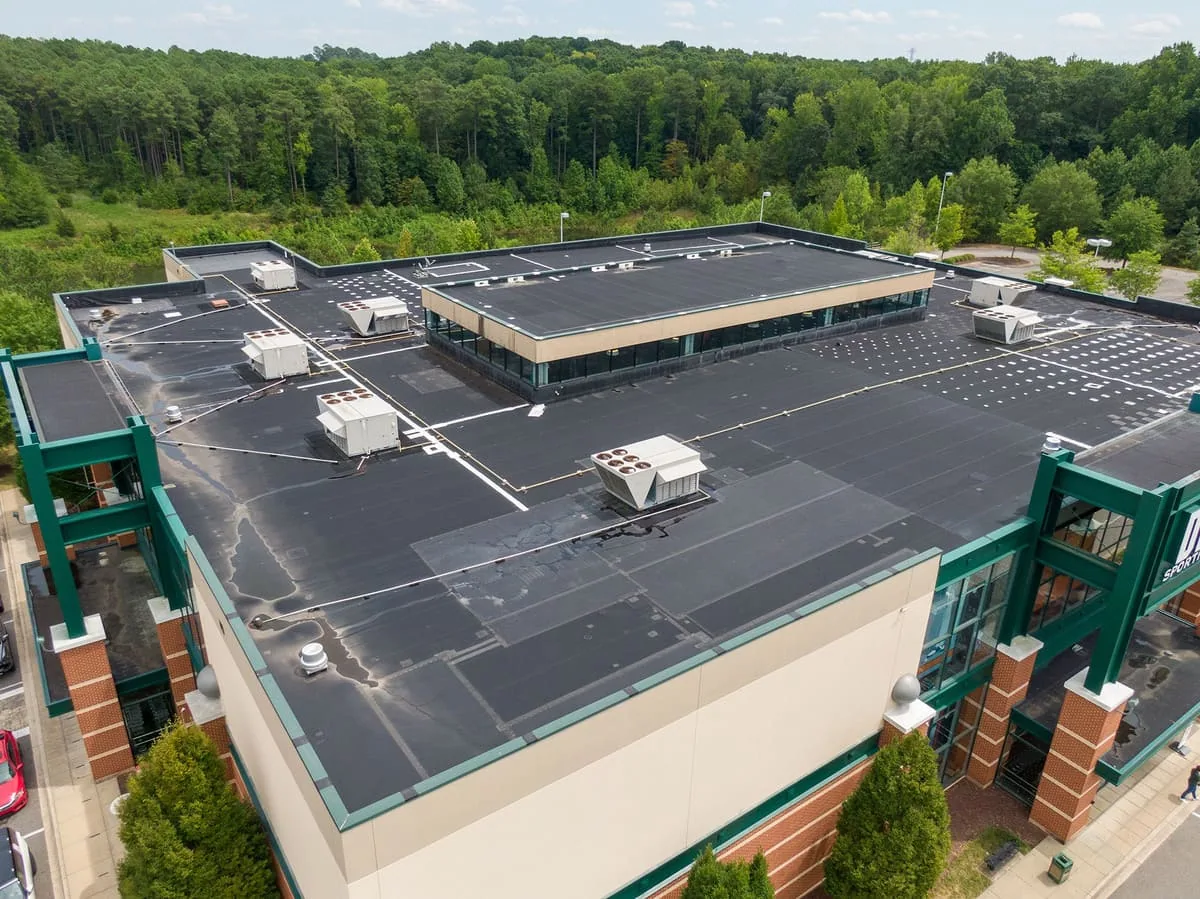
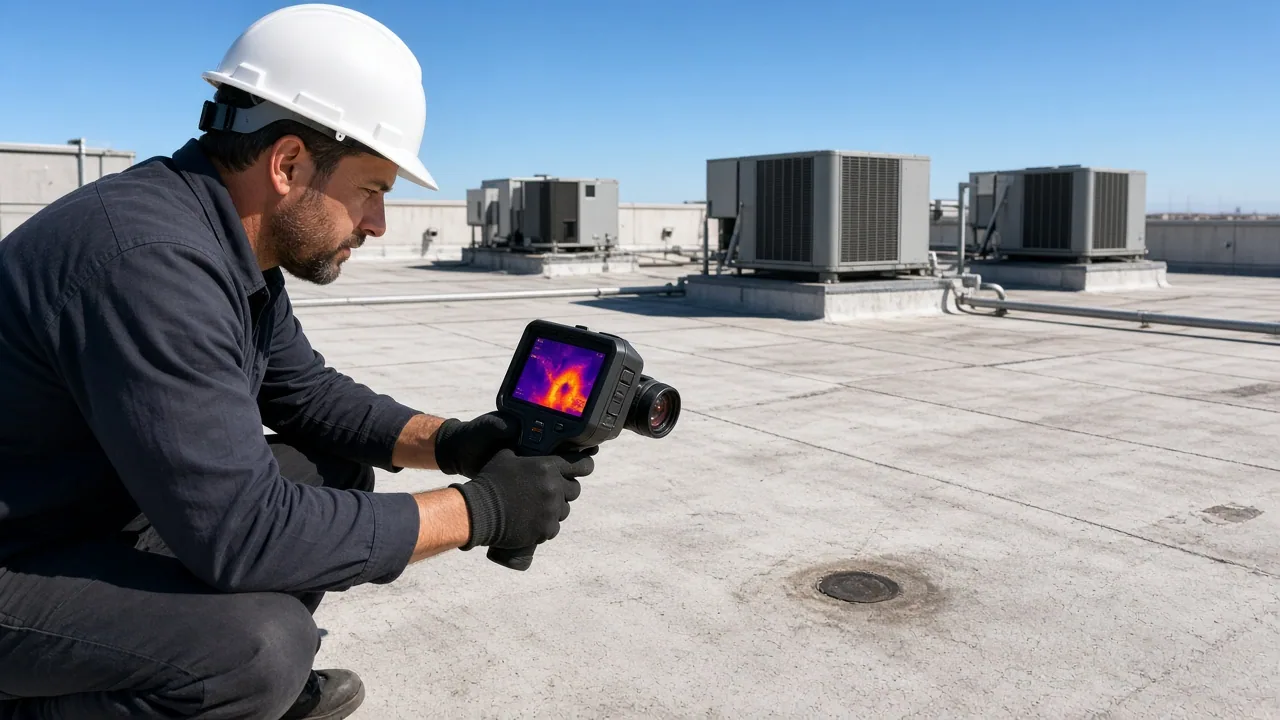
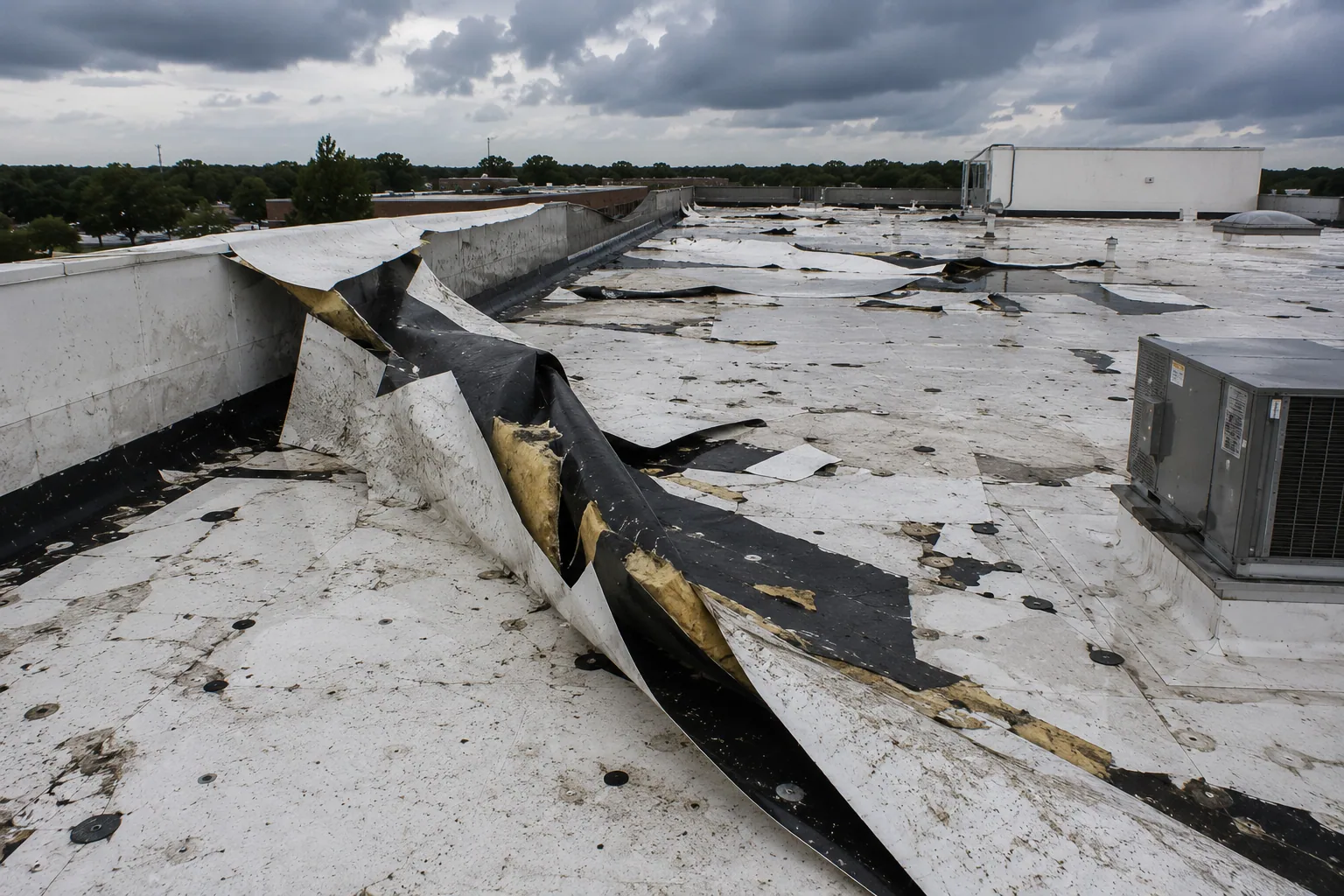
Once access is cleared, the crew looks for wind displacement, impact marks, punctures, open laps, displaced coping, damaged flashing, and water entry around curbs or penetrations. Wind can move a termination without tearing the field membrane. Hail can mark equipment or surfacing while leaving the membrane intact. We document what is visible and avoid calling a condition storm damage until the evidence supports that conclusion.
Elgin roofs face freeze-thaw cycles and roughly 29 inches of typical annual snowfall. At Northwest Business Park and Burnidge Bros. Industrial Park, roof access and tenant operations vary by property. We confirm the exact assembly, clearances, and safe travel path instead of assuming that neighboring buildings share the same details.
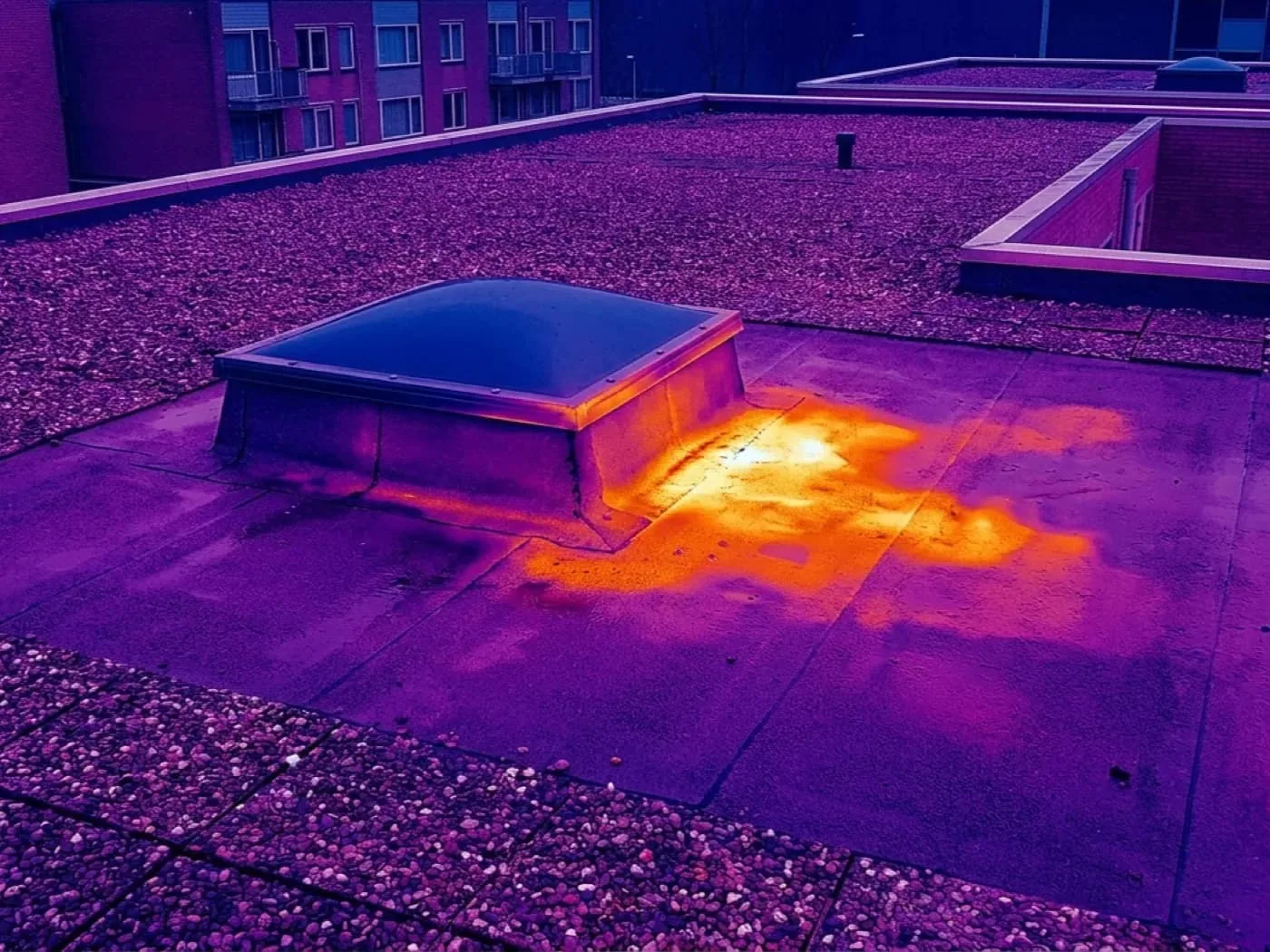
Where moisture may be concealed, we recommend a defined test area or infrared moisture survey. A scan can identify areas for follow-up; it does not by itself establish the full extent of wet insulation. The owner receives the finding, method, limitation, and approval point before invasive verification begins.
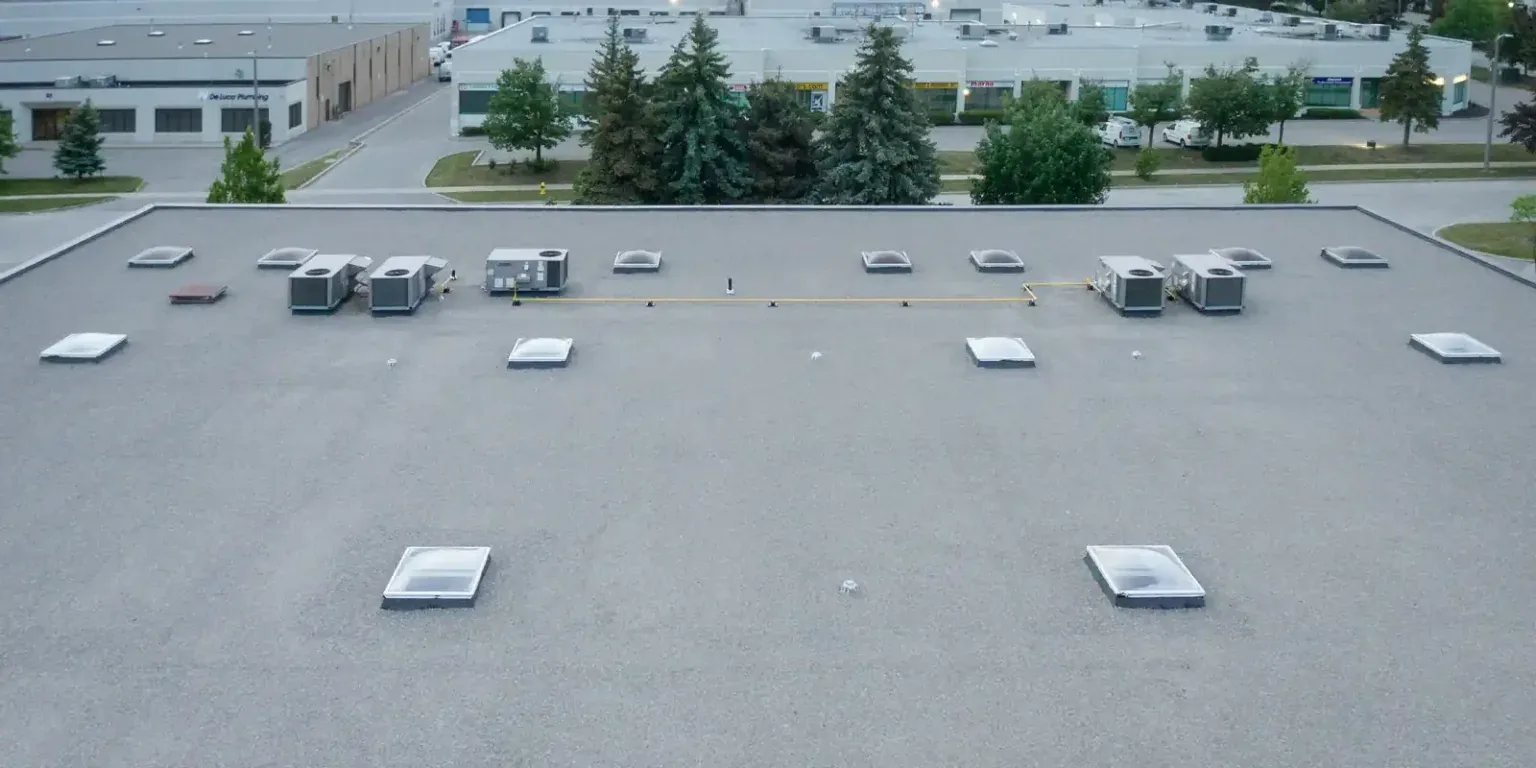
Temporary protection: control active water
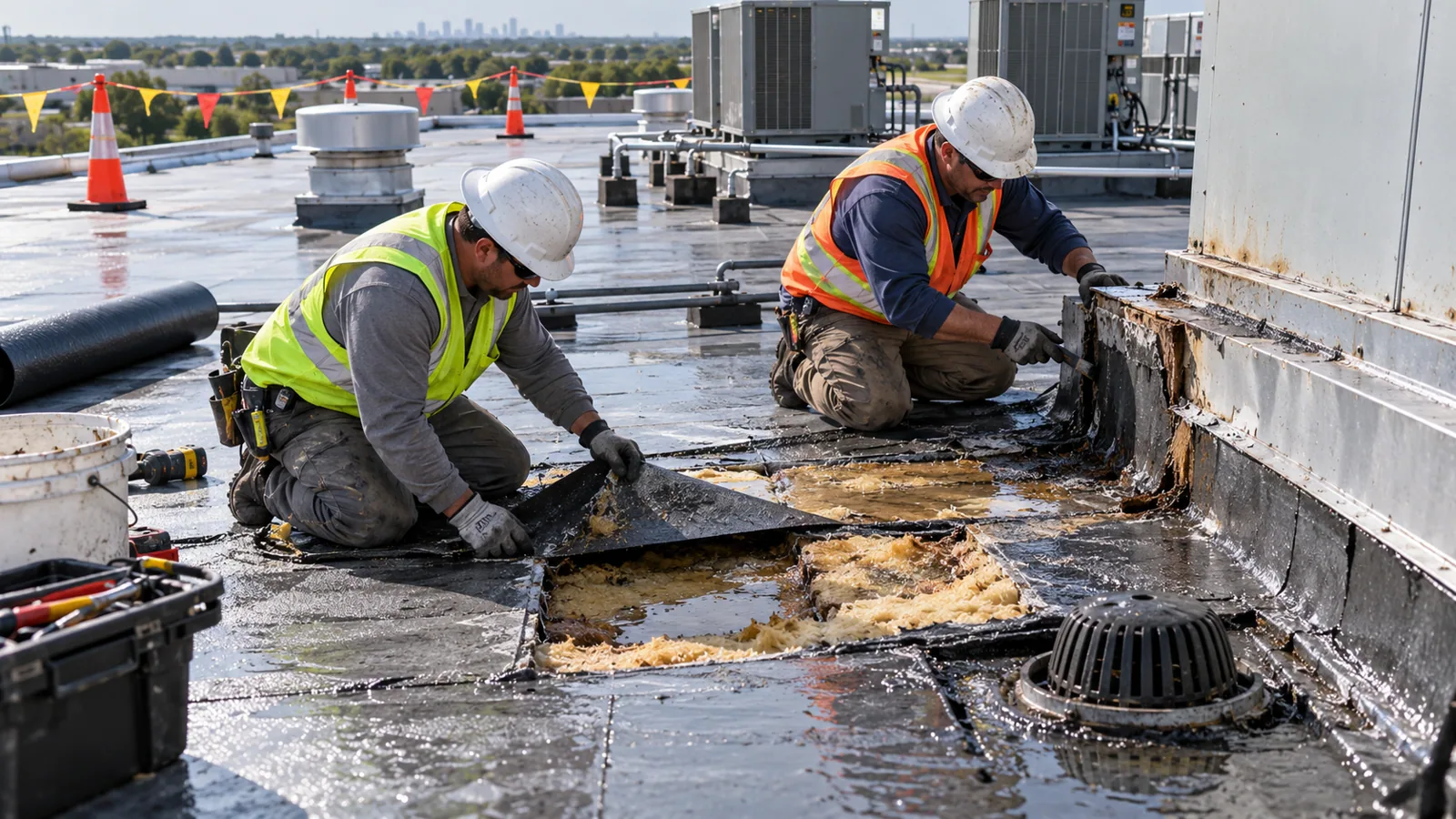
If water is moving into the building, we first identify a safe way to limit entry. Temporary measures may include a secured tarp, compatible sealant at a discrete opening, or a controlled interior collection plan. The measure depends on wind, roof condition, and the ability to secure material without creating a new hazard. We do not cover an unstable assembly or block a drain to redirect water elsewhere.
We mark the temporary repair boundary and photograph its location. The site contact monitors interior conditions and reports any change. If water continues, we schedule another inspection. For facilities near Downtown Elgin or the Fox River Business Center, site logistics are confirmed with the property contact; the neighborhood name alone does not determine access or urgency.
Temporary protection and permanent restoration are distinct scopes. The first reduces immediate exposure where safe. The later scope addresses the failed detail, substrate, drainage, or larger roof area. A leak investigation can help when the entry point is uncertain or water has traveled within the assembly.
Repair scope: define what the evidence supports
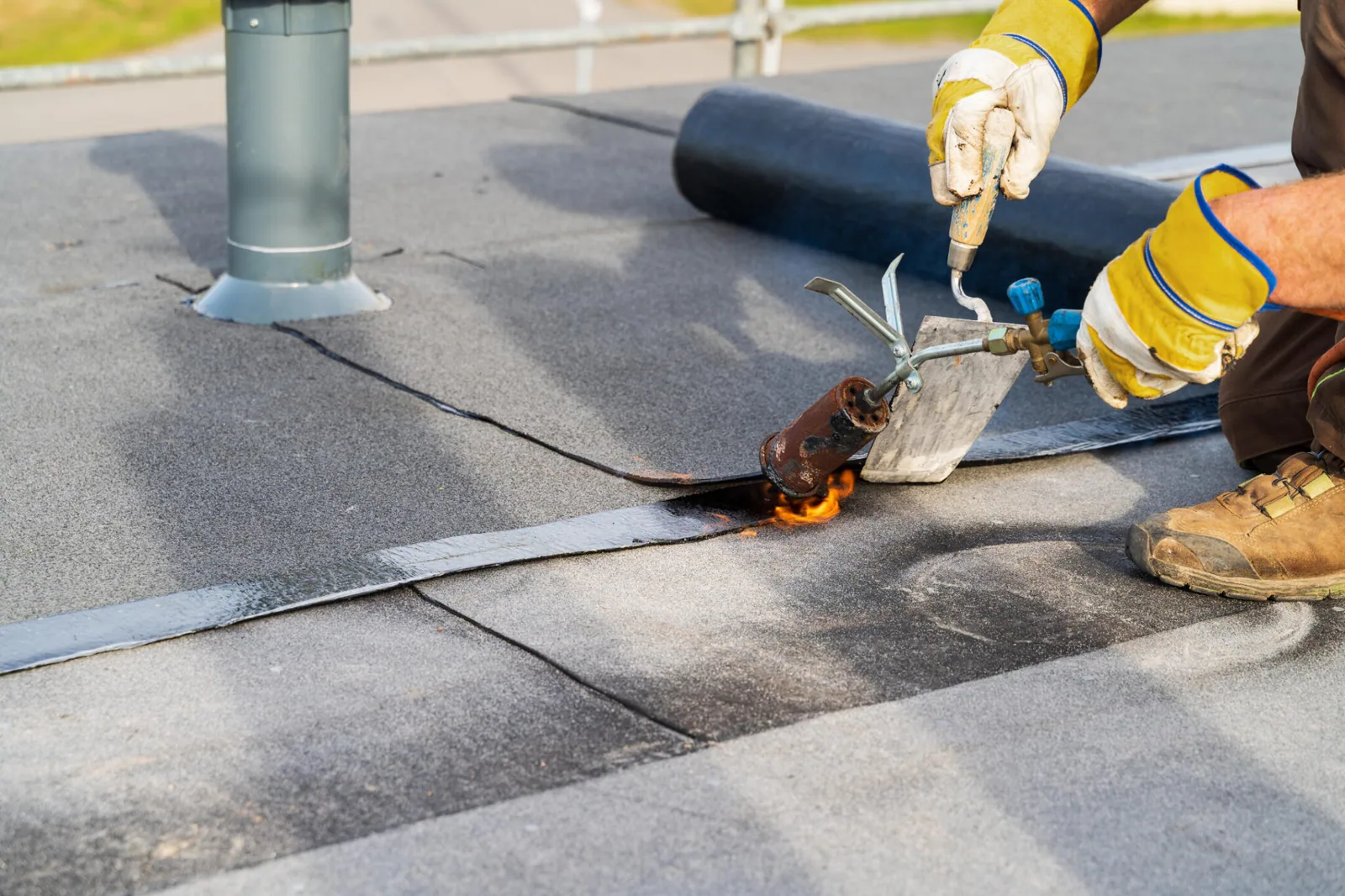
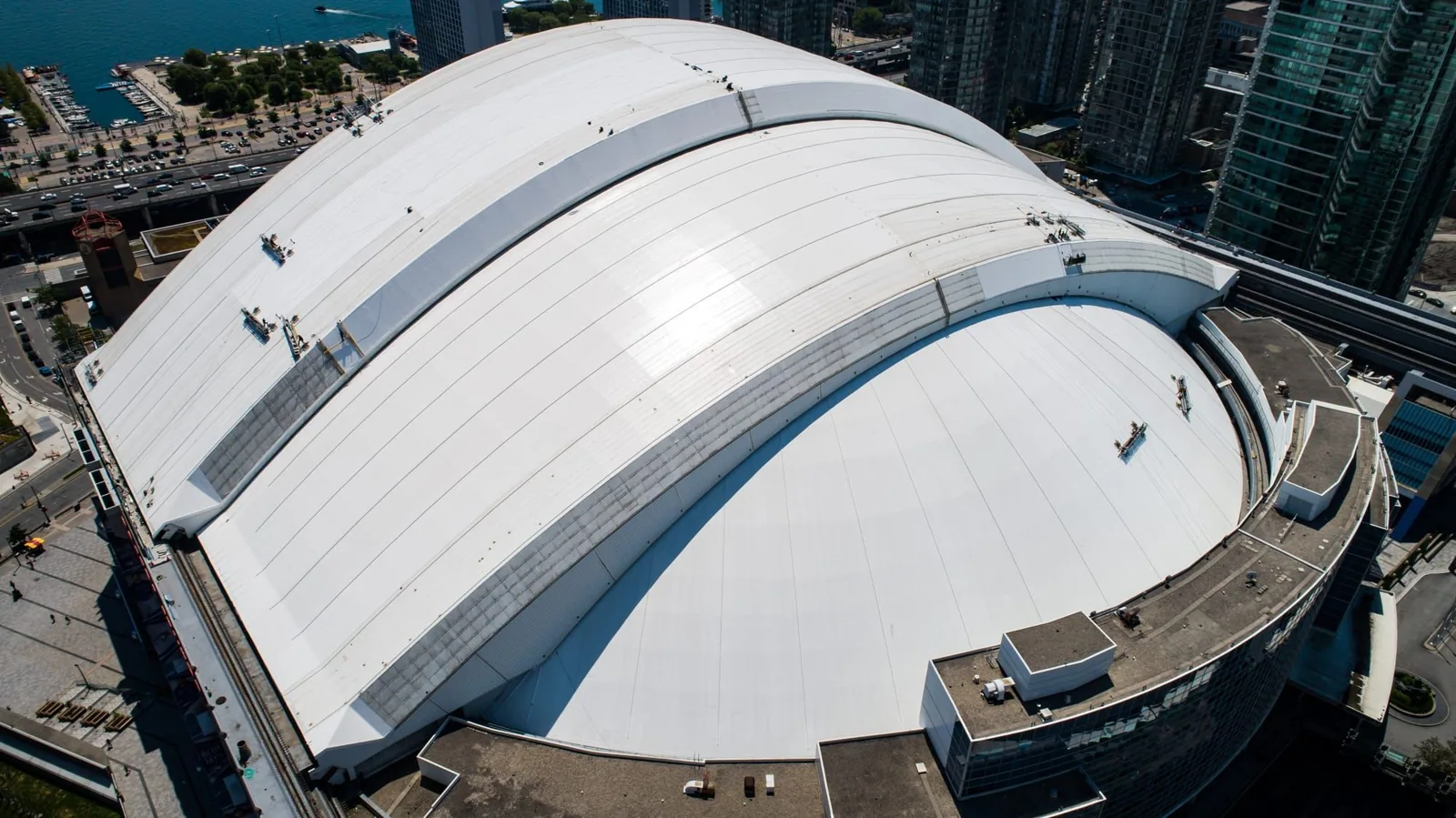
Permanent repair starts with a cause and a limit. We identify the material, affected area, adjacent transitions, and condition of the substrate. The scope may call for replacing a section of membrane, rebuilding a flashing, resetting edge metal, or addressing a failed penetration detail. Where the roof system is unknown, records or test cuts may be required before selecting compatible materials. For example, an existing TPO roof needs a repair material and heat-weld detail compatible with that assembly.
We separate verified storm damage from pre-existing wear, deferred maintenance, and concealed conditions. That distinction matters for approval and for any insurance review. Our claim documentation support organizes photographs, dates, and repair observations; it does not determine coverage or promise a carrier decision. The owner decides whether to authorize investigation, temporary protection, and permanent work at each approval point.
If damage crosses multiple roof zones or the assembly has widespread moisture, a small patch may not be the durable choice. We compare repair with recover or replacement only when inspection supports that discussion. A roof condition inspection can document the broader assembly and sequence work around operations.
Weather and access: protect people and the building
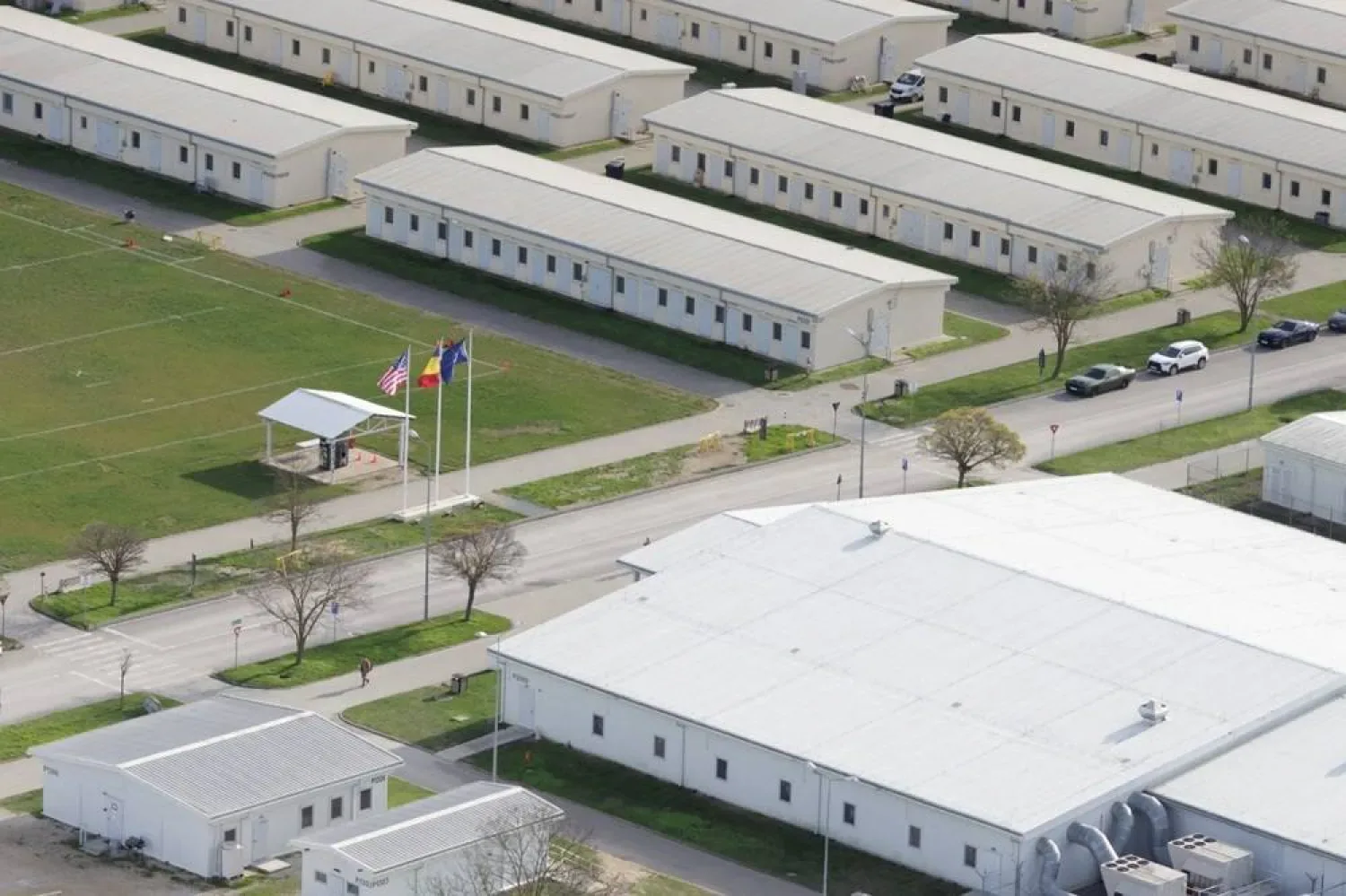
Work proceeds only when roof conditions support safe access and the selected repair method. Wet membrane, lightning, high wind, ice, or poor visibility can stop a crew. Elgin records recurring below-freezing days, so a winter dispatch may require a ground-level review first, followed by roof entry when ice clears. Summer heat also changes work-rest planning and material handling. The site contact receives a weather hold and the next proposed window when conditions prevent reliable work.
Occupied sites need a roof-entry plan. We coordinate ladders or lift access, loading locations, pedestrian separation, and notification for affected tenants. If a building supports healthcare, food production, education, or logistics, the work area and timing should match its operating controls. Elgin’s employer mix includes these sectors, but we verify each client’s own requirements instead of assuming a standard procedure.
Where drains or scuppers are involved, we preserve the drainage path during protection and repair. A drain and scupper review can identify whether the storm exposed a blocked outlet, damaged bowl, or separate slope issue.
Approval: keep decisions visible
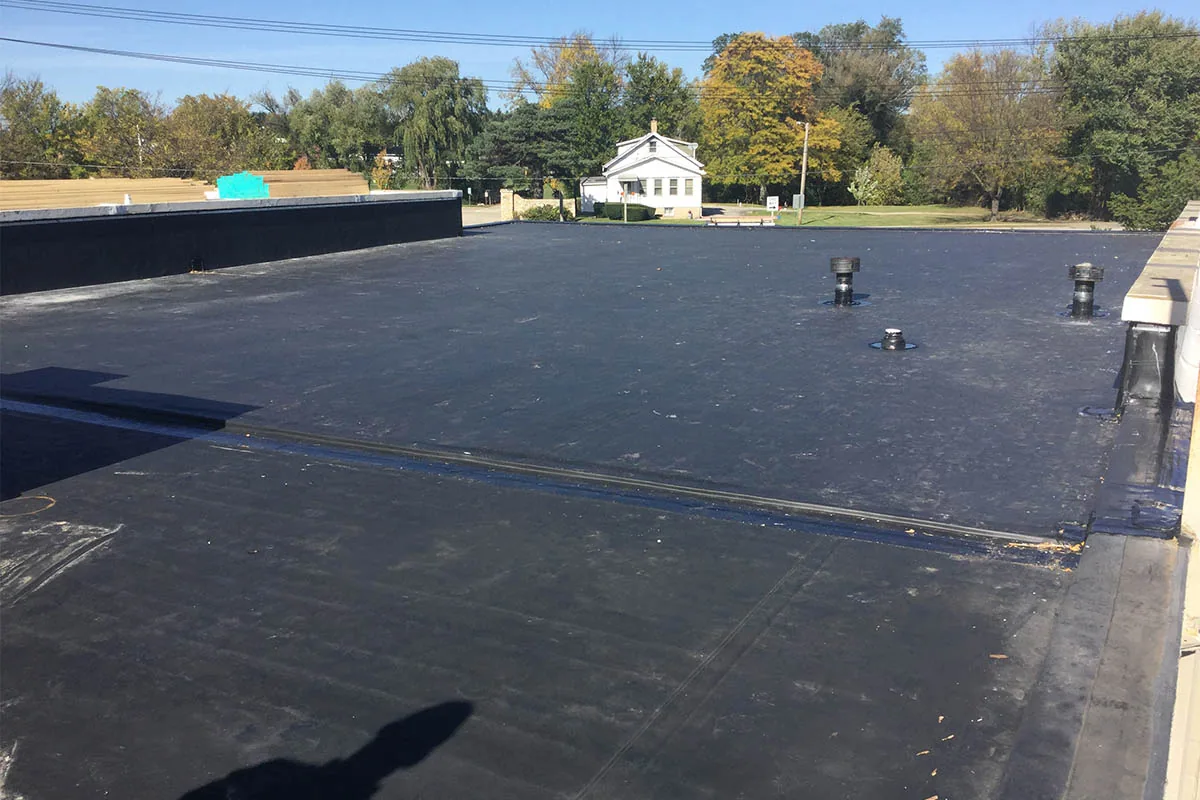
The estimate identifies observed damage, proposed repair, temporary work already completed, exclusions, and conditions that may change the price. Photographs carry a location and date. If concealed damage appears after opening a roof area, we stop at the written approval point, document the new condition, and request direction before expanding the scope.
Portfolio findings stay separate by building and roof zone. The repair boundary also identifies where existing roof material remains untouched. Any code, permit, or inspection requirement is confirmed for the specific project with the City of Elgin and the authority having jurisdiction.
Repair selection follows system compatibility and substrate condition. The next update goes to the designated contact, with a clear status: protected, awaiting approval, scheduled, or complete.
Closeout: record repairs and next steps
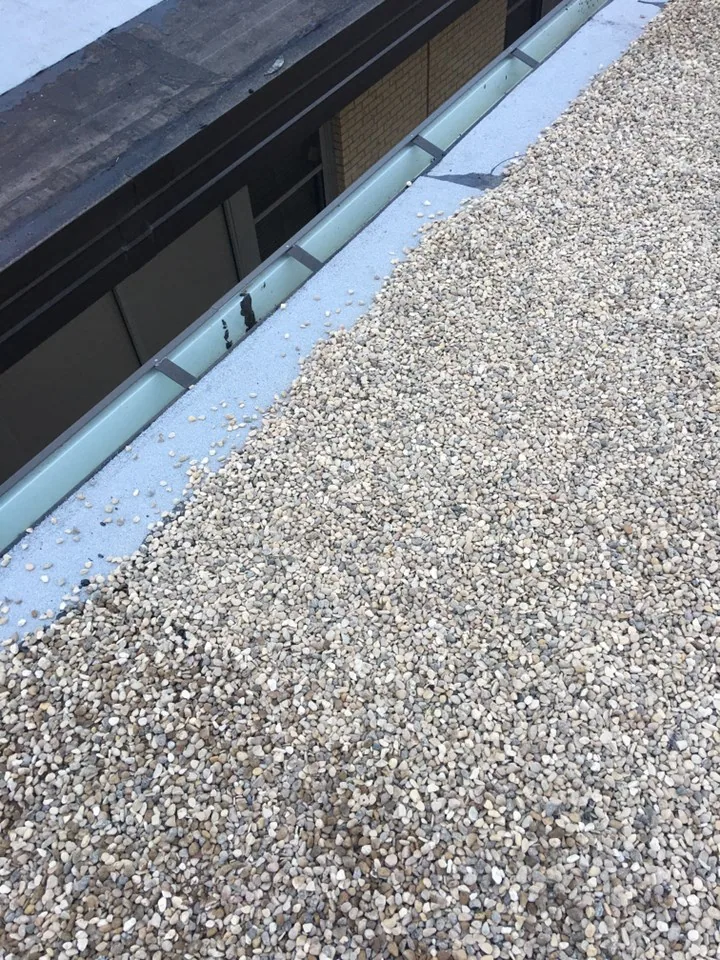
At completion, we provide closeout photos, installed materials when known, repaired locations, and any remaining observation. The record notes temporary work that should be revisited and areas excluded from the permanent repair. We also identify simple follow-up actions, such as checking interior conditions after the next rain or confirming that a drain remains clear.
Share the building name, affected room or process, access contact, roof records, and current photos when requesting service. For properties around Randall Road or the Elgin-O’Hare Business Center, include the operating window and loading constraints. We will confirm the dispatch plan and the next update before mobilization. No broad storm statement replaces a roof-level finding and an approved repair boundary.
Questions About Commercial Storm Damage Roof Repair
Does a nearby tornado or hail report mean my roof is damaged?
No. Local storm history establishes exposure, not the condition of a particular roof. We inspect the reported building, document visible findings, and recommend testing when concealed layers could change the repair.
Can you stop an active leak during the first visit?
When access and conditions allow, we can install temporary protection at a verified opening. The crew records the repair boundary and explains any limits. A permanent repair may require a later visit or owner approval.
What should I send before dispatch?
Provide the property name, affected room, time water appeared, access contact, roof plans if available, and any restrictions. Photos from inside can help direct the first inspection but do not replace roof verification.
Will you decide whether my insurance claim is covered?
No. We can document observed roof conditions and completed work. Coverage and claim decisions belong to the policyholder and insurer; we do not promise a result.
When will weather delay a repair?
Ice, lightning, high wind, wet surfaces, or temperatures outside material limits can make roof work unsafe or unreliable. We explain the hold and give the site contact the next workable window.