Commercial KEE Roofing in Elgin, IL
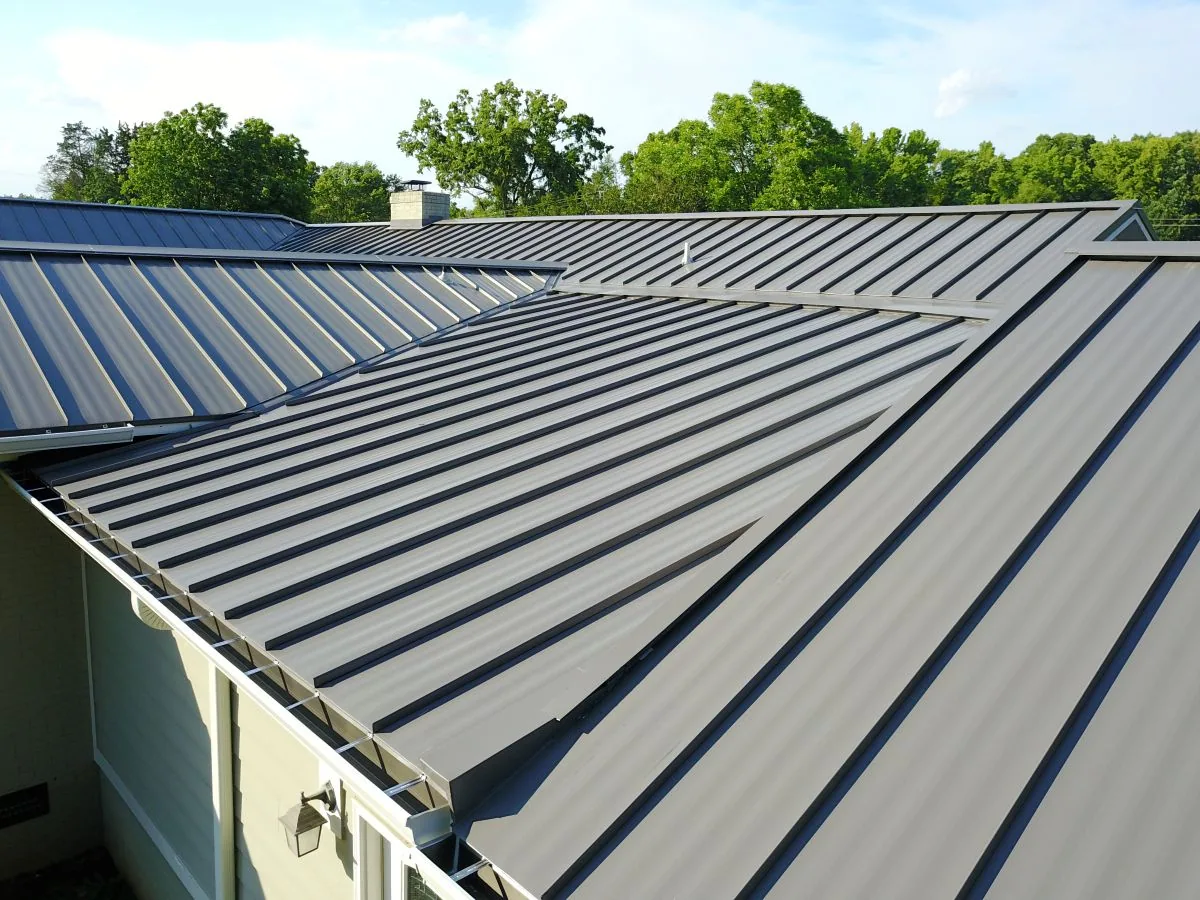
Review a KEE roof or proposed assembly
Provide product records, roof plans, building-use details, chemical exposure notes, leak history, and access contact. We will verify system identity and set the inspection scope.
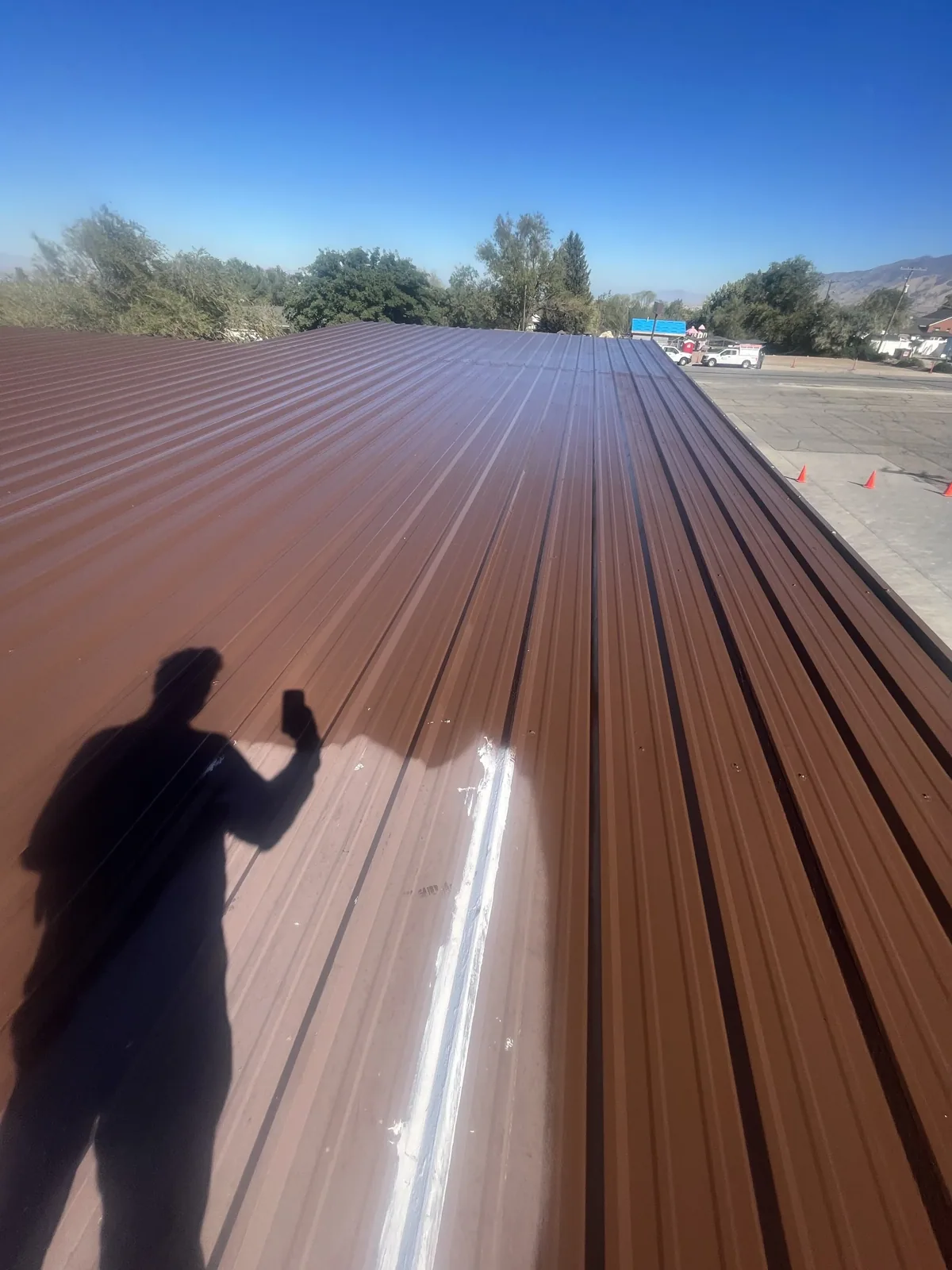
Commercial KEE Roofing
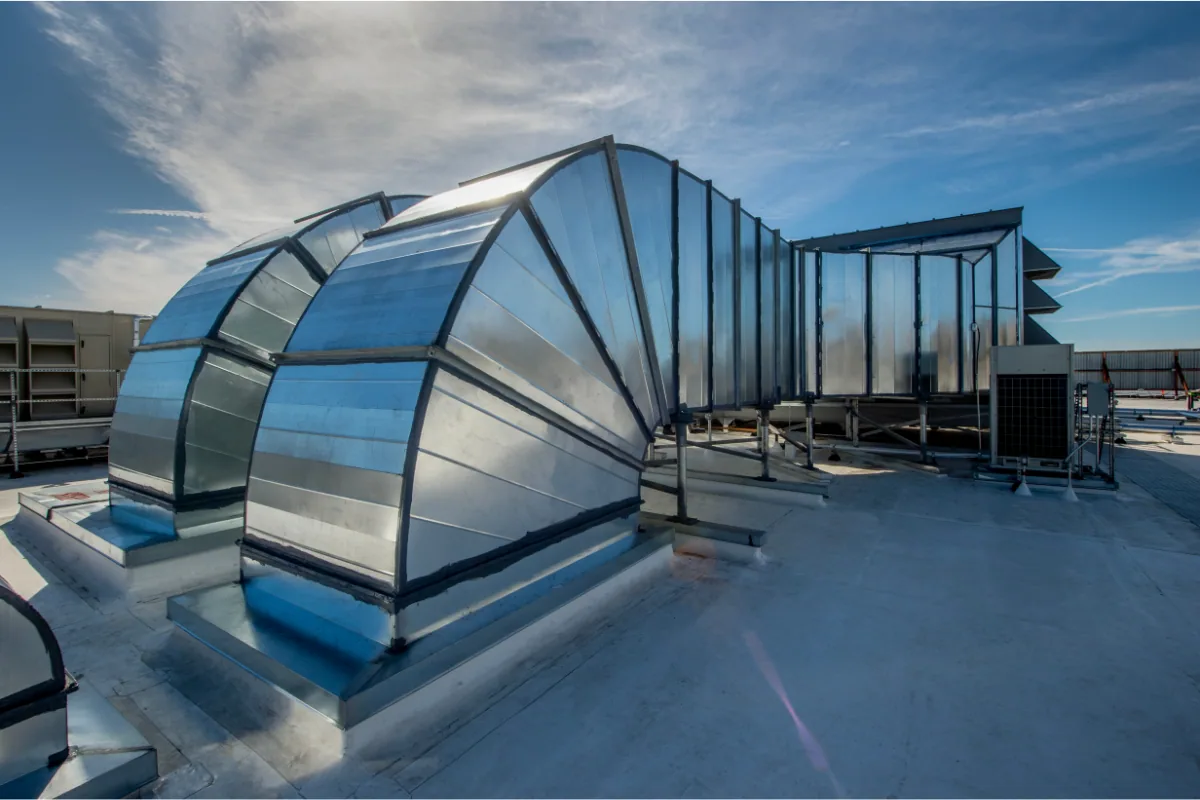
KEE is a PVC-alloy membrane category, but the product name alone does not select a roof system. We check the manufacturer, membrane composition, assembly, exposure, attachment, and project requirements. A facility’s roof must also handle drains, curbs, seams, and maintenance access. Elgin’s mix of manufacturing, healthcare, education, and commercial uses makes building-specific review important. We verify the actual roof and operating conditions before comparing a KEE product with another membrane.
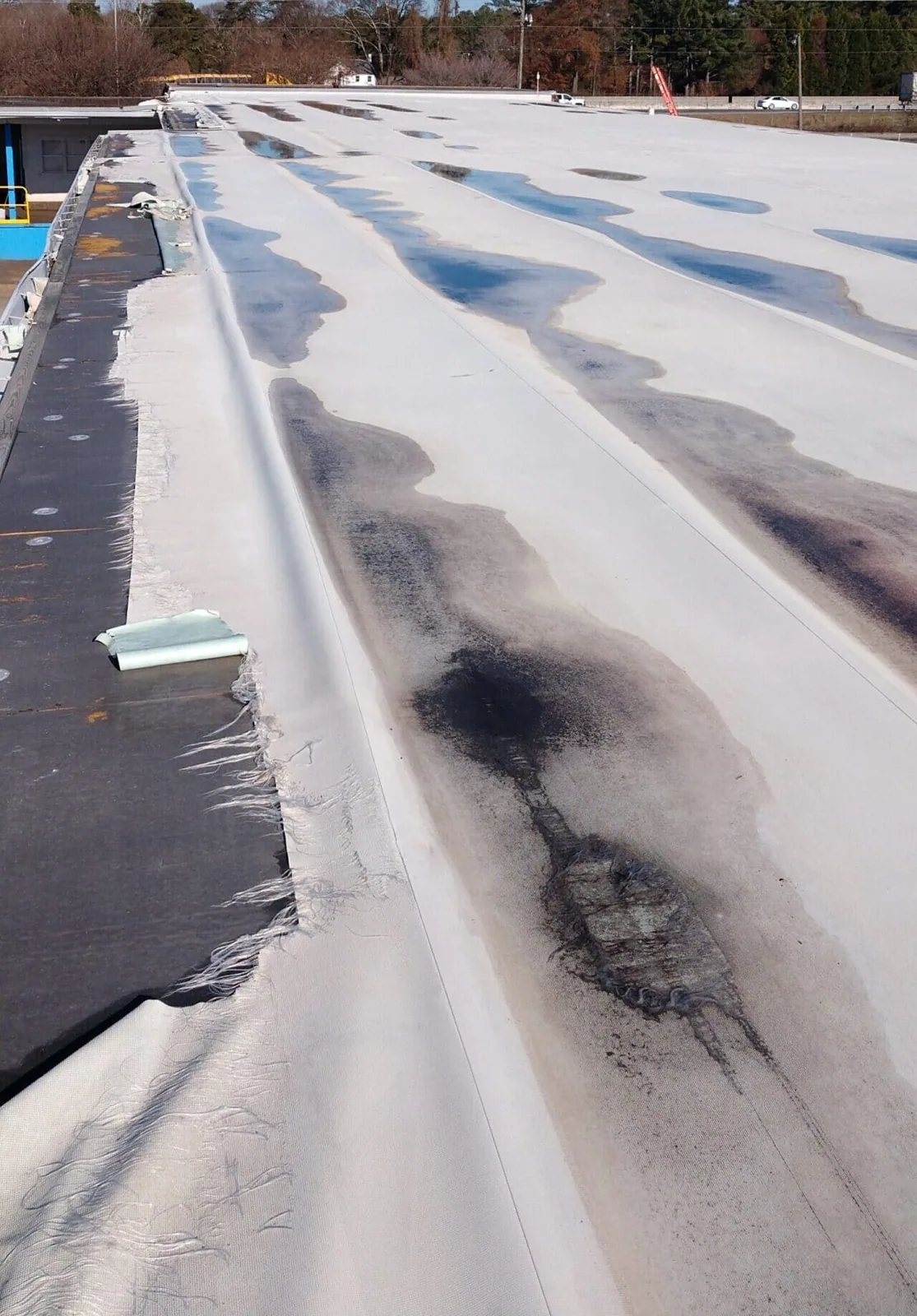
Product verification: read the assembly documents
Start with product data, warranty paperwork, roof plans, and records of prior repairs. Confirm the manufacturer and exact membrane line. KEE formulations and assemblies can vary, so a generic description is not enough for compatibility or warranty decisions. We identify specified thickness, reinforcement, attachment, cover board, insulation, and approved accessories. If the documents are missing, the owner may approve a small verification area before the scope is finalized.
The building use can affect material selection. An exhaust plume, food processing activity, rooftop grease, or cleaning chemical may create exposure questions. Facility staff should identify the substance and where it reaches the roof. We compare that information with current product guidance; we do not promise resistance based only on the KEE label.
At Fox Bluff Corporate Center or the Crow Commerce Center, buildings serve different tenants and operations. We confirm the actual use, roof access, equipment schedule, and maintenance expectations with the property contact. The park designation does not establish a membrane requirement.
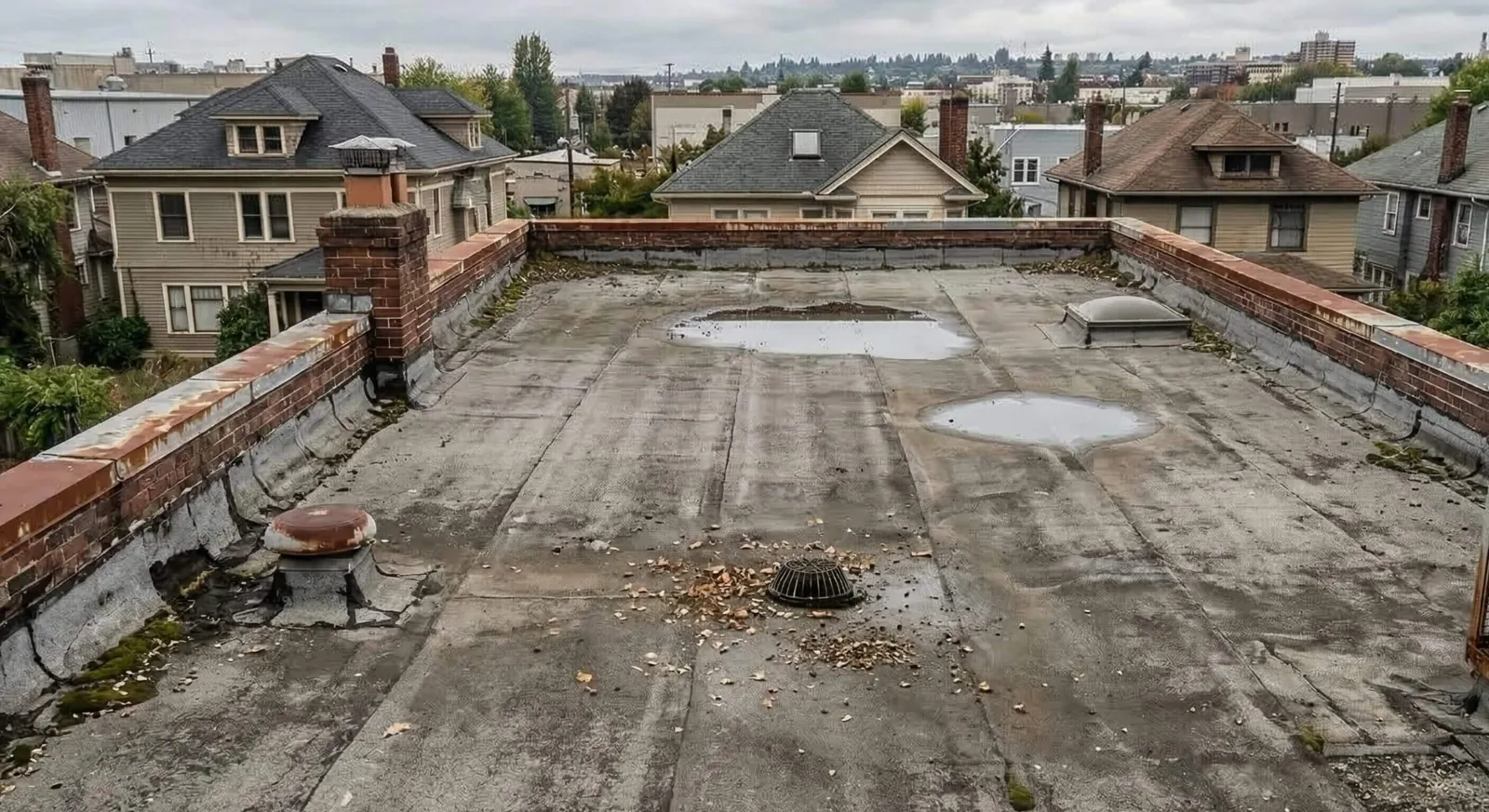
Performance questions: connect claims to project evidence
Owners may ask about heat, flexibility, chemical exposure, puncture resistance, or expected service life. Those questions need product-specific data and an assembly review. The project team should compare published test information, warranty language, substrate, detail design, and maintenance conditions. A laboratory rating does not predict the exact performance of an installed roof at one property.
Elgin averages 12.7 days above 90°F and has recurring freezing conditions. Temperature cycles affect installation and material movement, but they do not by themselves favor one membrane. We check the product’s application limits, seam method, perimeter details, and existing roof condition. The daily roof surface and manufacturer instructions control when work proceeds.
Owners comparing systems can review standard PVC and TPO roofing alongside KEE. We identify specification differences without treating names as equivalent. A qualified designer may need to resolve chemical compatibility, wind design, and warranty selection.
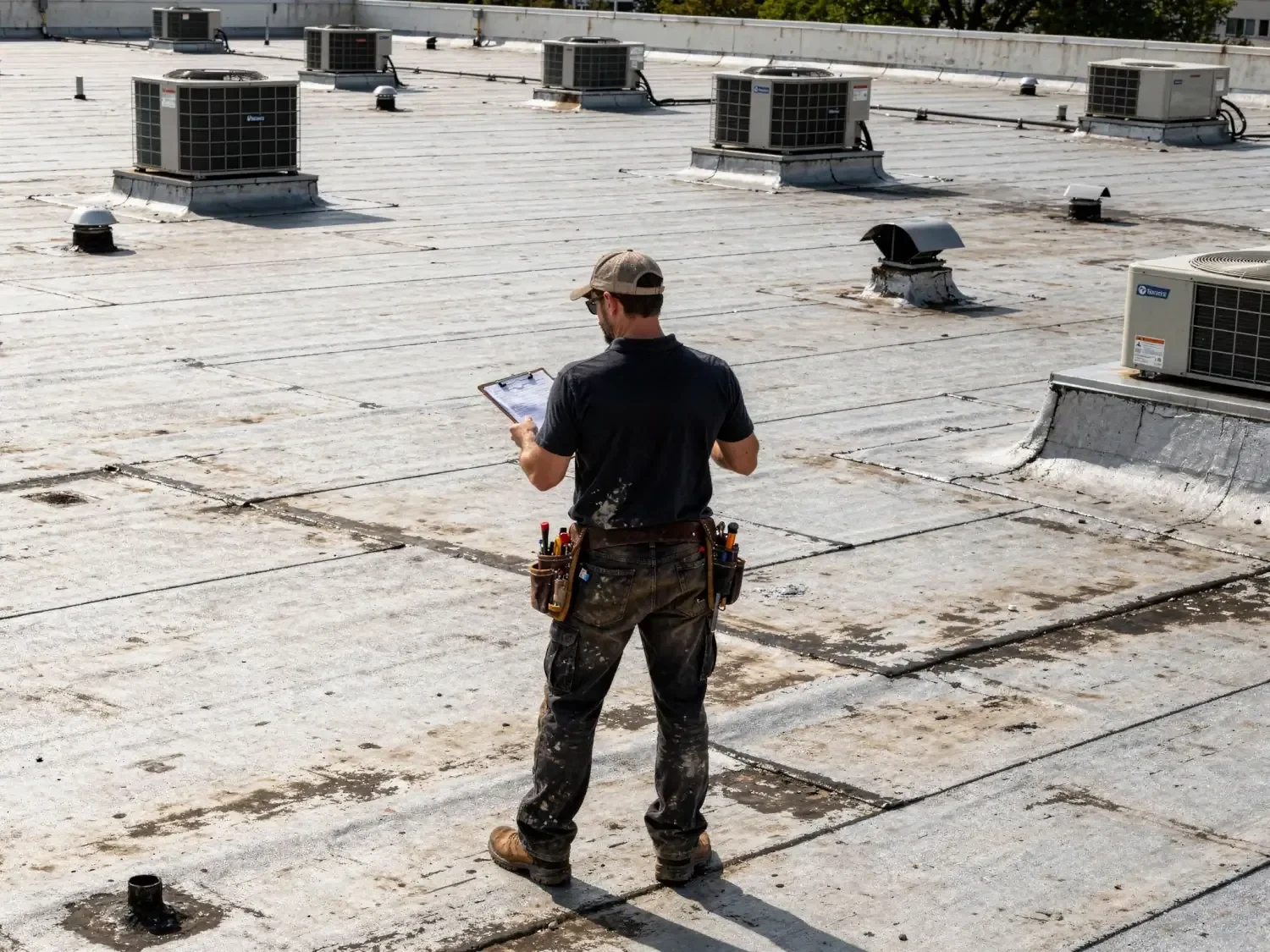
Existing roof: check seams, details and transitions
For an existing KEE roof, inspection covers field seams, corners, patches, curbs, drains, penetrations, flashings, and perimeter securement. We look for open welds, contamination, shrinkage, impact, movement, or repairs that may use another product. A probe check or test weld can be useful if suitable. The report names the sampled area and does not extend a result to inaccessible roof zones.
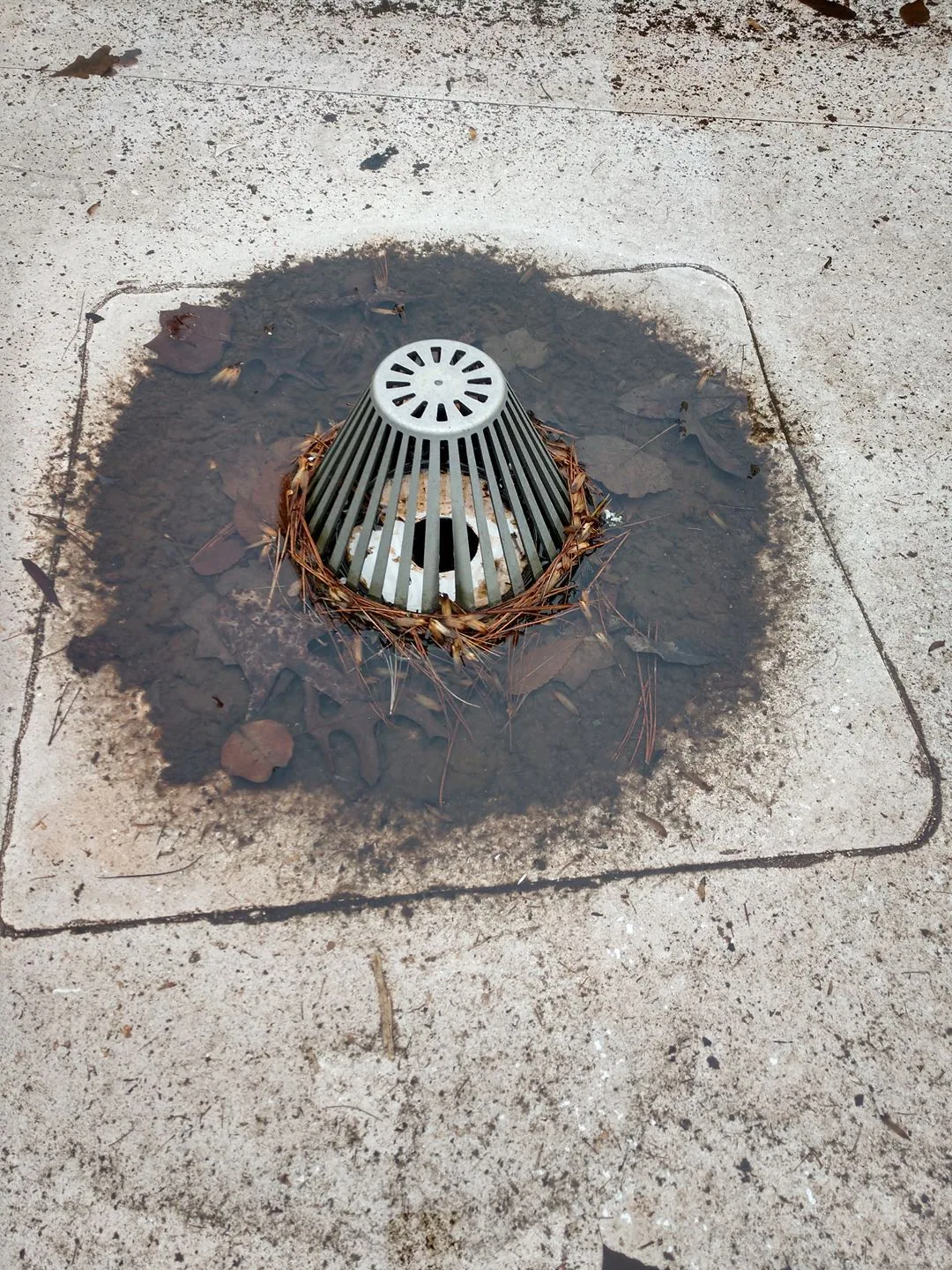
At drain bowls and scuppers, we check whether the membrane is secured and the outlet remains clear. At a curb, the detail needs a compatible turn-up and stable base. An outlet review or curb coordination visit can address a detail outside the initial report. The proposal states whether those items are included.
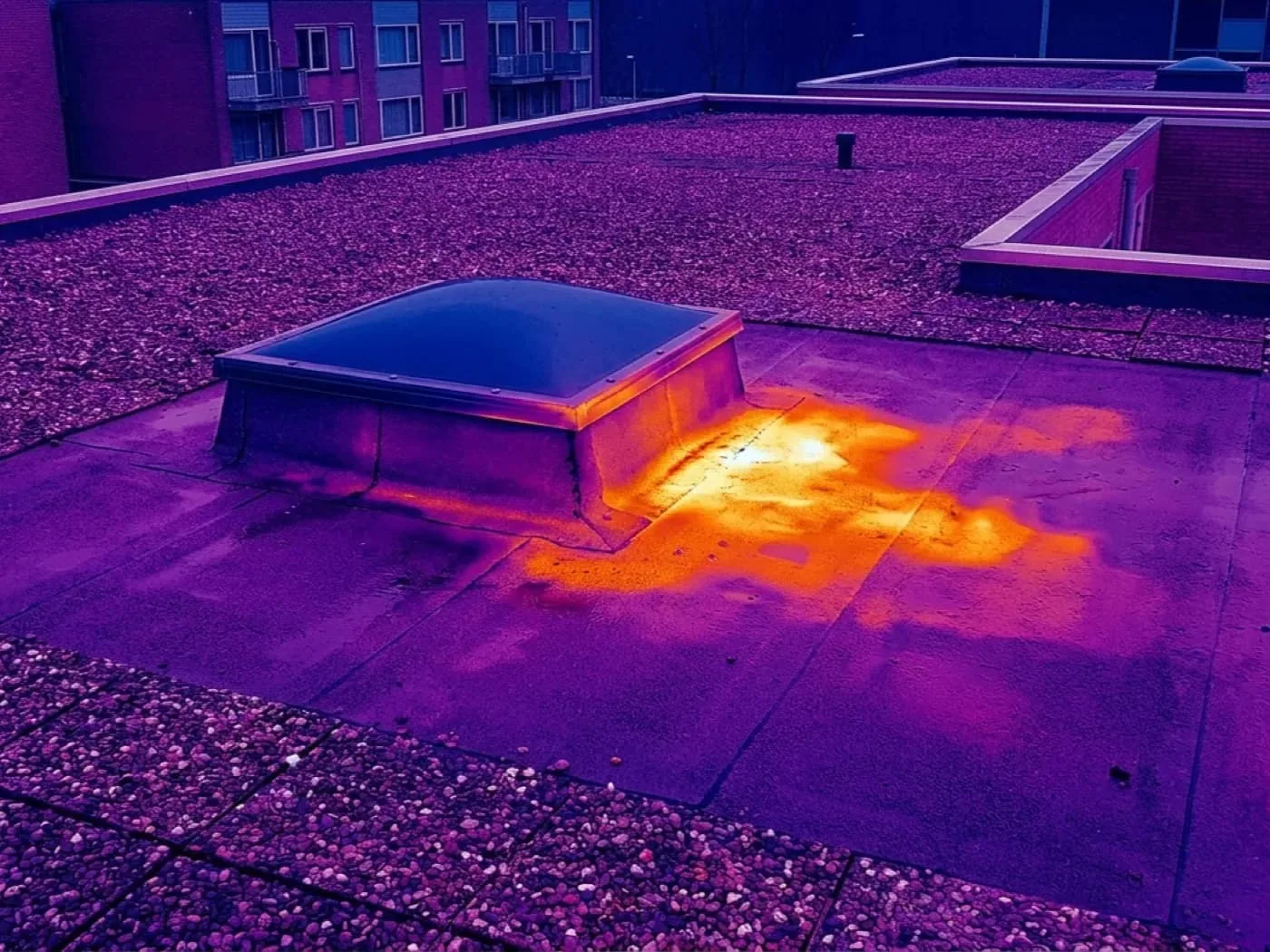
When moisture is suspected under the membrane, scanning or test cuts may help locate the extent. A targeted moisture scan identifies candidate areas, not a final wet-insulation quantity. We explain the method and limitation before the owner approves invasive testing.
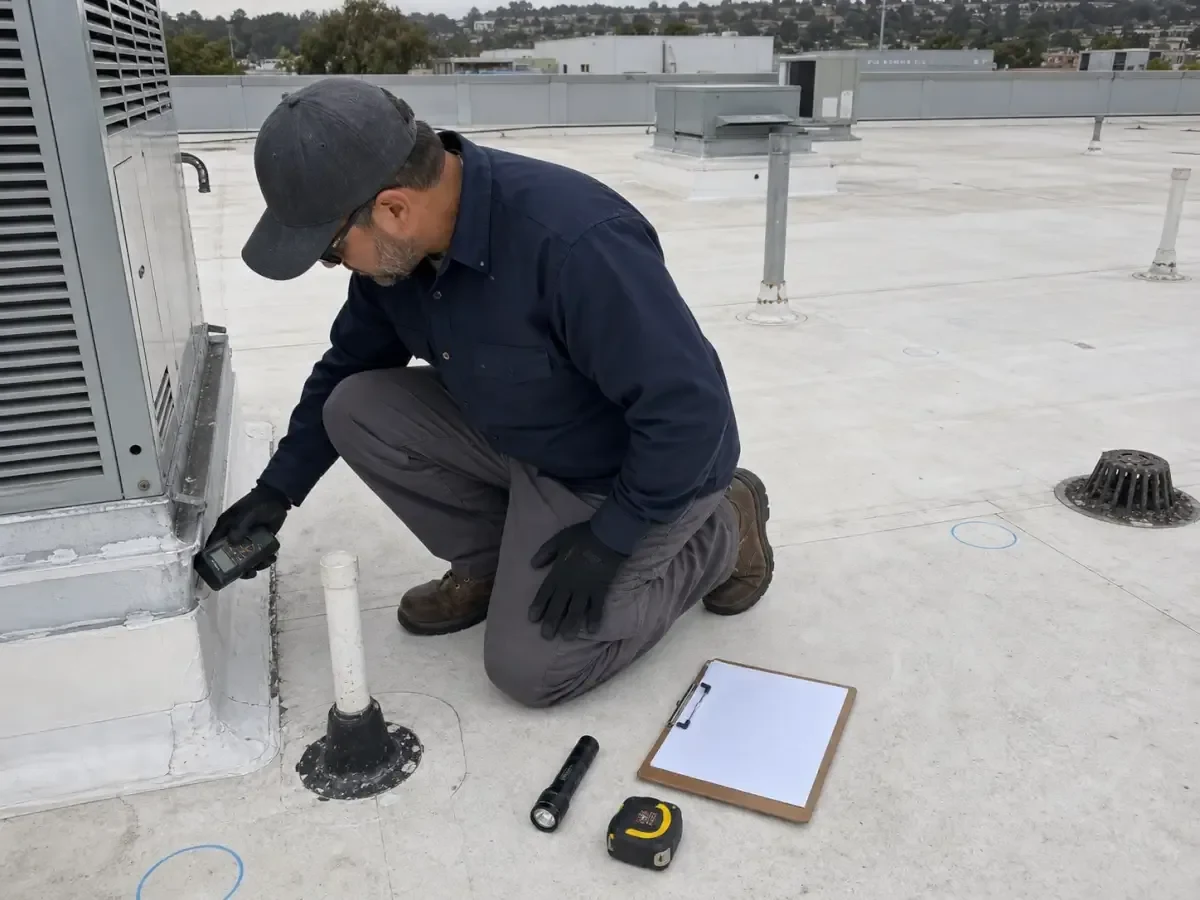
Repair method: preserve compatible welds
Repairs must use compatible materials and preparation. The work may replace a damaged patch, restore a field seam, rebuild a penetration flashing, or correct a termination. We confirm whether the manufacturer permits the proposed accessory with the installed KEE membrane. Existing coatings, dirt, oxidation, and prior sealants can affect weld quality. A test area may be needed before a larger repair.
If the roof is actively leaking, temporary protection is set only where it can be secured safely. The permanent scope follows after the cause is clearer. A leak repair assessment may trace water from a curb or seam to a remote interior location. We keep the observed opening separate from any unverified travel path.
Widespread seam failures or saturated insulation may call for more than local patches. We compare repair, recover, and replacement with records of layer count, moisture, substrate, and system approval. A replacement scope should identify insulation, membrane, fastening, edges, drains, and exclusions.
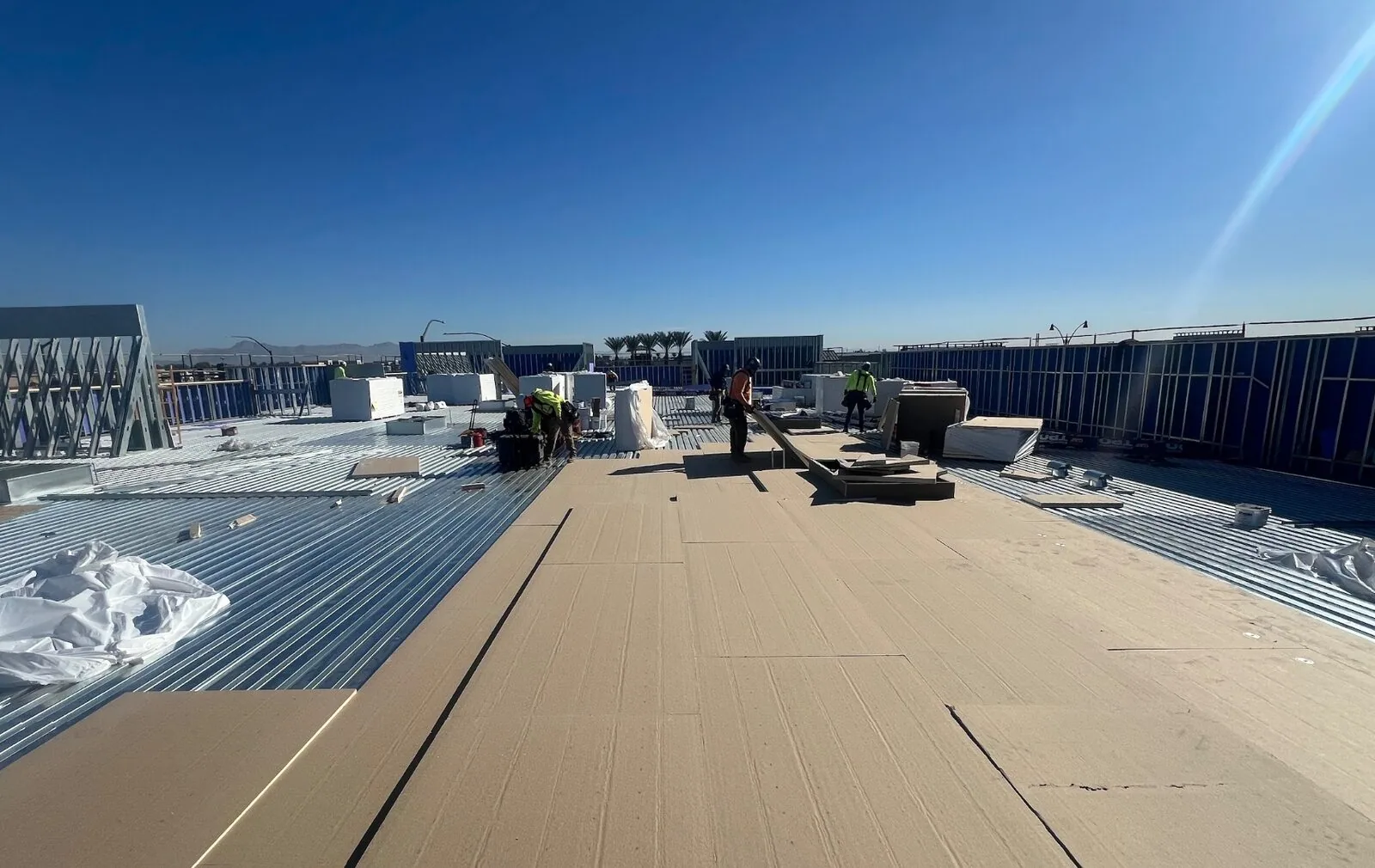
Installation controls: coordinate submittals and conditions
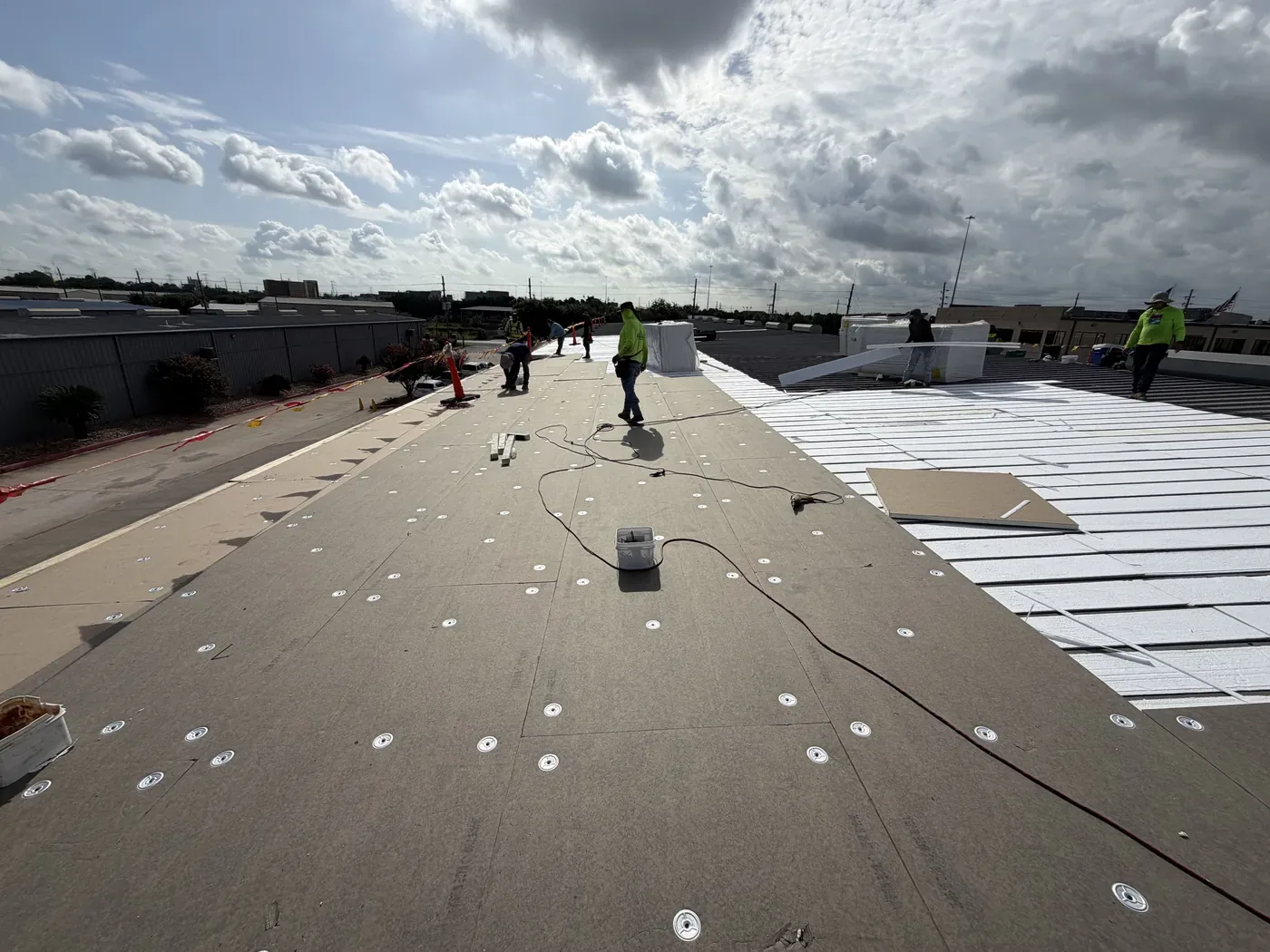
Before installation, the project team approves product data, layout, attachment, flashings, and warranty procedures. We confirm the existing deck and substrate can accept the specified system. If the specified detail conflicts with field conditions, we request direction before the crew proceeds. Substitutions require written approval through the contract process.
Clean, dry surfaces and proper temperature support seam work. Elgin’s winter weather and summer heat can affect the installation window. The superintendent checks roof moisture, wind, temperature, and product limits daily. When the roof cannot support the method, the crew secures completed work and resets the schedule.
For work near Carpentersville Route 31 Corridor, delivery timing and production access are confirmed with the local contact. The project also sets rooftop traffic routes so carts, tools, and other trades do not damage finished membrane.
Maintenance: protect the installed system
Maintenance records should identify inspections, seam observations, drain condition, rooftop trade activity, and approved repairs. Keep photos tied to roof zones. New equipment, conduit, or supports should be coordinated with the roofing contractor before installation. An unauthorized penetration can create a condition outside the original warranty or repair scope.
Elgin receives substantial rain and winter snowfall, so owners should keep water paths and access points visible. Safe inspections can identify debris, movement, or damage before it spreads. A warranty record can track notices and manufacturer requirements. It does not replace a product-specific inspection or establish coverage for later damage.
The closeout file should retain the membrane identity, approved assembly, warranty documents, test areas, repair photos, and maintenance instructions. When a later contractor works on the roof, share those details before materials are applied.
Closeout: record exact membrane and work limits
At completion, we provide available product information, repair locations, photos, inspection records, and outstanding observations. The closeout marks excluded areas and any condition needing follow-up. For a new assembly, we include approved submittals and warranty paperwork when issued for the project.
Send roof plans, product records, building use, known chemical exposures, leak reports, and access rules before requesting a KEE review. We will confirm the membrane line, inspect the repair area, and identify any test or manufacturer input needed. The recommendation will name the actual product and assembly rather than rely on a broad category label.
Questions About Commercial KEE Roofing
Is every KEE membrane the same?
No. Product formulations, reinforcement, accessories, and warranty requirements vary. We identify the manufacturer and exact membrane line before reviewing compatibility.
Does KEE resist every chemical used in a manufacturing building?
No universal claim applies. The owner should identify the specific exposure and confirm it against current product data and project requirements.
Can you patch a KEE roof with standard PVC?
Only when the manufacturer and assembly details permit that material. We verify compatibility and may use a test weld before authorizing field repairs.
How do you confirm moisture under an existing KEE sheet?
Scanning can flag candidate areas, while a test cut can verify layers at an approved location. The report states what each method establishes and what remains untested.
What records matter for a KEE warranty?
Keep product identification, approved submittals, installation records, notices, repairs, inspections, and maintenance instructions. Follow the specific warranty terms for reporting and access.