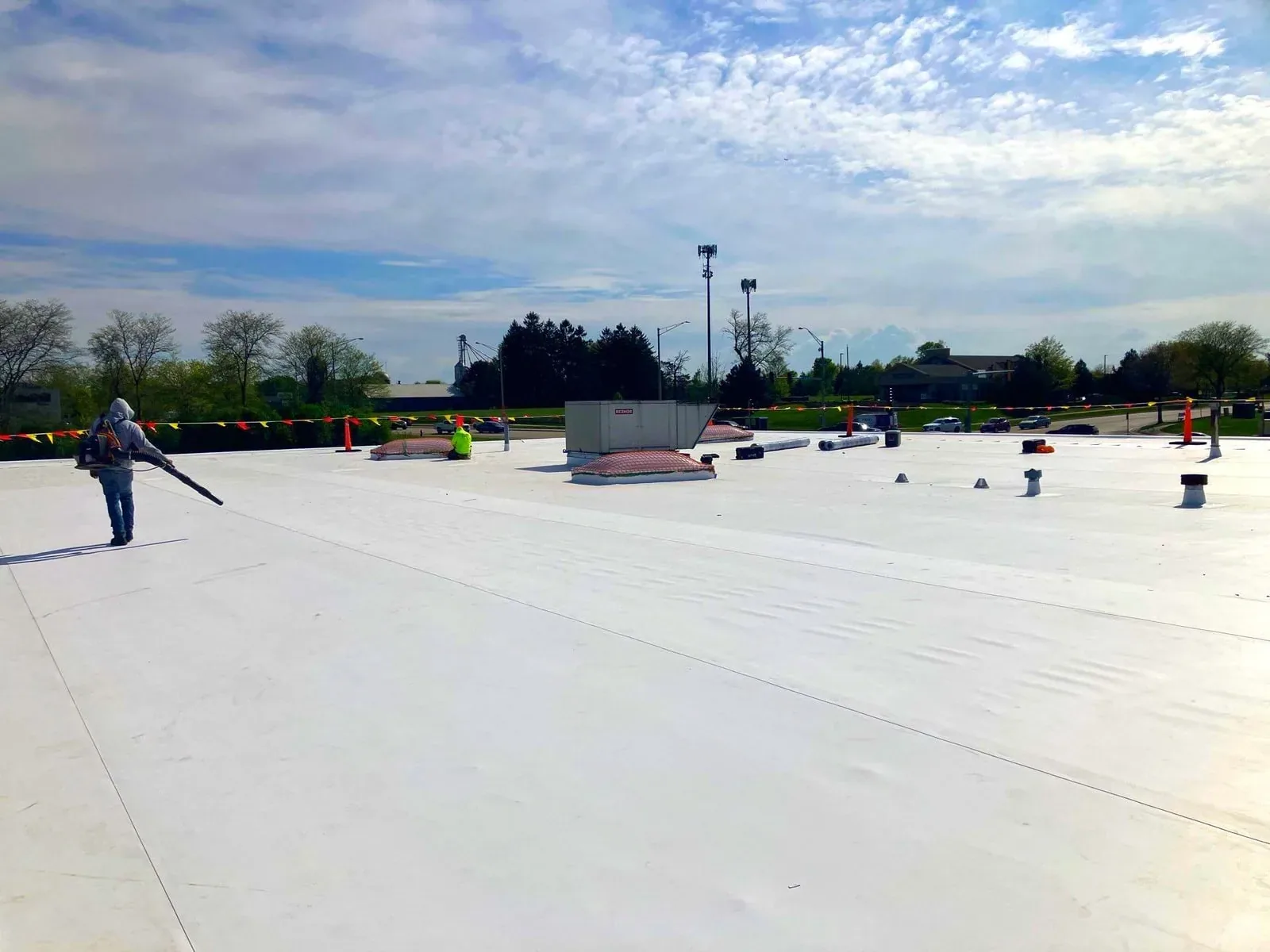
Commercial Modified Bitumen Roofing in Elgin, IL
Review a modified bitumen roof
Share roof plans, repair history, leak reports, access rules, and hot-work restrictions. We will verify the assembly and establish the inspection boundary.
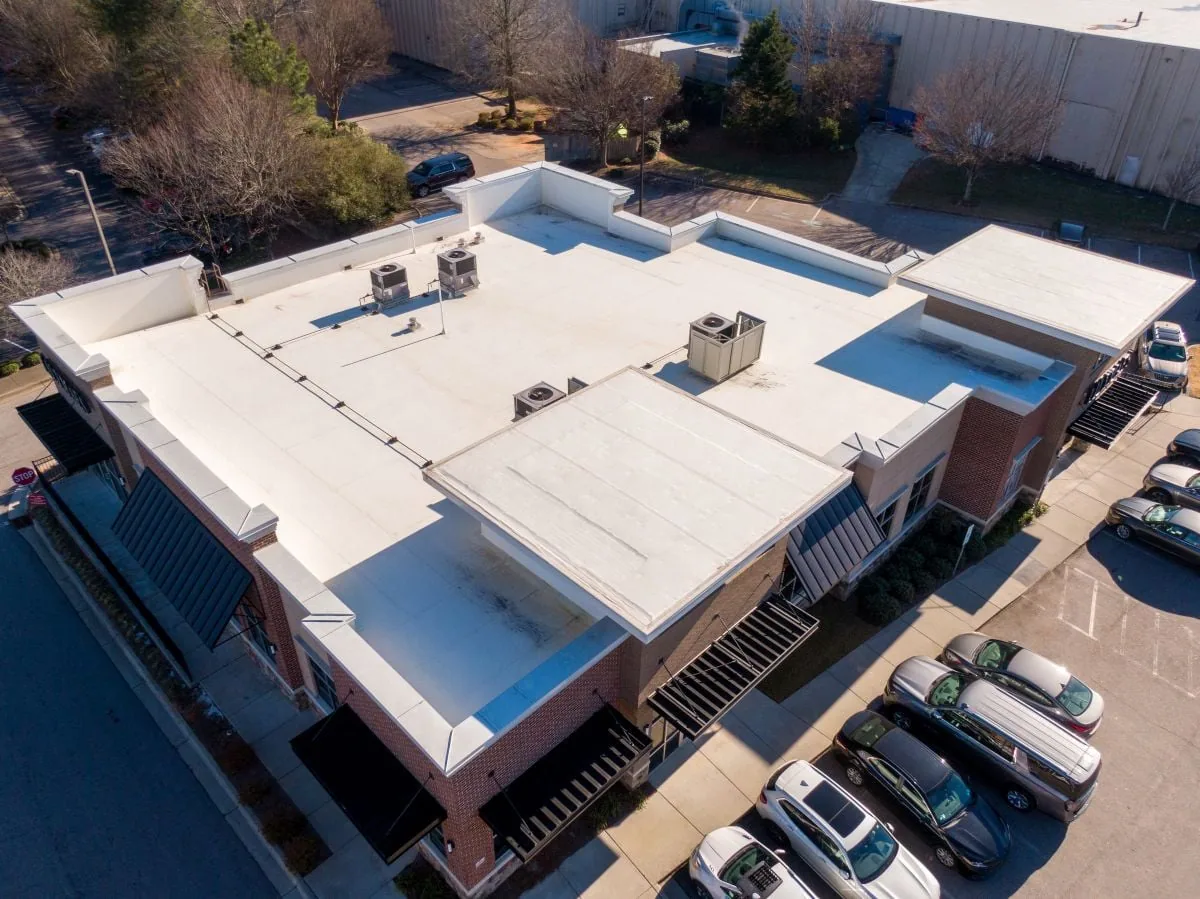
Commercial Modified Bitumen Roofing
Modified bitumen roofs need a repair method matched to the installed plies and surfacing. We identify the membrane, seams, base and cap sheets, edge conditions, and prior patches before specifying work. Elgin’s rain, snow, and freezing periods make water paths and low-point details part of the review. A roof’s appearance alone does not confirm whether it uses SBS, APP, or another asphaltic assembly. We verify documents and field layers where needed.
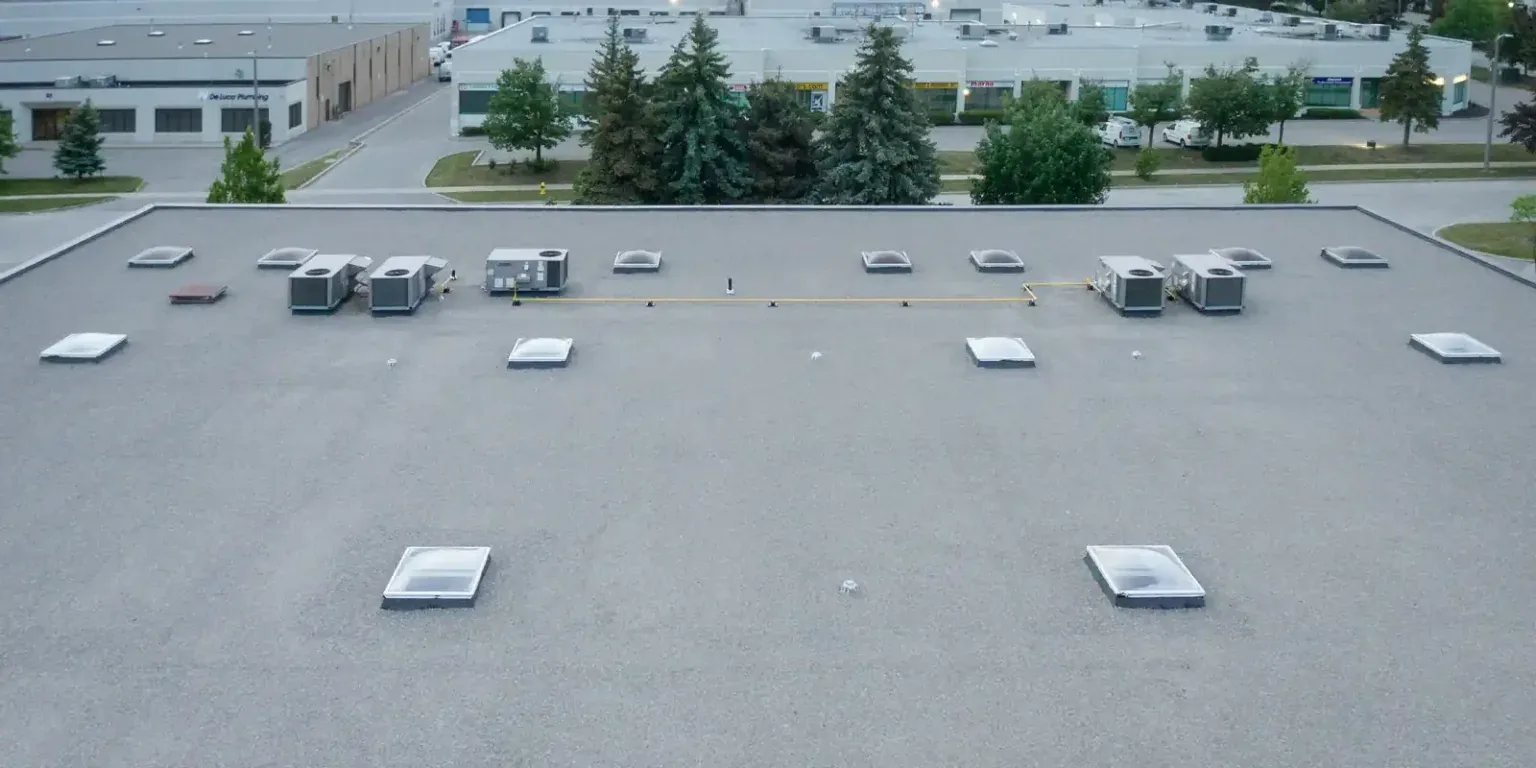
System identification: verify plies and surfacing
We review roof plans, warranty papers, product records, and previous repair scopes. Field inspection checks granule loss, exposed asphalt, blisters, open laps, wrinkles, ridges, and termination bars. We identify whether cap sheet surfacing is mineral, coated, or another finish where visible. If the assembly is covered or unclear, the owner may approve a small test cut to confirm layers and deck conditions.
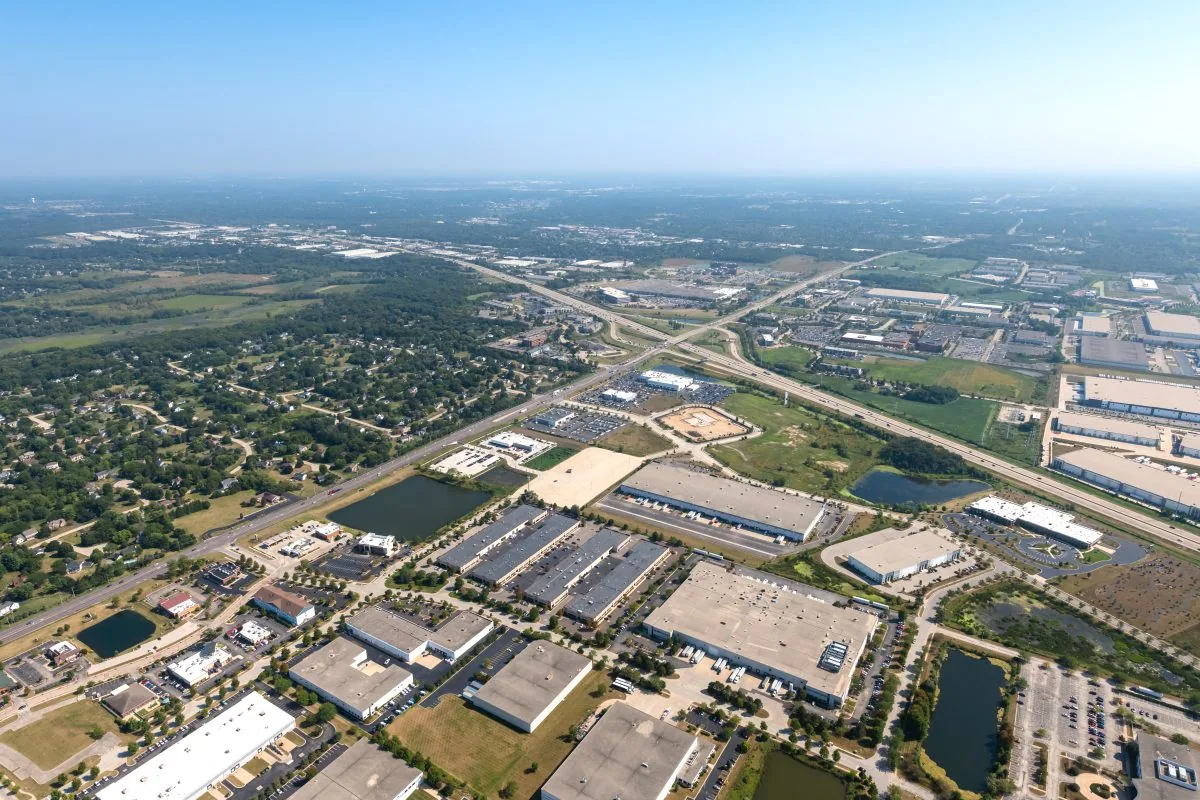
SBS and APP products use different polymer modification and can require different installation temperatures or methods. The exact sheet and manufacturer detail govern. We do not assume a roof is torch-applied because it has a granular cap sheet. At Elgin-Victor Industrial Park or the Tollgate Industrial Center, we confirm access and operations before opening a roof section.
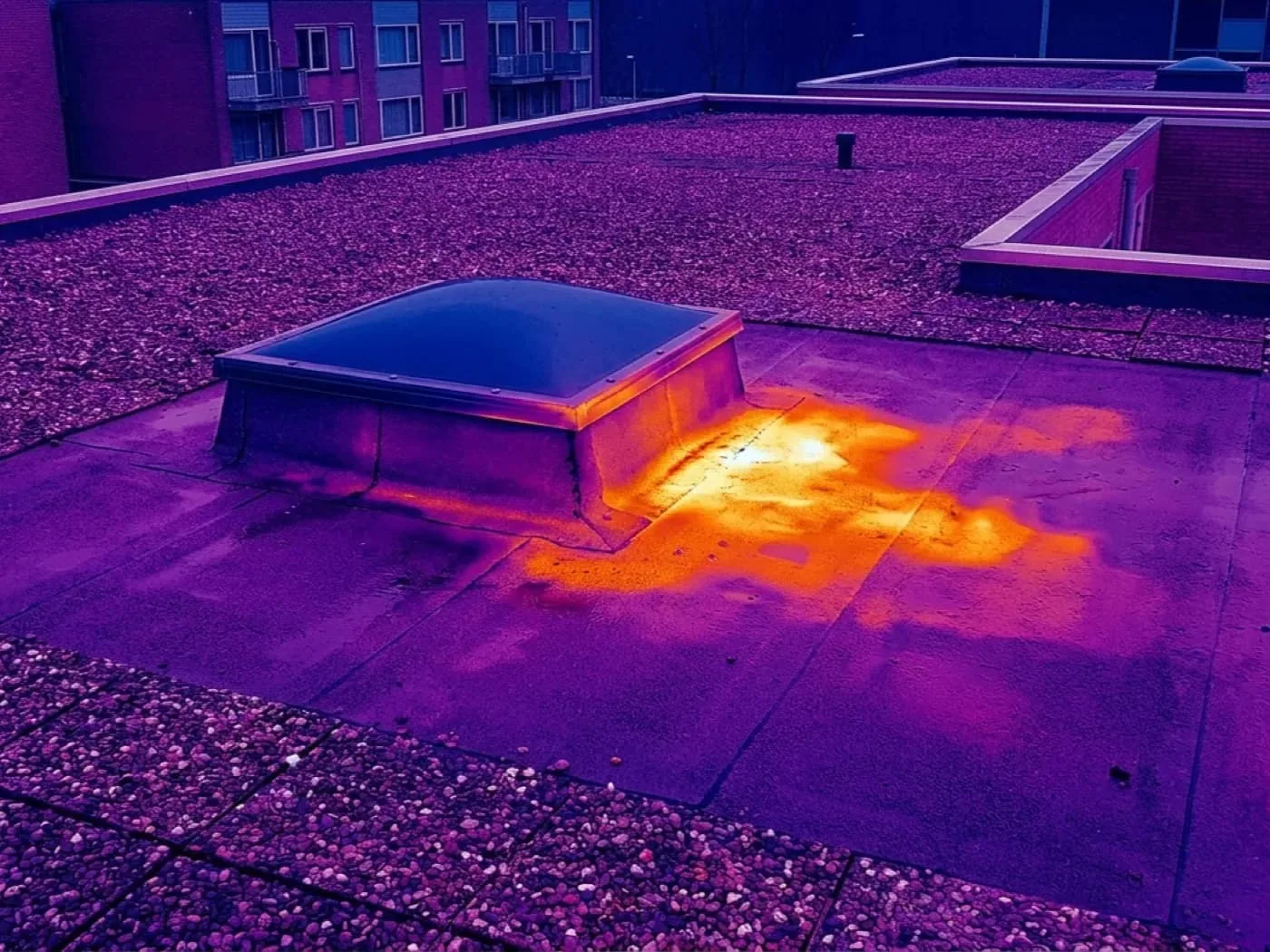
When concealed wet insulation may be present, a moisture scan can identify areas for verification. The scan does not distinguish every material condition. The report identifies candidate zones and whether test cuts are needed to set quantity.
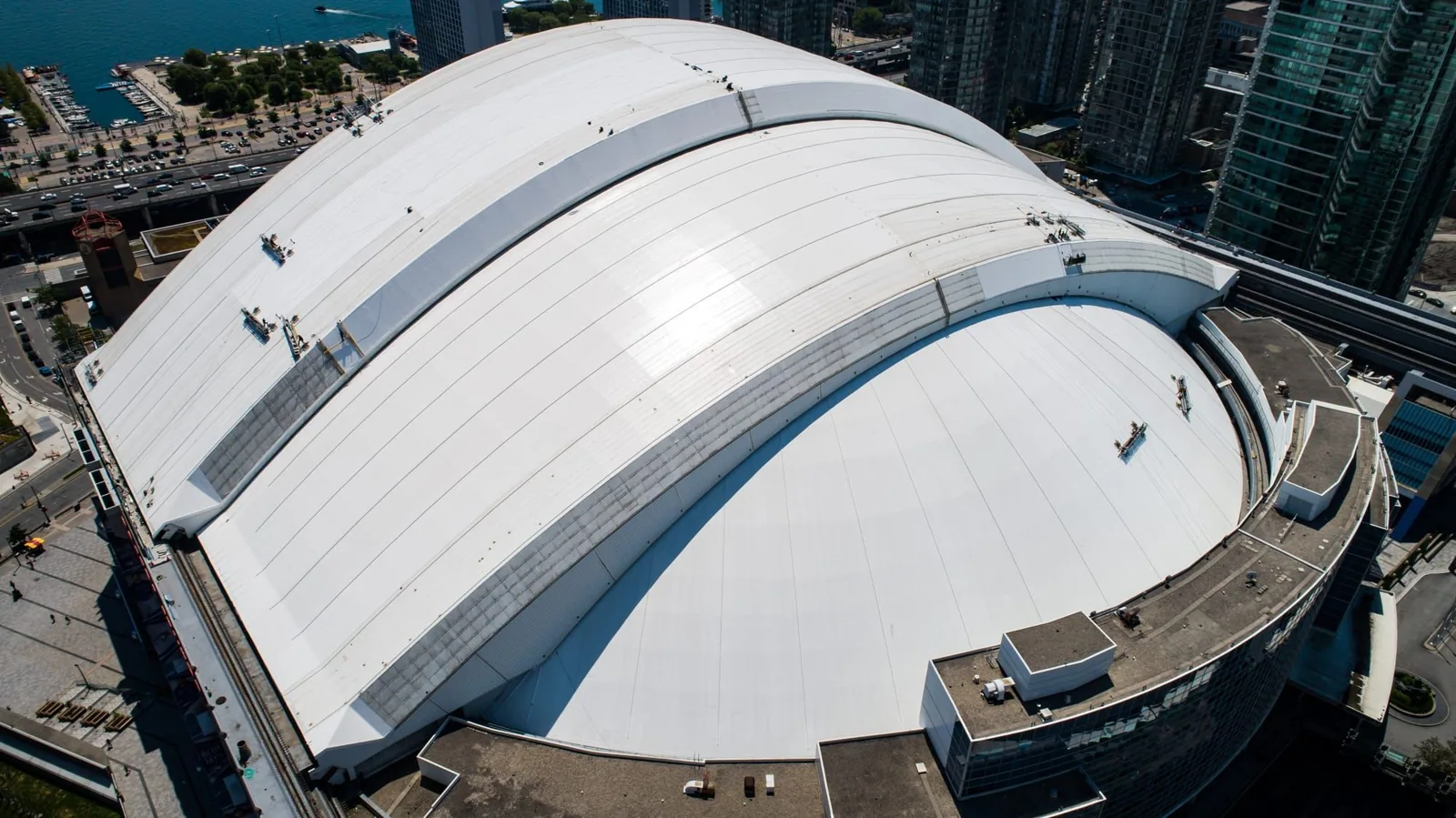
Layer condition: distinguish wear from failure
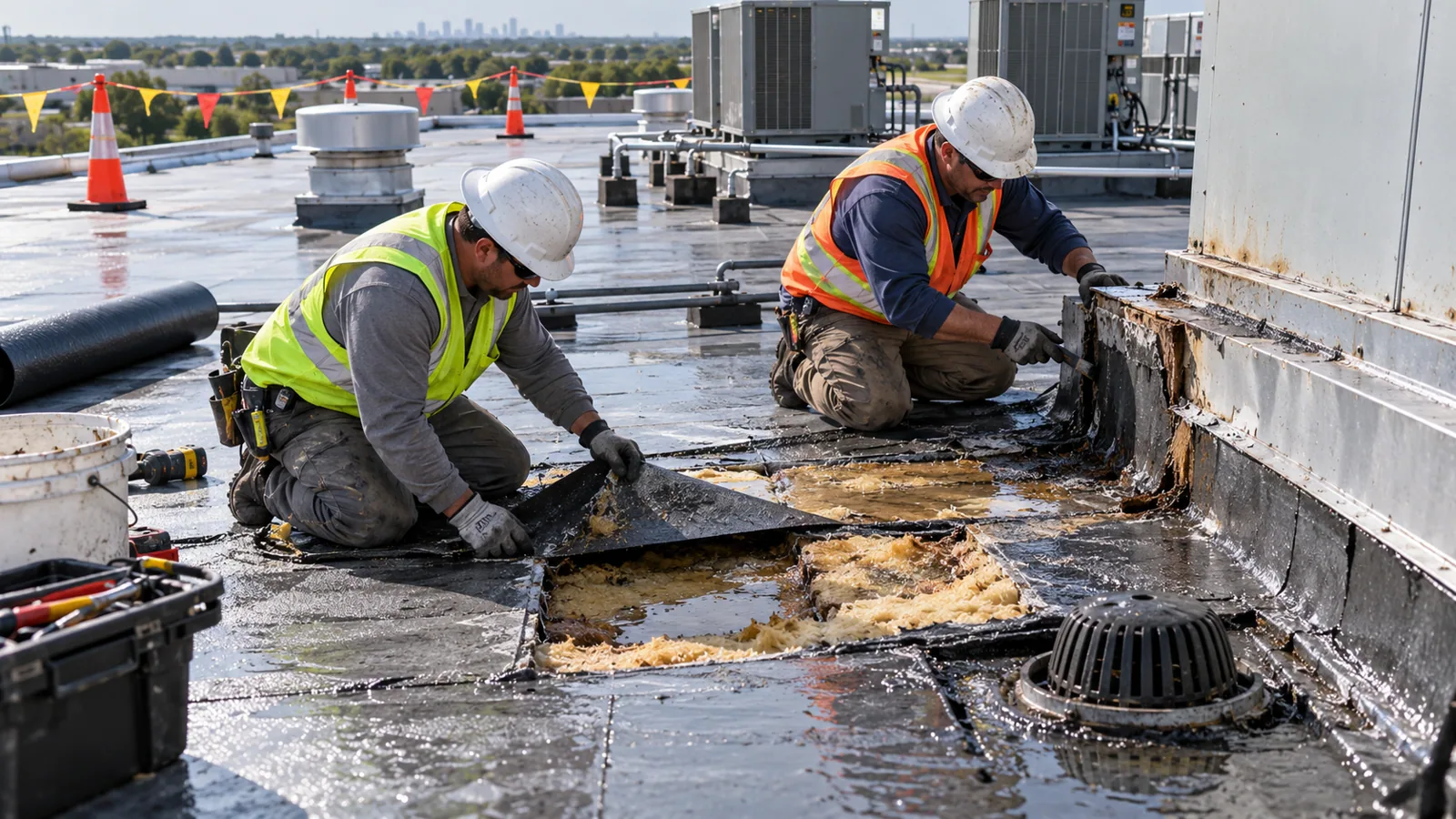
We inspect laps, transitions, patches, flashing, penetrations, drains, and perimeter details. Open laps may result from movement, poor adhesion, contamination, or prior work. Blisters can reflect trapped air or moisture; they need evaluation before repair. We avoid cutting into an assembly until the owner approves the location and understands how the opening will be restored.
Granule loss is recorded with area and severity when visible. It may expose asphalt, but the next decision depends on sheet condition and whether water has reached lower plies. A local patch can be useful for a defined defect. Repeated openings, splits, or wet layers may point toward broader work. An inspection report can record conditions beyond the active leak location.
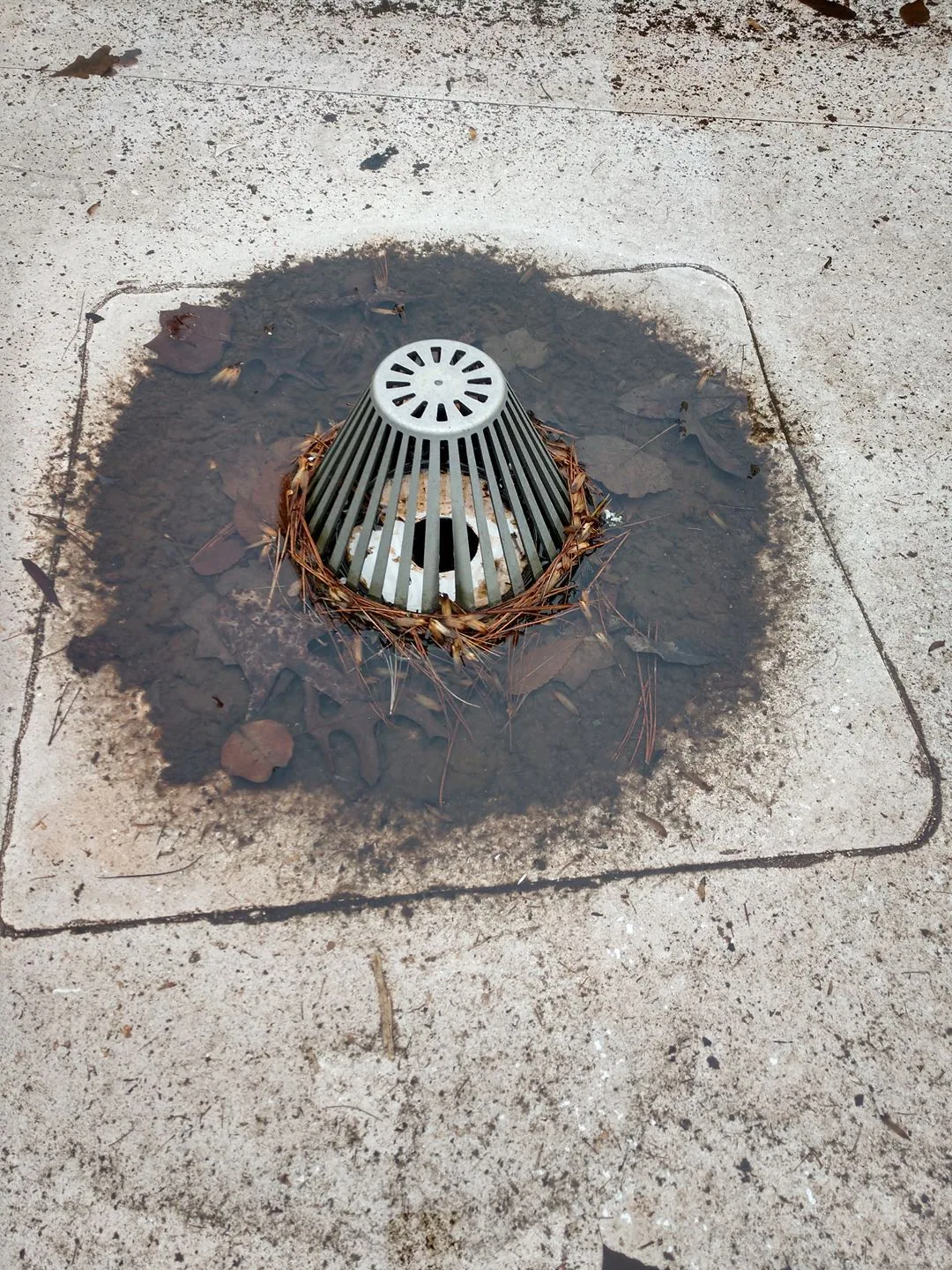
At drains and scuppers, we check how the membrane terminates and whether water has an open route. A drainage review can identify a separate outlet issue. A roof repair should not seal over debris or block a designed overflow path.
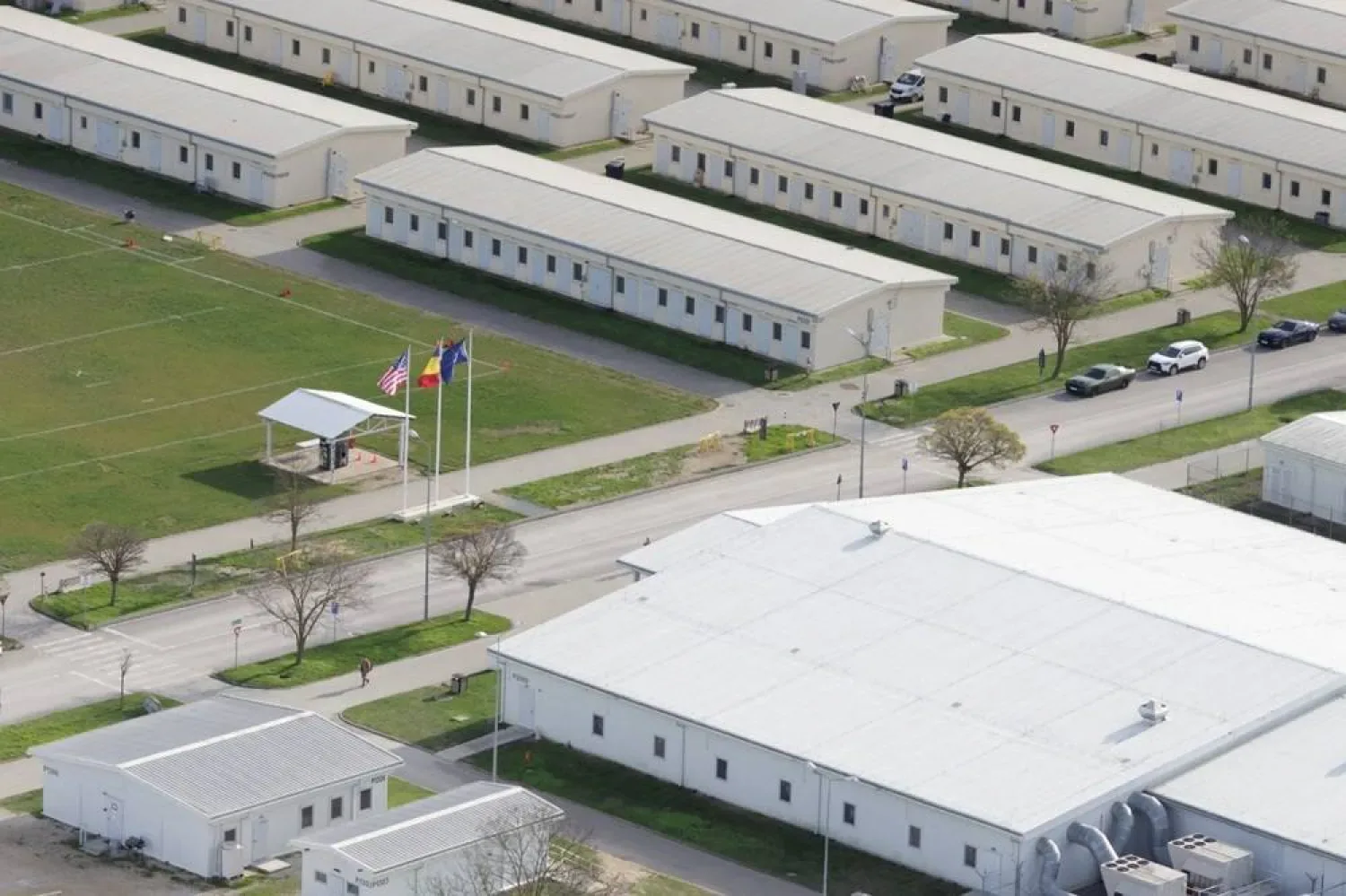
Repair detail: restore a compatible lap
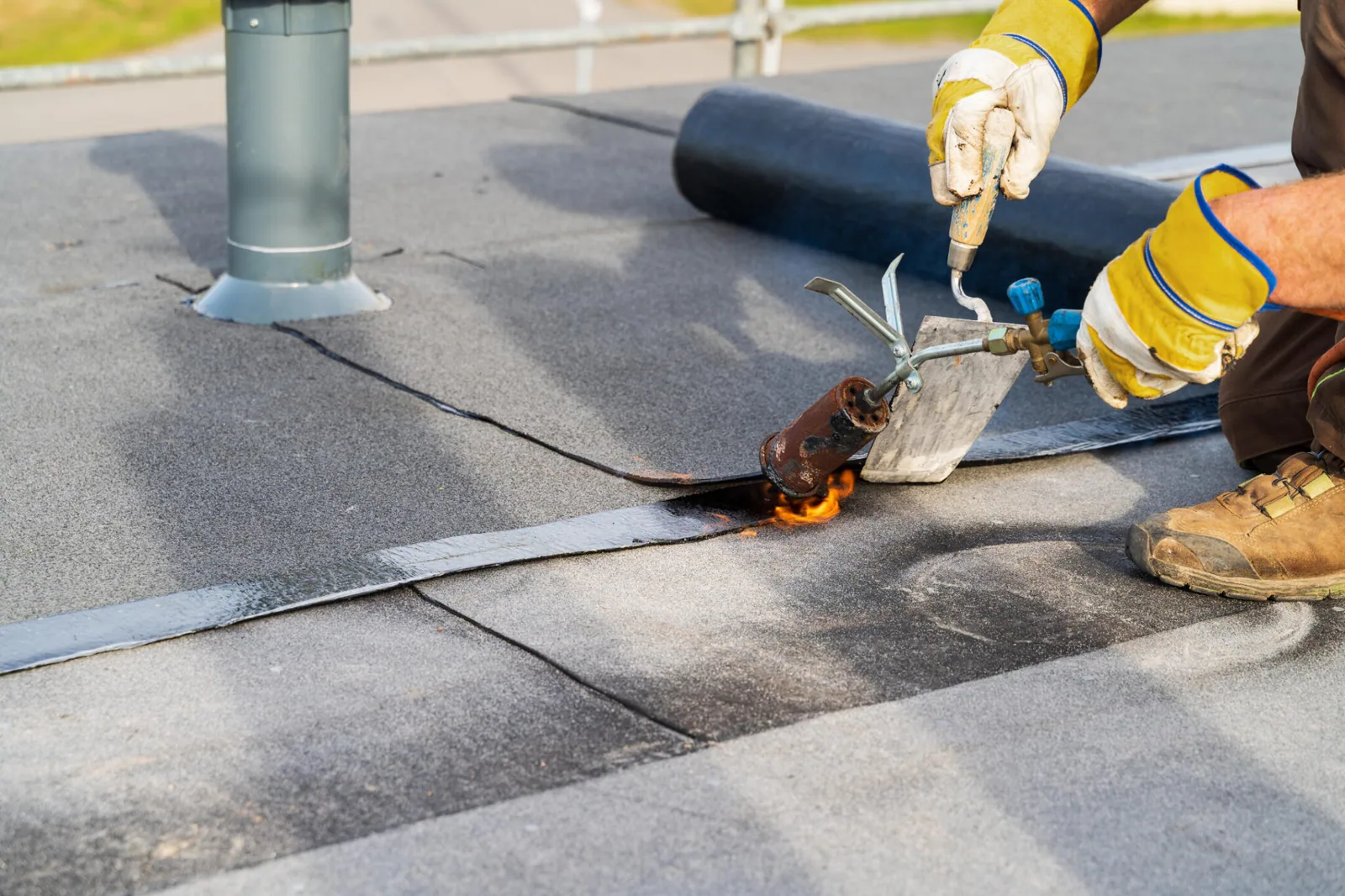
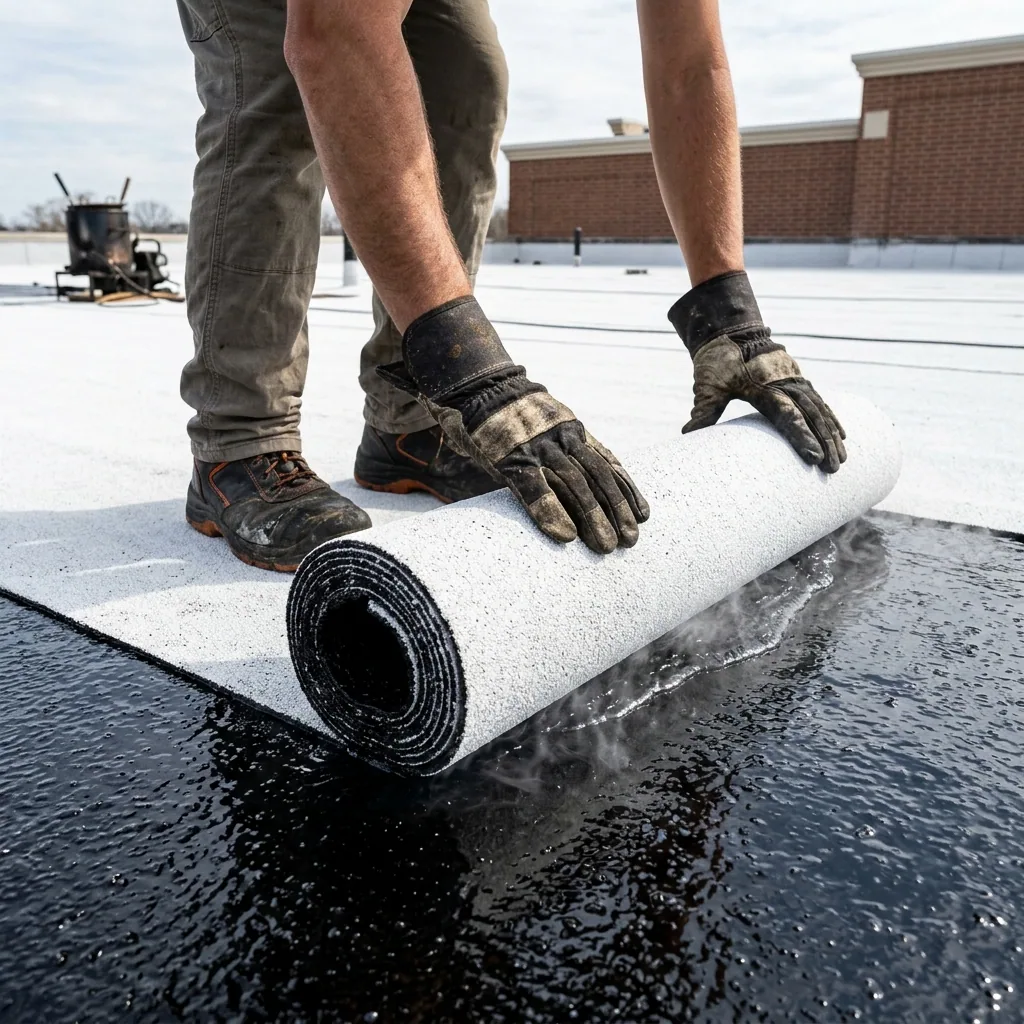
Repair may include cleaning and priming a lap, installing a compatible patch, replacing a section of cap sheet, renewing flashing, or rebuilding an edge termination. The scope names the material, overlap, surface prep, and work limit. We identify whether the repair will be torch-applied, self-adhered, cold-applied, or mechanically secured according to the approved assembly.
Fire controls are essential when open-flame work is specified. The project needs a hot-work permit where required, trained personnel, fire watch, extinguishers, combustible protection, and a post-work check. If the site prohibits flame, another approved method must be considered. We do not switch methods without confirming compatibility and written acceptance.
Temporary protection for active water is separate from the permanent detail. If the source is uncertain, a leak investigation traces the entry path and distinguishes wet insulation from a surface defect. A closeout photograph records the final lap and nearby transition.
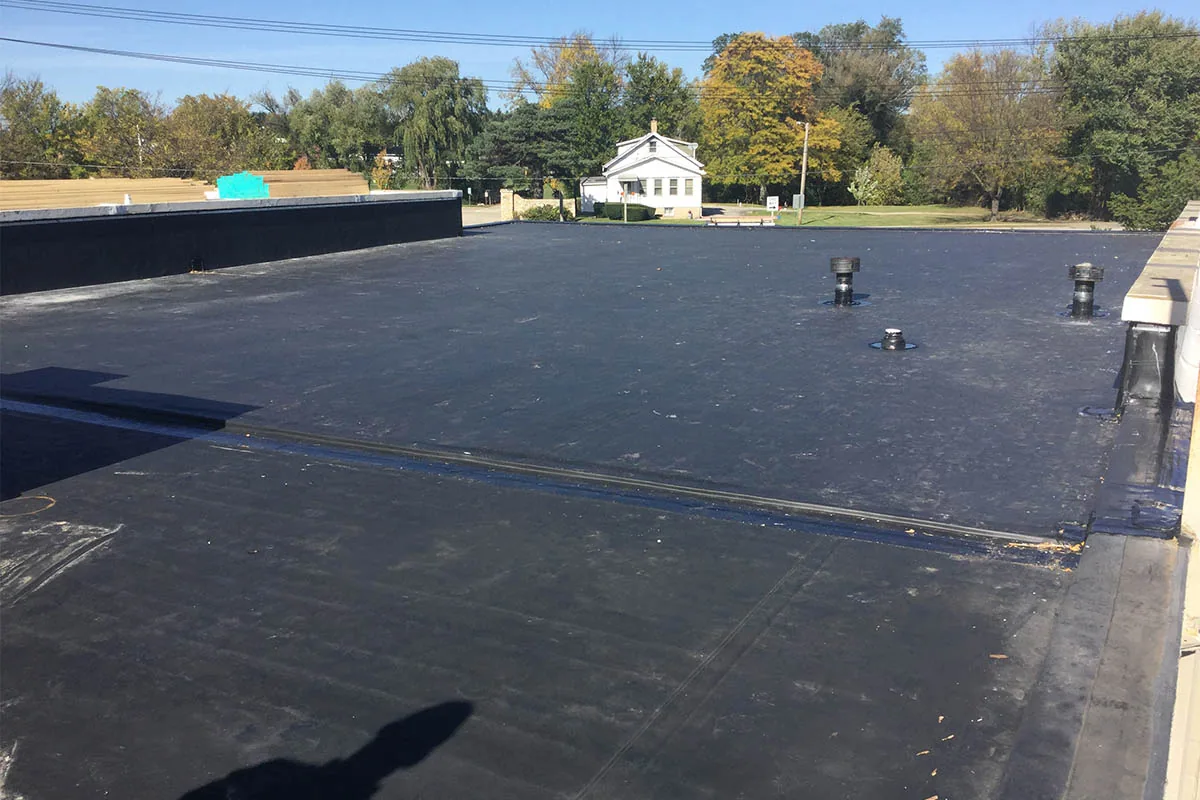
Recover or replace: account for the full assembly
Modified bitumen may be repaired, recovered, or replaced depending on ply condition, moisture, attachment, deck, and existing layer count. Recover plans must address added weight, edge height, drains, curbs, and fastening. A tear-off plan sets daily limits and protection for the occupied building. The owner sees how each option handles the known condition and what remains unverified.
Elgin’s annual snowfall and recurring freezes give reason to check drainage and termination performance. They do not establish that an older roof has failed. We review maintenance history and inspect the actual roof. A built-up roof comparison may help owners distinguish a multi-ply asphalt assembly from modified bitumen, while a single-ply alternative has different seams and details.
A replacement proposal lists membrane type, substrate preparation, insulation, flashing, edges, and exclusions. Where test cuts are needed, the estimate identifies the approval point before final quantity is set.
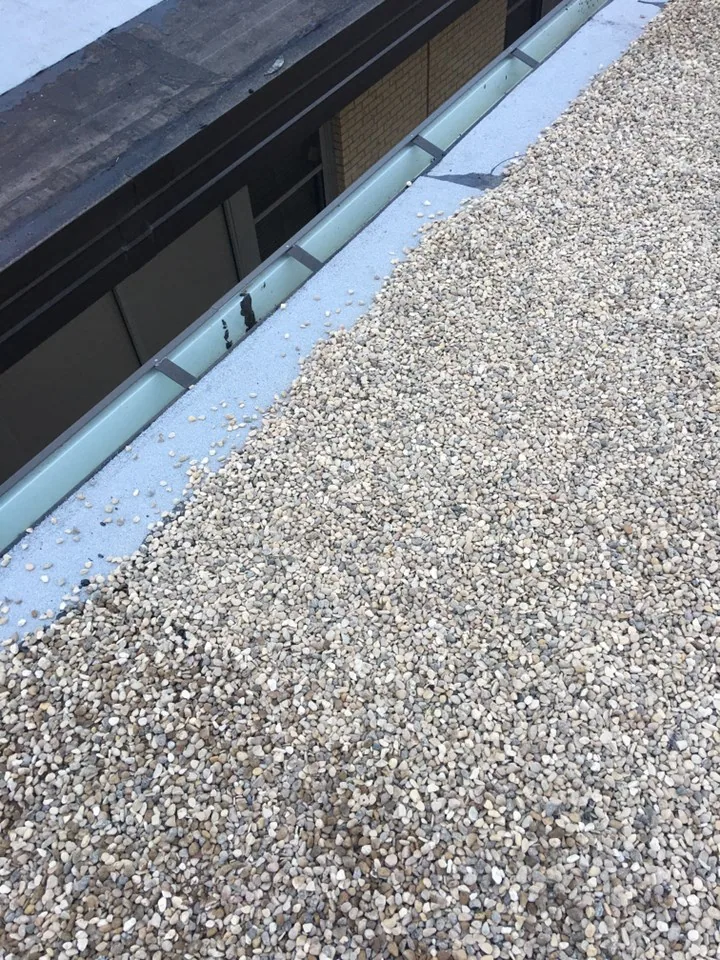
Installation planning: manage heat and occupied operations
Application conditions follow the specified method and product instructions. Heat, wind, moisture, substrate temperature, and storage affect sheet handling and adhesion. Elgin records 12.7 days above 90°F in an average year, while winter conditions can constrain asphalt work. Winter freezes recur in Elgin, with average snowfall near 29 inches. Check the actual surface before torch, adhesive, or membrane work. We coordinate with facility staff before moving gas cylinders, heating equipment, or hot materials. If the approved access route changes, the crew pauses and confirms an alternative before continuing.
Near Randall Point Executive Center, we coordinate staging with the property representative. Other commercial areas may have different requirements. The written logistics plan names actual delivery, laydown, and roof-entry points for each building.
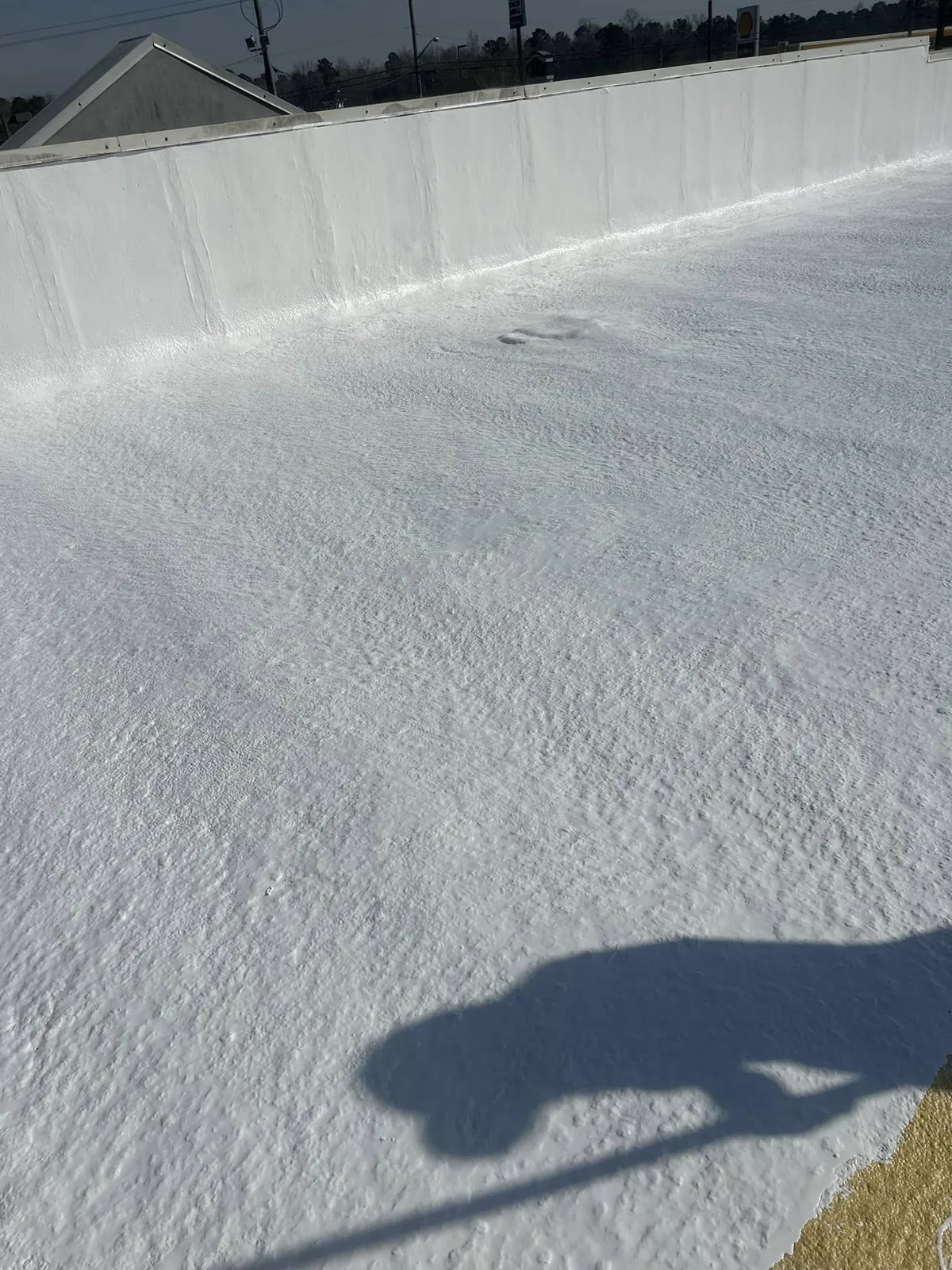
Maintenance: monitor laps and exposed edges
After installation, maintenance checks should include seams, cap-sheet surface, penetrations, flashings, drains, and edge metal. Debris should be removed without damaging surfacing. A dated photograph can record granule condition or a repaired lap. Any rooftop trade that makes a penetration should identify the membrane type and arrange a compatible flashing detail.
For portfolios around Northwest Corporate Park, owners can use a roof asset record to track age, repairs, and follow-up dates. The record should identify which structures have modified bitumen and which use other systems. That distinction prevents a maintenance crew from applying the wrong patch product.
Manufacturer warranty requirements may set inspection and notice procedures. Keep project documents and closeout photos available to the person responsible for maintenance. A contractor inspection does not replace the warranty provider’s process.
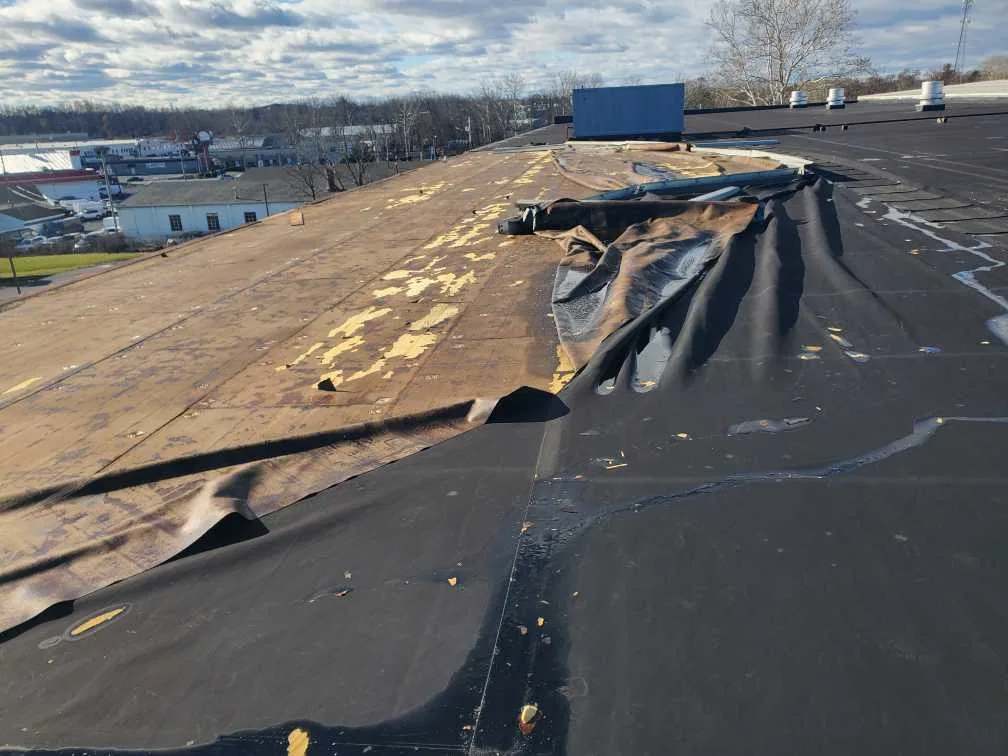
Closeout: record method and repair boundaries
We document product information available, work method, repaired laps or details, photos, and any remaining limitation. If a fire watch or hot-work record applies, it is kept with project closeout. For replacement work, the owner receives the approved submittals and warranty material when issued. The contractor file records the completion date and handoff contact. The closeout should identify the prepared surface and tie-in length for later comparison.
Send roof plans, maintenance history, previous repair methods, access requirements, and known fire-safety restrictions before requesting a review. We will identify what can be inspected and whether a test cut is needed. The recommendation names the confirmed assembly and method so later repairs can follow compatible details.
Questions About Commercial Modified Bitumen Roofing
How do you tell SBS from APP modified bitumen?
We review product records and verify visible layers where possible. If the assembly is unclear, an approved test area may be needed before choosing materials or an application method.
Can a modified bitumen roof always be torch-applied?
No. The approved system, substrate, site restrictions, and fire controls determine the method. We review safer or alternate application options when open flame is not permitted.
What does granule loss mean?
Granule loss can expose asphalt; its significance follows the area, sheet condition, and lower plies. Inspection determines whether localized repair or broader work is appropriate.
Can you install new modified bitumen over the existing roof?
An overlay is appropriate only when moisture, layer count, attachment, deck, edges, drains, and project requirements support it. We verify those conditions before recommending added layers.
What should I share before a roof inspection?
Provide the roof plan, previous repair records, warranty documents, known leaks, site fire rules, and access contact. These details help identify a safe inspection method.