Commercial PVC Roofing in Elgin, IL
Review a PVC roofing assembly
Share the building use, roof plans, known chemical exposure, leak history, access contact, and warranty records. We will verify compatibility and define the next step.
Commercial PVC Roofing
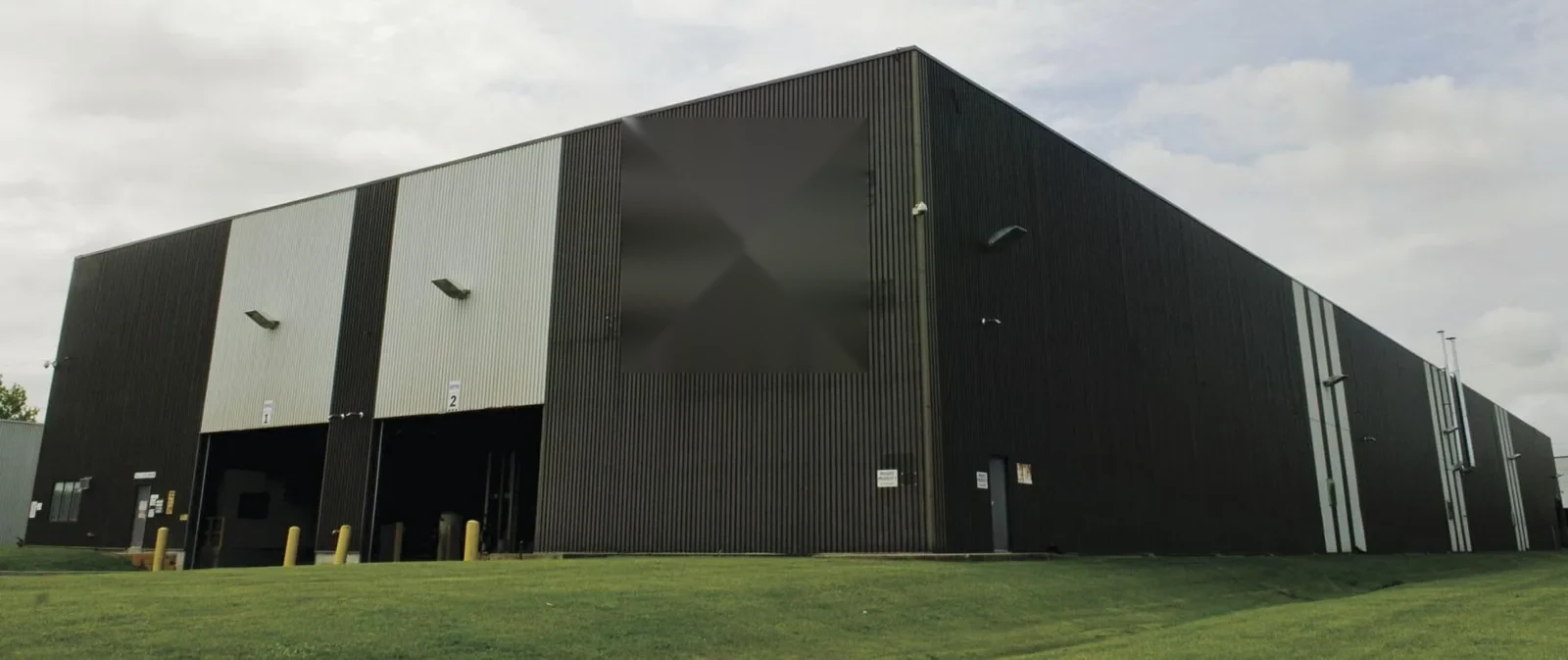
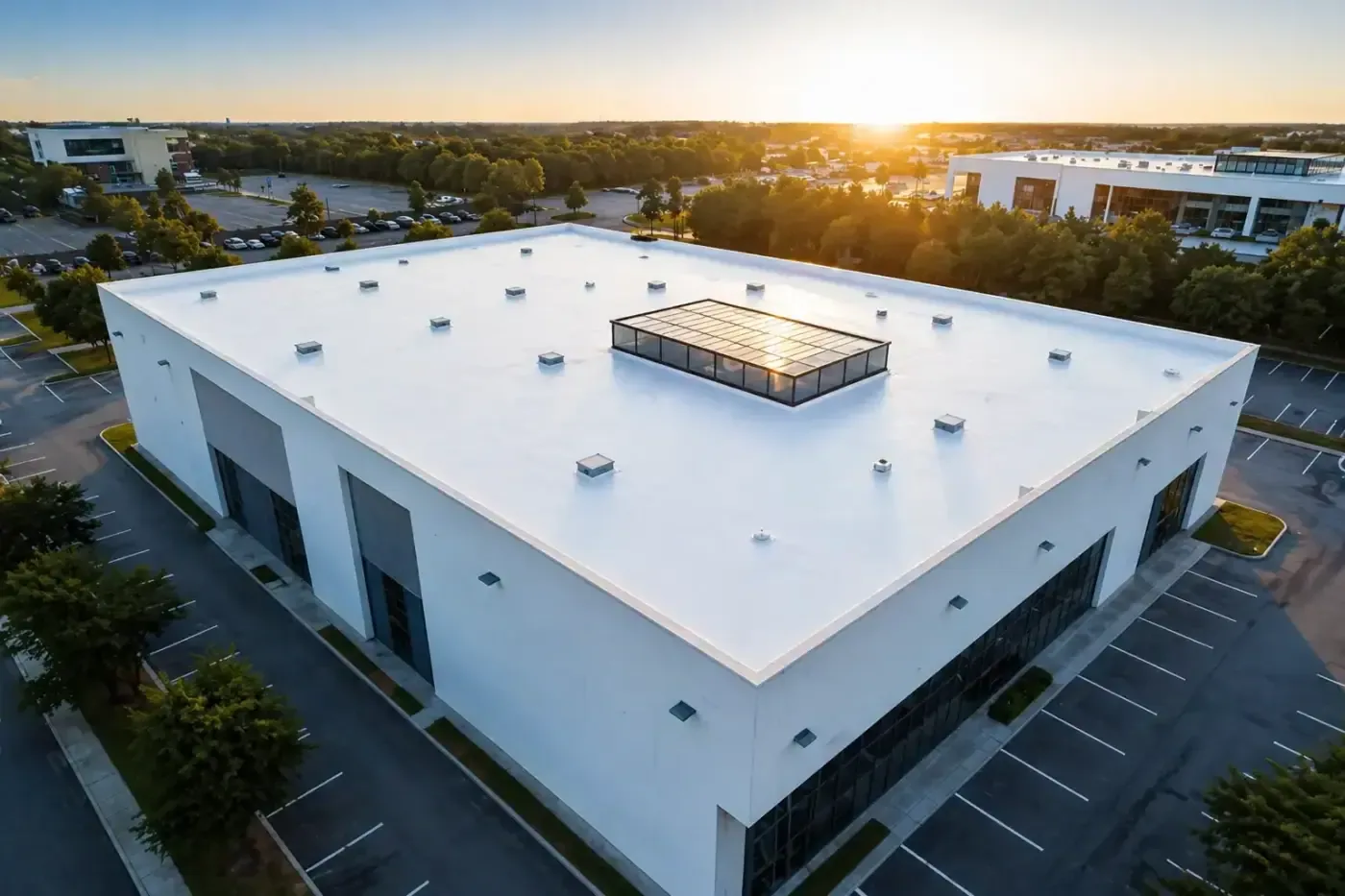
PVC roofing should be selected for the conditions it will face. We review the building use, exhaust, chemical exposure, roof access, drainage, and existing assembly before discussing a membrane. Heat-welded seams and compatible flashing matter, but system performance also depends on substrate, attachment, and maintenance. Elgin’s manufacturing and food-processing employers make exposure questions relevant across the market. We confirm the actual use at the property rather than assign a system by industry label.
Application review: identify exposure and operations
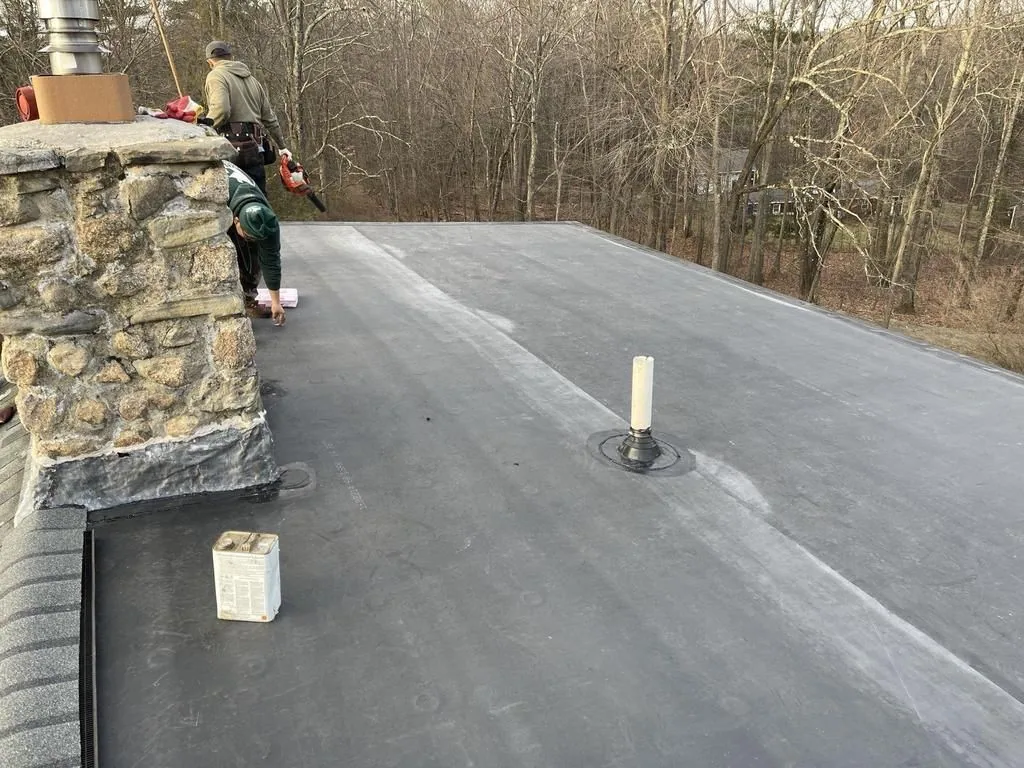
We ask what is exhausted, where it discharges, and whether cleaning agents, grease, or process residue reaches the roof. The owner or facility engineer identifies known chemical conditions and operating cycles. PVC may be considered where the manufacturer’s data supports the exposure, but no membrane should be selected from a generic compatibility claim. If the exhaust stream is not documented, the project team should obtain that information before finalizing the system.
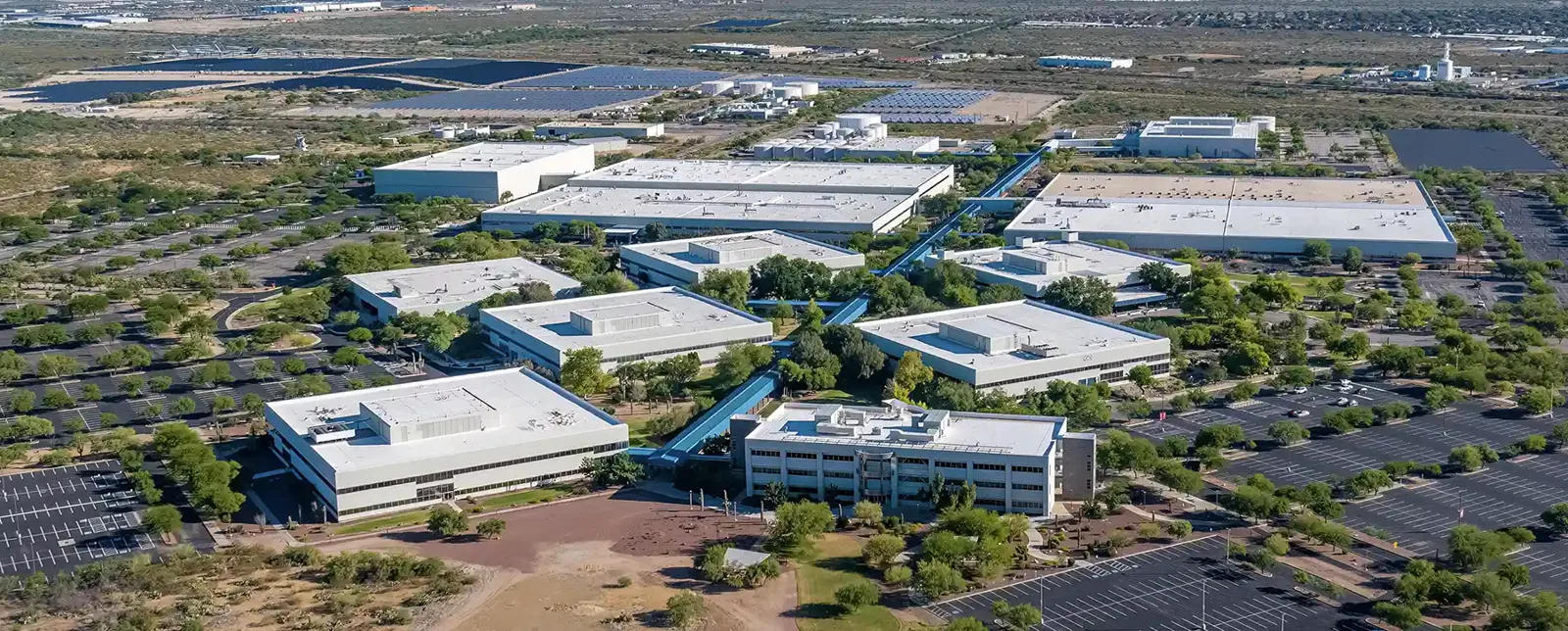
Elgin’s economic base includes food processing, manufacturing, healthcare, and education. Those sectors cover different building functions and roof demands. A campus or industrial park name cannot tell us whether fumes reach a particular roof. Near Jaynes Industrial Park or Burnidge Bros. Industrial Park, we verify roof access and process restrictions directly with the site contact.
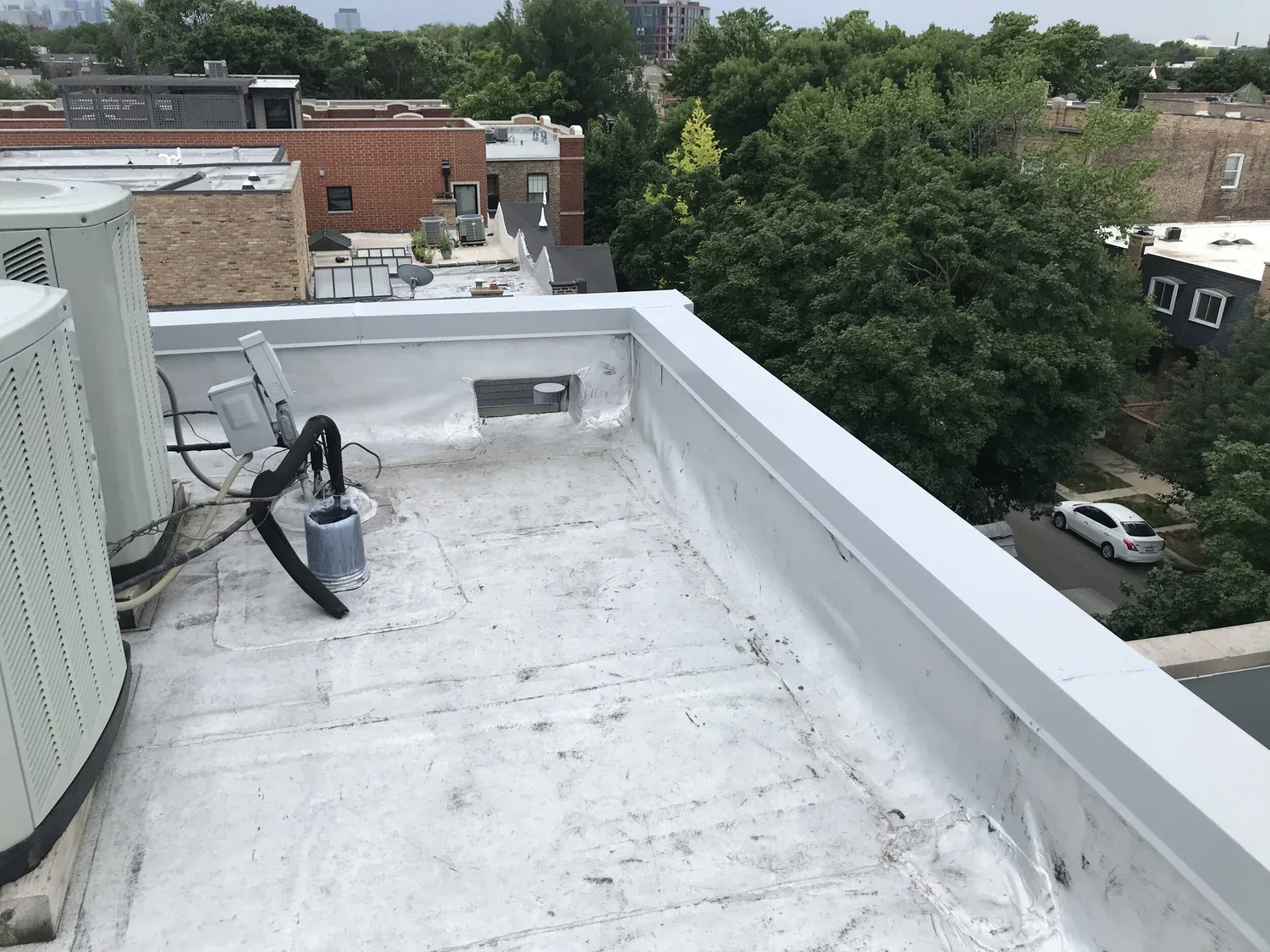
Existing roofing also matters. We inspect current membrane type, repair history, insulation, cover board, seams, edges, and penetrations. If material identification is uncertain, records or a small approved test area may be needed. A roof condition inspection can establish accessible conditions before product selection.
Assembly: specify membrane, attachment and insulation
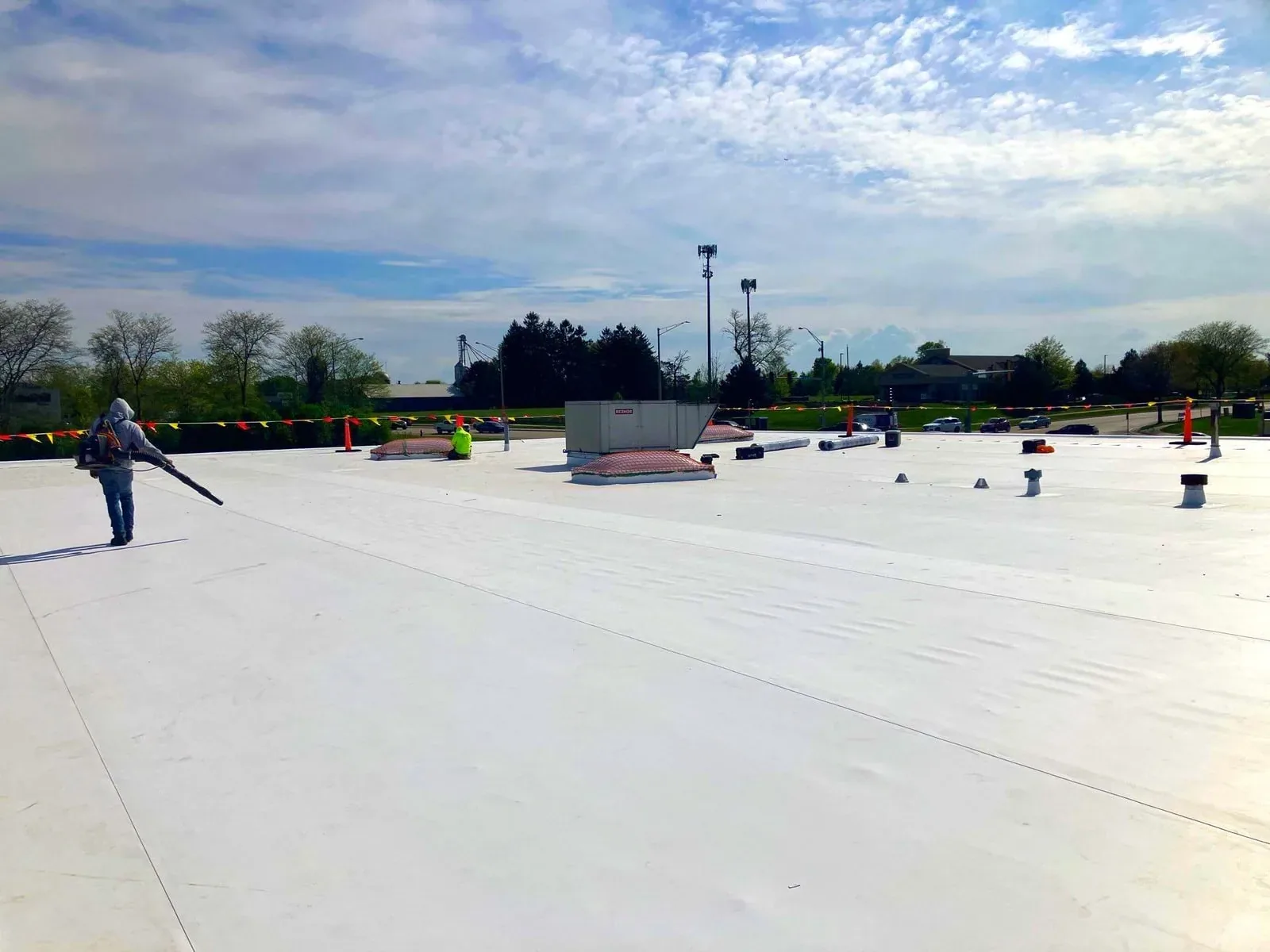
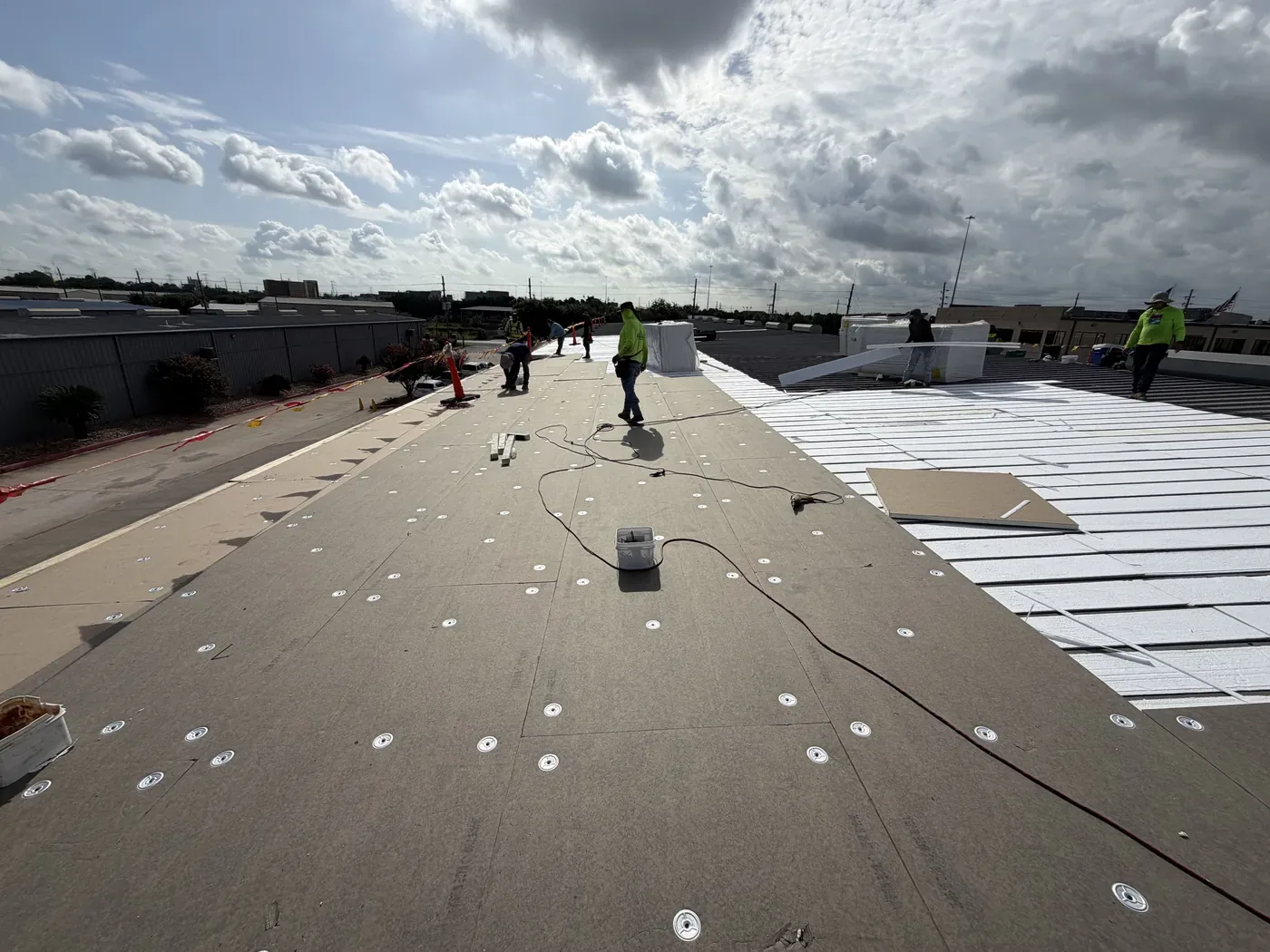
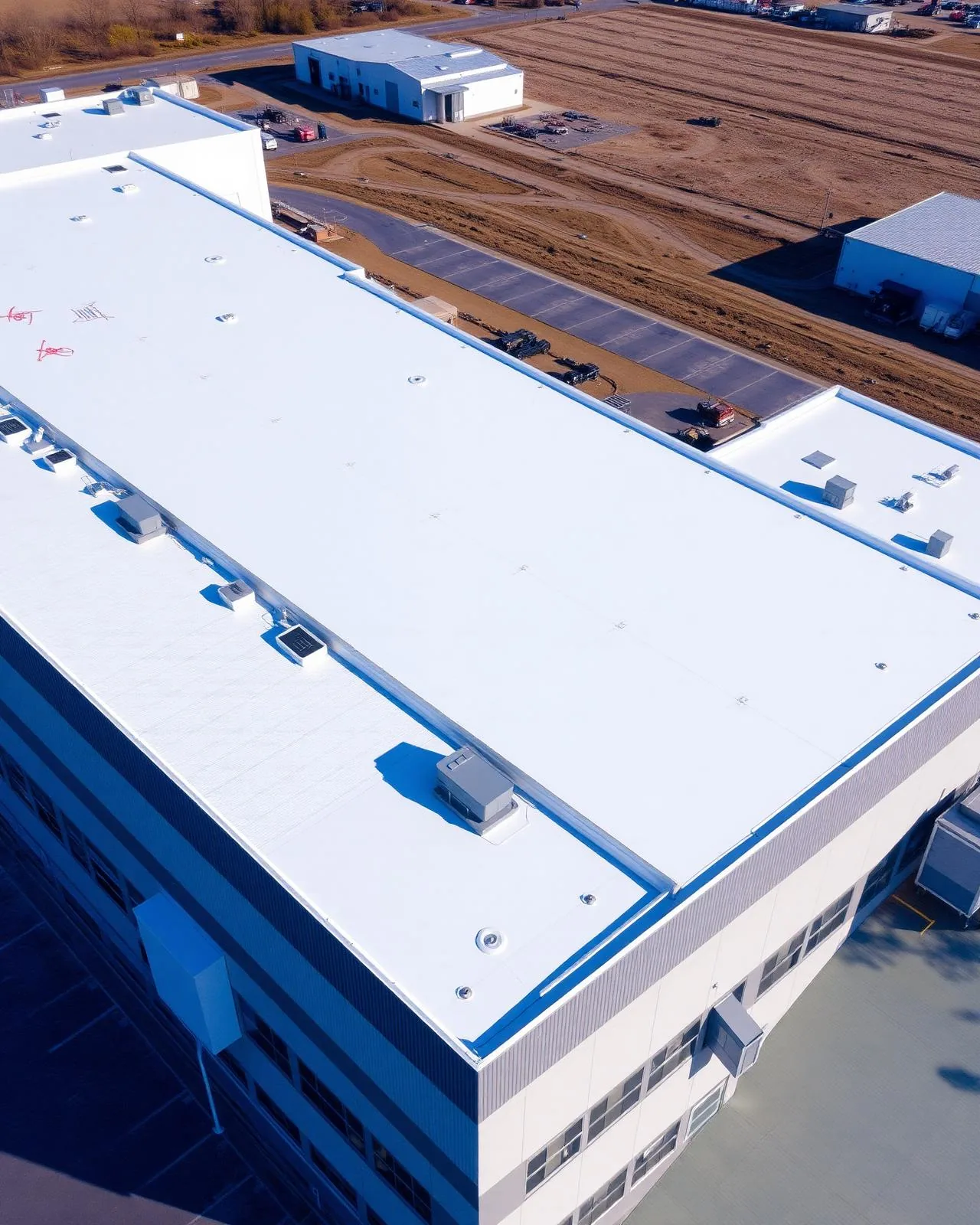
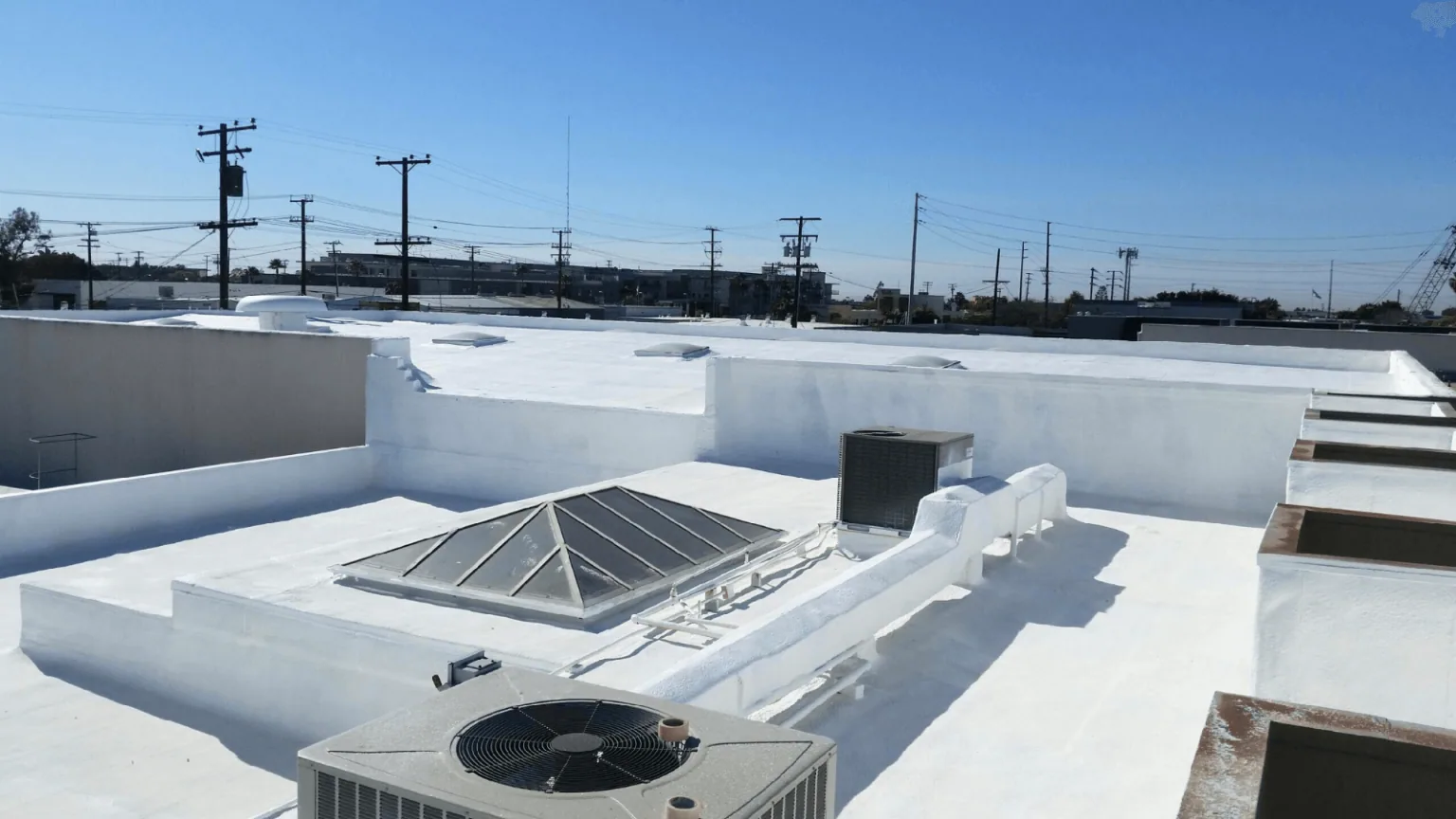
A PVC roofing assembly includes more than the field membrane. The scope should state membrane thickness, insulation and cover board, fastening or adhesive method, perimeter securement, flashing components, and warranty requirements. The design must suit deck type, wind criteria, building use, and existing elevations. We compare the approved assembly with field conditions before materials are purchased.
Where a recover is proposed, we review existing layers, moisture, attachment, and edge heights. Adding a new sheet over an unknown assembly can preserve trapped water or create incompatible transitions. The owner receives a test recommendation when concealed conditions could change the scope. We do not set a thickness or fastening pattern based only on a roof photograph.
Owners comparing systems can review TPO and KEE-modified PVC alongside standard PVC. Each choice depends on exposure, manufacturer requirements, detail design, and project objectives. We identify the difference in the proposed specifications instead of implying that product names are interchangeable.
Welds and details: inspect the full water boundary
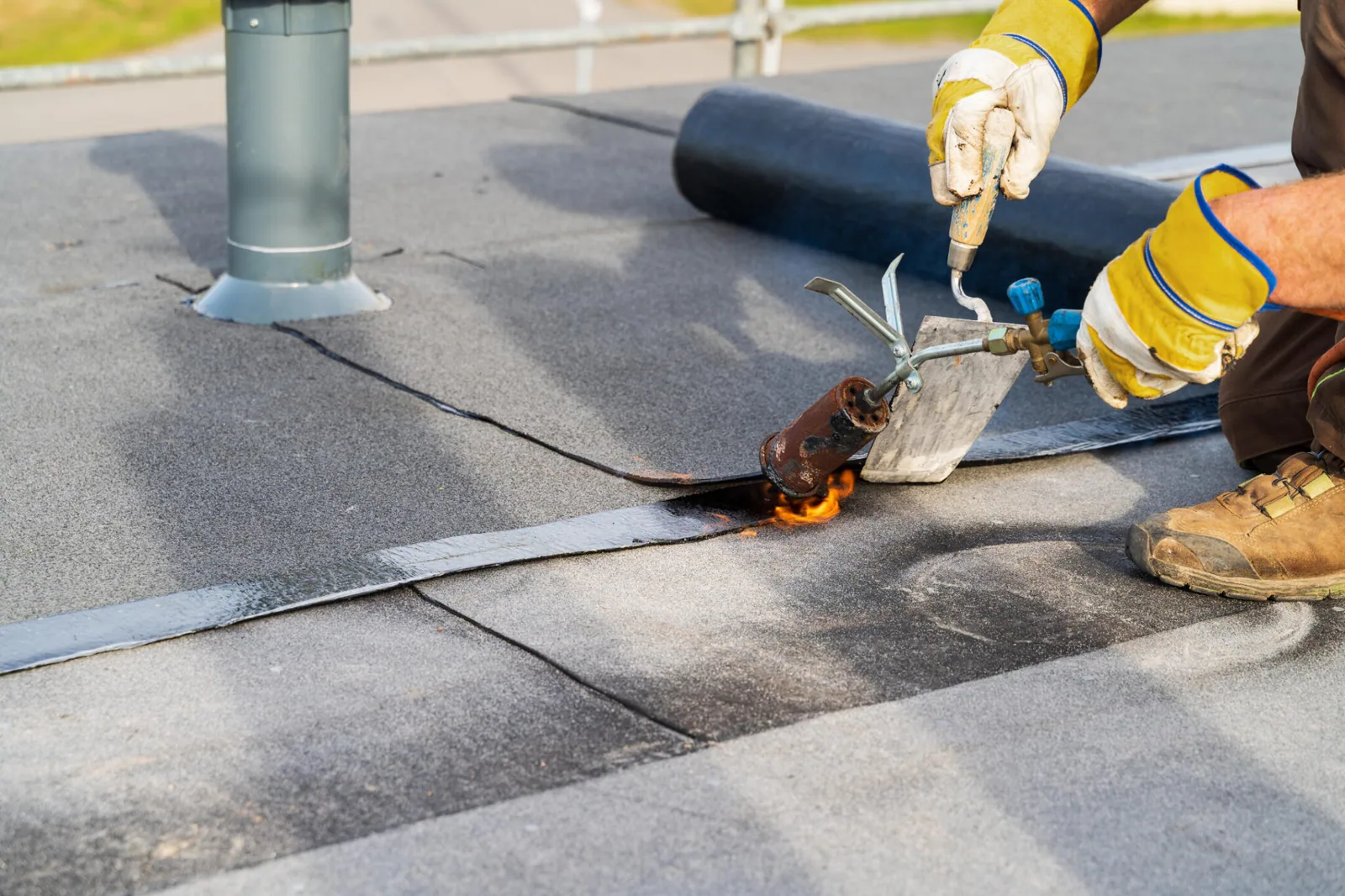
PVC field seams are heat-welded. We check seam edges, corners, end laps, patches, and transitions for open welds, contamination, wrinkles, and movement. Probing can help locate a discontinuity when the surface allows it. We note the method and limits; one tested section does not certify every seam across the roof.
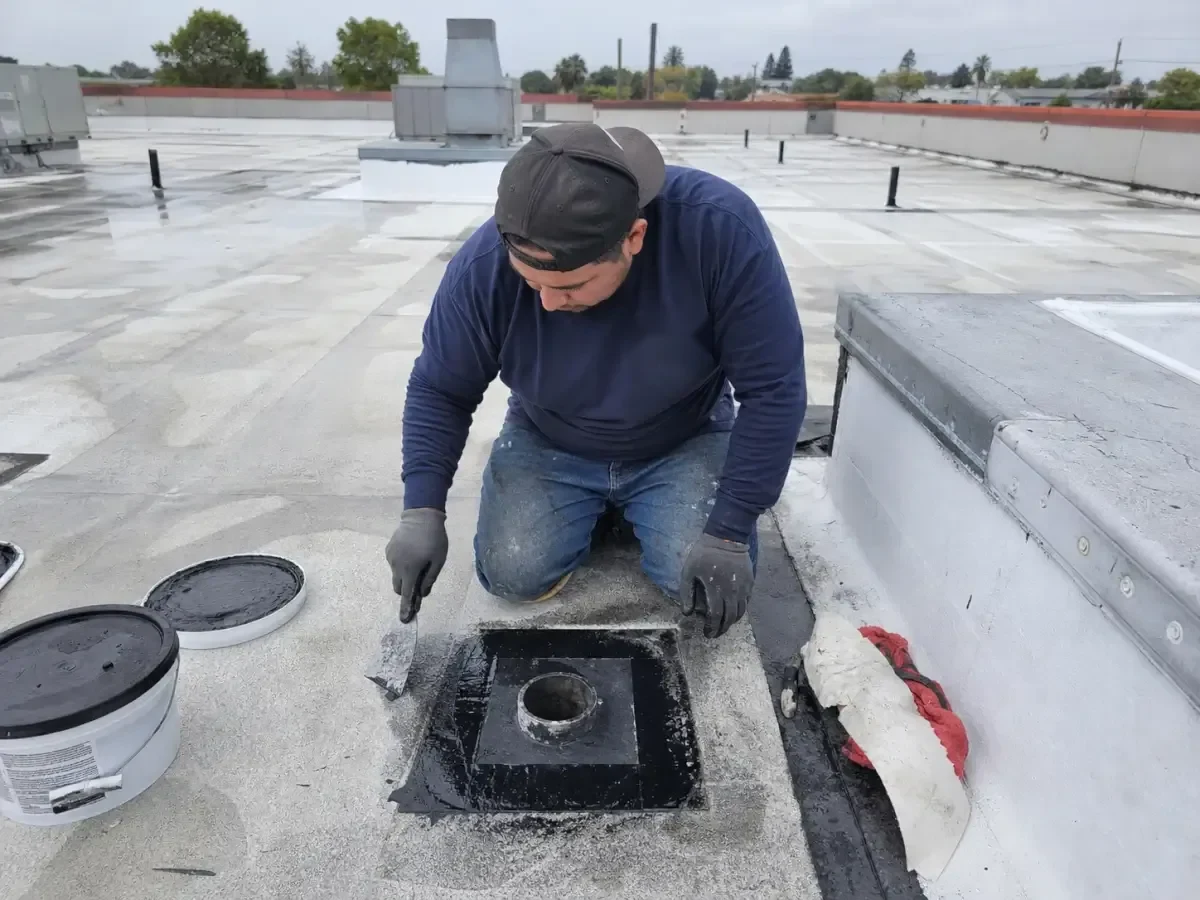
Curbs, vents, drains, and parapets need details compatible with the membrane. We identify where a preformed accessory is suitable and where field fabrication or metal work is needed. At a drain, the membrane must secure to the bowl and preserve the designed water path. A drain assessment can cover bowls, scuppers, overflow, and nearby membrane.
Perimeter metal and wall transitions can involve another trade or detail. A coping and edge review can document attachment and termination. The estimate separates that work from the field membrane so the owner can see all necessary interfaces.
Repair: use compatible heat-welded details
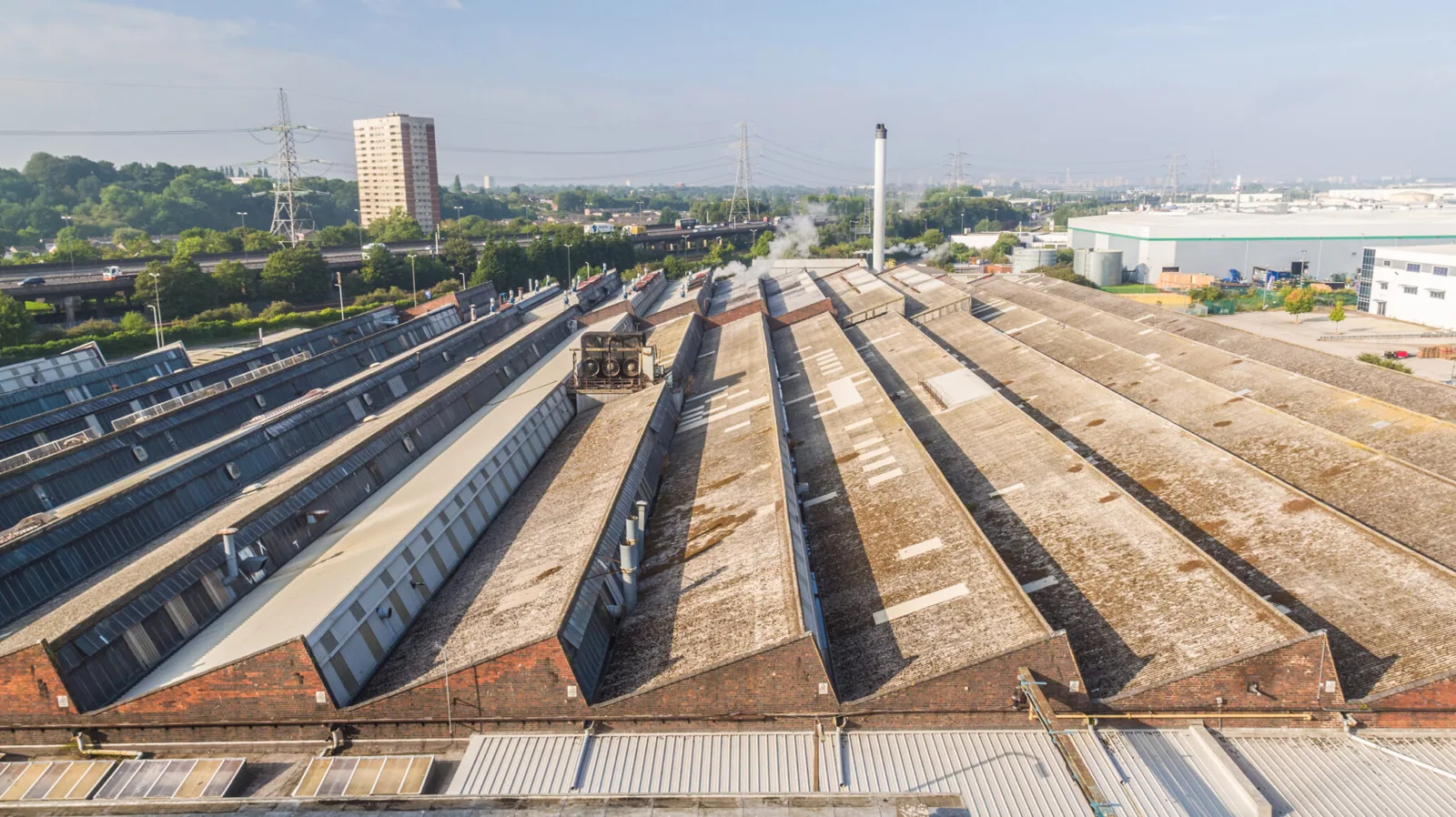
Repair begins with identifying the PVC product and preparing the surface as required. A patch or flashing repair may involve cleaning, removing incompatible sealant, welding compatible membrane, rebuilding a corner, or replacing a drain tie-in. The proposal names the roof zone and work limit. If the sheet is brittle, dirty, or extensively patched, a test weld can inform whether localized work is viable.
Active water may require a separate temporary measure. We document what it covers and what remains exposed. The permanent scope follows after the substrate and entry path are clear. A leak investigation can trace an interior report that appears far from the roof opening.
We do not assume that a coating, caulk, or generic membrane patch bonds correctly to PVC. Product compatibility and preparation govern. Where an adjacent roof section is TPO or EPDM, we define a transition detail rather than weld unlike materials together.
Installation window: protect weld quality and occupants
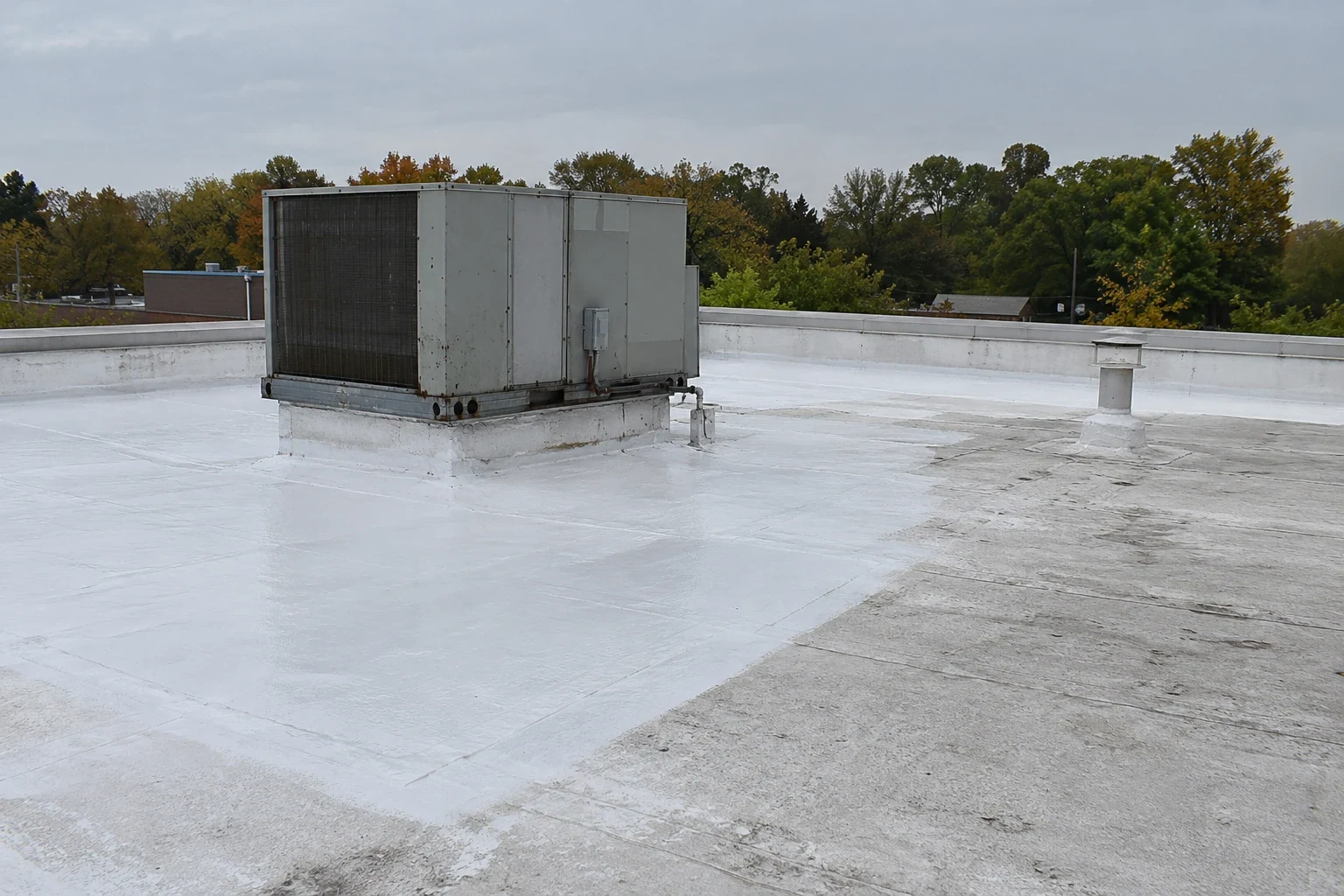
Installation requires clean, dry surfaces and conditions that support the selected system. The crew checks roof moisture, wind, temperature, staging, and material storage. Elgin averages 12.7 days above 90°F and has recurring cold periods. Daily conditions determine whether crews can weld, adhere, or secure the membrane as specified. Annual averages do not set the installation window.
For occupied buildings, the site contact identifies delivery windows, access routes, noise limits, and areas needing protection. A roof section stays within the crew’s ability to close it before weather changes. If an unexpected leak, wet insulation, or deck concern appears, the team stops at the approval point and reports the issue before covering it.
At Windsor Commerce Center, loading and roof access are confirmed with the property representative. The same check applies across other areas. We do not assume identical operating controls from one commercial site to another.
Maintenance: inspect seams and roof openings
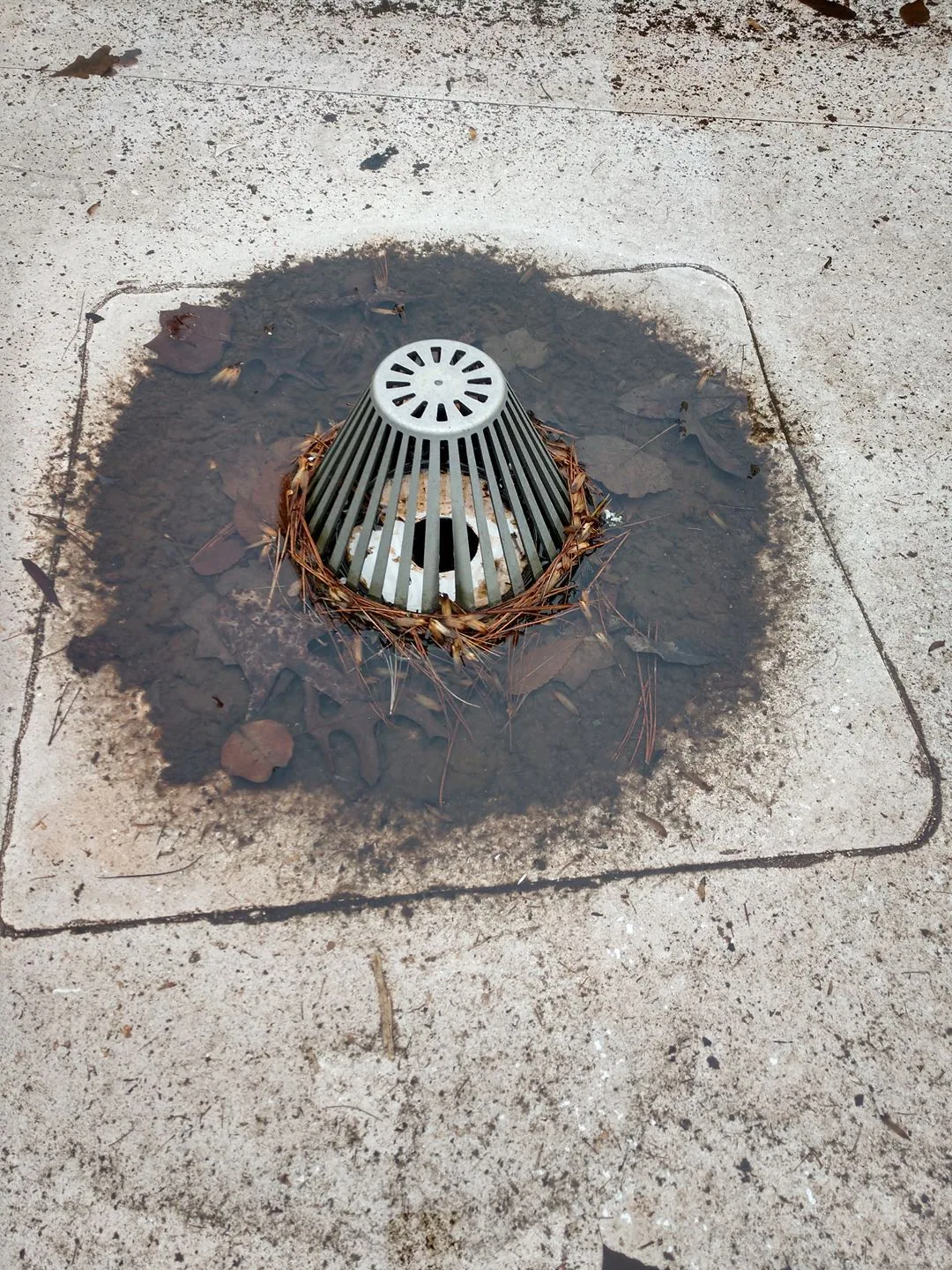
After installation, maintenance should include drains, seams, flashings, penetrations, perimeter transitions, and areas where other trades work. The owner can retain dated photos and a roof-zone map. Any rooftop equipment move or new pipe should receive an approved flashing detail and closeout record. A later inspection can then distinguish original installation from subsequent work.
Elgin’s precipitation and winter conditions make drainage checks part of routine review. Debris, snow, or ice can hide an inlet or keep water against a curb. The owner should use safe access procedures and avoid dragging tools across the membrane. A warranty management record can track notices and manufacturer requirements, but a scheduled contractor visit is separate from warranty acceptance.
Closeout documents should name product, attachment, warranty, completed details, and exclusions. If some roof areas were outside the project, identify them clearly for future maintenance.
Closeout: document product and boundaries
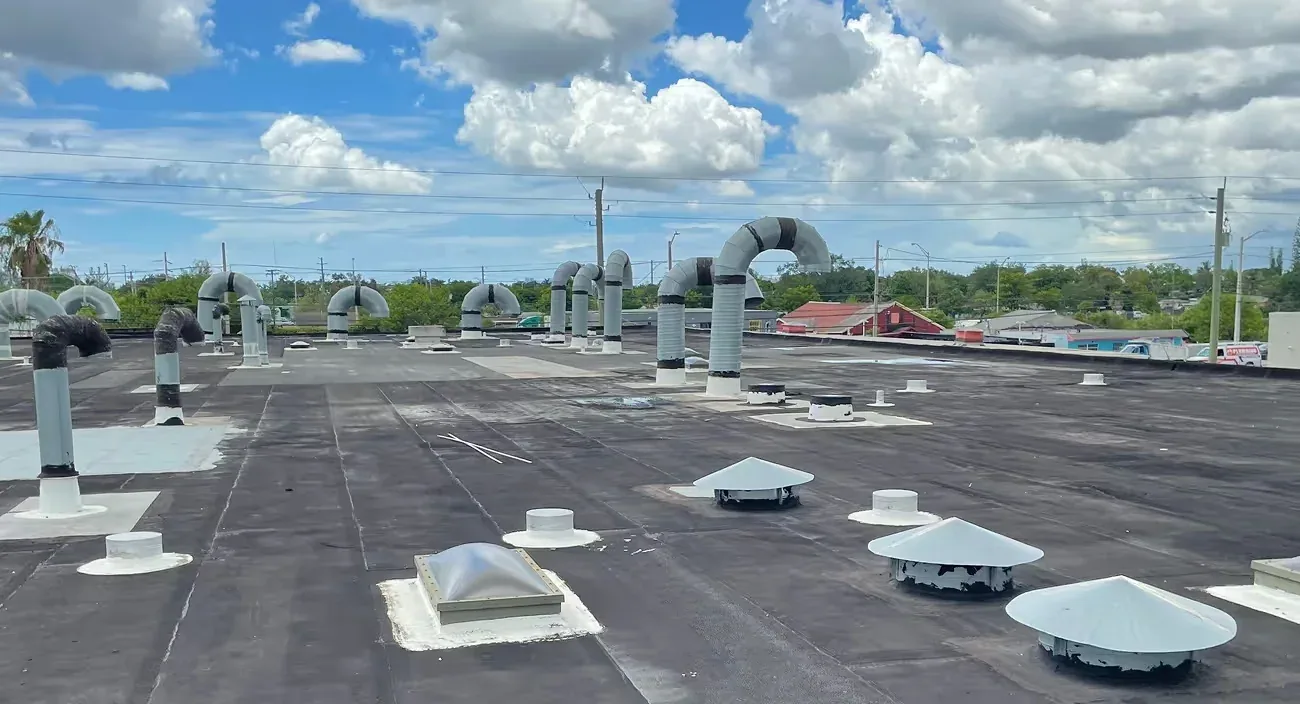
We deliver the approved product information, available installation records, photographs of seams and transitions, and any remaining observation. The record identifies roof zones and details included in the work. If the owner needs manufacturer inspection, we coordinate the required notice and access under the warranty terms.
Provide roof plans, process or exhaust information, repair history, access limits, and project schedule before requesting a PVC review. We will confirm what can be inspected and what requires design input. The recommendation stays tied to documented exposure and assembly details, not a generic claim that one membrane fits every commercial use.
Questions About Commercial PVC Roofing
Is PVC always the best roof for food or manufacturing buildings?
No. The exposure, product, exhaust, drainage, assembly, and manufacturer data all matter. We verify the actual roof environment before recommending a membrane.
How do you test a PVC seam?
We inspect the accessible weld and may use probing or a test weld where suitable. The report identifies the tested area and does not treat one sample as proof for every seam.
Can PVC go over an existing roof?
A recover depends on layer count, moisture, attachment, deck, edges, and approved assembly. We inspect and may recommend testing before specifying new material.
Will a PVC repair fix a leak from a nearby drain?
Only if the drain-to-membrane detail is the entry point and the repair addresses it. We trace water and inspect the bowl, surrounding sheet, overflow, and outlet path.
What should I provide for a PVC system review?
Send roof plans, process or exhaust details, prior repairs, warranty information, access rules, and current leak reports. These records help identify the right inspection boundary.