Commercial Roofing for Logistics and 3PL Operators in Elgin, IL
Arrange a logistics roof assessment
Share the property owner, dock schedule, roof plans, leak reports, equipment contacts, and access rules. We will plan around approved operations.
Logistics and 3PL Operators
Distribution sites run on dock schedules, yard movement, and inventory control. Roof work must fit those operations while addressing a verified building condition. We confirm the structure, roof area, access contact, reported leak, and spaces below before proposing a repair. Elgin’s local employment includes manufacturing, food processing, and commercial equipment, with regional access along I-90, U.S. Route 20, and Big Timber Road. Those facts do not define a specific warehouse or its shipping pattern.
A third-party logistics operator may manage a client’s building without owning it. We identify the party authorized to approve access, cost, and scope changes before inspection. Findings stay tied to the property and roof bay, so a problem over one dock is not generalized across a distribution portfolio.
Keep receiving and dispatch lanes available
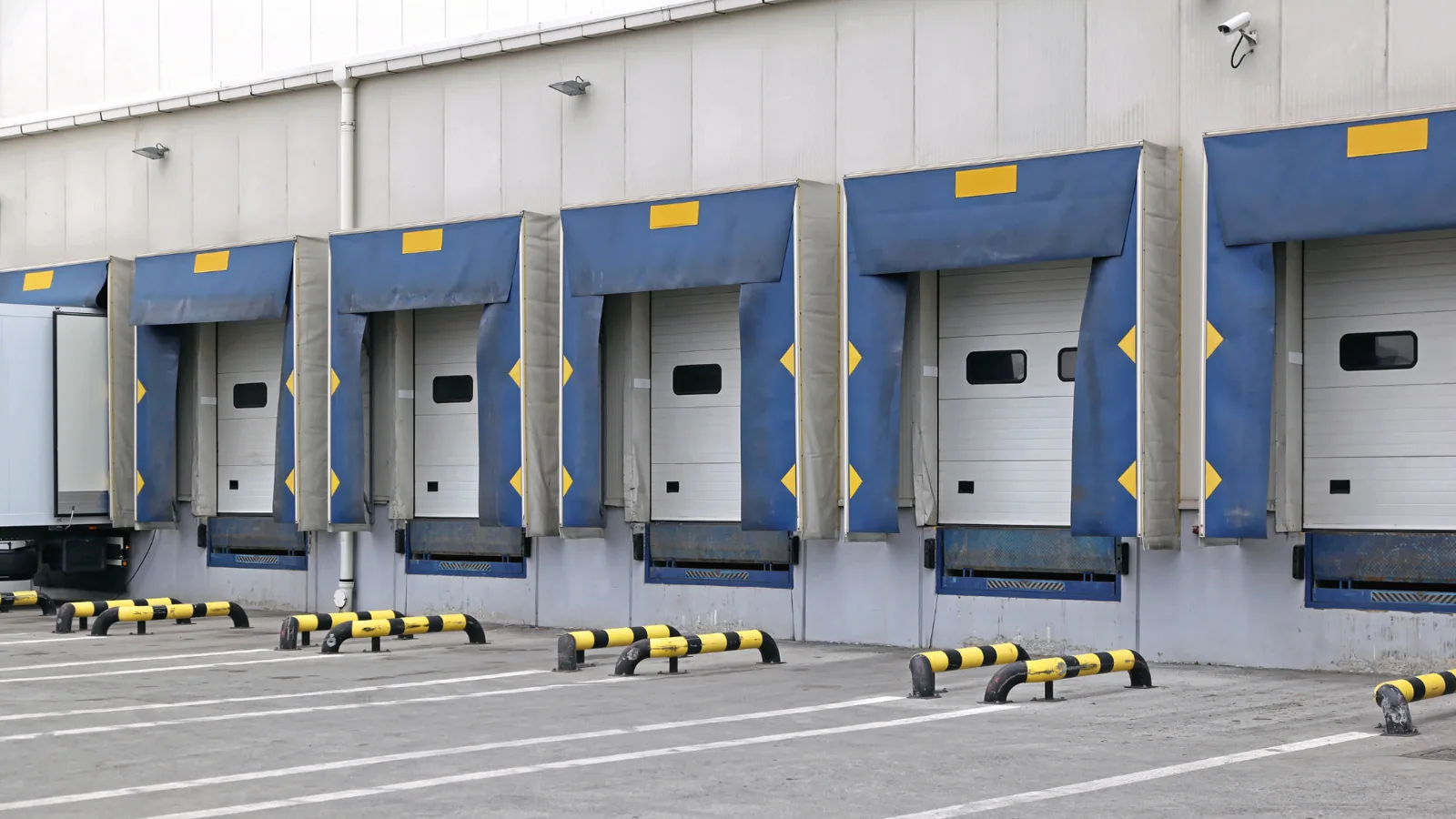
The site contact identifies inbound and outbound doors, carrier windows, yard rules, employee entrances, fire lanes, trailer parking, and staging limits. Roofing material should not block a dock or compete with a scheduled shipment. The plan states the unload point, truck route, spotter needs, and temporary closures. The operator controls carrier direction and decides whether an appointment must move.
Noise, odor, lift movement, or interior protection may affect a picking zone or packing line. We explain those effects before opening a roof section. The owner or 3PL assigns any inventory relocation and confirms who checks product protection below. Roofing crews do not move freight, operate conveyors, or direct warehouse employees.
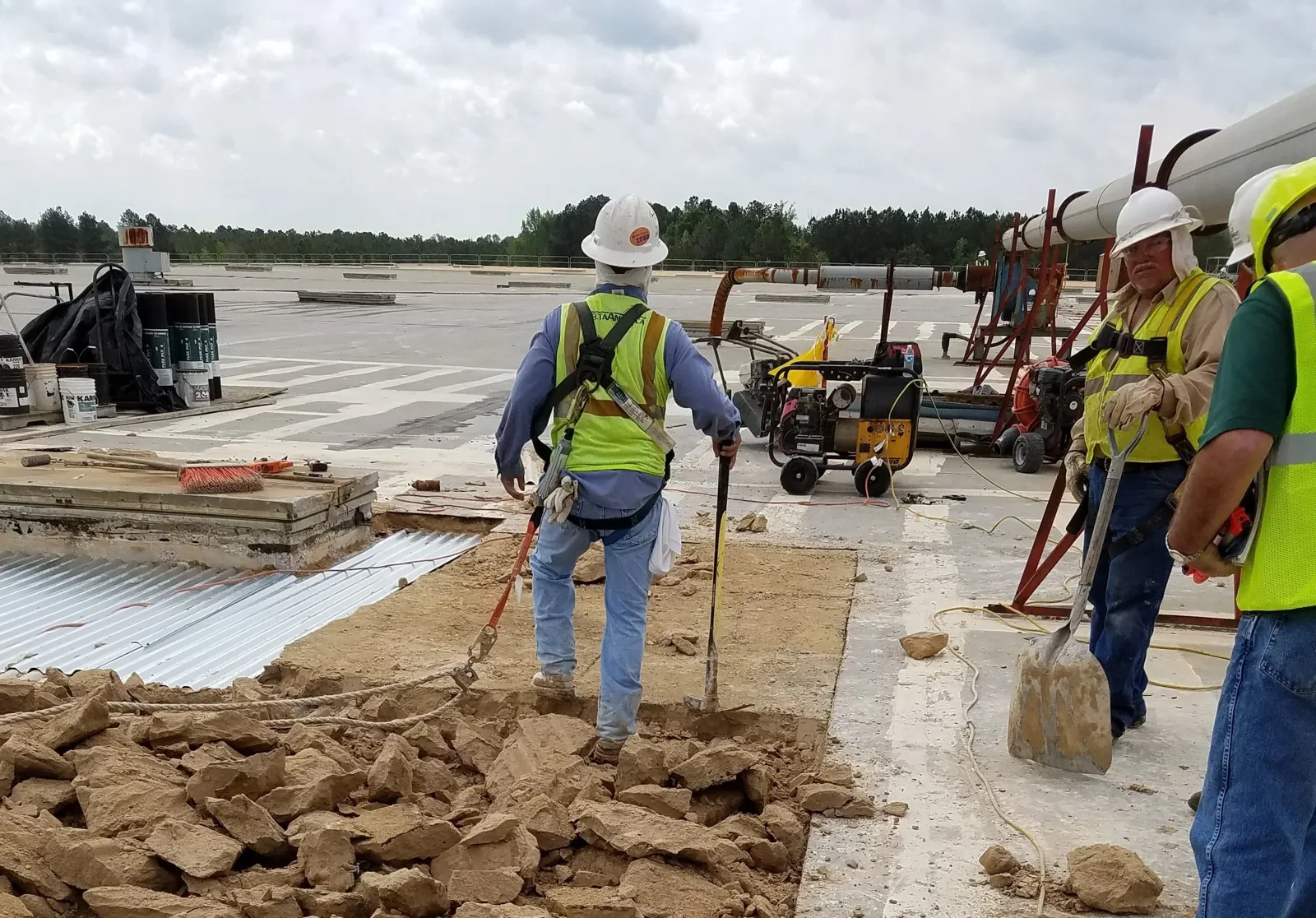
For extensive occupied work, phased reroofing can separate active zones from receiving and dispatch. Each phase identifies its roof area, dock relationship, protection, and daily securement check. A shift change is not treated as an automatic work window; site leadership confirms timing.
Confirm owner, operator, and client authority
A 3PL contact, building owner, tenant, and client may have separate responsibilities. The kickoff list names who grants roof access, approves scope, authorizes cost, and receives a daily status. A warehouse employee may report a leak but may not be authorized to hire a roofing contractor. We confirm that distinction before ordering material or performing work.
Roof access may require a badge, escort, alarm code, or safety briefing. A plan or previous ticket may not reflect current access. The site contact verifies ladder or hatch location, fall-protection rules, and any security requirement. If a driver or vendor uses a nearby entrance, that does not grant access to a restricted roof area.
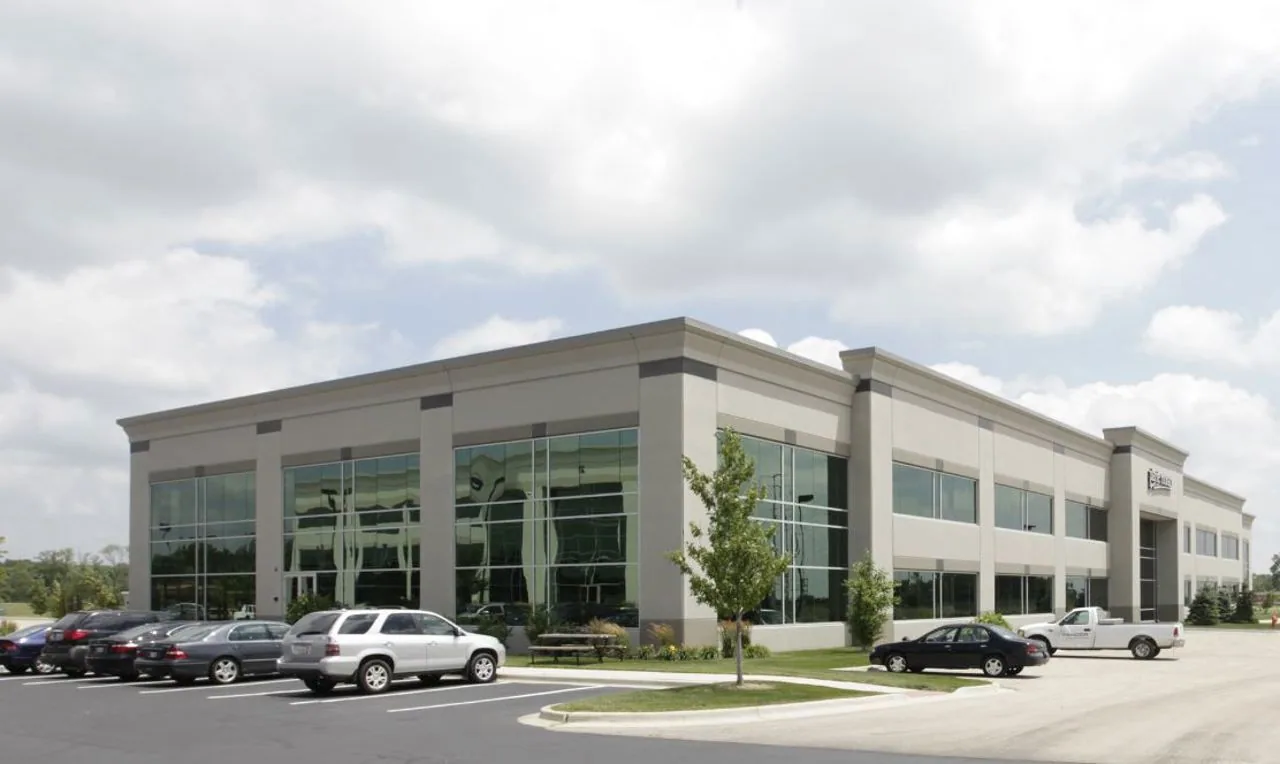
Elgin includes Randall Point Executive Center and the Elgin Industrial Park, plus commercial areas near Downtown Elgin. The operator confirms the property’s actual dock, trailer yard, and gate route; the commercial-area name is not a traffic plan. We also verify any shared-lot agreement before placing a truck or container.
Map water reports to building bays
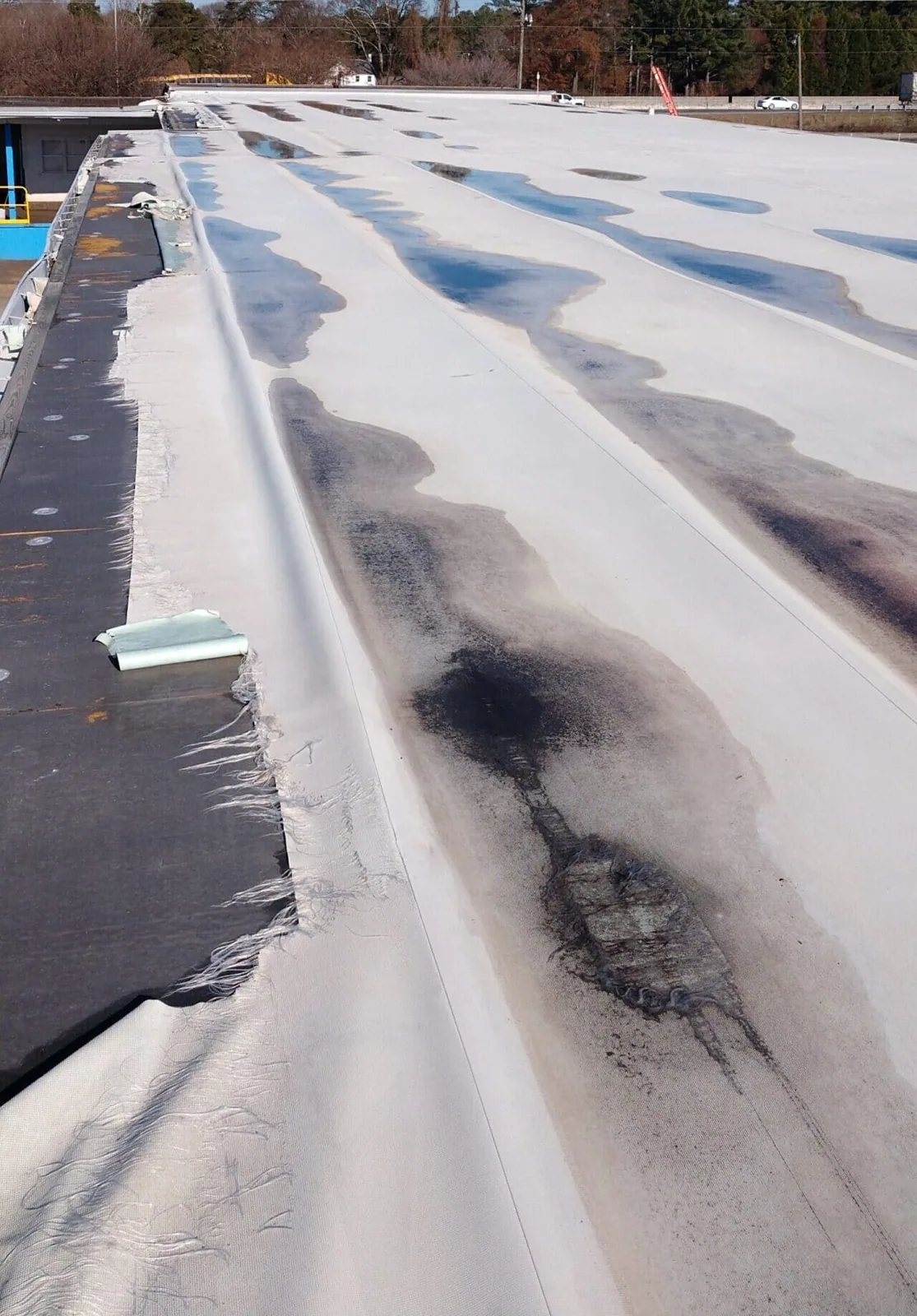
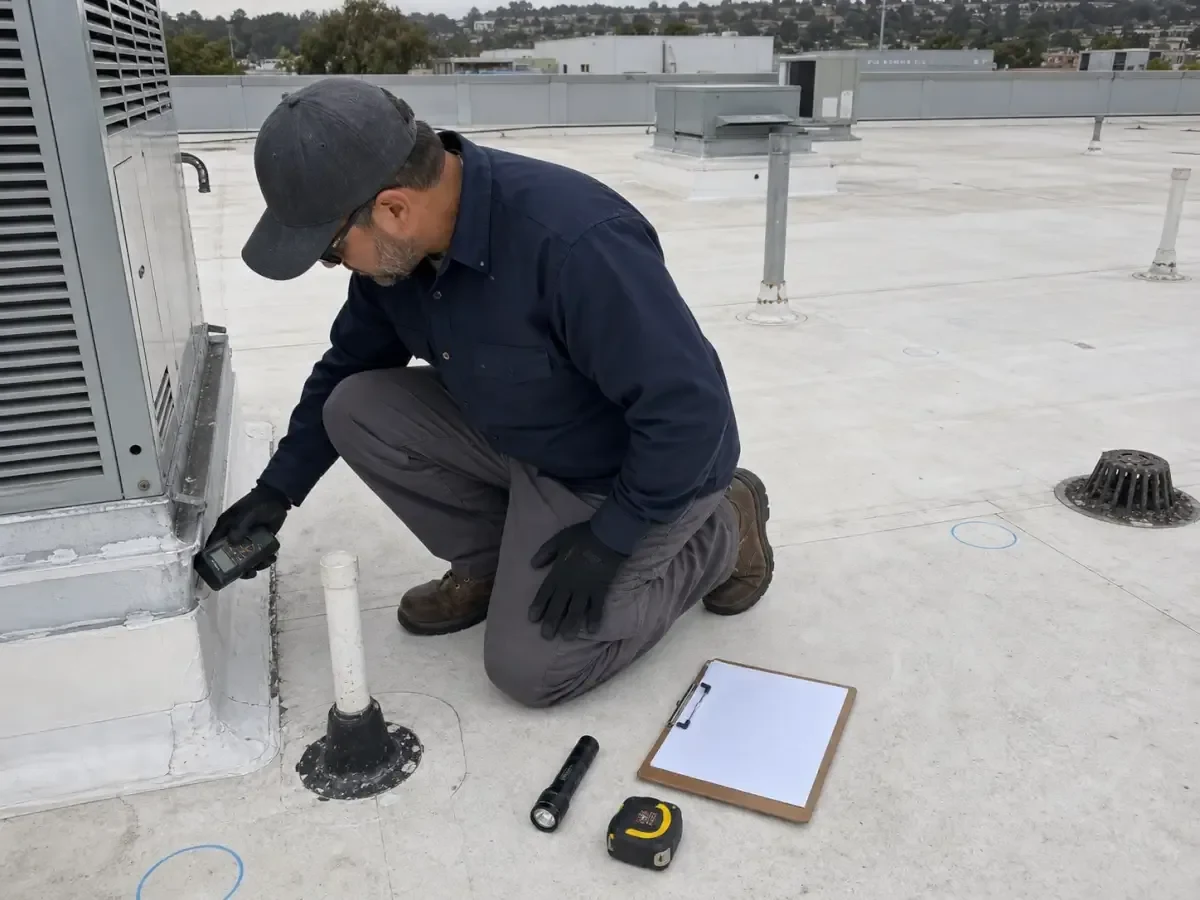
A report should identify the dock, rack aisle, office, or process area, when water appeared, active status, and equipment or inventory below. The water may travel along the roof deck before showing at a ceiling or light. We compare the report with accessible seams, drains, curbs, penetrations, skylights, and perimeter transitions and label observations by bay.
Building records may include roof drawings, tenant work, warranty details, and previous repairs. We compare them with the roof we can inspect and document any mismatch. If a moisture scan or test cut is warranted, the owner approves the location and safeguards for freight and equipment below. Unreached or unsafe areas remain identified as limitations.
A leak investigation can target active water. A broader inspection can document the building condition. The closeout keeps property, roof zone, and work-order references together so the operator can route the report to the building owner.
Coordinate rooftop and material-handling systems
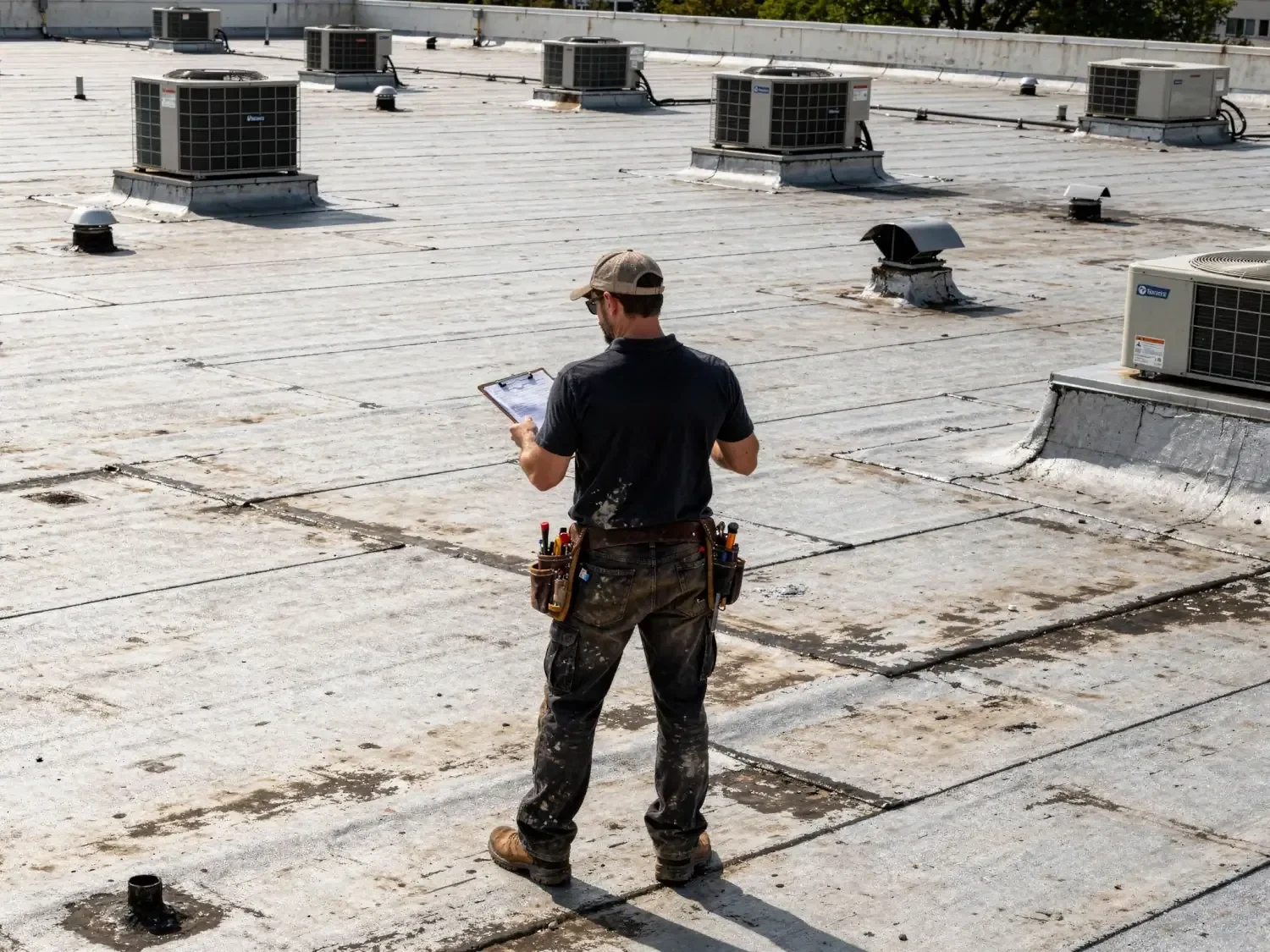
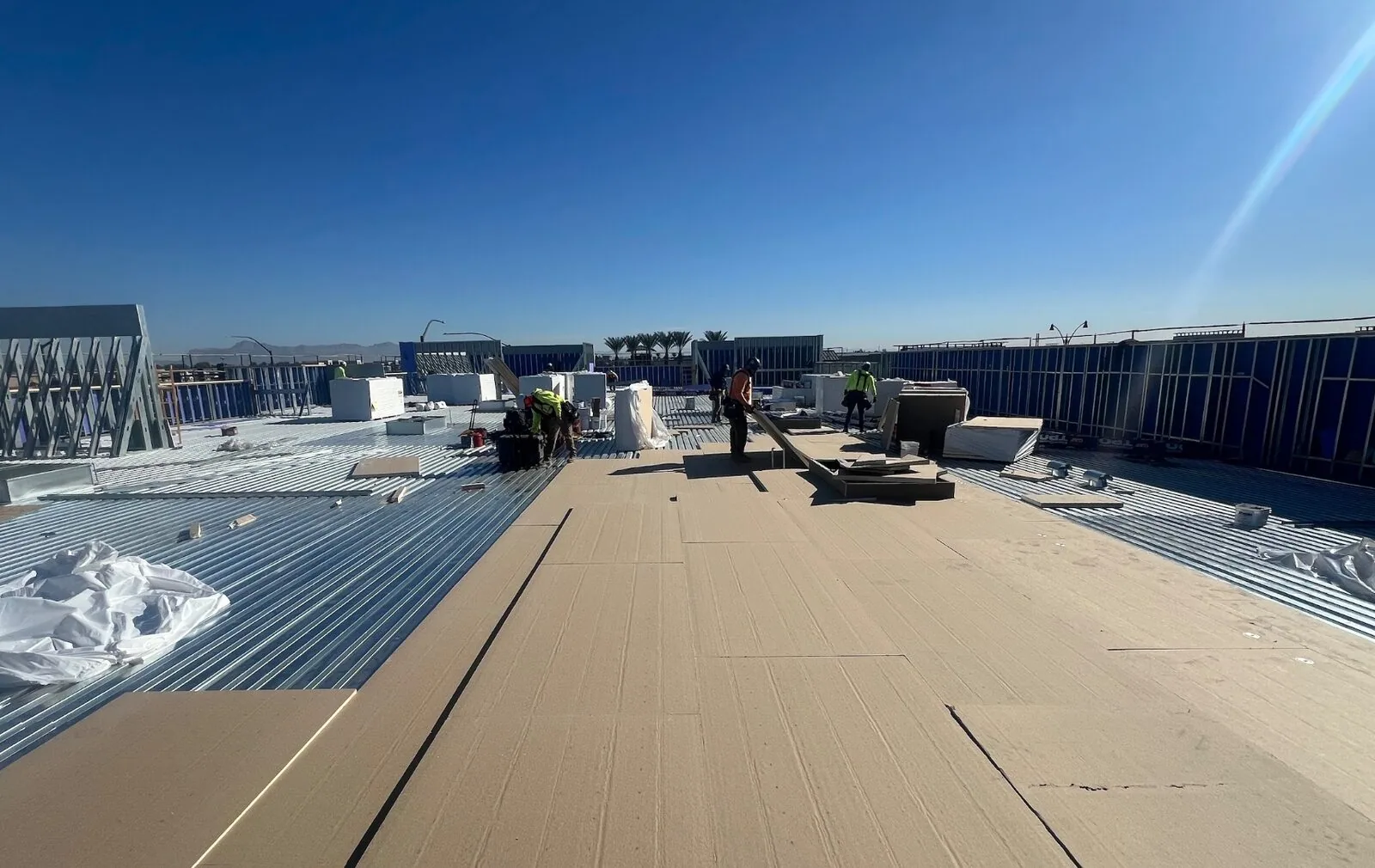
Rooftop HVAC, exhaust, conveyors, solar supports, communications equipment, and piping may cross a warehouse roof. We map visible interfaces and note flashing or membrane conditions. The operator identifies whether an equipment specialist must isolate or move a system. Shutdown and restart responsibilities appear in writing; the roofer does not alter live equipment by default.
Temperature-controlled storage or sensitive goods may need a specific protection or monitoring process. The client and building owner identify requirements and who verifies them. We describe the roofing sequence and roof openings; the logistics operator controls product handling and inventory decisions.
Elgin averages 29 inches of snowfall and has recurring freeze days. Safe access may be limited in winter. The inspection records what roof zones were reached, whether drains and overflows were visible, and which areas wait for safer conditions.
Review roof drainage and storm exposure
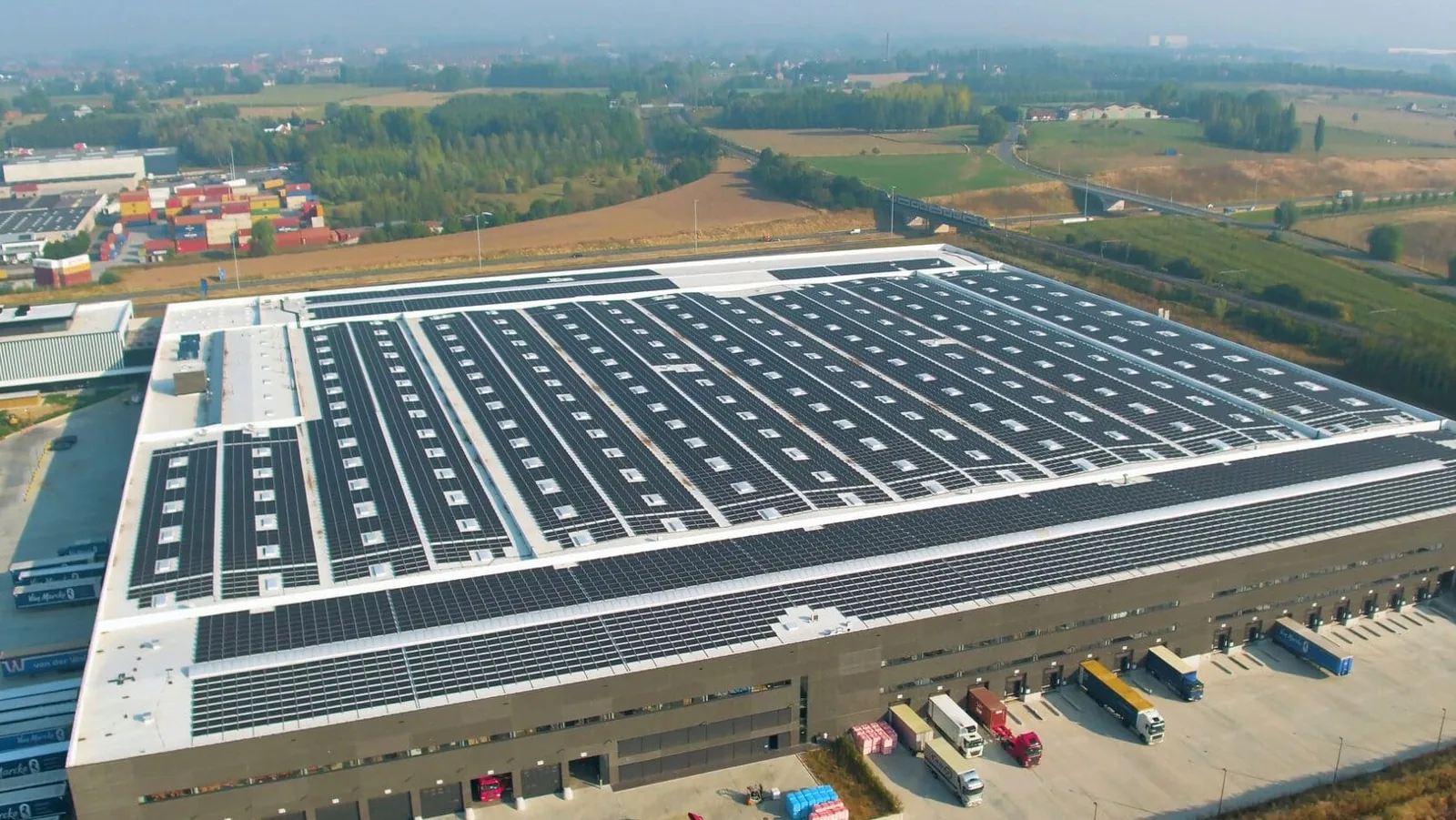
A warehouse visit should begin with the shift lead’s map of active docks, trailer lanes, pedestrian routes, and inventory that cannot be moved. The roofing crew records the roof zones inspected and coordinates any protection below with the person controlling that operation. If roof discharge reaches a loading apron or employee path, the report identifies the observed point and assigns any non-roof drainage follow-up separately. Elgin’s industrial employment base and access to I-90 make the market familiar to regional operators, but each facility sets its own freight and security rules.
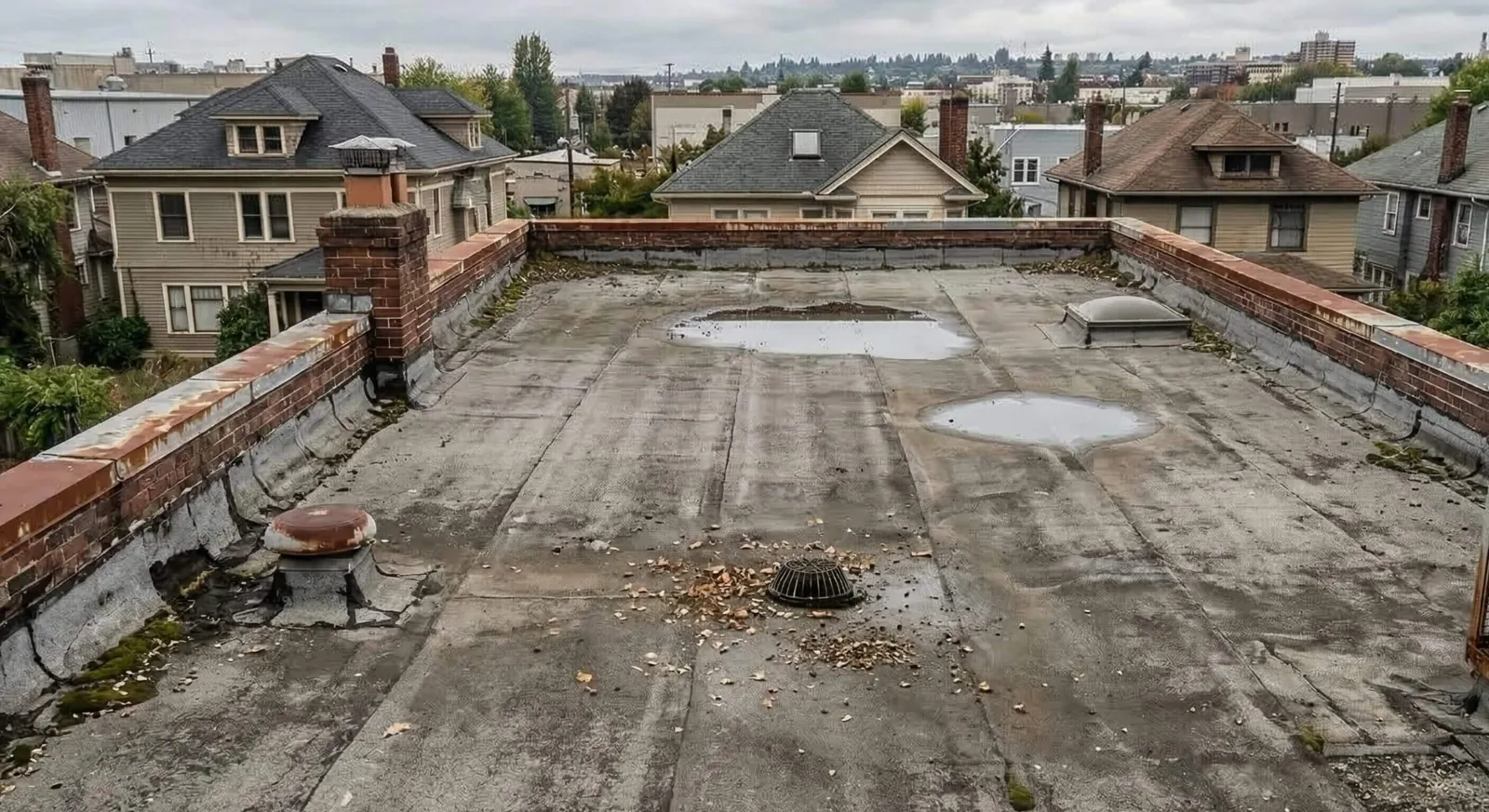
Runoff may affect a loading apron, employee entrance, trailer space, or pedestrian path. The site lead identifies those locations. Roofing scope can include specified gutters and flashings; paving or below-grade drainage requires separate responsibility. We state that division before the estimate is approved.
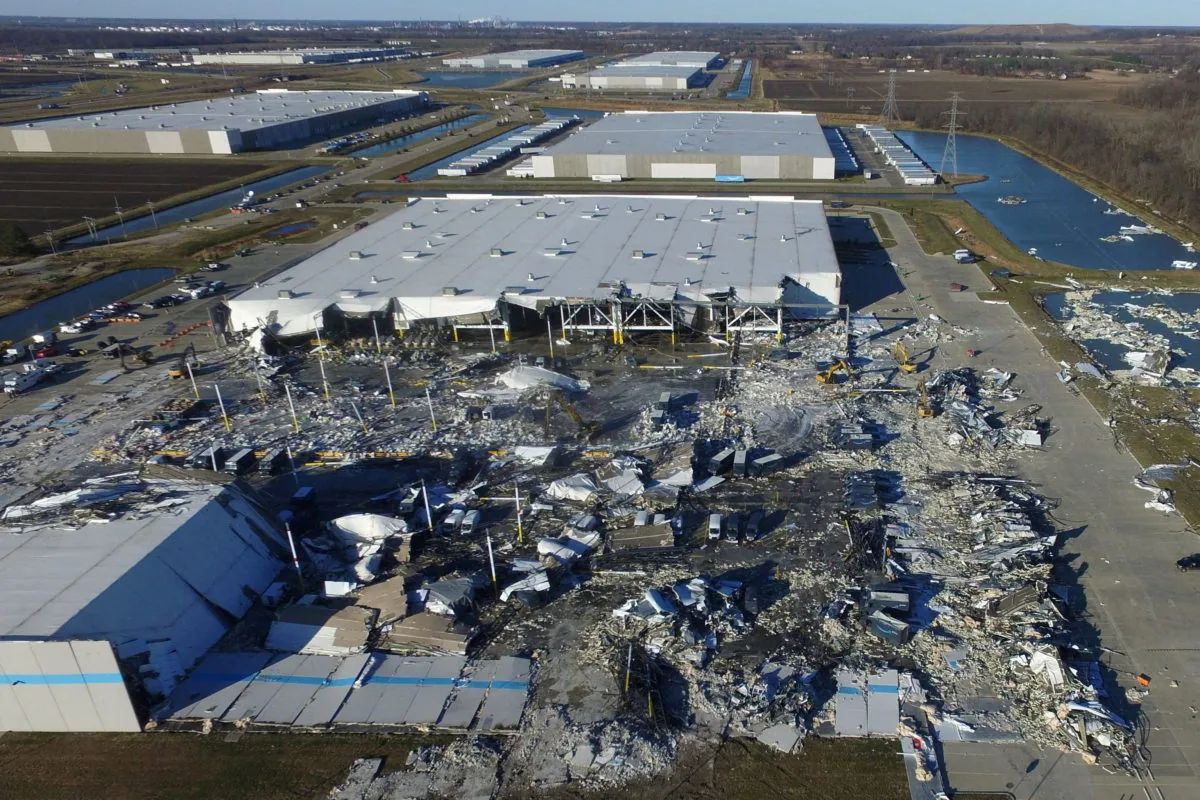
A warehouse storm review should identify the reported date, roof bay, active inventory below, and any evidence the shift team observed. The inspection describes visible roof conditions by section and records access limits. Operations staff decide whether product or equipment needs relocation while the owner evaluates the repair scope.
Compare repair options against the operating plan
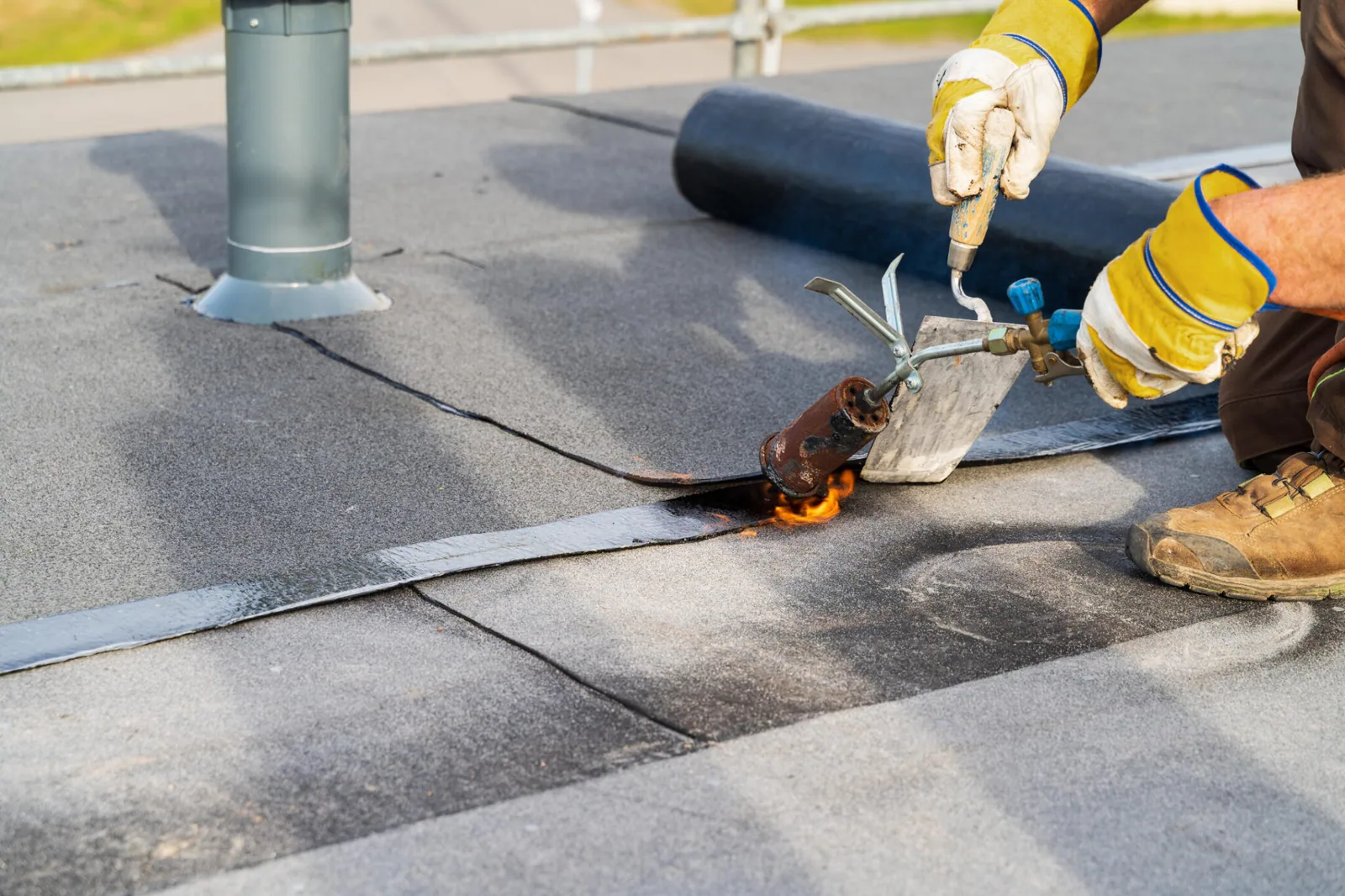
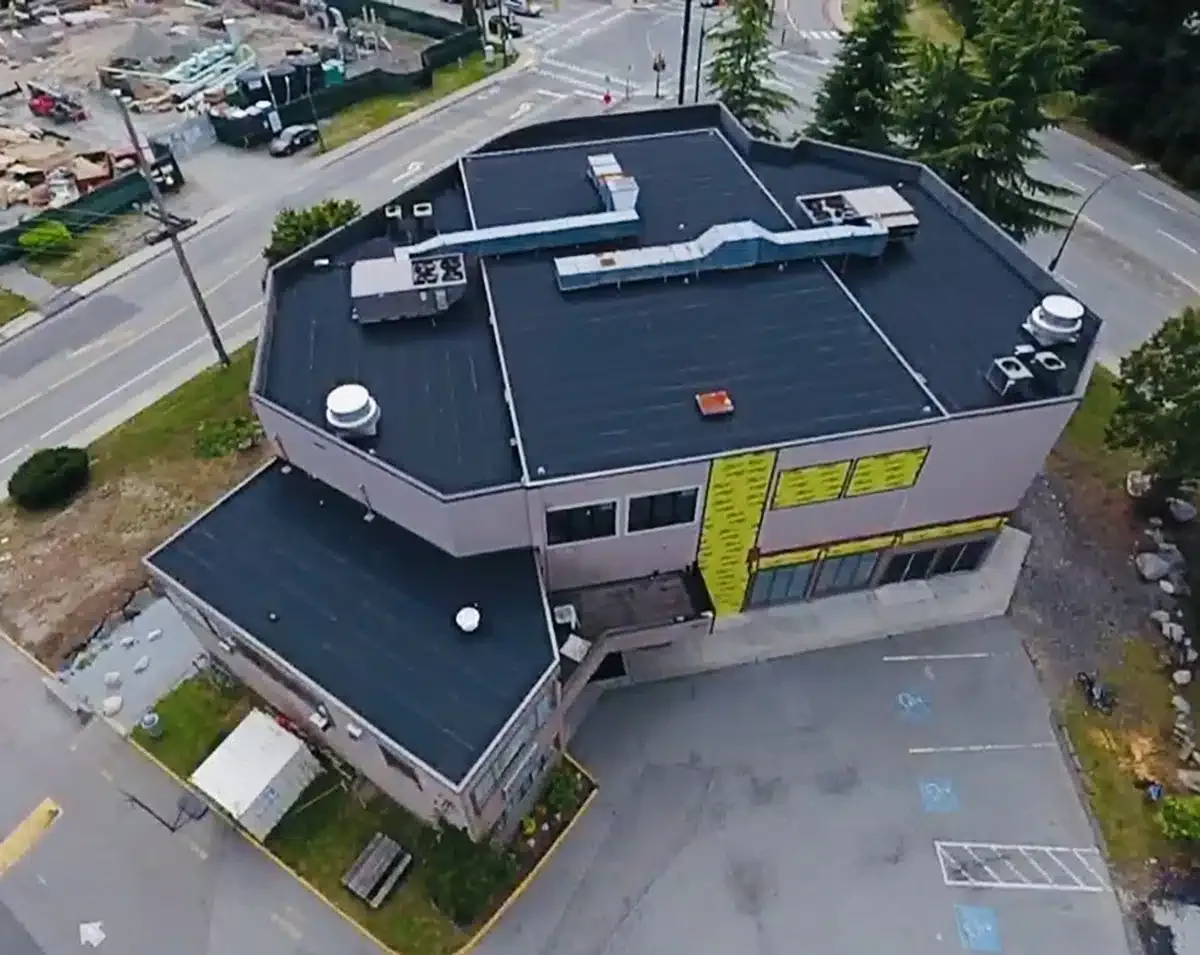
A localized defect may support a repair when adjacent material is sound. Coating depends on substrate condition, compatibility, and preparation. Recover or replacement requires review of layers, moisture, deck, drainage, and impact on dock operations. We explain why an option fits and identify what testing could change the recommendation.
The estimate lists roof zones, assembly, insulation, equipment interfaces, protection below, staging, and closeout. If hidden material changes the work, the crew documents it and pauses for owner direction. A capital plan can align larger work with facility plans. For client-facing approval, the operator may involve manufacturing stakeholders or property management teams; each party’s role should be named.
Before work at a distribution site, confirm which permit or inspection steps attach to the proposed scope. The owner or its design professional handles the applicable determination; our proposal lists the roofing assembly and boundaries for that review.
Return an operations-ready roof record
Closeout identifies the property, dock or roof bay, completed work, photos, materials where documented, open observations, and follow-up. Temporary cover is marked removed or retained. The site receives notice when a staged area or access route can return to its normal use.
For an assessment, send the building address, owner contact, roof plans, leak location, active-water status, dock and carrier schedule, equipment list, safety rules, and access sponsor. Note any client-specific inventory restriction. We will define the inspection boundary and any testing that requires written approval.
Keep the report in the property and operator work-order records. That lets a later shift identify which bay received service without assuming the entire roof was included. If water returns, record its current location and time before assigning the issue to an earlier repair.
Questions About Logistics and 3PL Operators
Can dock operations continue during roof work?
Often, if material staging, carrier routes, and work zones are agreed in advance. The operator decides which doors or lanes can close temporarily.
Who approves a repair when a 3PL does not own the building?
We confirm the owner’s authorized representative and the operator’s access contact before pricing or scheduling work.
What should a warehouse leak report include?
Identify the bay or aisle, date, active-water status, equipment or inventory below, photos, and the person who can arrange roof access.
Can you work around carrier appointment times?
Yes, when the operator provides delivery windows and approved staging. Weather, access, and the repair method also affect scheduling.
Does a local storm report show that a distribution roof was damaged?
No. An event record does not prove property impact. The inspection documents conditions found on accessible roof areas.