Commercial Roofing in Capital Corporate Center, Elgin, IL
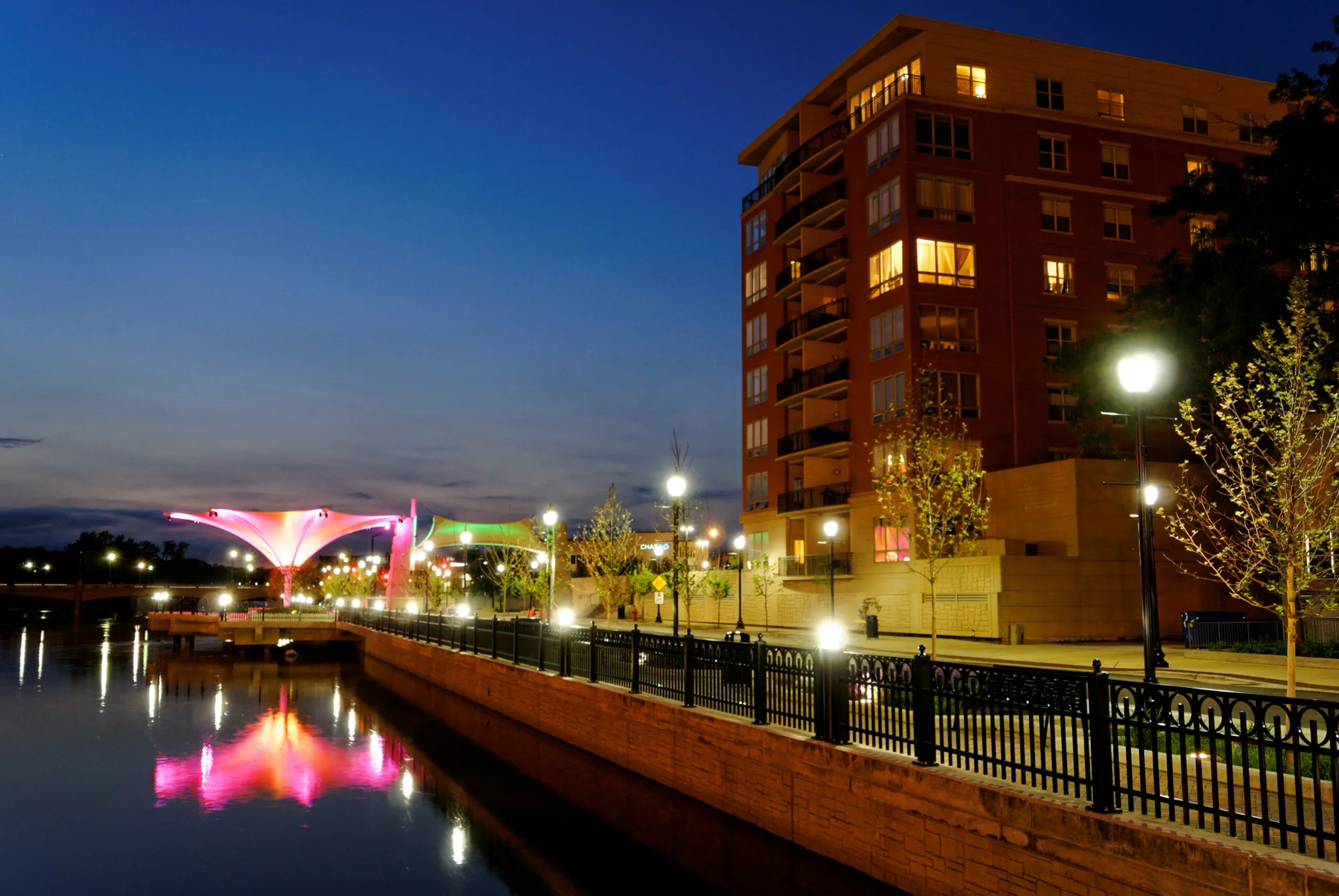
Capital Corporate Center
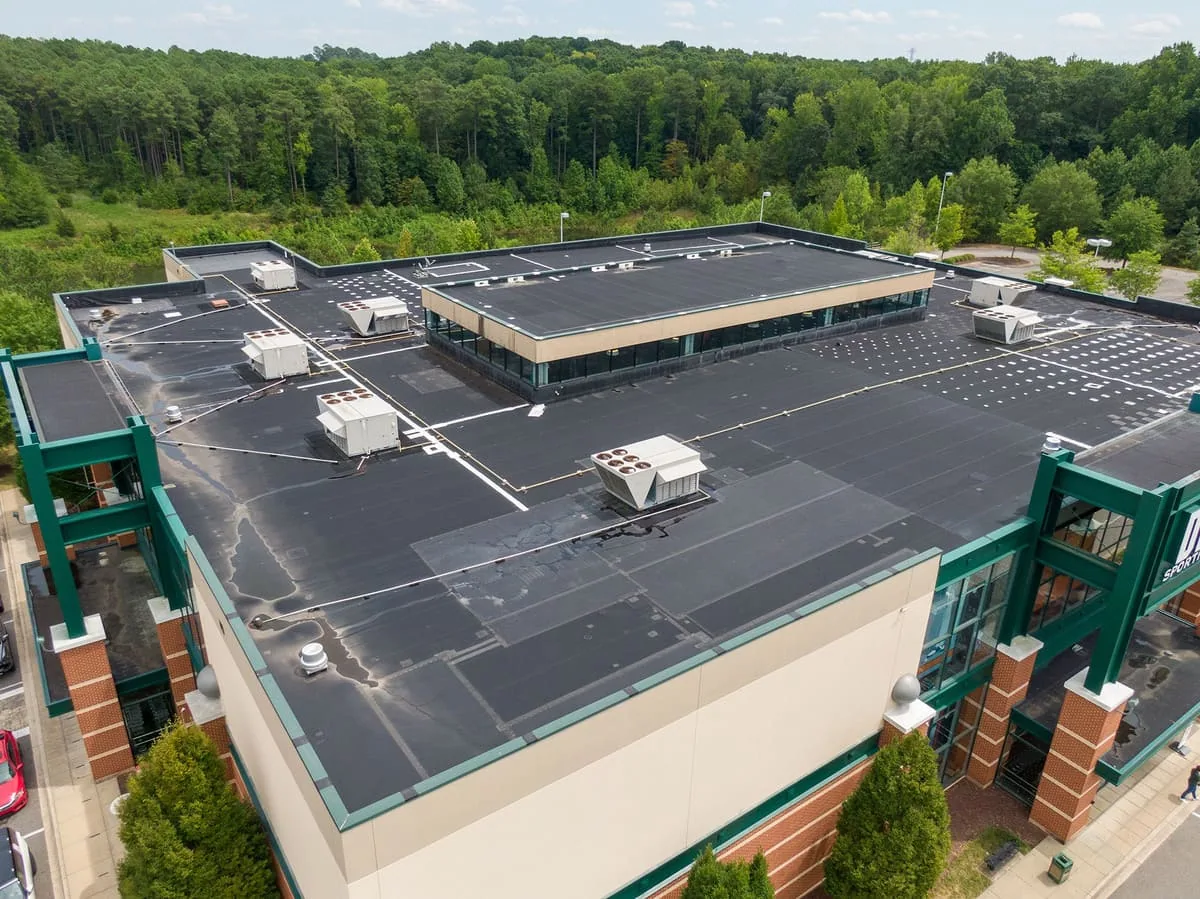
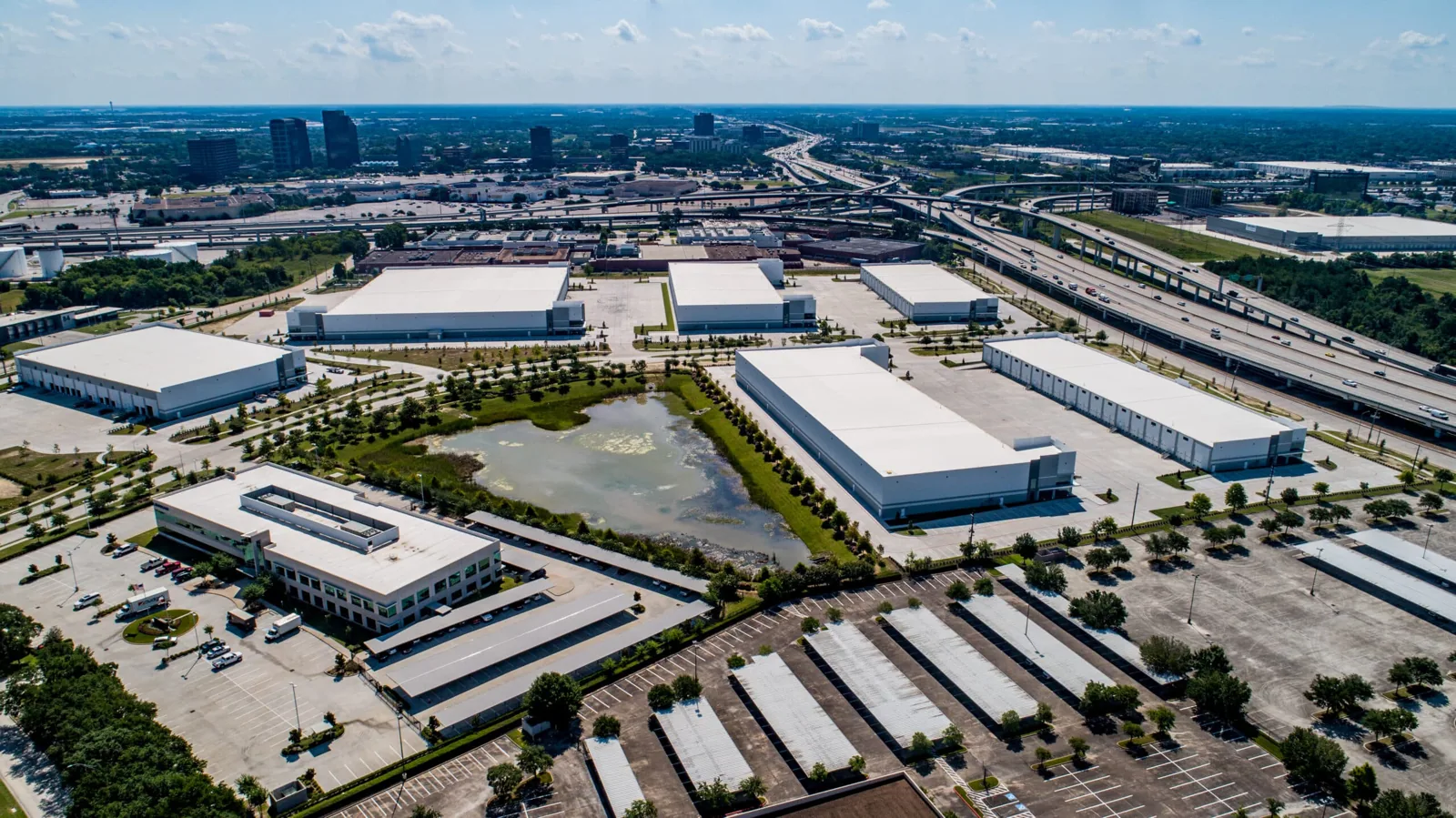
Capital Corporate Center is a 45-acre Elgin business area designated for office, research, industrial, or planned-business use. That broad land-use description does not identify any individual roof. Our work starts with the property: what is leaking, how the roof is built, which operations need protection, and what evidence supports the next step. We deliver a clear field record before pricing repair or replacement.
Triage water entry without guessing
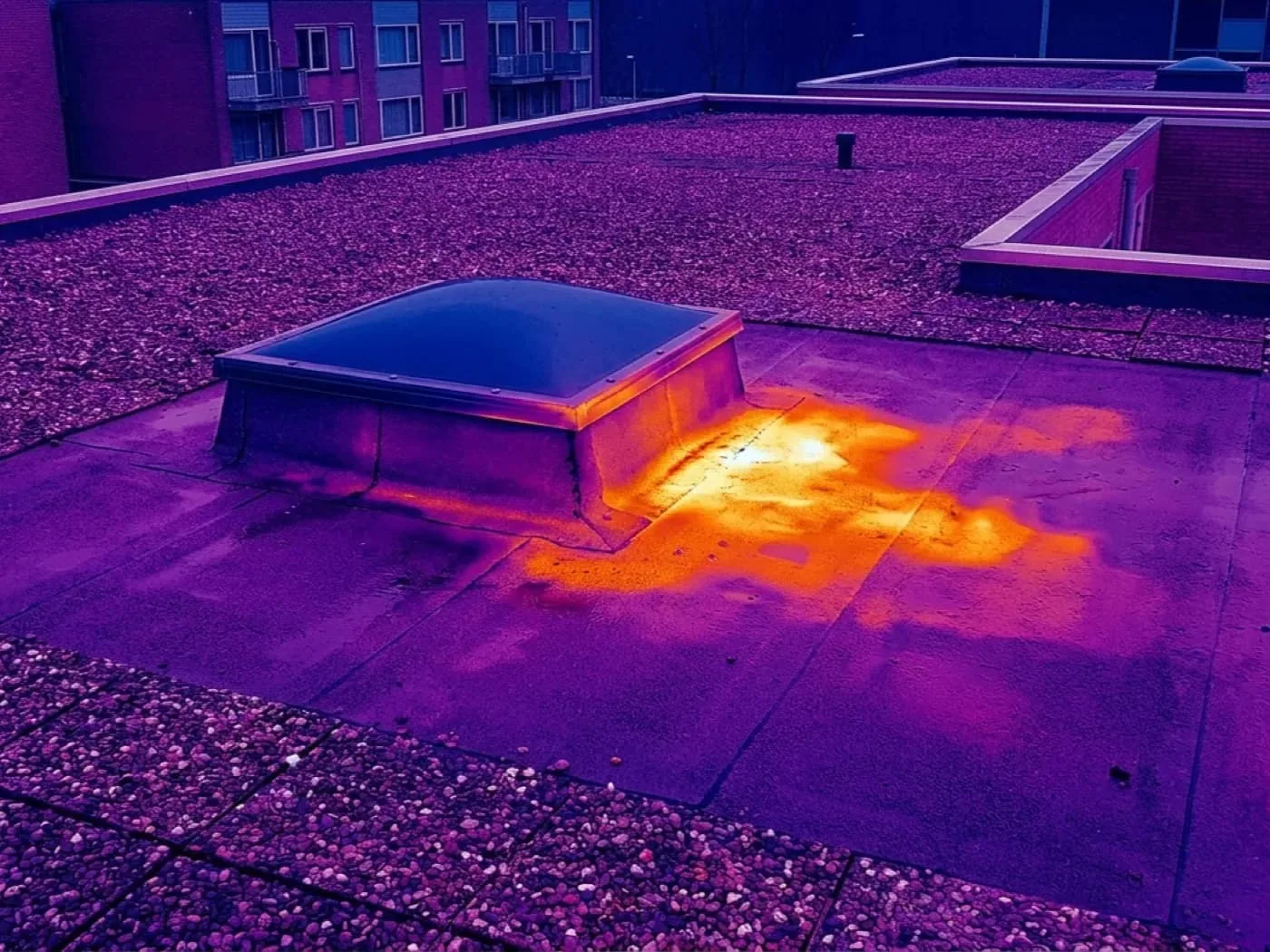
When a tenant reports a leak, we note the room, time, weather, equipment status, and any recent rooftop work. Then we inspect the likely roof zone. Water may travel along insulation, a deck joint, a drain line, or a wall before reaching the occupied space. The investigation checks the area above the report along with seams, transitions, curbs, penetrations, and nearby outlets.
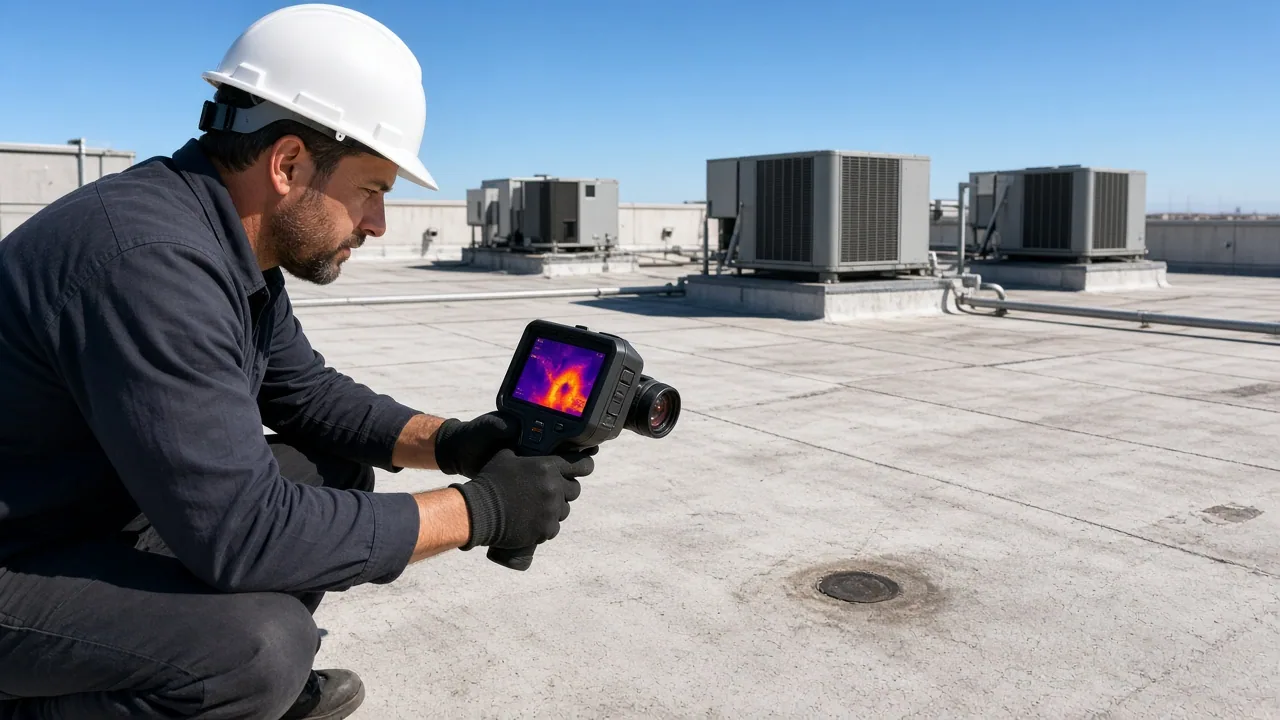
Interior protection comes first when water is active. The property contact may need a temporary collection point or cover for sensitive contents. We explain whether that is an immediate stopgap or a completed repair. On the roof, we photograph the suspected entry and surrounding details, note surface and substrate conditions that can be observed safely, and identify whether a test opening would answer an unresolved question.
For an urgent call, use emergency roof repair or commercial leak repair. When the issue is not active, a roof inspection can create a baseline. The resulting scope identifies the roof area, work method, compatible materials, and conditions that remain outside the repair boundary.
Create a roof record that supports ownership
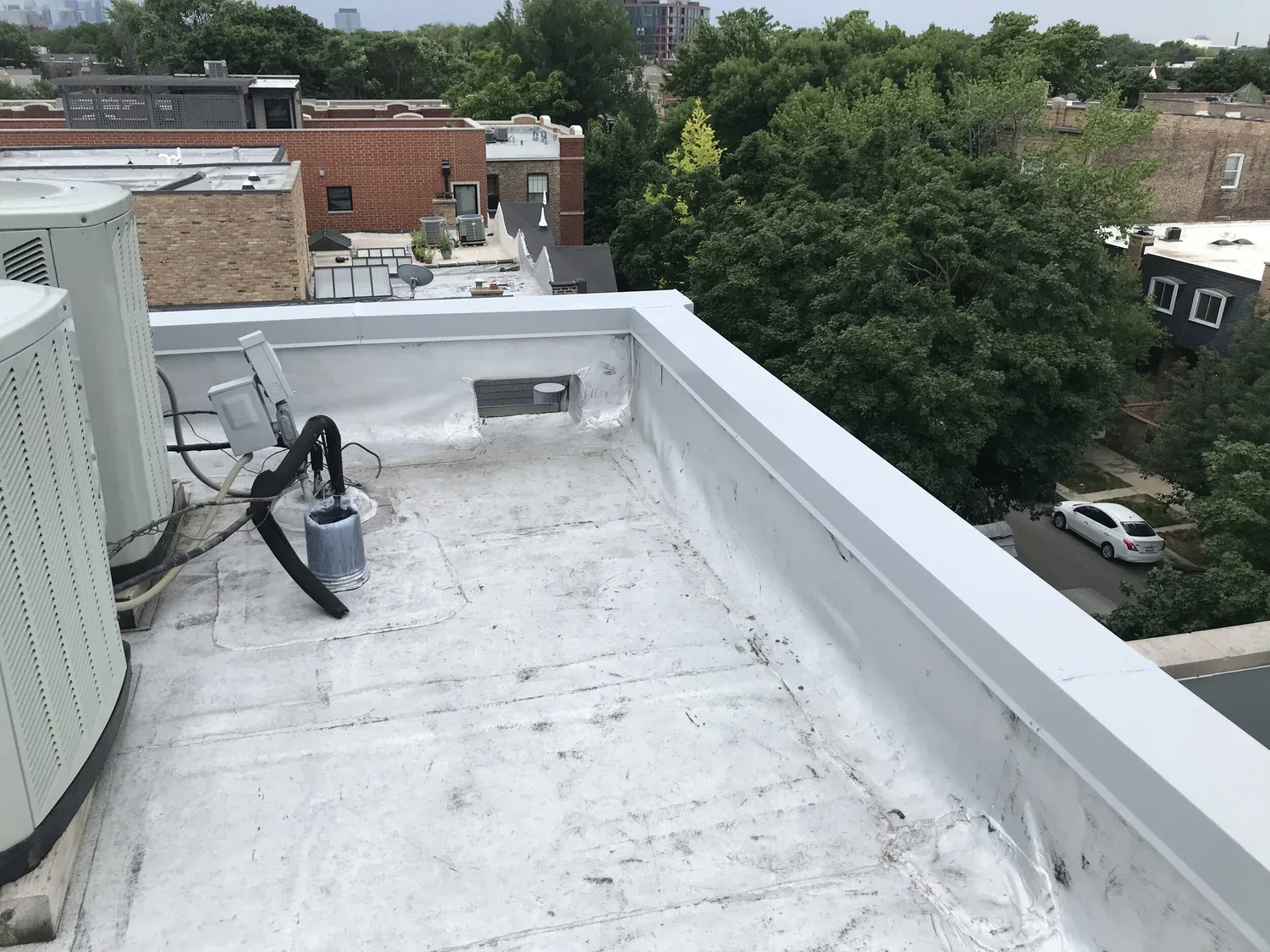
Property teams need findings they can use after the contractor leaves. We identify the roof zones, include clear photos, and describe each item in practical terms: what is visible, why it matters, and what action is proposed. A finding can call for repair now, monitoring at the next visit, testing, or design review. That priority is tied to evidence rather than a blanket statement about roof age.
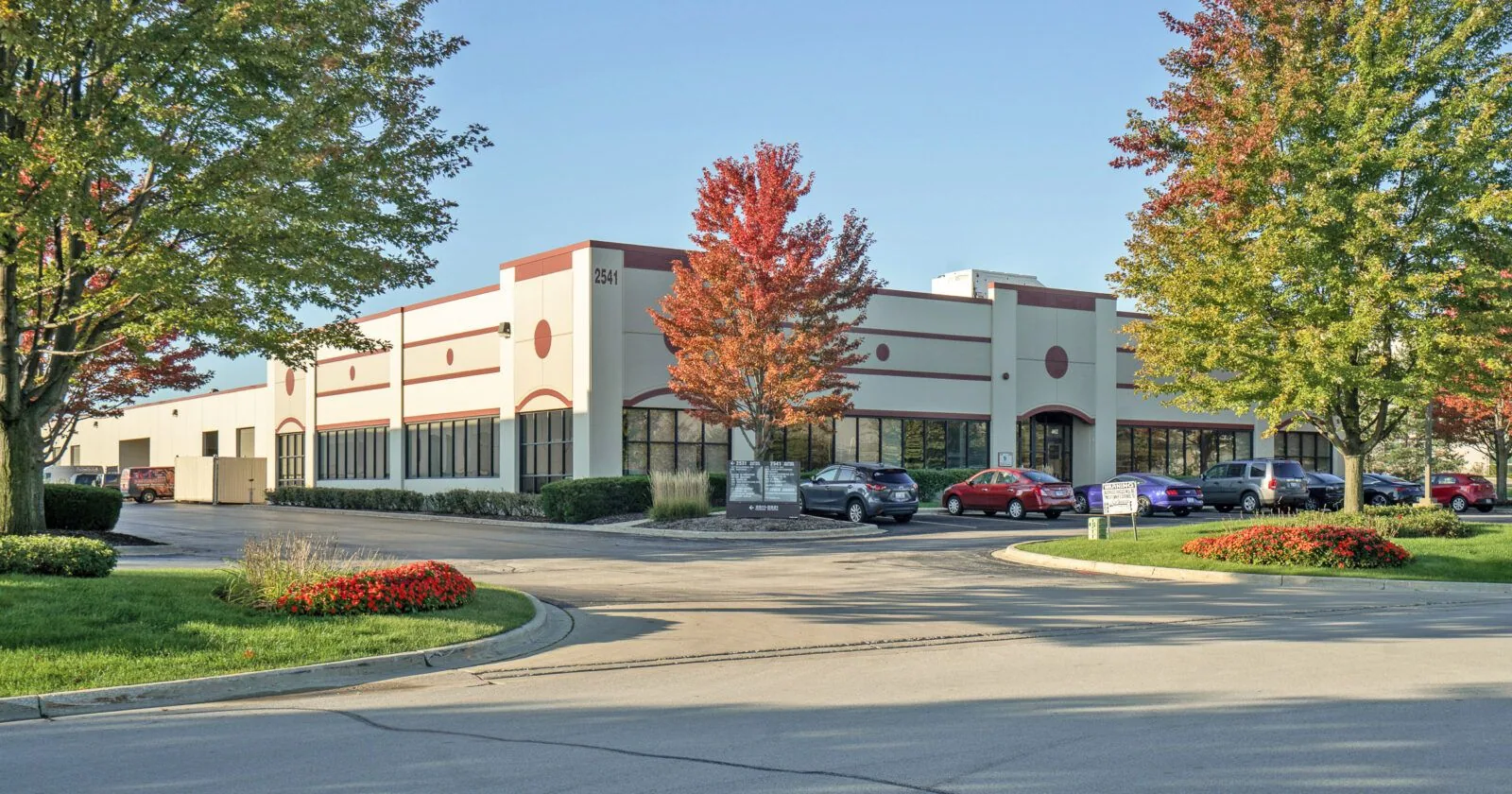
For an office or research property, access may depend on business hours, security, equipment uptime, and protection of interior work. The site contact tells us which doors, mechanical areas, and roof routes have restrictions. We confirm those requirements before mobilizing. If the roof has several distinct elevations, each is recorded separately so a small repair does not stand in for a portfolio-wide conclusion.
Capital Corporate Center’s 45 acres cover a broad business area, so property-specific tracking matters. Maintenance staff can log the date, leak report, repair location, materials, and follow-up status. A scheduled preventive maintenance visit can revisit items that were not urgent during the first inspection. If drainage details need focused review, use drain and scupper service.
Set a repair scope the owner can verify
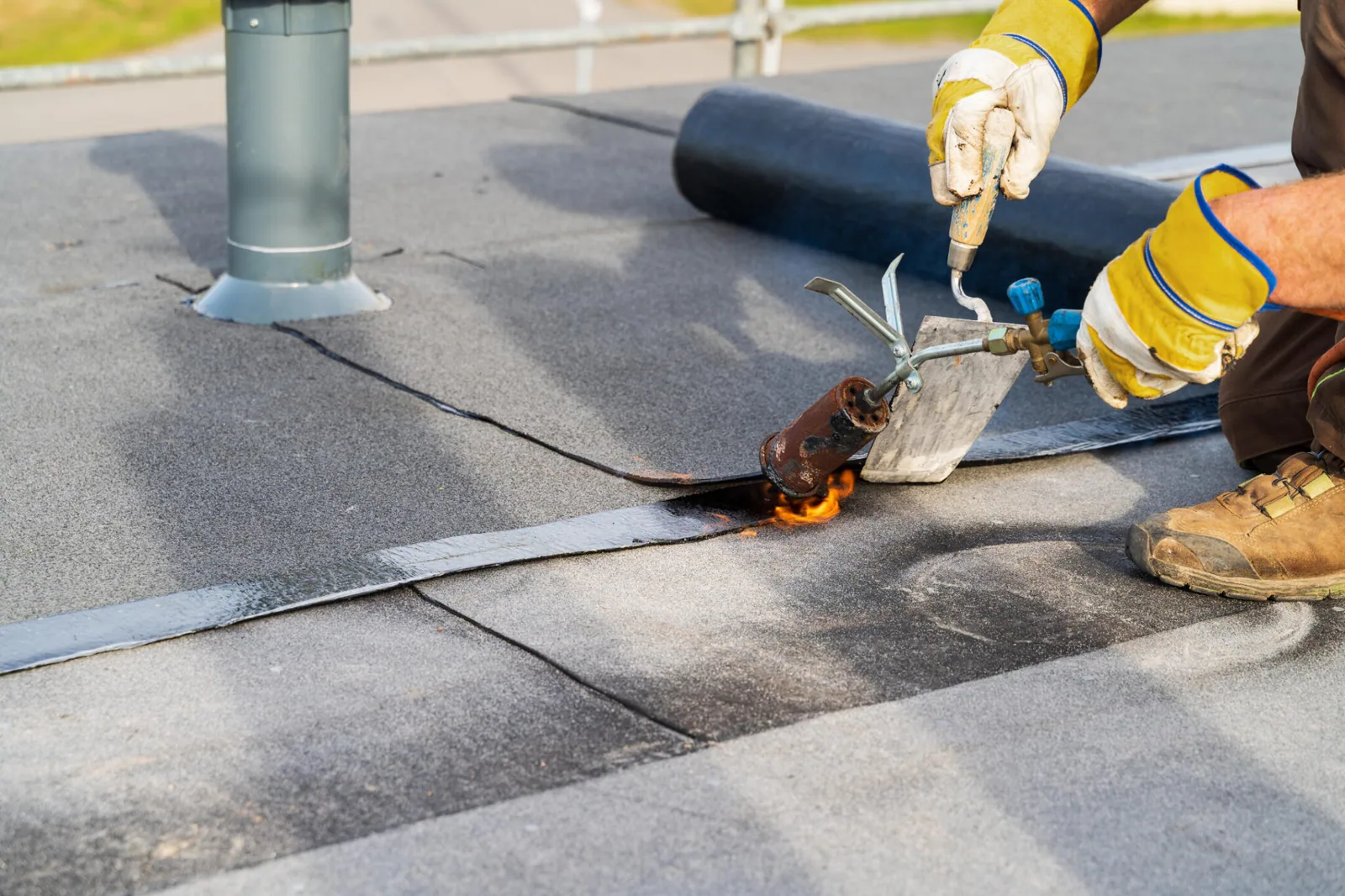
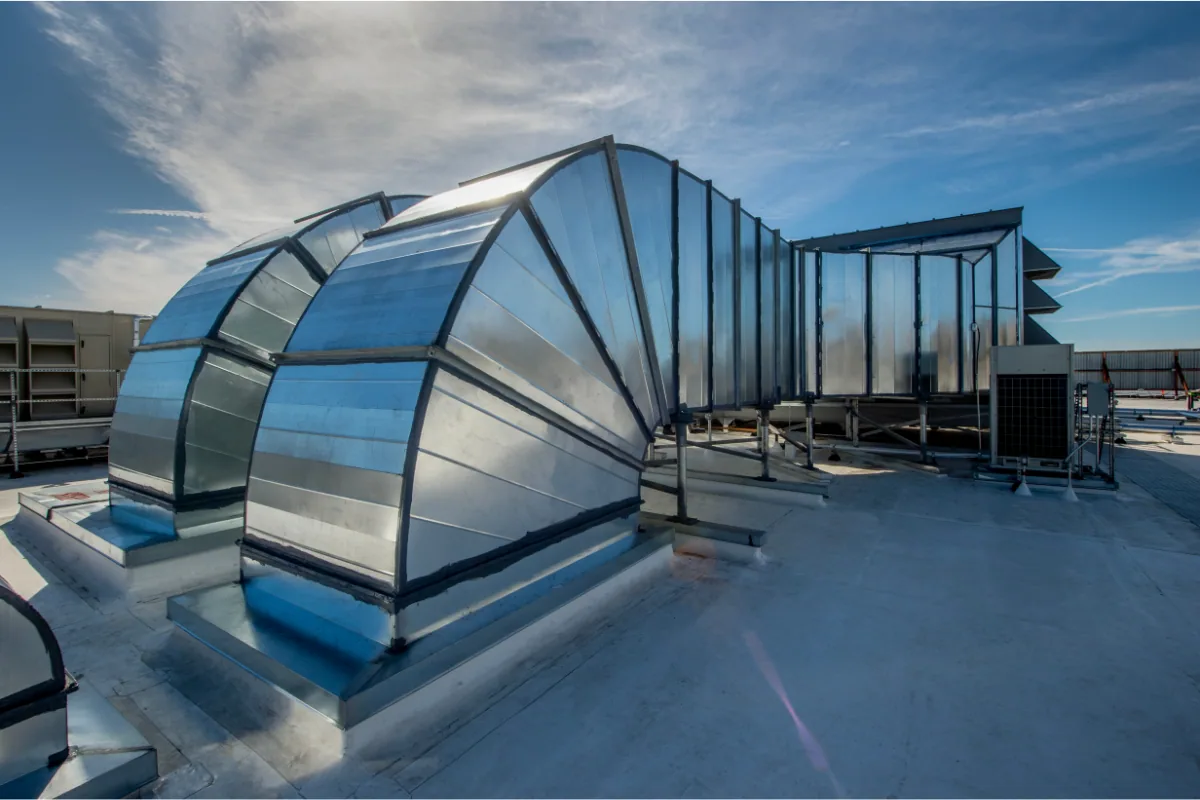
A repair should be sized to the defect and the condition around it. We identify the membrane or roof covering, confirm that the substrate can accept a repair, and use a compatible detail. The work description states the length or area included, affected transition, and any temporary protection. We do not describe a limited patch as a roof-wide correction.
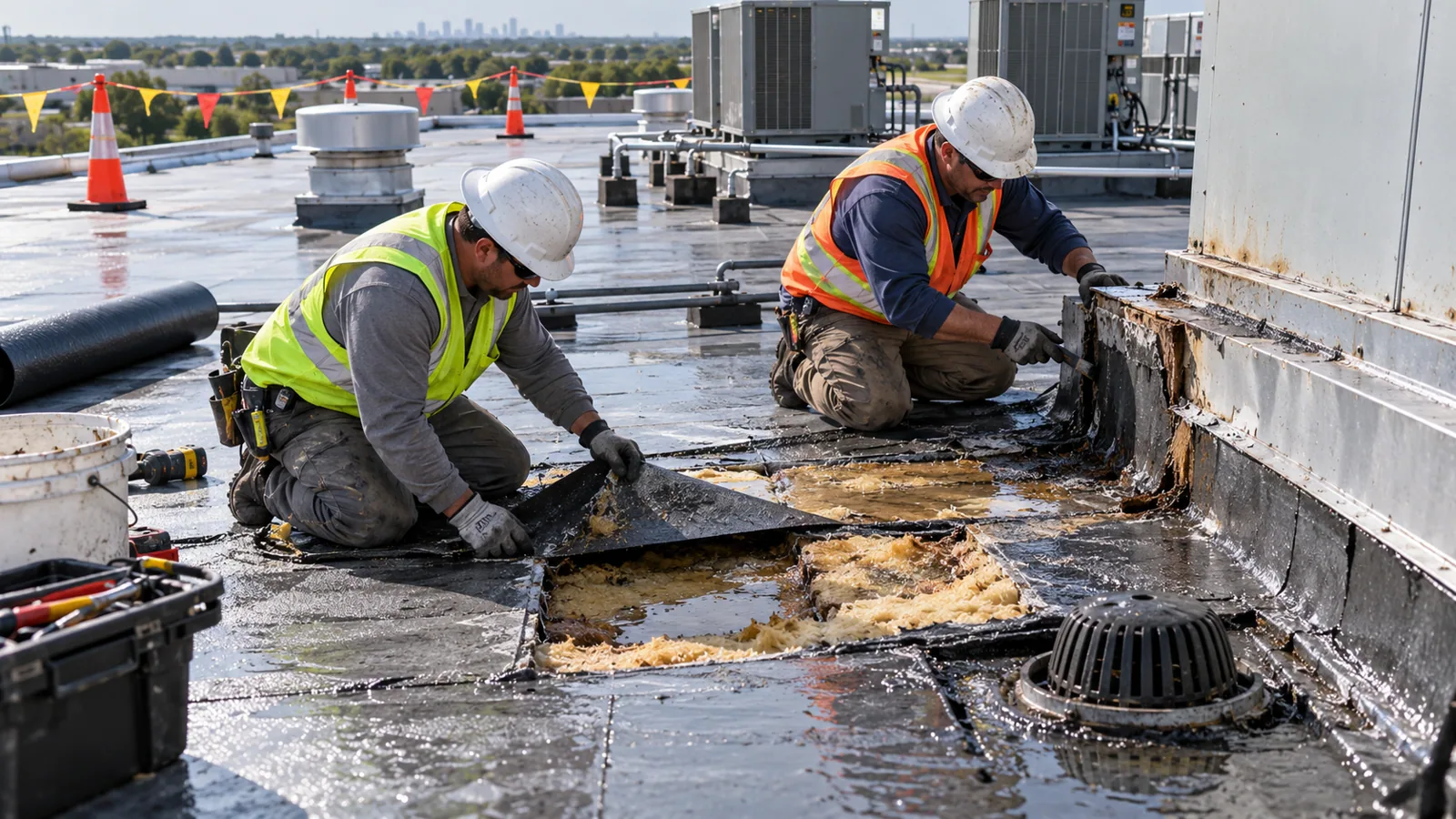
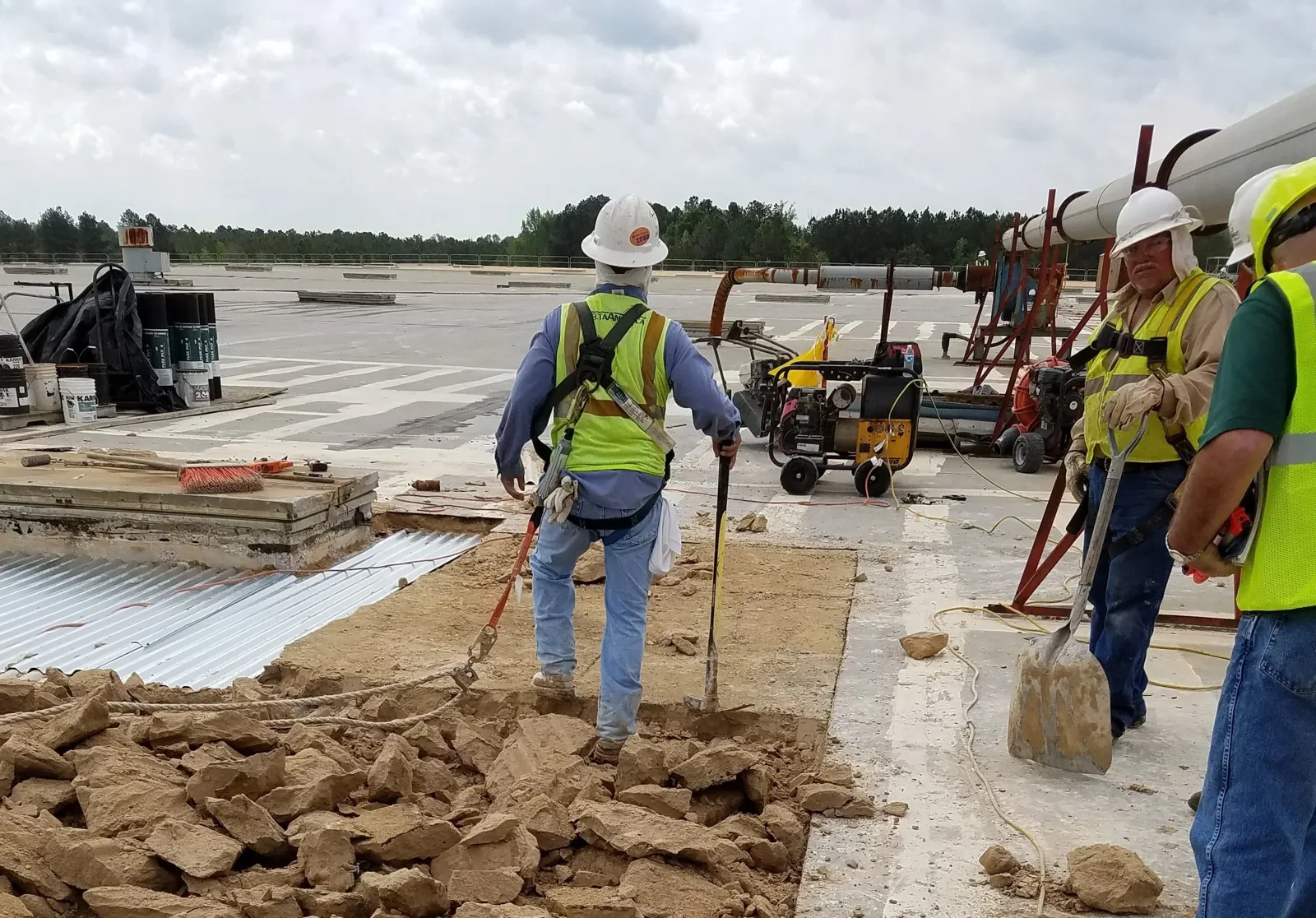
If a repair exposes wet insulation or an unstable surface, the owner receives photos and a recommendation before the crew proceeds beyond the approved work. A surface patch may not resolve a condition below the membrane. The project team can authorize a test opening or a revised scope once the issue is documented. This boundary helps maintain a clear record of why the completed repair stops where it does.
Elgin recorded one-inch hail on February 27, 2024. That date may prompt a property manager to request a roof check, but it does not show whether a Capital Corporate Center building was affected. We inspect for current punctures, displaced metal, open seams, damaged flashing, and interior evidence. A storm-damage inspection reports present conditions without attributing damage where none was observed.
Compare the project options
A repair, recover, and tear-off should be compared with the same information. We record existing layers where visible, roof dimensions, deck observations, drainage, perimeter height, and the location of equipment or transitions. If moisture or structural capacity is uncertain, we identify a test or design review instead of pricing an unverified assumption as fact.
Replacement cost can vary with tear-off quantities, deck repairs, insulation thickness, roof edge length, number of penetrations, material staging, lift access, and tenant protection. A complete proposal describes these drivers and states which quantities are measured. If an allowance is used for concealed work, it should identify what triggers the allowance and how the owner approves its use.
Owners should receive the assumptions in writing before they compare a low bid with a full replacement. One proposal may include tear-off and new insulation while another assumes a recover. Check that quantities, deck repair allowances, edge metal, drainage, access, disposal, protection, and closeout are addressed. When a line is excluded, state that clearly so it does not surface later as an unplanned change. We can walk through the comparison and identify which decisions need further field evidence.
Bid review also confirms who handles permitting, testing, manufacturer documentation, daily cleanup, and final inspection. If one proposal leaves these responsibilities unstated, request clarification before comparing totals. A complete schedule reduces uncertainty after award and gives the owner a point of reference during construction.
A new assembly needs a written schedule for membrane, insulation, cover board, attachment, vapor-control layer where specified, flashing, edge metal, and drains. Current manufacturer details and project criteria guide the installation. System comparisons are useful after that information is understood. Review TPO roofing and PVC roofing as categories, then consider how each approved assembly responds to the property’s requirements.
Use storm history as a reason to inspect
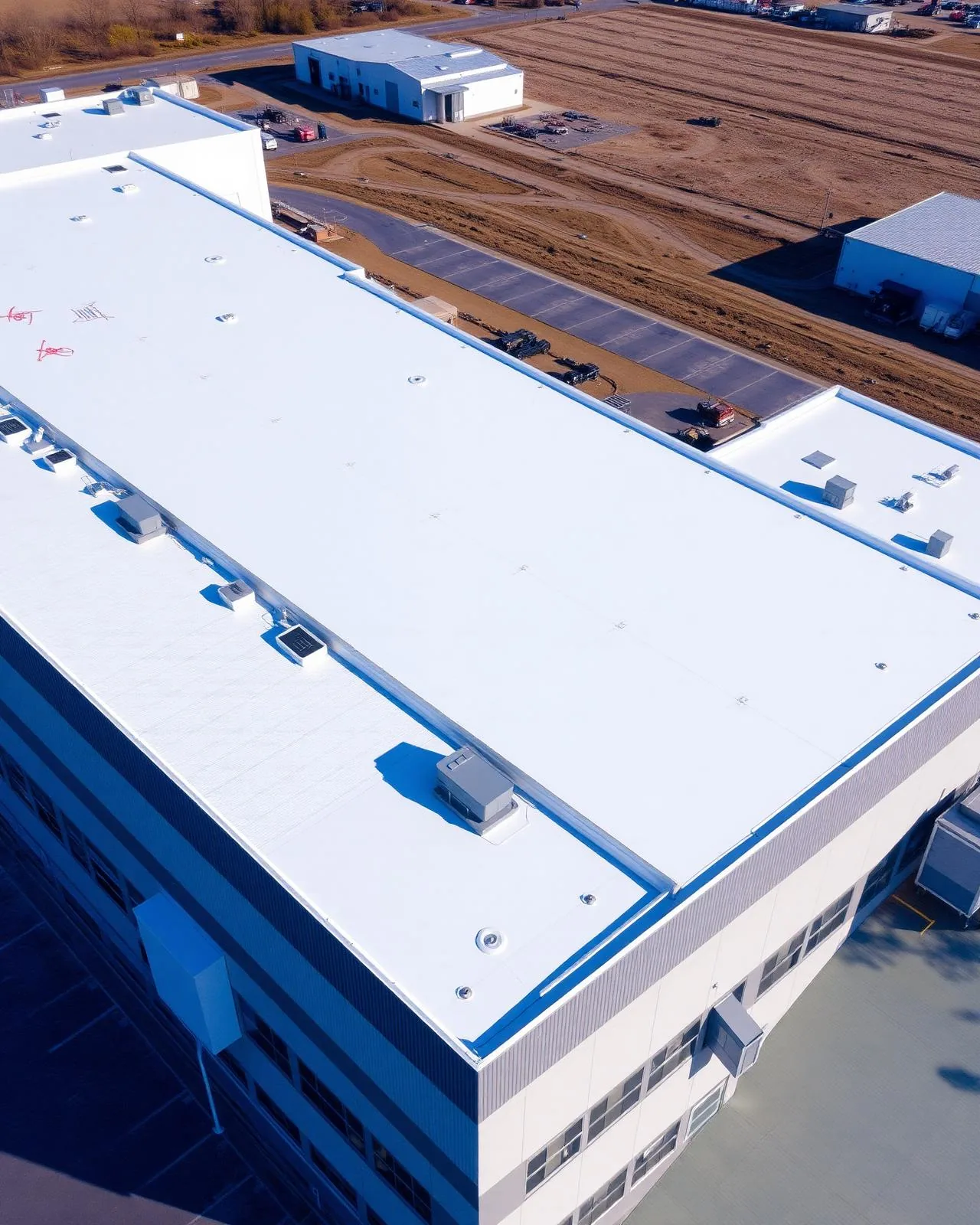
Elgin’s weather includes recurring freezes, snow, and summer storms. A local one-inch hail report in February 2024 gives a time marker for property teams reviewing maintenance records. It is not a roof-condition finding. A post-event visit looks at the actual assembly, including field seams, wall transitions, edge securement, rooftop equipment, and interior reports.
After a July 2023 EF1 tornado crossed Elgin, owners may also ask whether a building needs review. The inspection documents visible evidence and the area covered. If snow, ice, or wet surfaces prevent safe access, the report explains what could not be inspected and when a return visit is appropriate.
For any repair or replacement, temporary exposure has a defined limit. The supervisor watches conditions, sequences work to crew capacity, and secures each area at shift end. The site contact knows what is complete, what remains protected, and what decision is still needed. No estimate can replace a daily plan for a roof that is open to weather.
Keep project communication direct
Before mobilization, the supervisor confirms the building representative, access route, staging area, delivery window, lift position, and emergency contact. If the project affects tenants or staff, notices identify dates and areas rather than using a general message. Roof access restrictions and any noisy work are coordinated with the people responsible for operations.
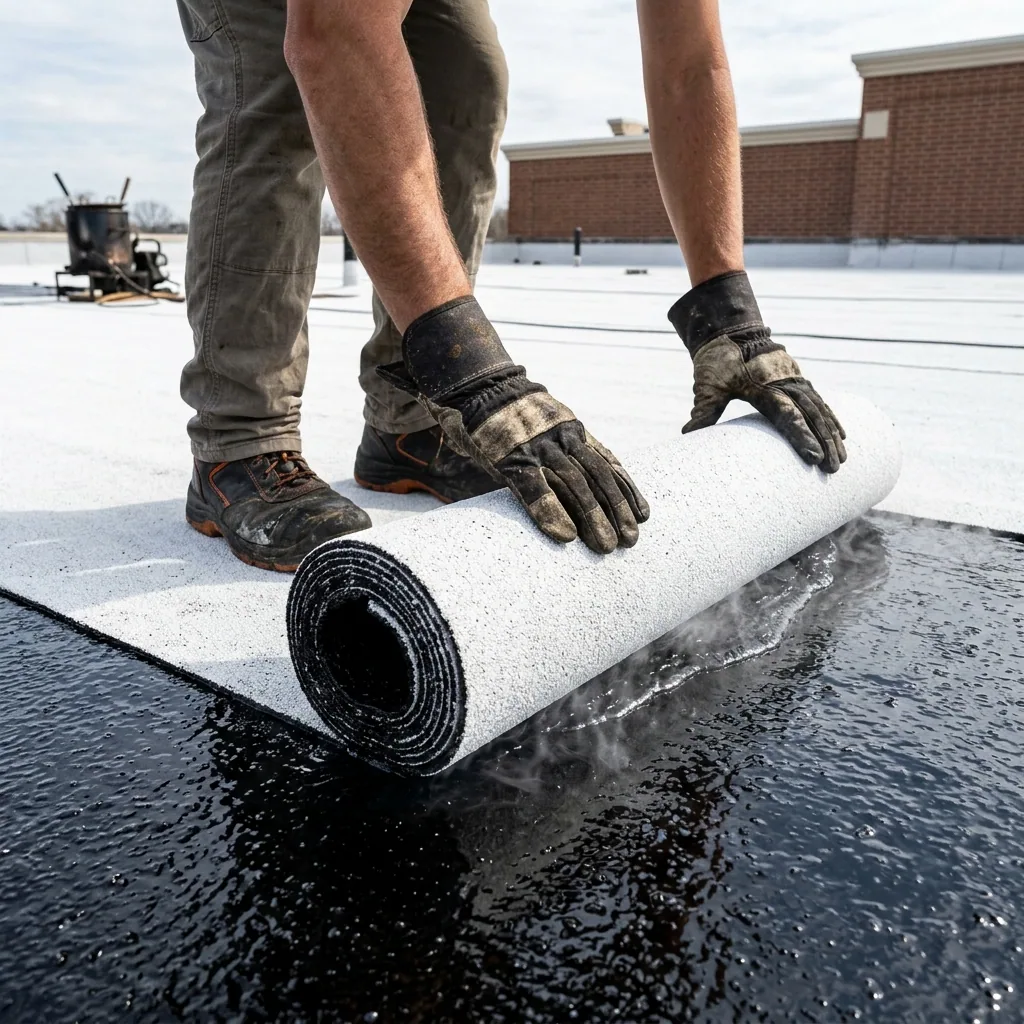
During installation, the crew records completed zones and checks transitions before they are covered. Unexpected deck or insulation conditions are photographed and measured. The contractor communicates the impact on scope and cost, then waits for the owner’s direction under the contract process. The change record retains the related photos and quantities. This prevents field decisions from becoming undocumented commitments.
Closeout records the work performed, photos, installed materials, approved changes, punch items, and maintenance recommendations. Owners coordinating work across Randall Point Executive Center and Westfield Business Park should keep each building’s roof findings and approvals separate. Each destination has its own property facts; they are not evidence about roofs at this center.
Questions About Capital Corporate Center
What does 45 acres tell you?
It describes the business area; each roof requires a separate inspection.
Can you handle an active office leak?
Yes. We protect interiors, trace entry, document the roof, and define repair scope.
Does the hail report mean this property has damage?
No. It is context; inspection establishes conditions at an individual roof.
What affects replacement cost?
Area, layers, deck, insulation, details, access, staging, and protection shape scope.
Can work fit tenant schedules?
Usually. We coordinate hours, deliveries, noise, access, and daily dry-in.