Commercial Roofing in Streamwood, IL
Streamwood
Commercial roof service in Streamwood begins with the building’s use and the condition on the roof. Streamwood supports more than 600 businesses, from small firms to international companies, across commercial and industrial activity. We inspect the specific property, map roof zones, and explain which repair or replacement decision follows from the evidence. A business count describes the municipality; it does not tell us what any one roof contains.
Start with the owner’s actual concern
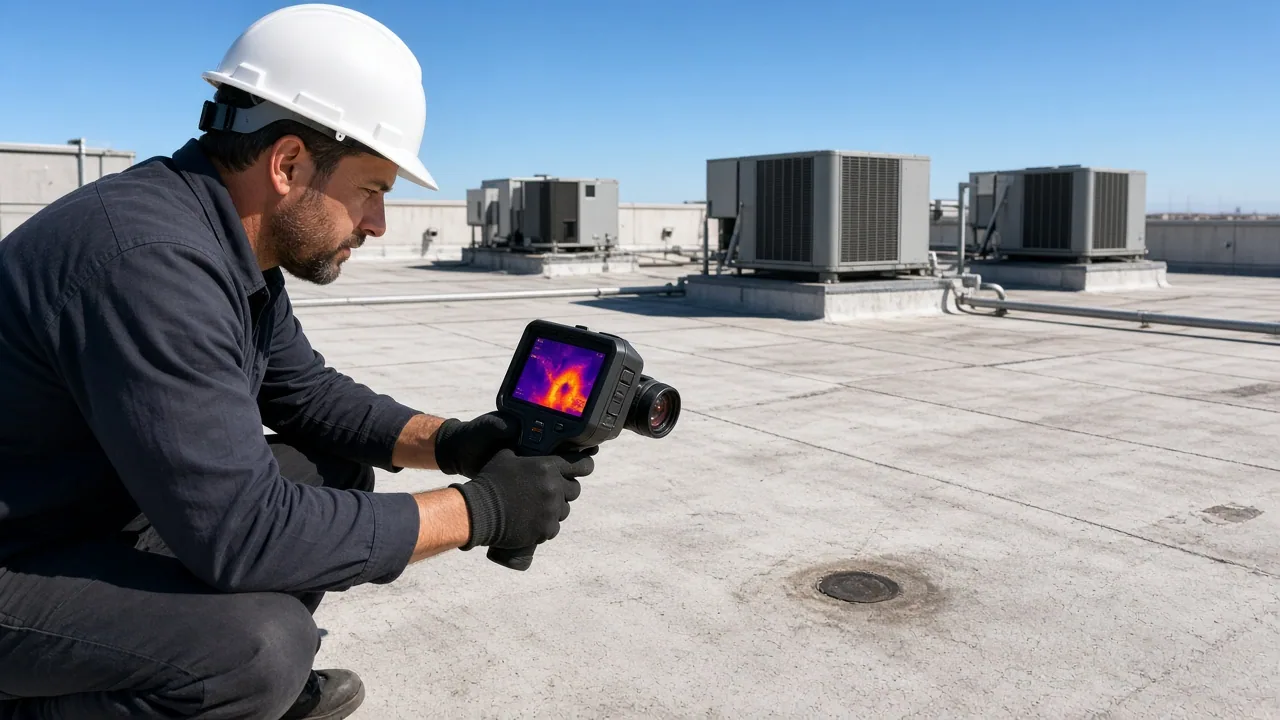
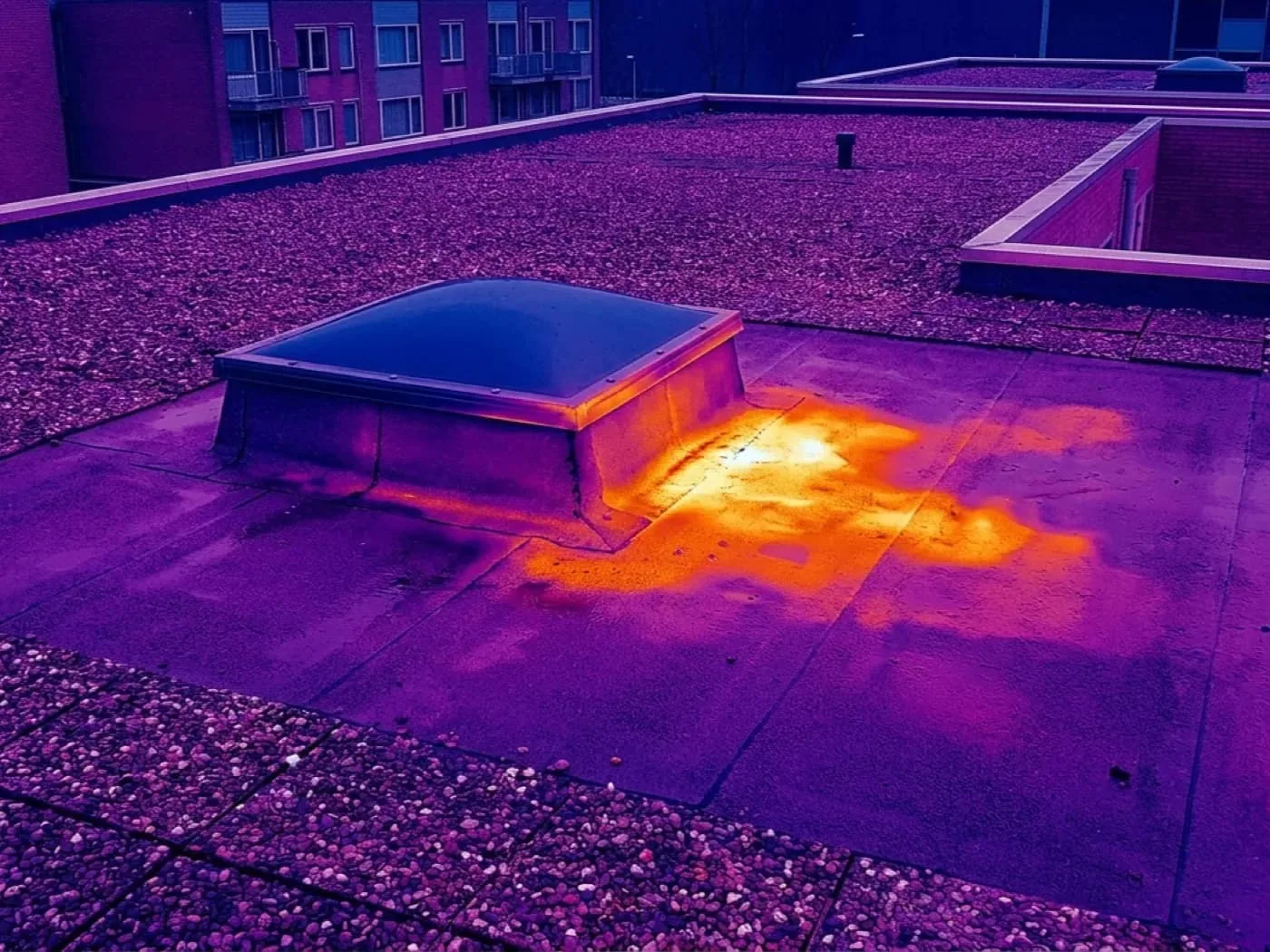
A first visit can address a leak report, storm concern, maintenance question, or capital planning request. We ask where water appeared, when it started, which rooms need protection, and whether any equipment or other contractor work changed recently. On the roof, we identify the covering when possible, inspect seams and laps, check transitions and flashing, and photograph drains, curbs, penetrations, and roof edges. Each condition is tied to a section so the property team can follow up.
Water does not always travel straight down. It can move along insulation, a deck seam, or the underside of a membrane before becoming visible inside. We compare the interior report with plausible roof paths and label the likely source as confirmed or unresolved. If a moisture survey, test opening, or access to a concealed area would clarify the cause, the report explains what that step can establish.
For an overall baseline, schedule a commercial roof inspection. If water is entering now, arrange leak repair or emergency roof response. The crew first protects the interior, then identifies a repair boundary and any condition that remains outside the immediate work.
Plan around different business operations
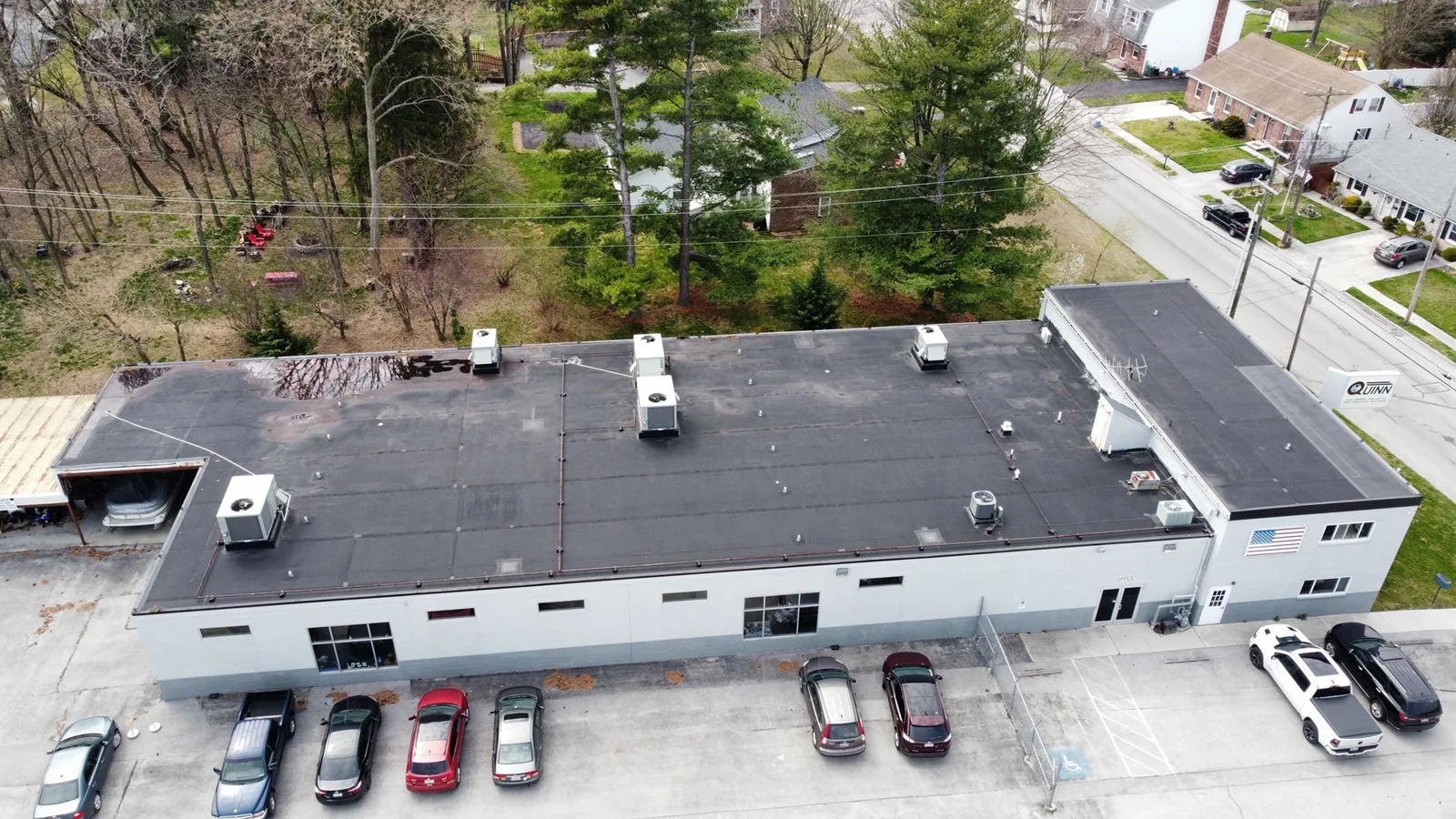
Streamwood includes many types and sizes of businesses. Their roofing needs vary with building use, roof geometry, equipment, traffic, and maintenance history. We do not infer a roof type from the business category. Instead, we ask how the property operates: which areas must remain open, what inventory needs protection, whether rooftop units can be shut down, and when a crew can access the roof.
Interstate 90 is accessible from Barrington Road or Route 59, and the Elgin-O’Hare Expressway connects with several regional routes. That transportation context can matter when a property schedules deliveries or coordinates trades. We confirm the actual gate, material drop, lift location, and work window directly with the site contact. A published road connection does not establish a travel time or a particular facility’s roof access.
For an occupied workplace, the supervisor divides work into roof zones and sets closures, delivery timing, and daily dry-in with management. The owner names who receives notices and who can approve added work.
Define repair work before the crew starts
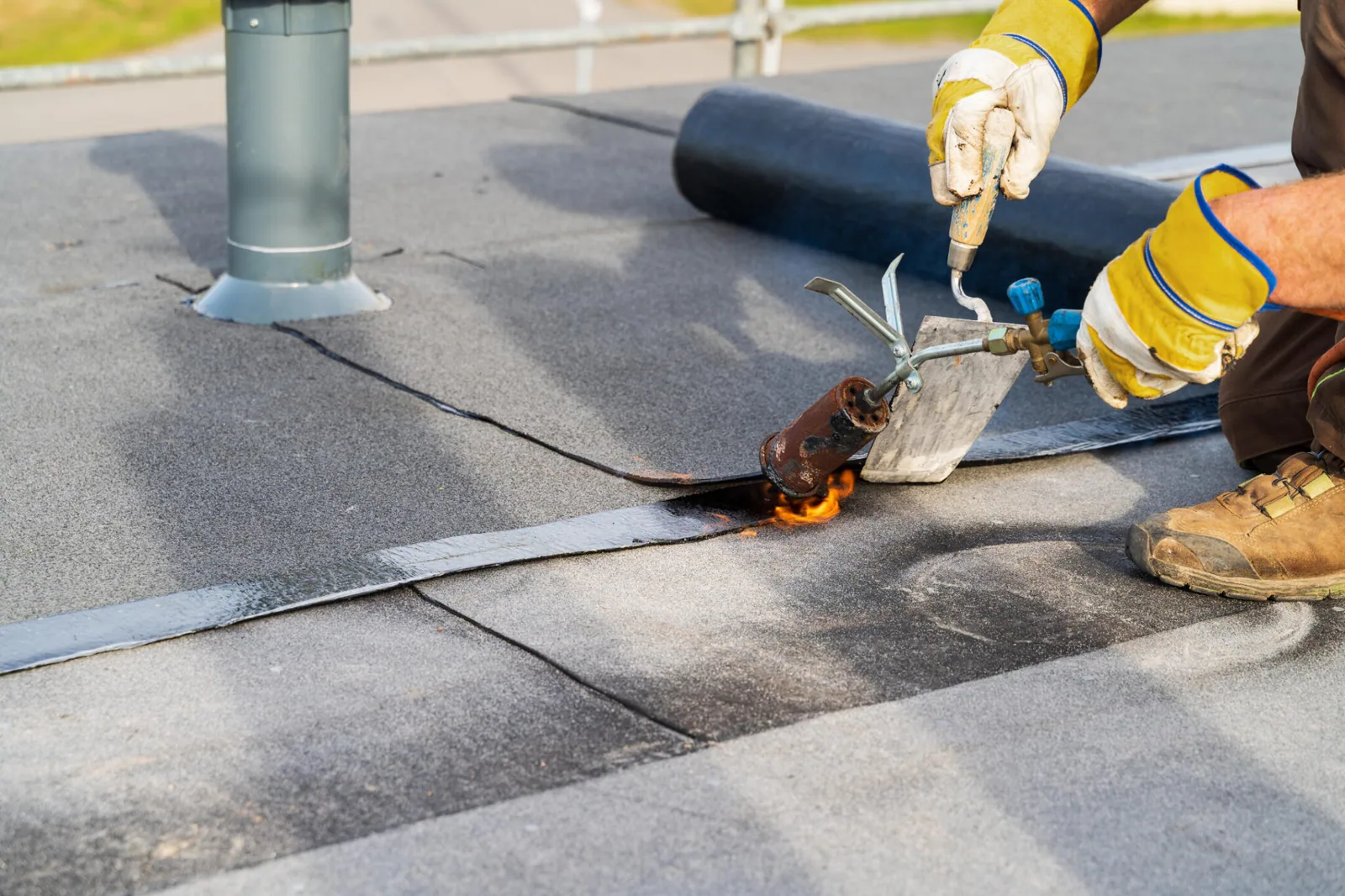
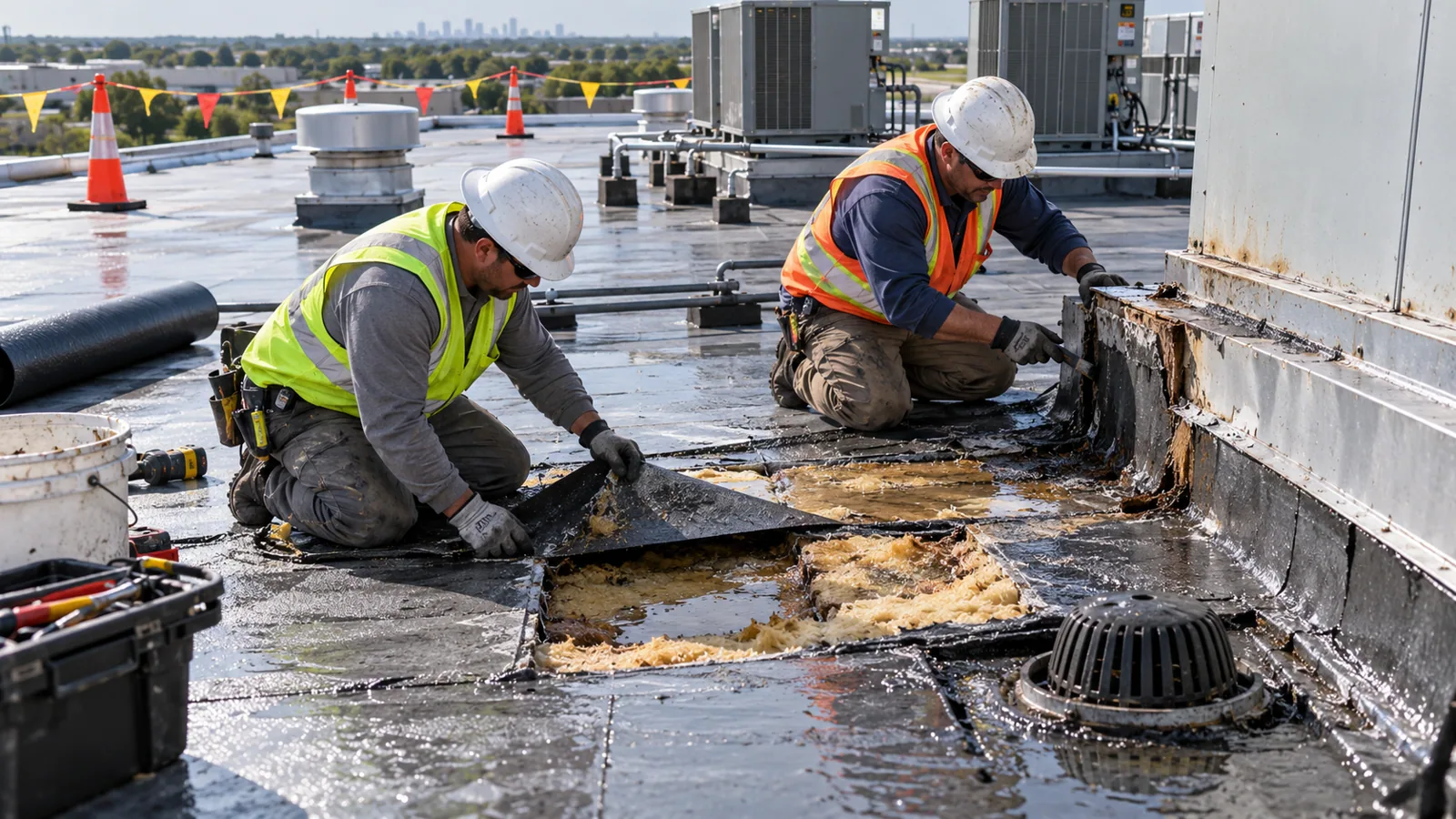
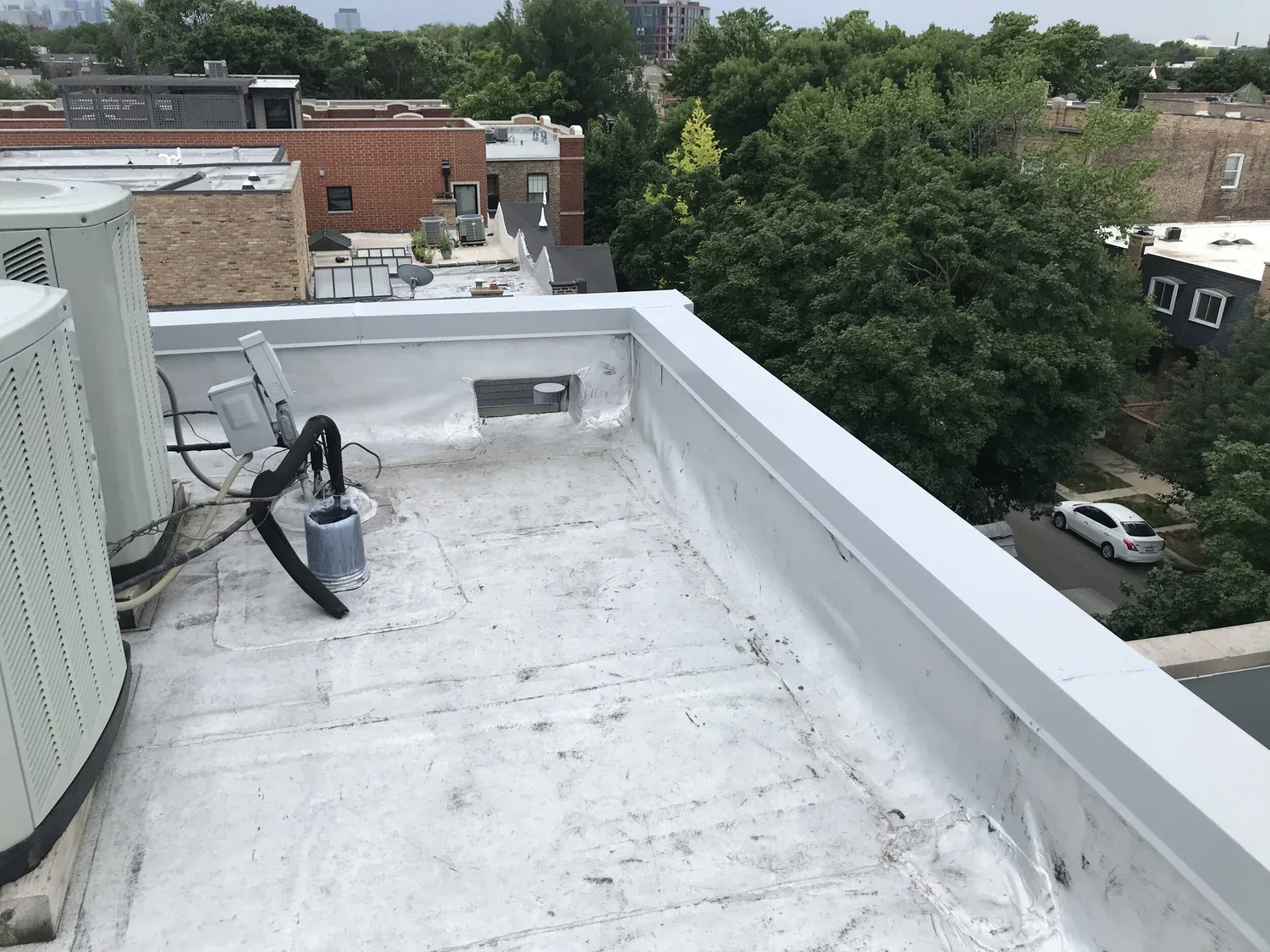
A repair scope states the affected area, observed defect, materials, preparation, and limit of work. A patch may be appropriate when the surrounding roof and substrate can support it. If the membrane is brittle, the substrate is wet, or the material is not identified, a surface repair may not solve the underlying condition. We explain the additional test or removal that could answer the question and ask for direction before expanding scope.
Temporary protection and permanent repair are different services. A temporary measure can limit water while a permanent visit is scheduled, but the work record should say what remains. After a permanent repair, photographs show the treated detail and adjacent area. If a defect recurs, we review the earlier photos, water path, drainage, and nearby transitions before selecting another method.
Drainage gets a separate review when ponding or overflow appears. We inspect accessible outlets and note debris, water marks, and visible discharge. Slope, insulation, deck, or downstream piping may require further evaluation.
Use a roof record for ongoing decisions
A maintenance log turns separate visits into a useful building history. We record inspection dates, roof-zone labels, symptoms, repairs, materials, photos, and open recommendations. That record helps staff compare a new leak with a prior patch instead of relying on memory. It can also show whether several reports point to one recurring transition or different roof sections.
Routine visits can include surface observation, debris review, visible drainage checks, flashing and edge inspection, and a check of prior work. The scope can exclude repairs unless the owner authorizes them. If a technician sees a condition that needs immediate attention, the site contact receives its location and proposed next step. A follow-up schedule should reflect the actual roof findings and the property’s operating requirements.
A preventive roof maintenance plan can keep that cycle consistent. When a storm or wind event prompted the call, storm-damage services can address event-related repairs. Elgin-area weather information helps with scheduling, but inspection establishes the condition at the Streamwood property.
Compare project options using verified quantities
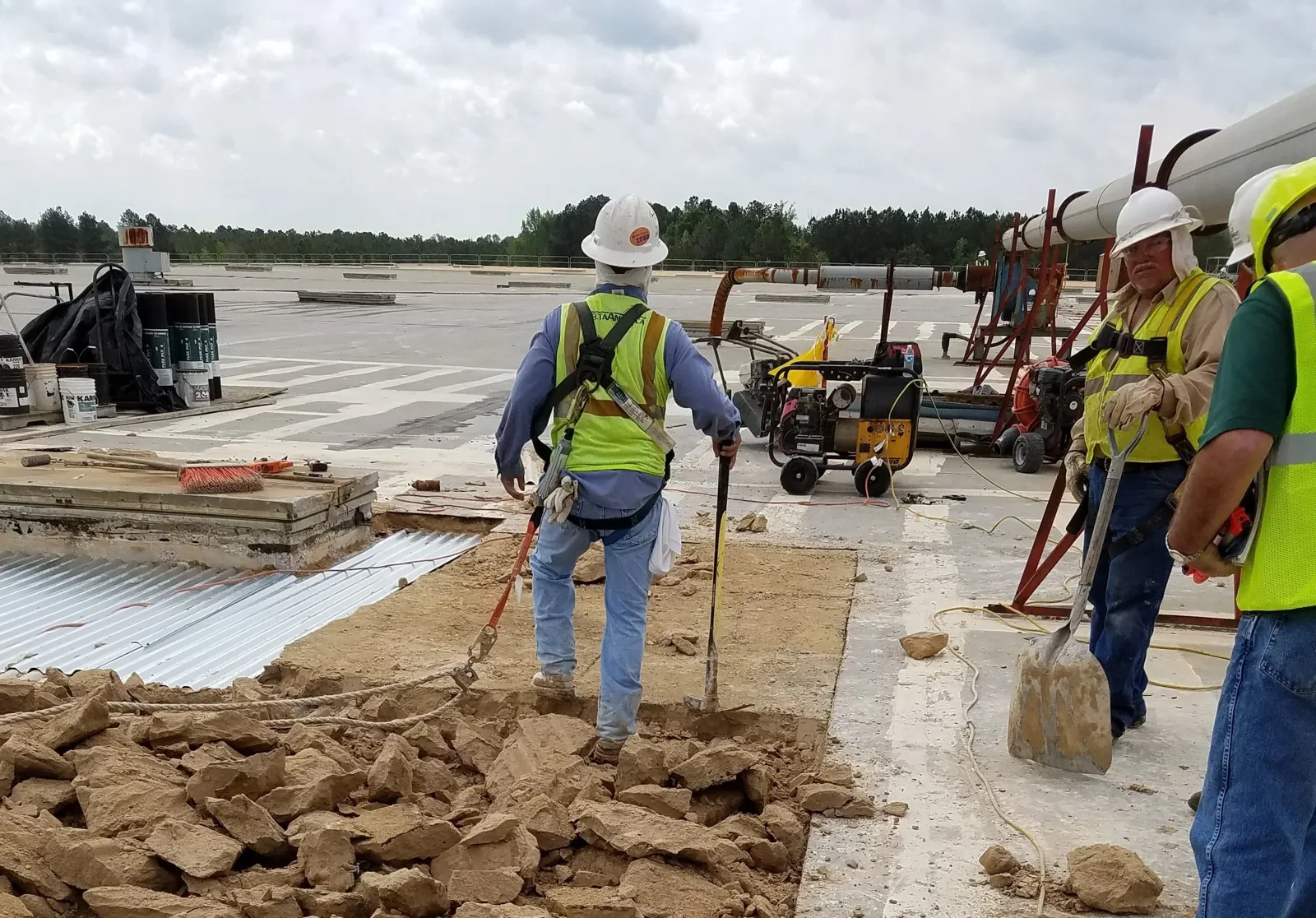
Before pricing a recover or tear-off, the project team verifies existing layers, deck condition where accessible, insulation, edge height, roof slope, and drainage. If moisture or structural capacity is unknown, the proposal identifies the test needed. A recover is not assumed simply because the roof is low-slope. Code, attachment, perimeter details, and compatibility must support the proposed assembly.
Cost can vary with measured area, number of roof levels, equipment curbs, penetrations, flashing, edge length, tear-off, deck repairs, staging, and interior protection. We show which quantities are measured and which assumptions remain. An allowance for concealed conditions states what triggers added work and who authorizes it. That makes bids easier to compare and gives the owner a decision point before a change affects budget or schedule.
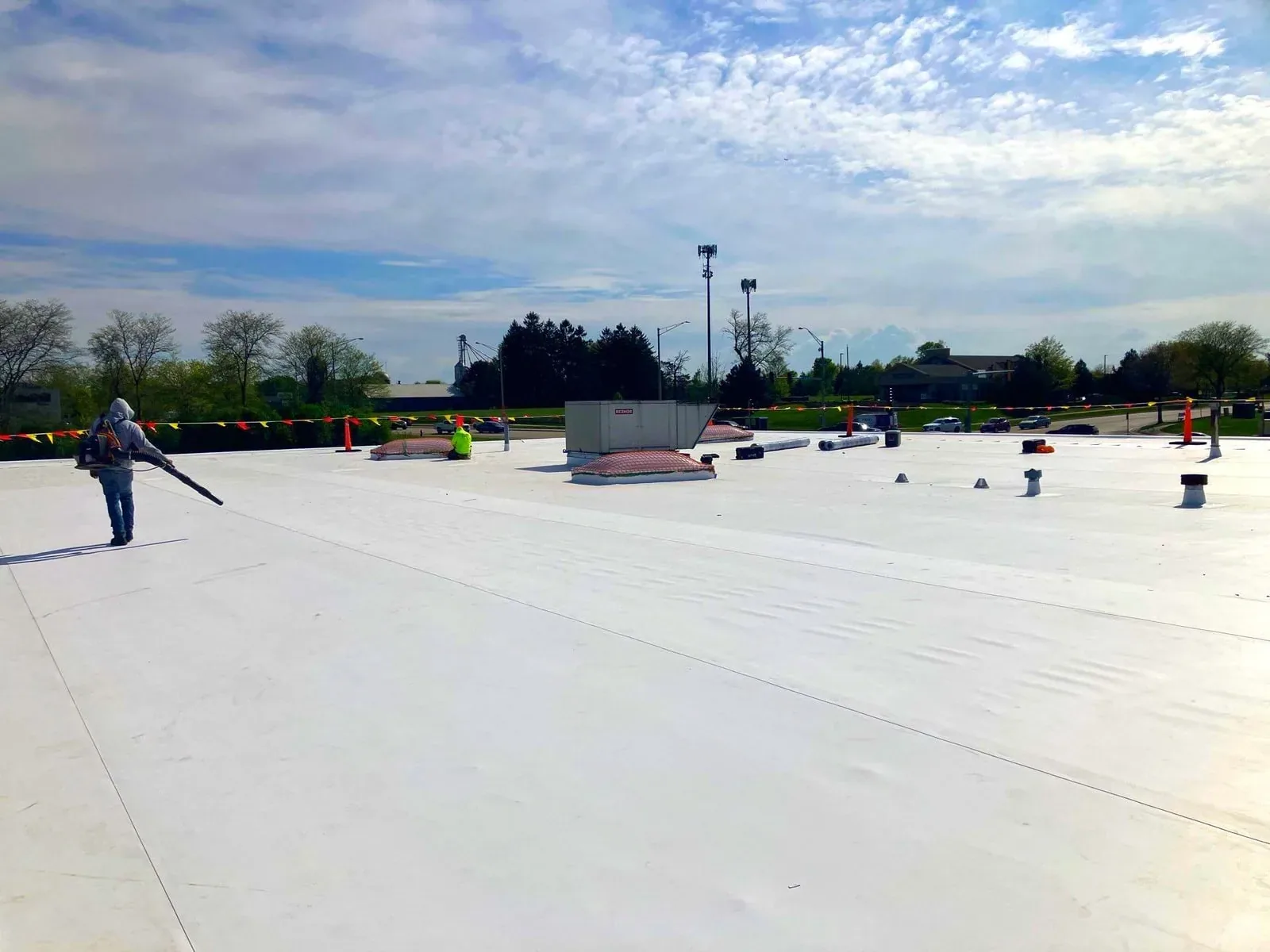
A replacement specification lists membrane or surfacing, insulation, cover board, attachment, flashings, perimeter metal, and drainage details. Wind and fire requirements need design review for the complete assembly. Owners comparing TPO roofing and EPDM roofing should weigh the approved assembly, existing substrate, operating schedule, and maintenance plan rather than a product label alone.
Schedule for Elgin-area seasonal conditions
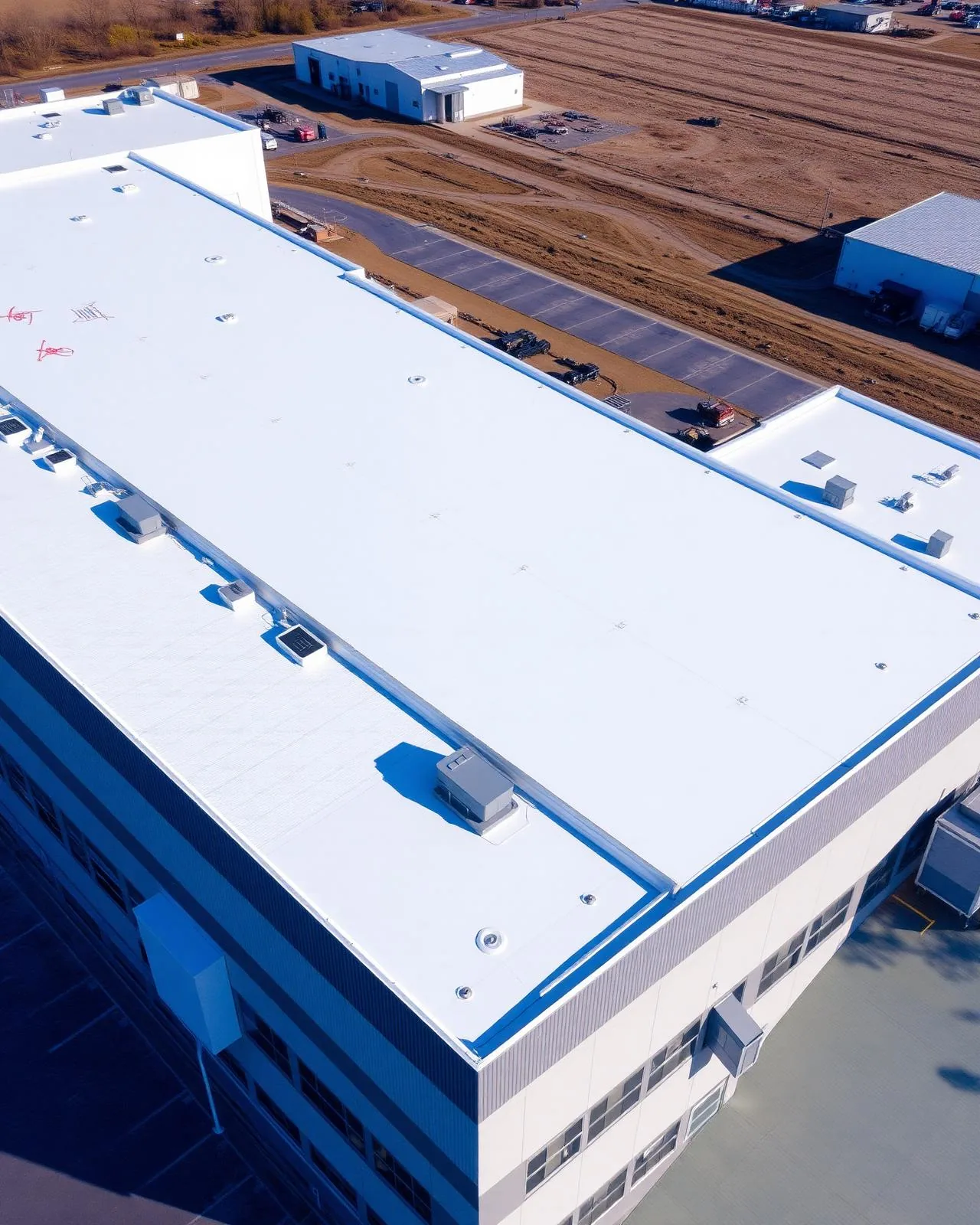
Streamwood property work is scheduled with the wider Elgin-area climate in mind. Elgin averages about 29 inches of snow annually and has recurring freeze-thaw periods. Those conditions affect safe access, drainage observations, and the amount of roof area a crew can keep open. We check actual surfaces and forecasts before mobilization; averages do not diagnose a specific roof.
On July 12, 2023, an EF1 tornado crossed Elgin and produced roof-damage reports at several property types. A reported event still requires a property-level inspection. We document current conditions, such as displaced edge components, torn flashing, punctures, open seams, or interior water, only where observed.
For a replacement, daily dry-in is part of the work sequence. The supervisor sets the maximum open area, checks securement before leaving, and tells the site contact what remains protected. If weather or access prevents a full inspection, the report identifies the unchecked zone and the return visit needed.
Coordinate access, deliveries, and closeout
Before work starts, the property contact and superintendent confirm roof keys, escort requirements, staging, loading times, lift placement, pedestrian routes, and emergency access. Where a business has fixed operating hours or active loading, the plan identifies when those areas remain clear. The contractor verifies those details at the actual property rather than assuming each site uses the same arrangement.
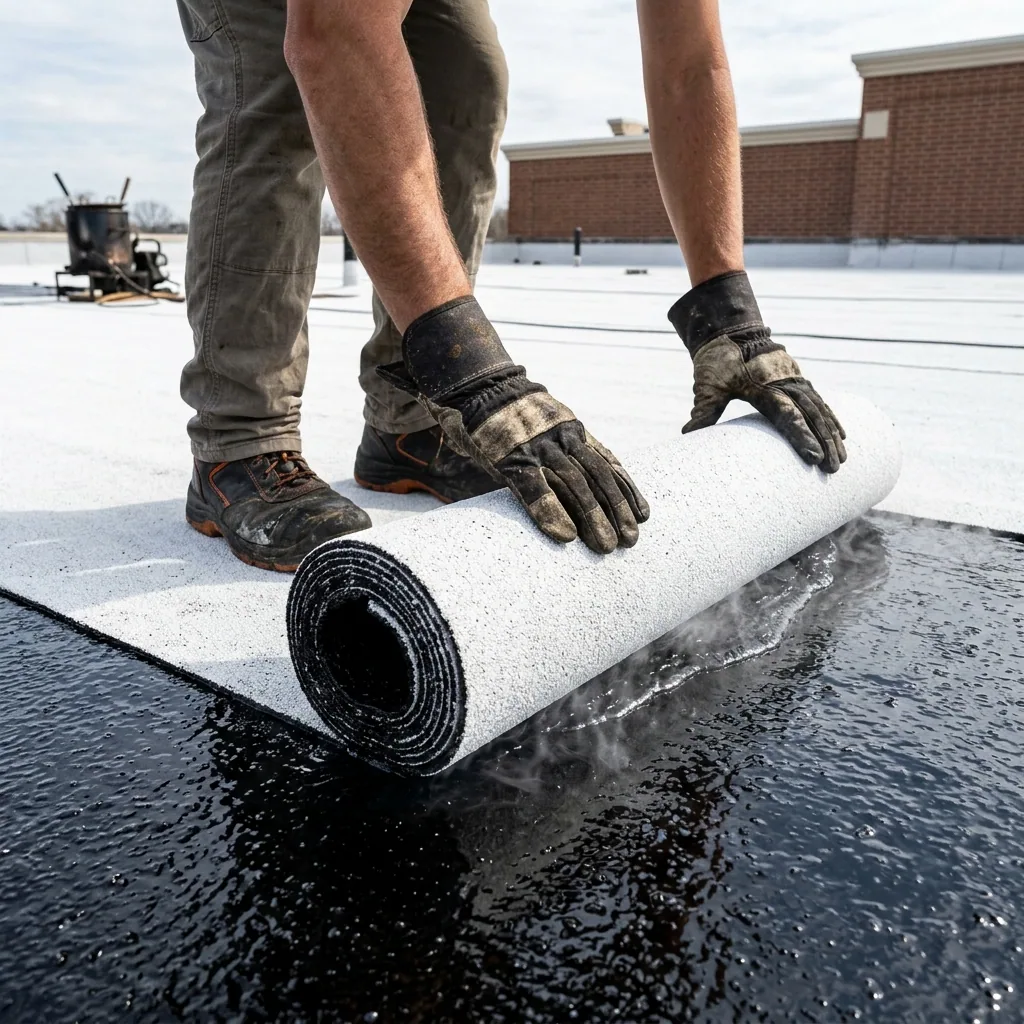
During replacement, work moves through defined sections. The crew checks substrate and details before they are concealed. If tear-off exposes wet insulation or damaged deck, workers photograph and measure the location, then follow the agreed approval process. The owner receives the cost and schedule effect before the scope expands. This gives operations staff a clear point of contact for field changes.
At closeout, the property team receives completed-zone photos, installed material information, approved changes, punch items, and maintenance recommendations. A property owner can also request service at Elgin Corporate Center or Slough Business Center, with each inspection scoped to the actual roof.
Questions About Streamwood
How many businesses are in Streamwood?
The Village reports more than 600 businesses across commercial and industrial activity.
Can you service an occupied Streamwood property?
Yes. We coordinate roof access, interior protection, deliveries, and work timing with the site contact.
Does a regional storm report prove roof damage here?
No. An inspection must establish current conditions at the specific property.
What should staff report when a leak starts?
Share the room, timing, weather, and any recent rooftop work. We trace plausible entry paths.
How do I compare repair and replacement?
We document roof condition, layers, moisture, access, quantities, and unresolved assumptions for review.