Commercial Roof Drains and Scuppers in Elgin, IL
Inspect a roof drainage path
Send the property name, reported ponding area, drain or scupper location, access contact, and recent roof records. We will define the inspection boundary and next step.
Commercial Roof Drains and Scuppers
A roof drain problem starts with the path water should take. We check the inlet, bowl, leader connection, overflow, nearby membrane and low-point geometry before recommending work. Elgin receives about 37.76 inches of precipitation annually and averages 29 inches of snow. Rain, meltwater and freeze-thaw each test a different part of the drainage assembly. The inspection records what is blocked, damaged, poorly sloped or still uncertain. A coating or sealant alone cannot correct a blocked line or an incorrect roof plane.
Trace the water path: inlet to discharge
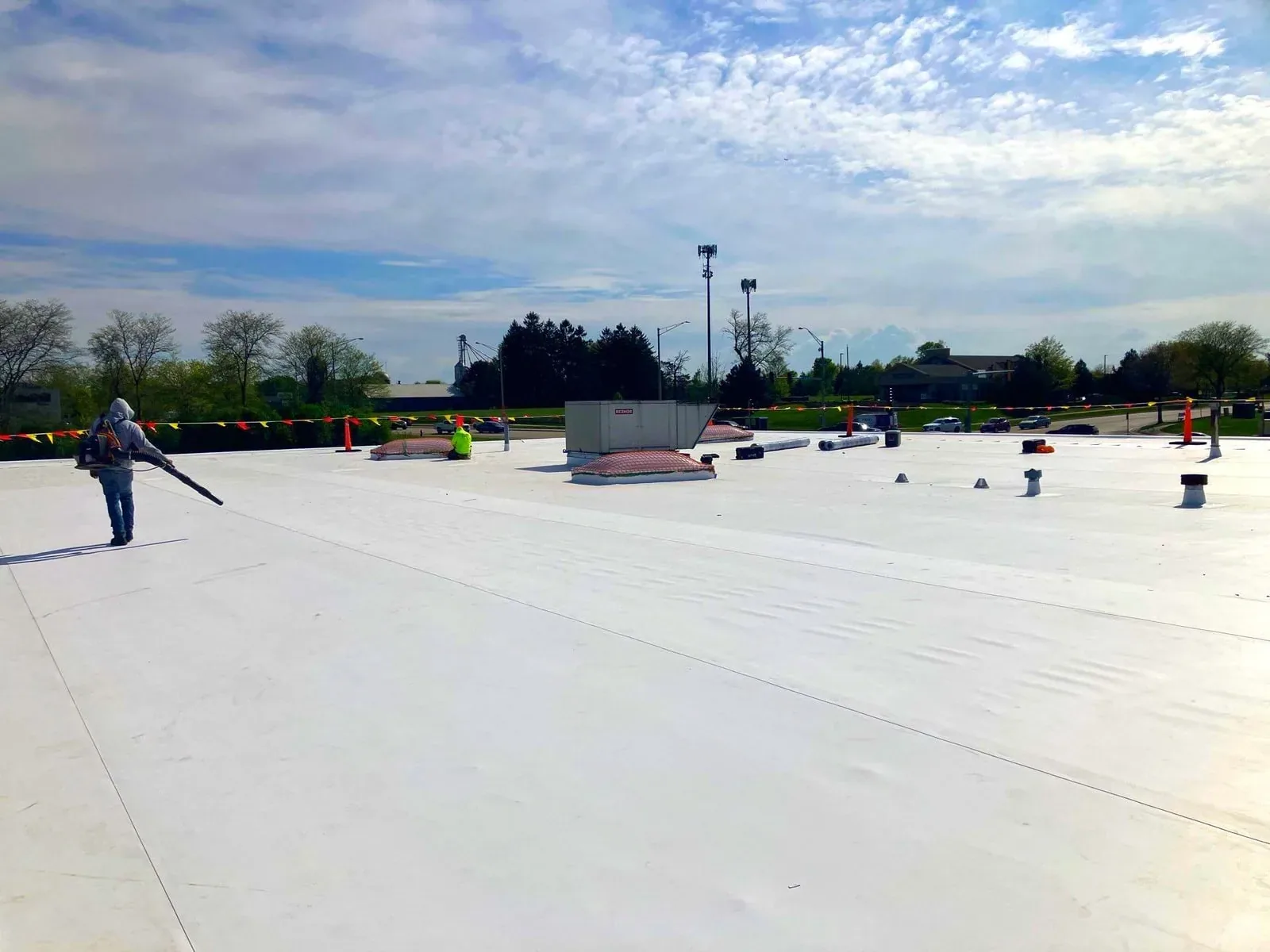
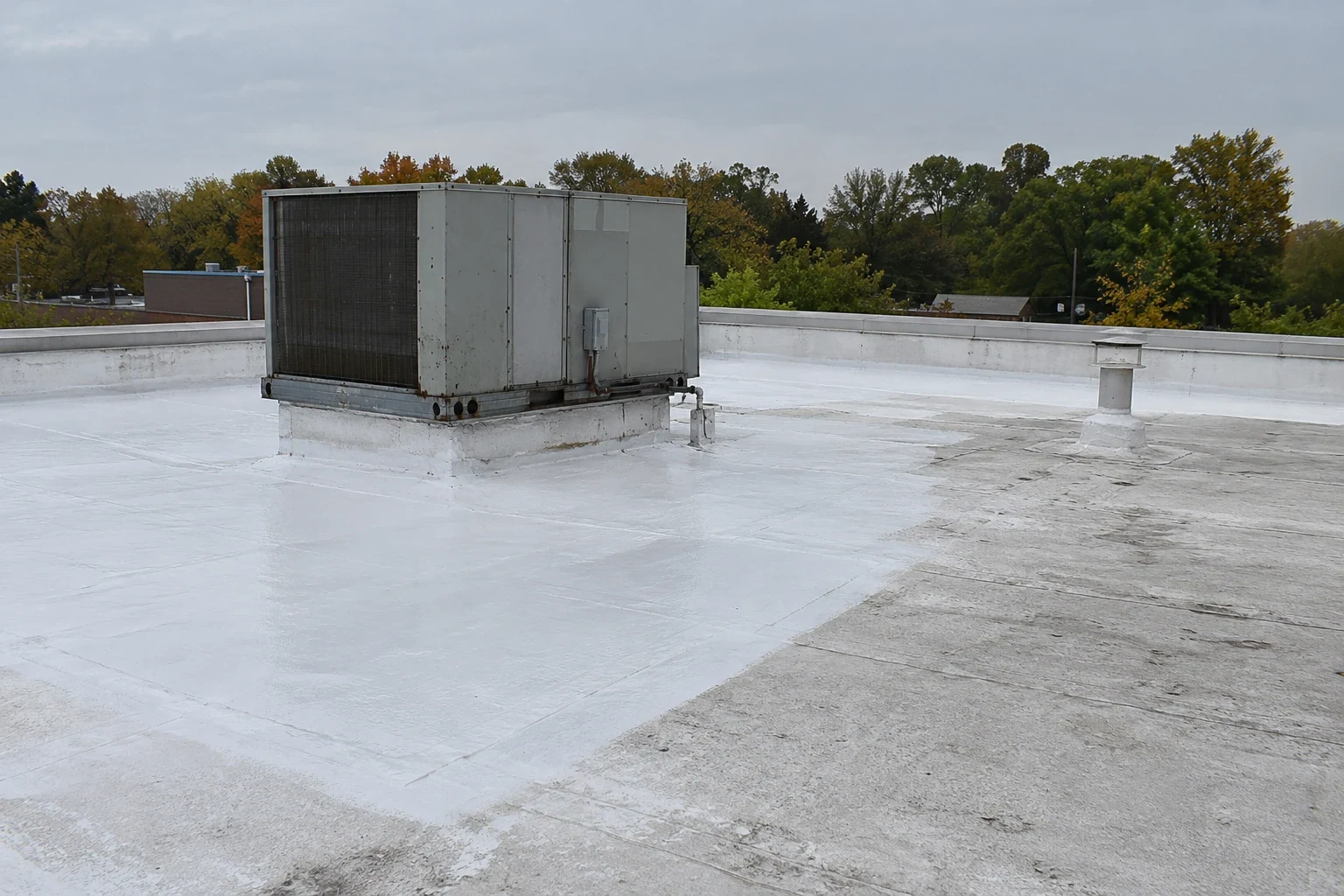
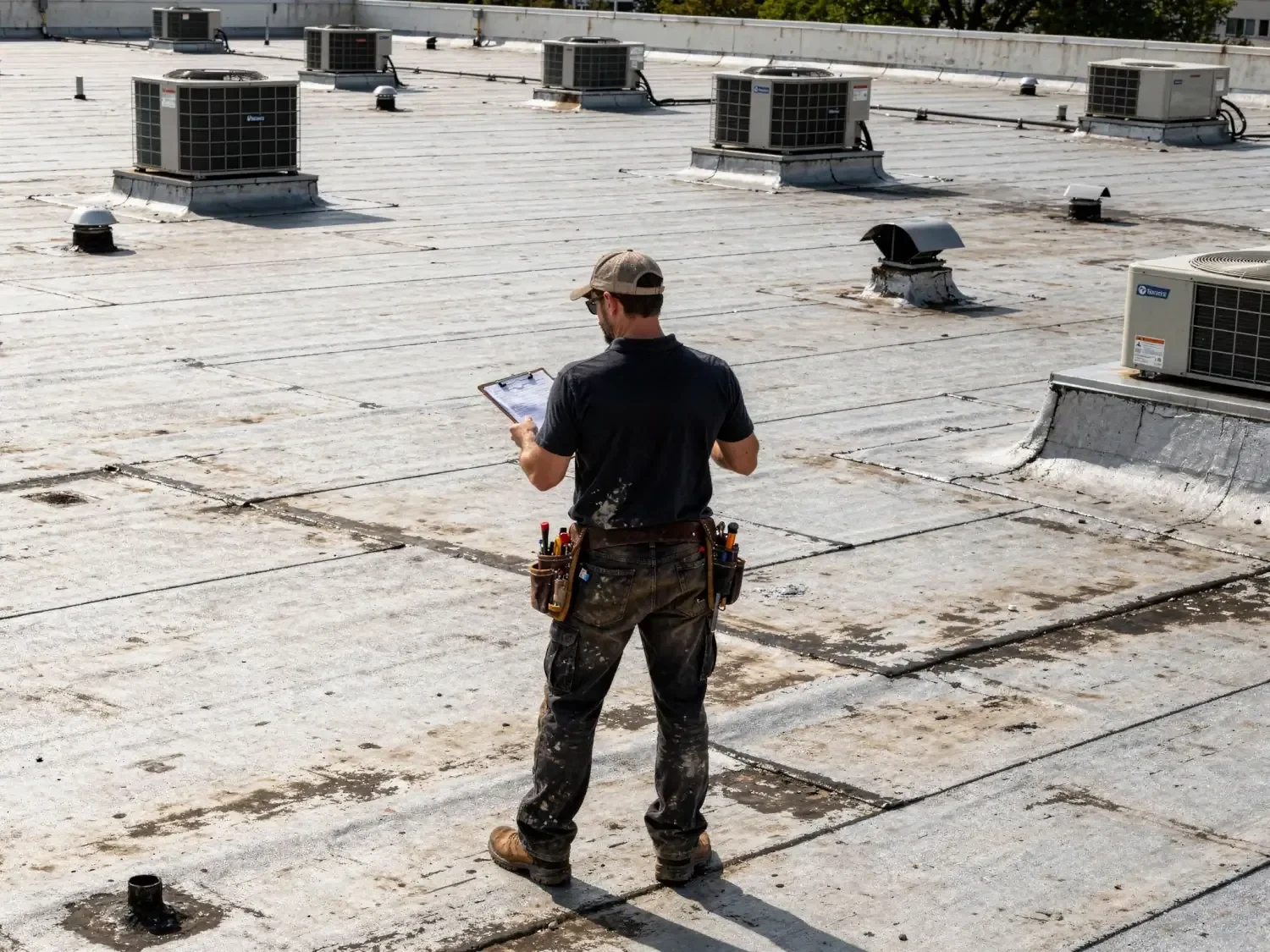
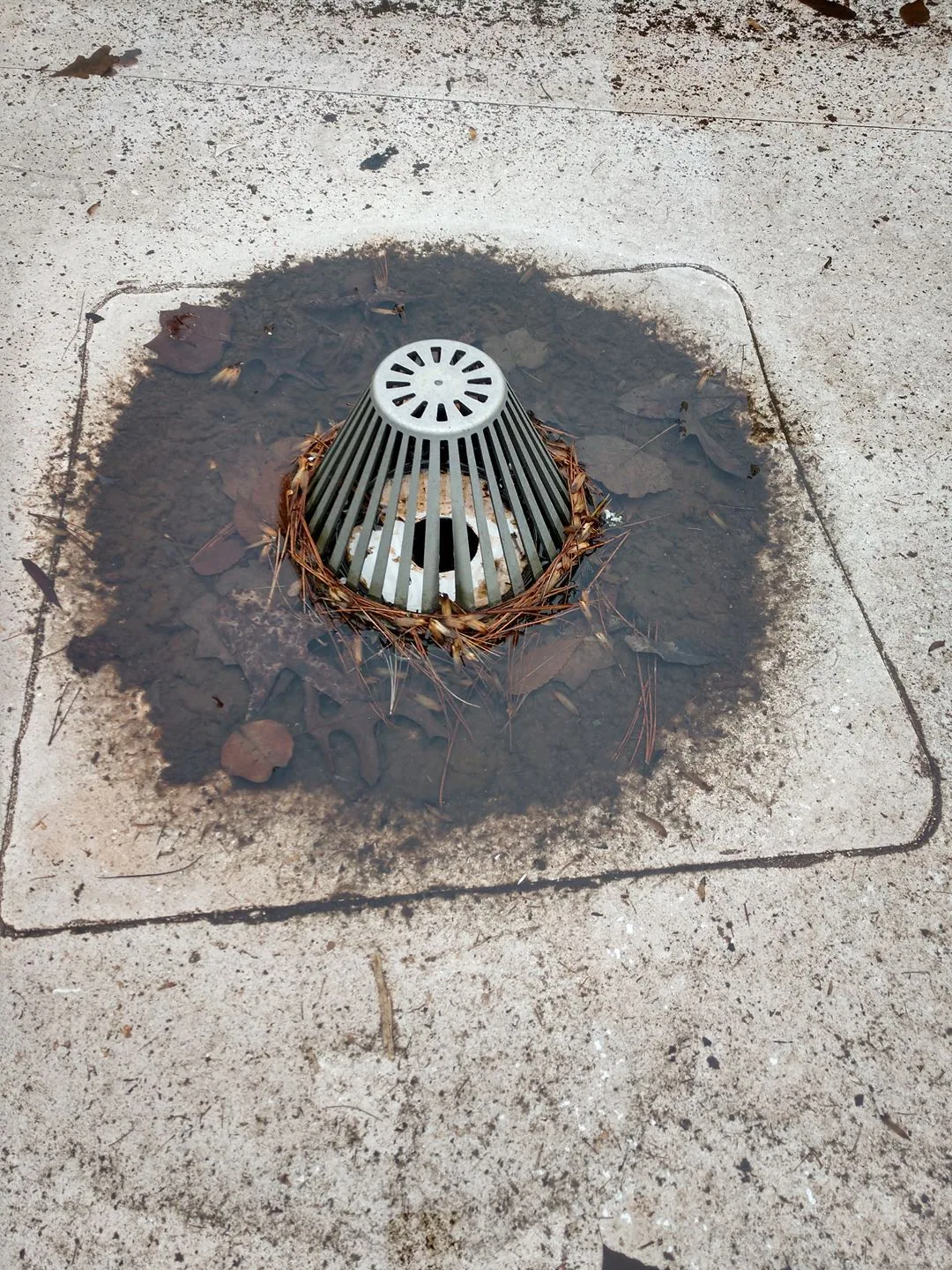
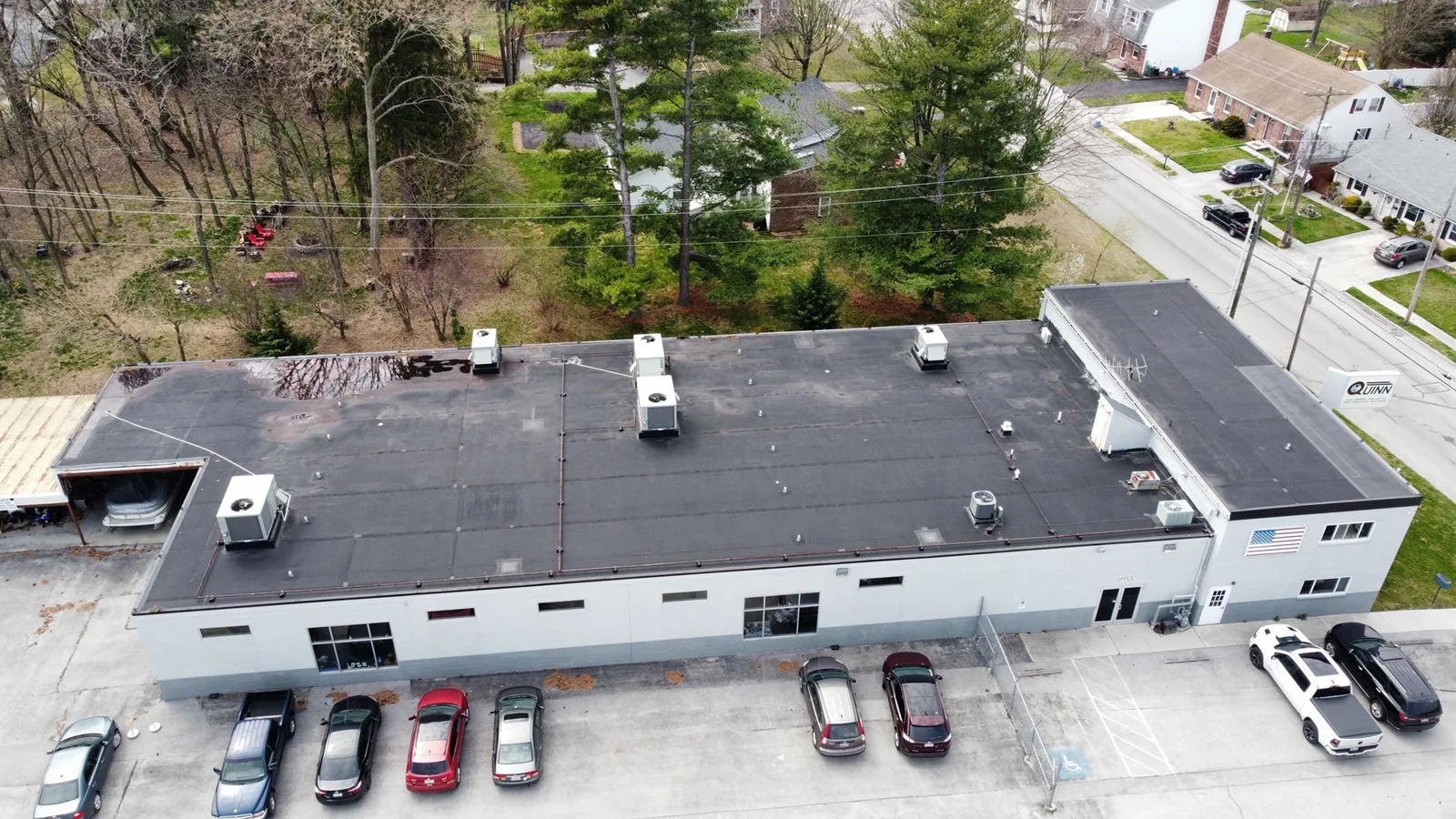
We begin at the roof surface. The crew removes loose debris from an accessible inlet, checks the drain ring and clamping detail, and looks for a gap between the drain and surrounding membrane. We inspect strainers, sump areas, overflow outlets and visible piping conditions. A clear-looking bowl does not prove that a leader below the deck is open. When flow remains slow, the scope identifies whether plumbing or interior access is needed.
At roofs with scuppers, we check the opening, metal sleeve, termination, and path beyond the wall. A discharge point that spills onto a lower roof can create a separate concern. We document where water exits and whether the receiving roof can direct it to an outlet. The proposed work distinguishes cleaning from repair or redesign. If roof records show a previous addition, we verify which drainage path serves each section before changing a detail.
Properties near Randall Point and the South Elgin-LaFox corridor have different site layouts and operating schedules. We confirm roof access, drainage drawings, and safe discharge points at the building. Area names help with dispatch; field conditions determine the recommendation.
Measure ponding: distinguish low spots from blockage
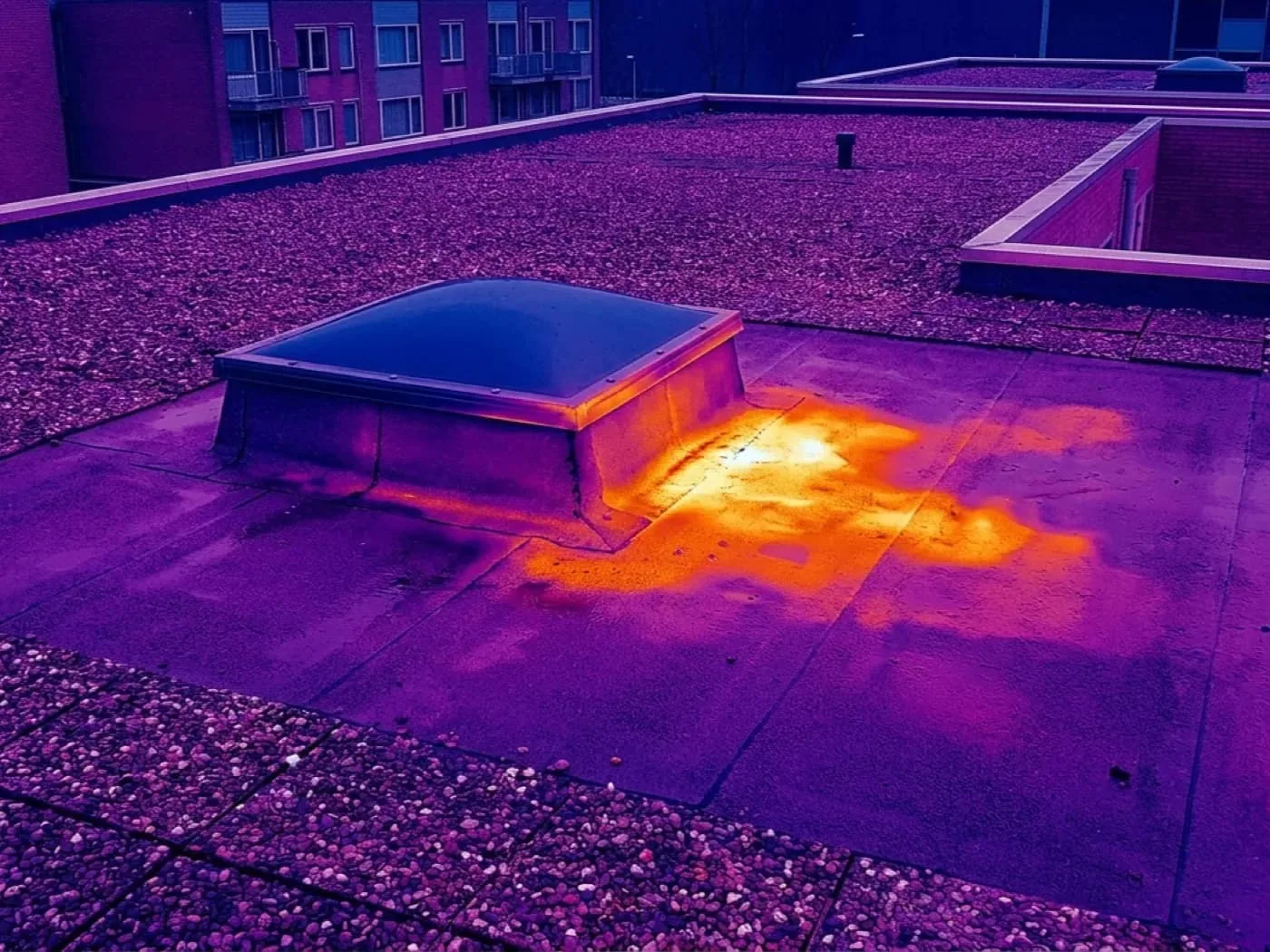
Standing water may reflect a blocked drain, a depressed deck, insulation settlement, a misplaced cricket or a design slope that does not reach the outlet. We note the water line and roof condition after weather allows the surface to drain. A single visit during rain cannot show how long water remains. The report records observed depth and location when measurable, plus the conditions affecting the observation.
Elgin’s annual precipitation and winter snow make seasonal checks useful. A drain can be clear in summer and restricted by leaves, ice or displaced material later. Snow storage can also hide an inlet. We do not assign a structural cause based only on a shallow pond or a ceiling stain. If the pattern suggests movement, we recommend review of available structural or roof design records before changing slope.
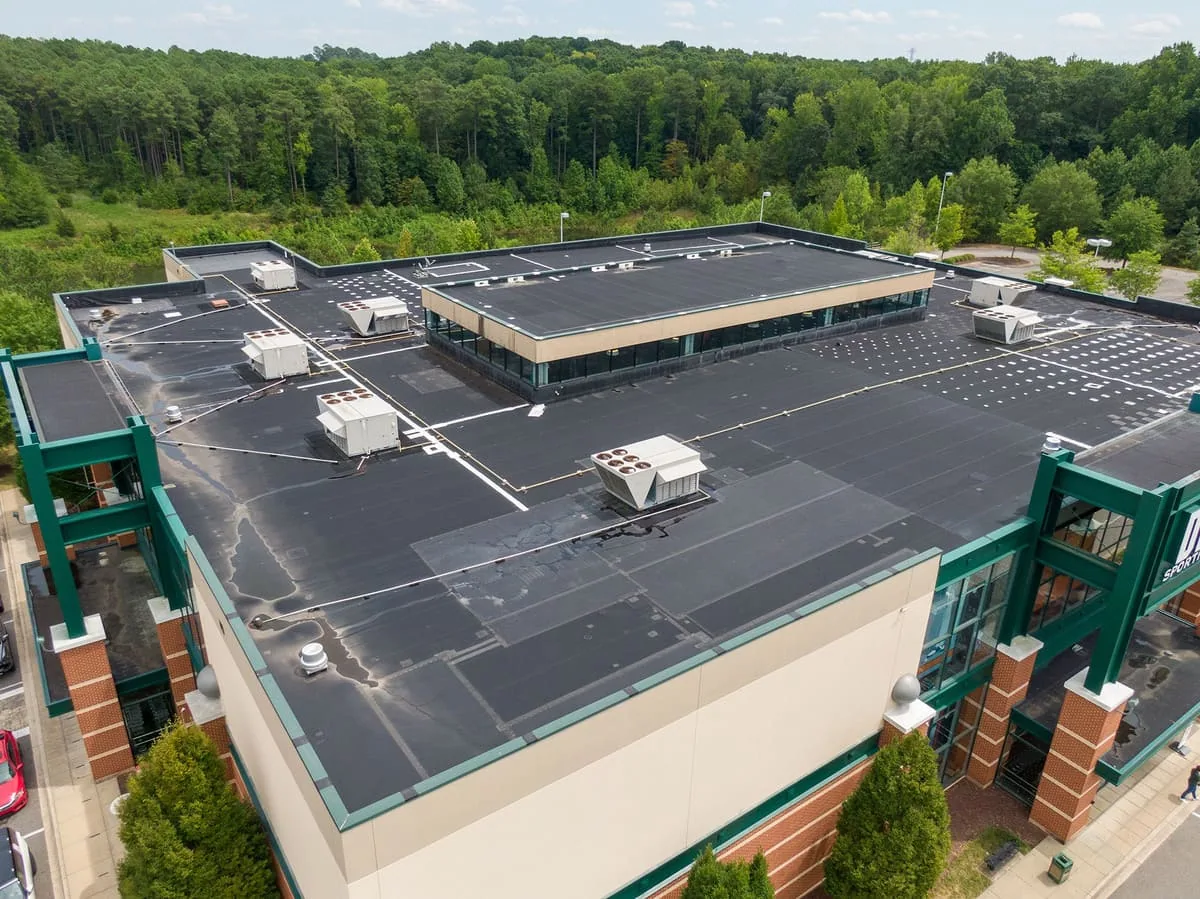
Where the outlet works but the surface falls away incorrectly, a TPO assembly may require a detail-compatible tapered insulation plan. The remedy depends on deck, existing layers, loading and tie-in constraints. We present options with measurable limits rather than coat over a low area and call the drainage corrected.
Repair the assembly: preserve membrane continuity
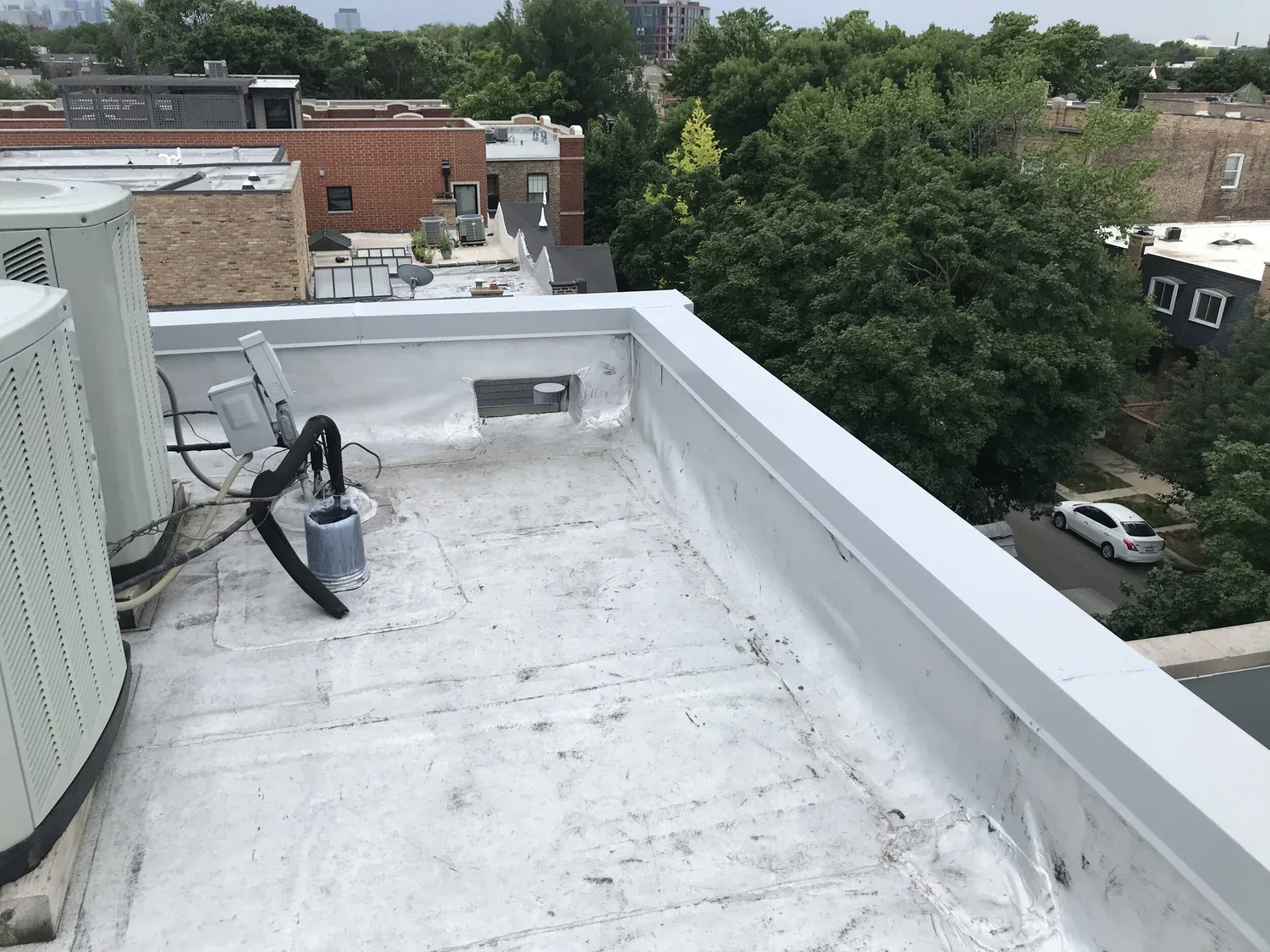
Drain work often touches several materials. The crew may need to remove a clamp ring, replace a bowl, restore membrane at the flange, reset a strainer, or rebuild nearby flashing. The specific scope follows the installed roof type. We identify whether the work can be completed from the roof or needs access below. New components must fit the outlet and connect without leaving an unsealed transition.
Scupper repair requires similar care. We inspect the metal sleeve and membrane termination, then define whether the repair is a localized flashing, a replacement opening, or a larger edge correction. We avoid reducing the overflow capacity or sending water toward an unprotected wall. A perimeter metal review can be useful when the scupper meets coping or gutter work.
If the roof has wet insulation or failed surrounding material, the drain repair boundary may need to expand. A coating evaluation is appropriate only where the substrate and drain details meet the product requirements. We do not treat coating as a substitute for correcting a failed drain assembly.
Plan for freeze and snow: keep outlets serviceable
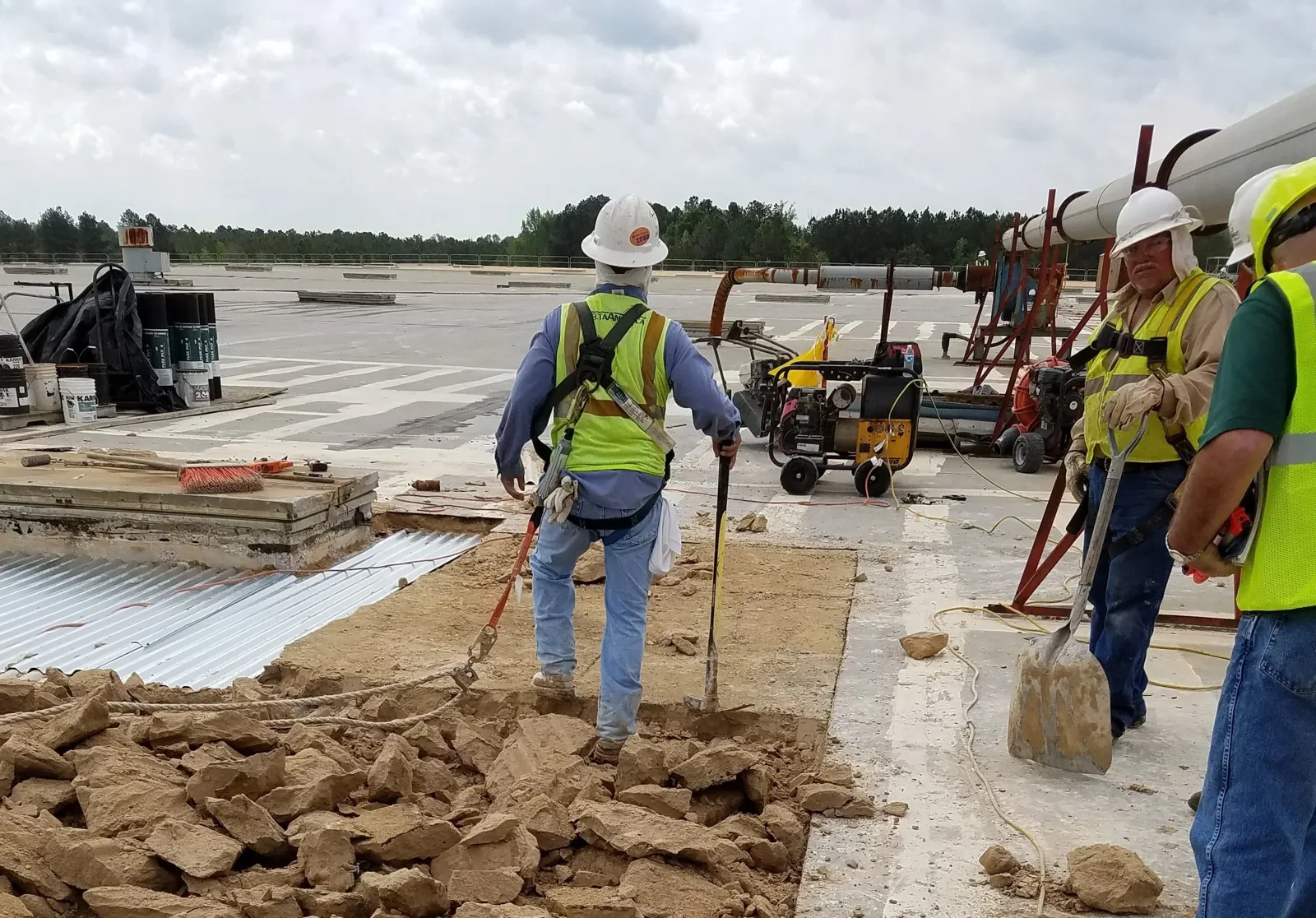
Cold-weather drainage is a sequence, not a single cleaning task. We check whether ice blocks an inlet, whether melting water can reach an outlet, and whether the overflow remains available. We do not chip ice in a way that punctures the membrane or damages a drain bowl. Elgin snowfall averages 29 inches per year. With 137.9 freezing days, confirm each outlet again after safe thaw access. This supports planning for seasonal inspections; it does not mean a specific property has an ice problem. The owner can schedule a pre-winter check for accessible drains, strainers, scuppers, and discharge areas. During a thaw, a follow-up can confirm that outlets remain open and that water has not collected at a seam or curb.
At Downtown Elgin, occupied entrances and pedestrian areas may shape ground-level protection and work hours. We confirm each property’s routes with its contact. On other sites, loading docks, production traffic, or secure zones may drive the plan.
Set the approval point: state what remains unknown
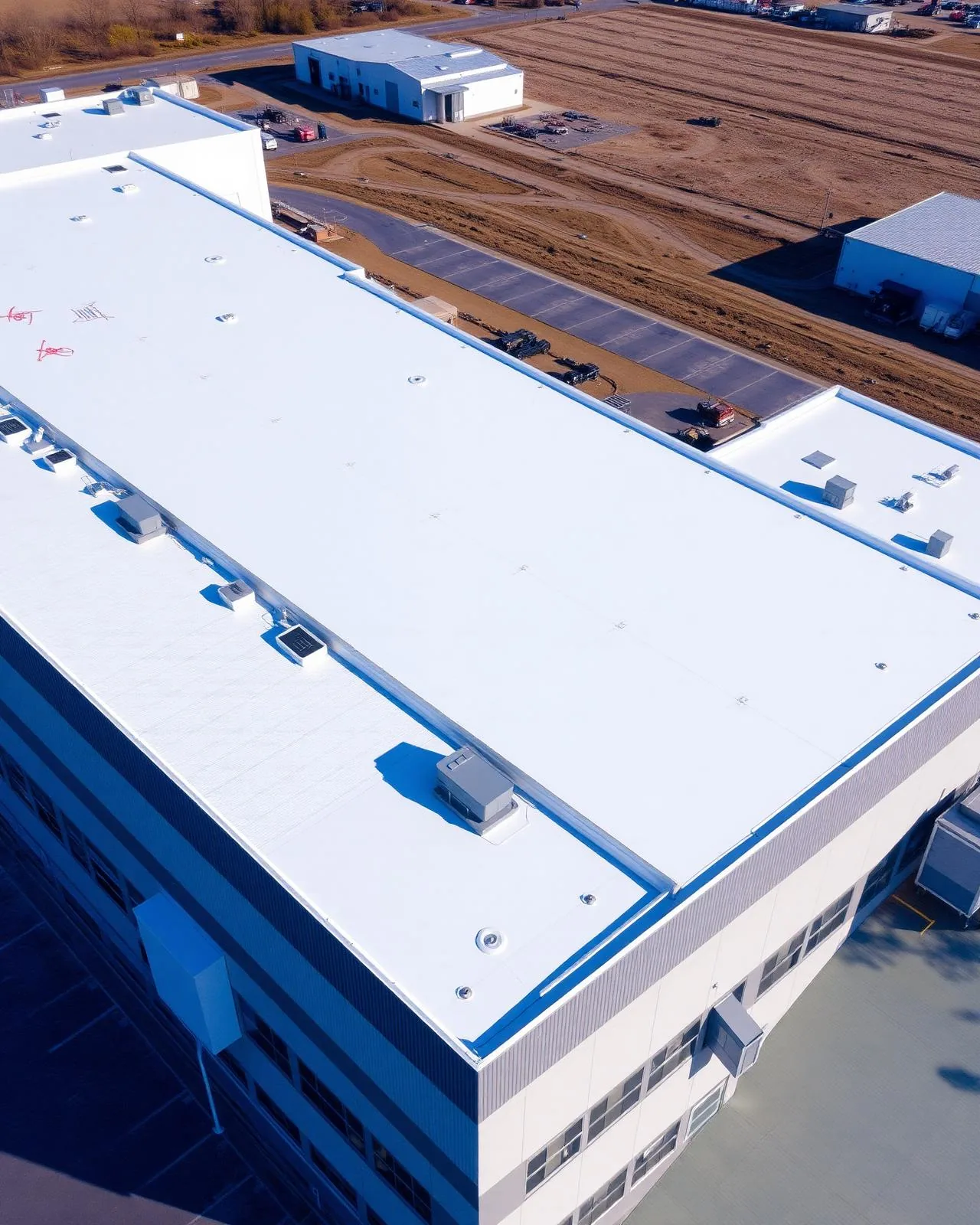
The proposal separates cleaning, drain-component replacement, membrane tie-in, piping review, and slope correction. It lists accessible outlets and any that could not be examined. If water testing is appropriate, we agree on the area, conditions, and method first. The scope also identifies whether a roofer, plumber, or structural professional needs to participate.
Where concealed piping or deck conditions remain unknown, we set an approval point before opening the assembly. If the drain bowl is separated from the leader, that issue may require interior access and a different trade. No crew should infer that a slow drain proves a specific underground blockage. We report the observation and identify the next diagnostic step.
For a multi-building owner, an asset condition record can track each drain, repair date, and seasonal follow-up. A small inventory is more useful when it identifies the roof zone and outlet, not just the building name.
Closeout: leave a maintainable drainage record
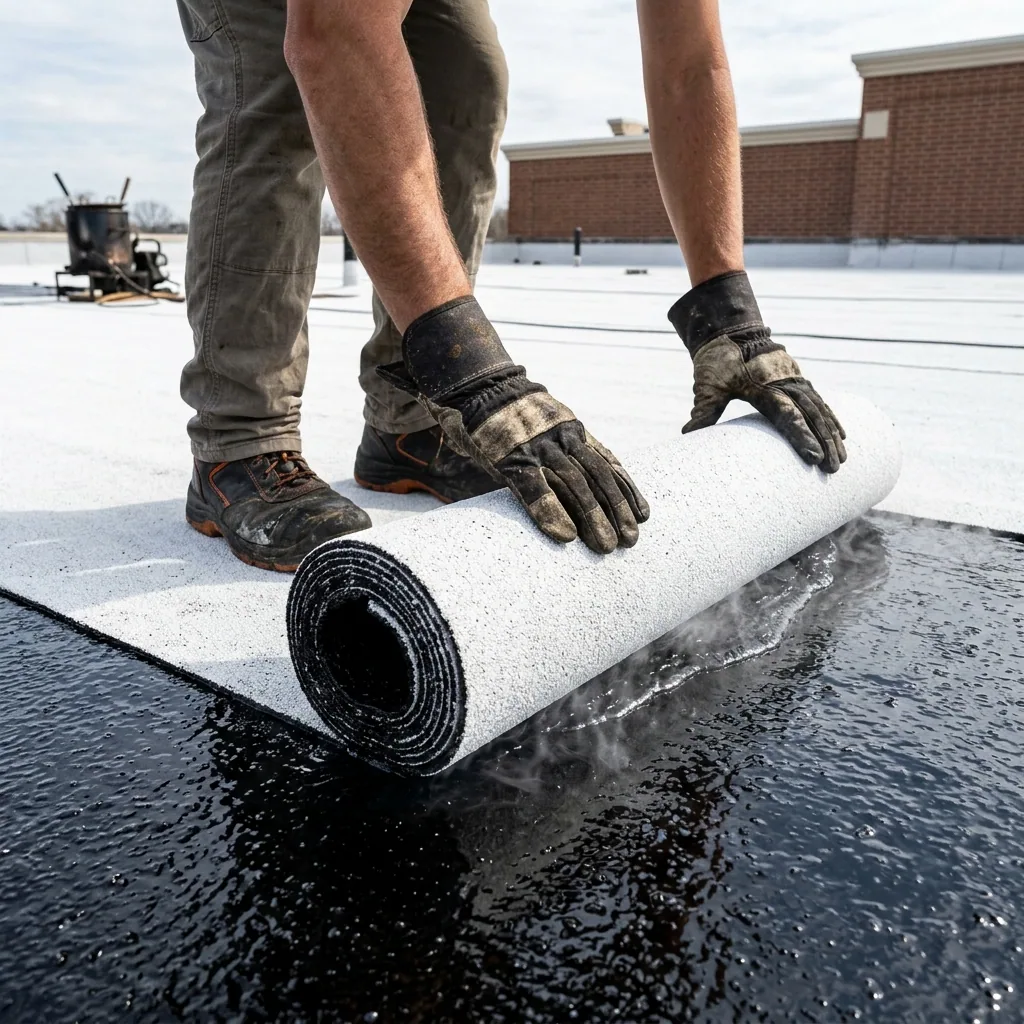
At completion, we photograph the repaired drain or scupper, membrane tie-in, strainer, and discharge path. The closeout lists removed debris, replaced components, any flow test performed, and limits on that test. The owner receives practical maintenance instructions and the date for a recommended review. A drain should remain accessible; rooftop equipment or stored material must not block the service path.
Share roof plans, recent leak locations, known drain counts, and access rules when requesting an inspection. Include the building contact who can confirm interior access if a leader needs review. We will identify which outlets can be inspected during the first visit and where testing is needed. The final recommendation follows the verified water path, not a blanket assumption based on regional rainfall.
Questions About Commercial Roof Drains and Scuppers
Does ponding always mean the roof needs replacement?
No. A blocked inlet, damaged bowl, settled insulation, poor slope, or deck movement can create standing water. Inspection identifies what is visible and which tests or records are needed before selecting a repair.
Can you clear a roof drain during an inspection?
We can remove accessible loose debris when safe and within the authorized scope. A slow leader or concealed blockage may require separate plumbing access or testing.
How do you check a scupper?
We inspect its opening, sleeve, membrane termination, discharge point, and any lower roof receiving the flow. The scope distinguishes flashing repair from changes to capacity or drainage layout.
Should drains be checked before winter in Elgin?
A seasonal review can confirm that accessible inlets, strainers, and overflow paths are clear before snow and freeze cycles. The schedule depends on roof access, debris exposure, and owner maintenance requirements.
Will coating fix a low area?
Coating does not change slope or open a blocked outlet. We first evaluate the drain path, substrate, and low-point geometry. Tapered insulation or other corrective work may be a separate option.