Commercial Fire Damage Roof Repair in Elgin, IL
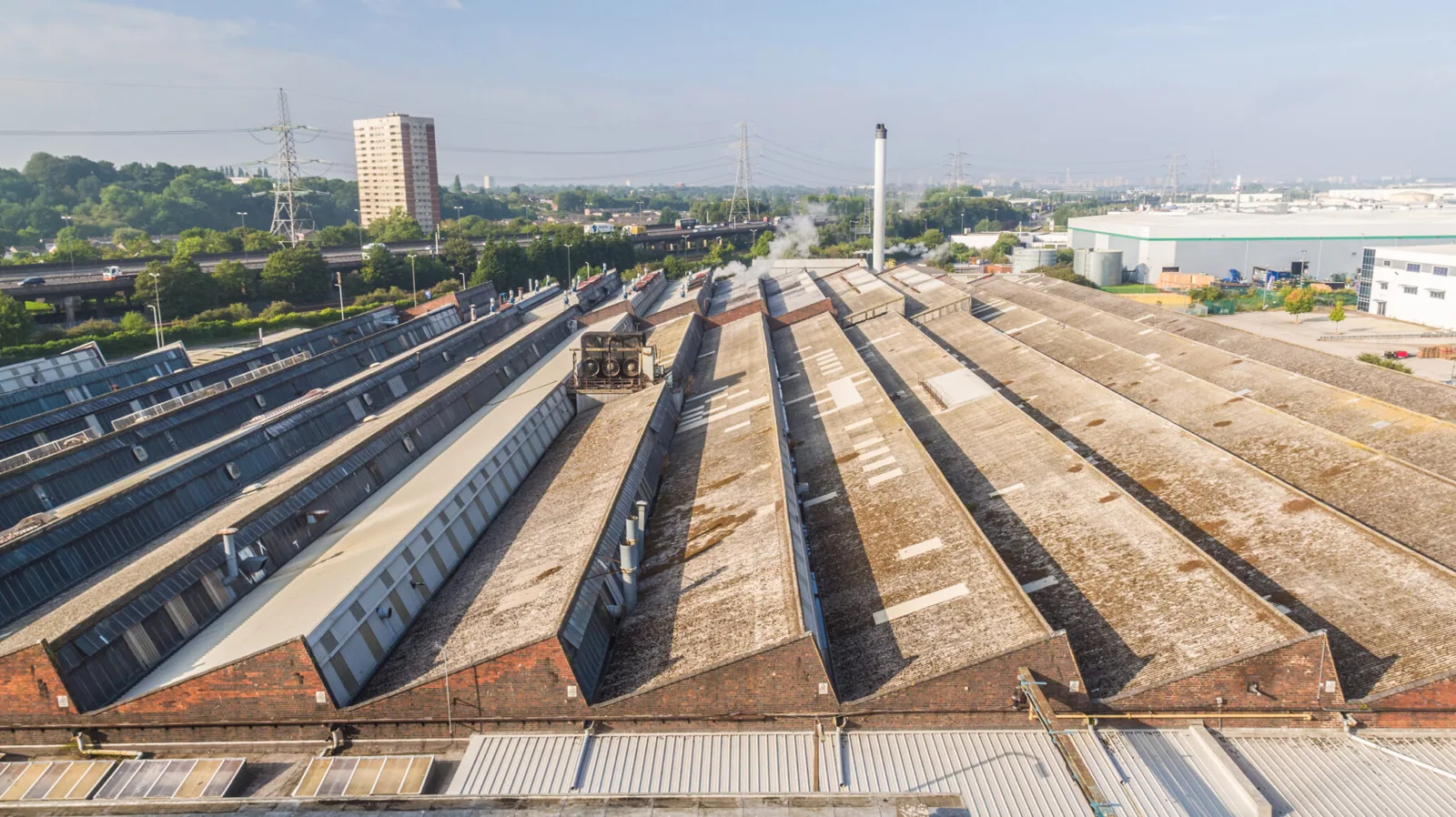
Request a post-fire roof assessment
Provide the property, scene-release status, affected roof area, water condition, site contact, and approved access limits. We will confirm what can be inspected and the first authorization point.
Commercial Fire Damage Roof Repair
After a fire, roof access follows the incident command and building-safety plan. We confirm that the owner or fire official has released the affected area, identify active water, and learn which rooms or equipment remain restricted. Then we inspect the roof above the reported area for heat exposure, openings, displaced flashing, and suppression-water paths. No repair begins until the access contact and approval point are clear.
Elgin’s business and industrial parks include office, research, and general industrial areas. Manufacturing, food processing, and commercial equipment are part of the local employer mix. Those uses can affect operating priorities, but they do not establish the construction or condition of a specific building. A property in Elgin Industrial Park or Downtown Elgin receives a site-specific roof review.
Release: confirm safe roof entry
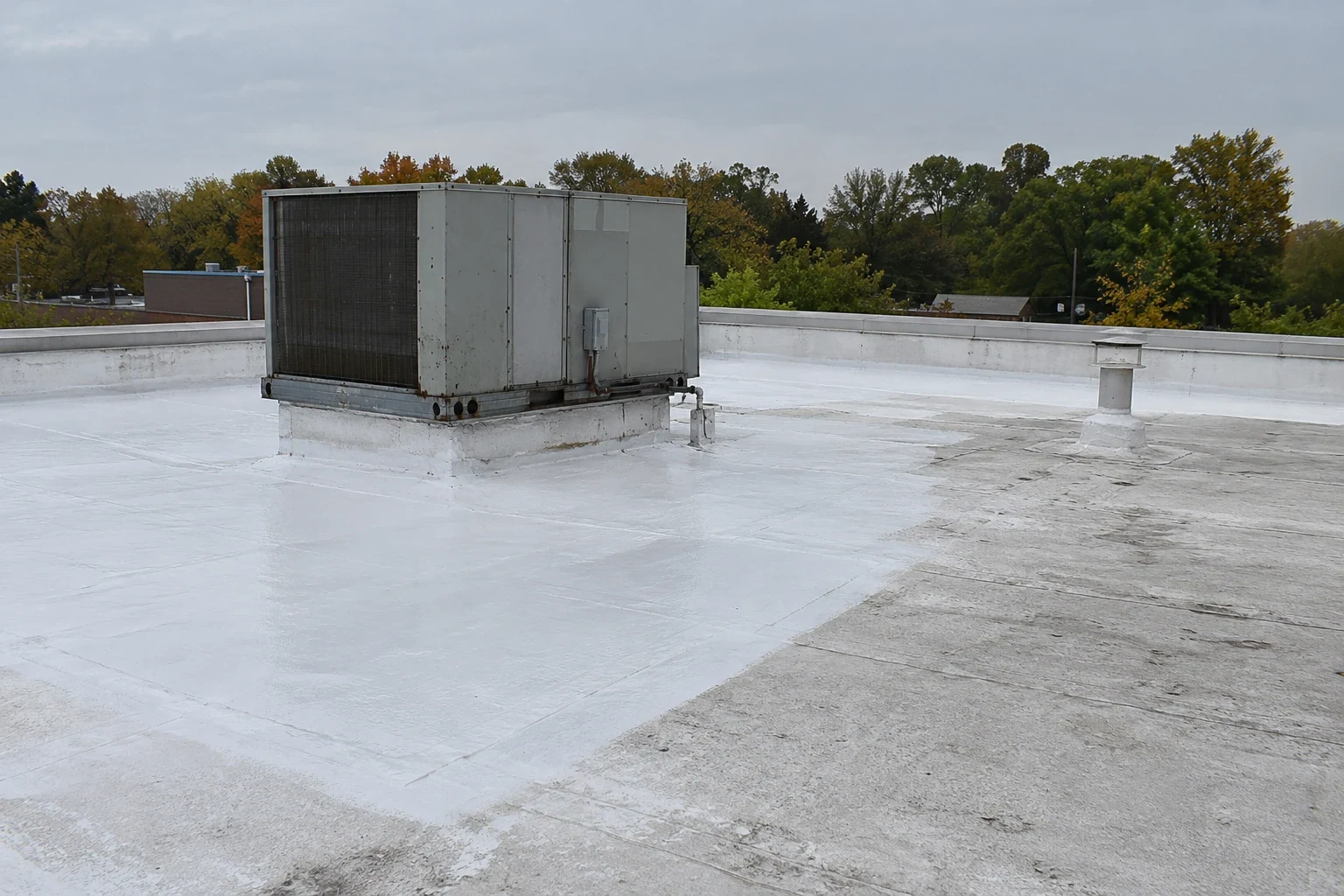
Fire response may leave a roof unstable, wet, or unsafe to enter. We follow the owner’s and fire authority’s access instructions and stay outside any restricted zone. The site contact identifies structural review, utility isolation, hot spots, or other hazards already reported. We do not treat visible access from a ladder as permission to cross a damaged area. If entry is deferred, the report records that limit and a return condition.
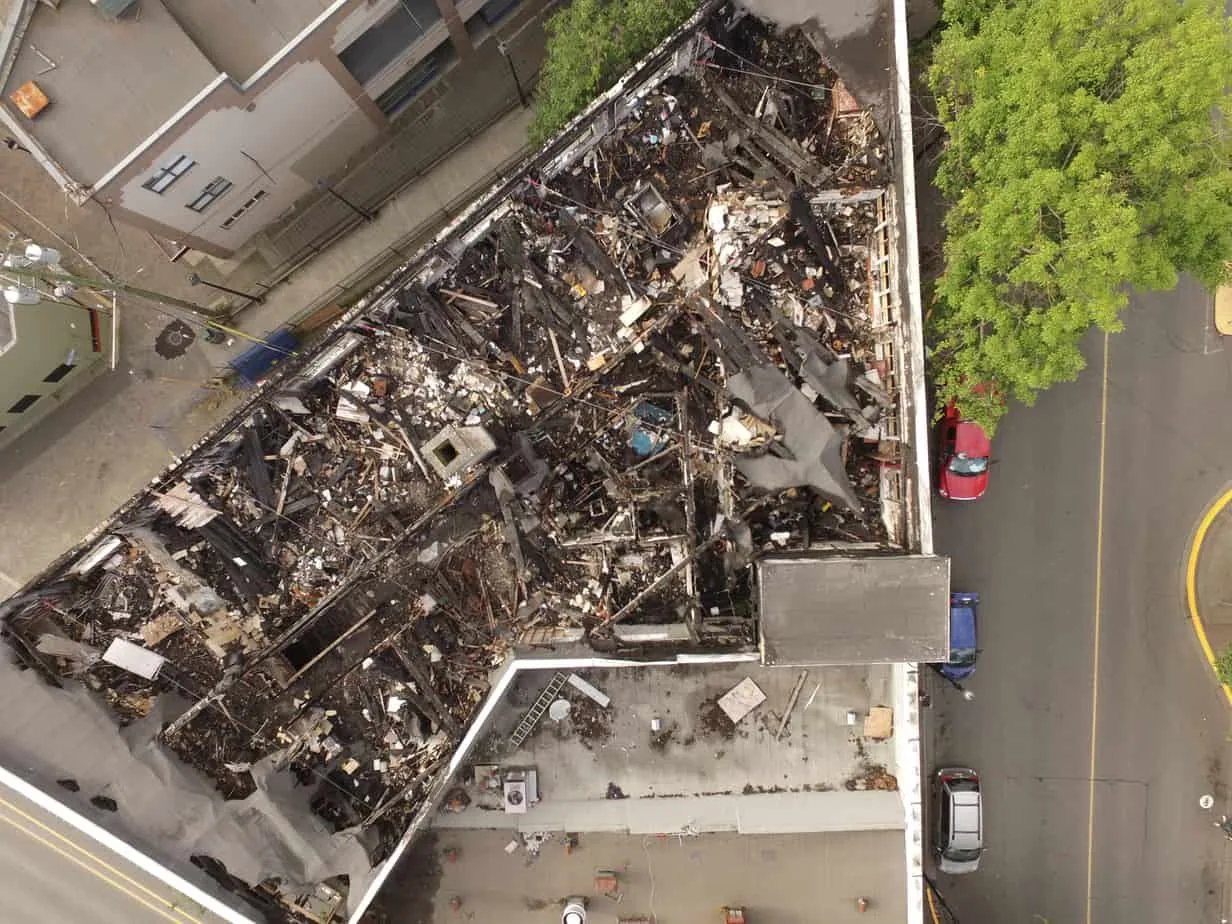
Before dispatch, the owner identifies the building, roof sections involved, current water status, incident contact, and person authorized to approve roofing work. Fire crews may have opened walls or roof areas for suppression. Those openings can affect drainage, insulation, deck, and rooftop equipment. We document what can be seen, identify what is hidden, and coordinate a safe sequence with the restoration lead.
Temporary measures may be needed to keep weather out after the area is released. The plan states which opening is covered, how the cover is secured, what remains exposed, and who monitors it. An emergency roof response can address immediate exposure, while the permanent repair remains a separate scope and authorization.
Impact review: separate heat from water damage
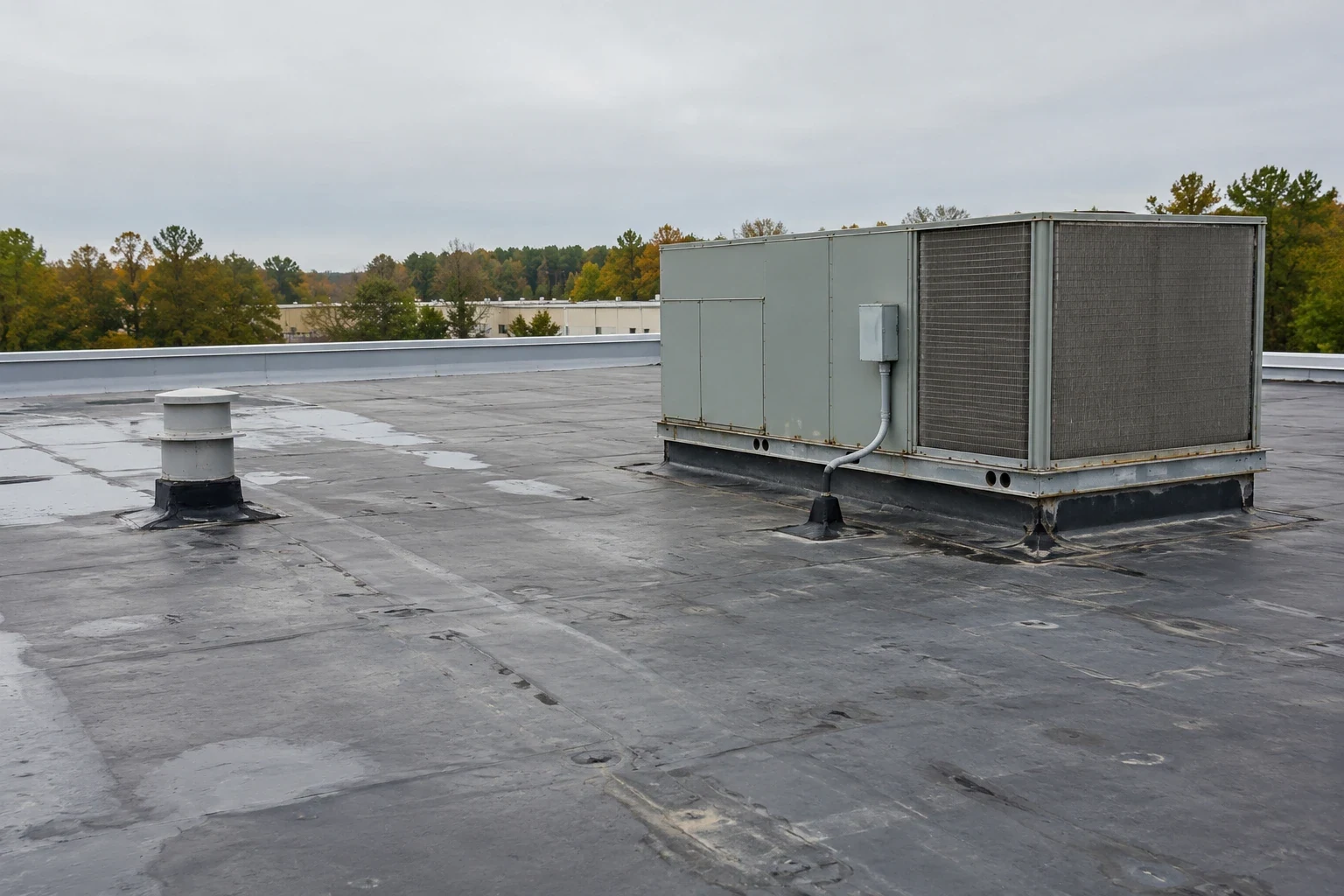
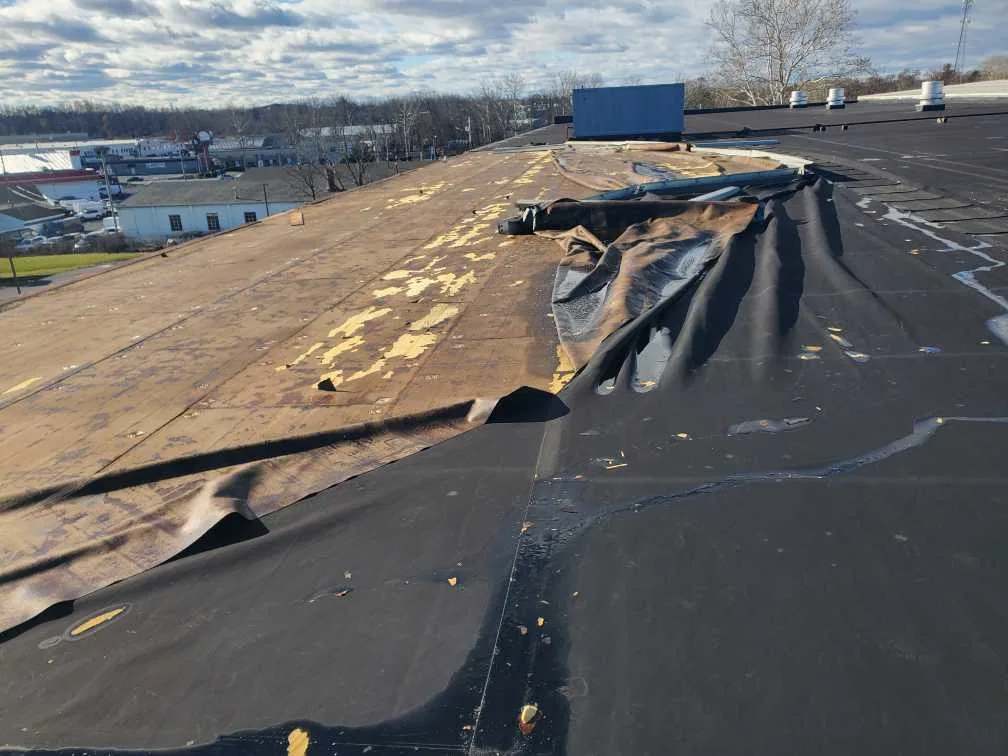
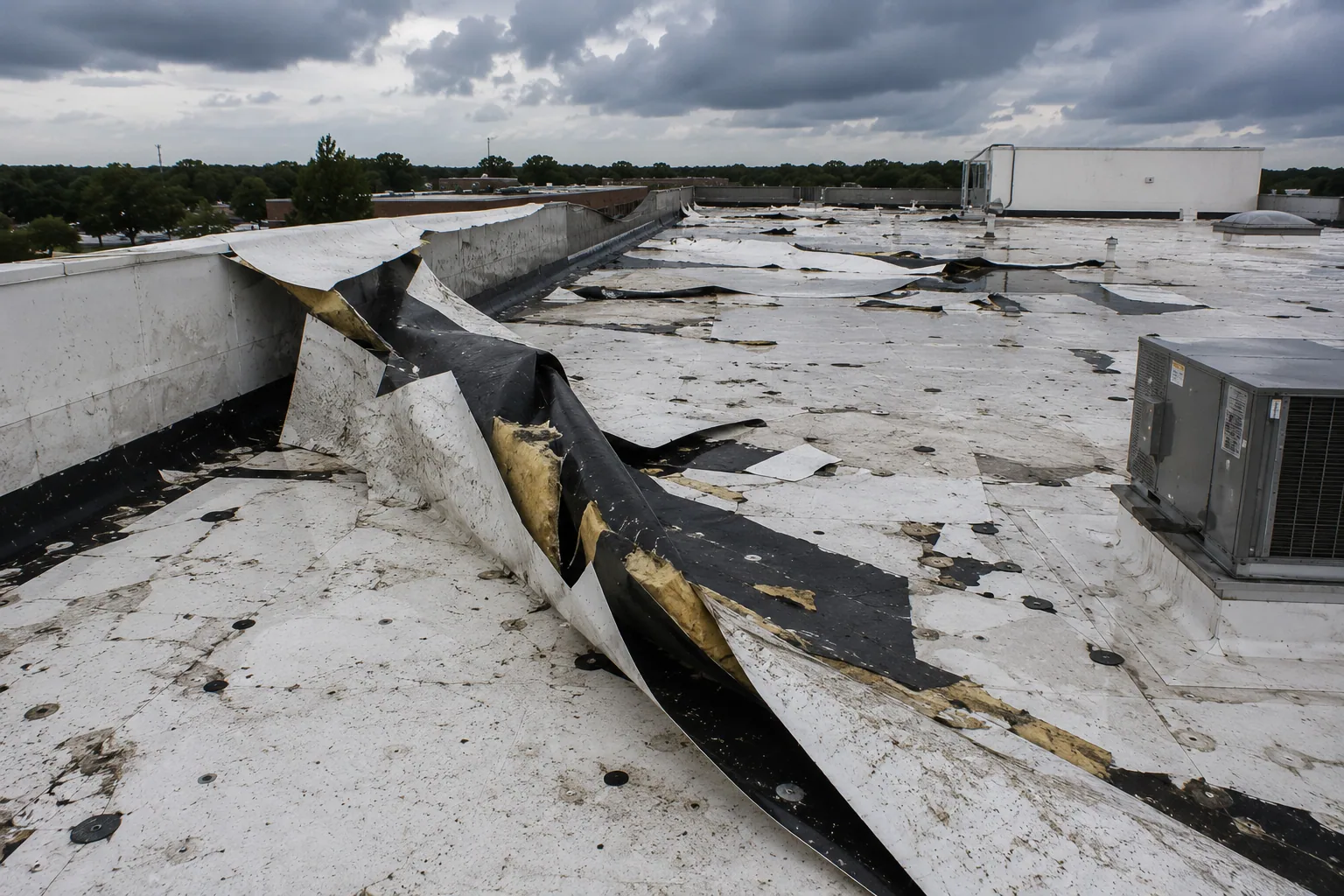
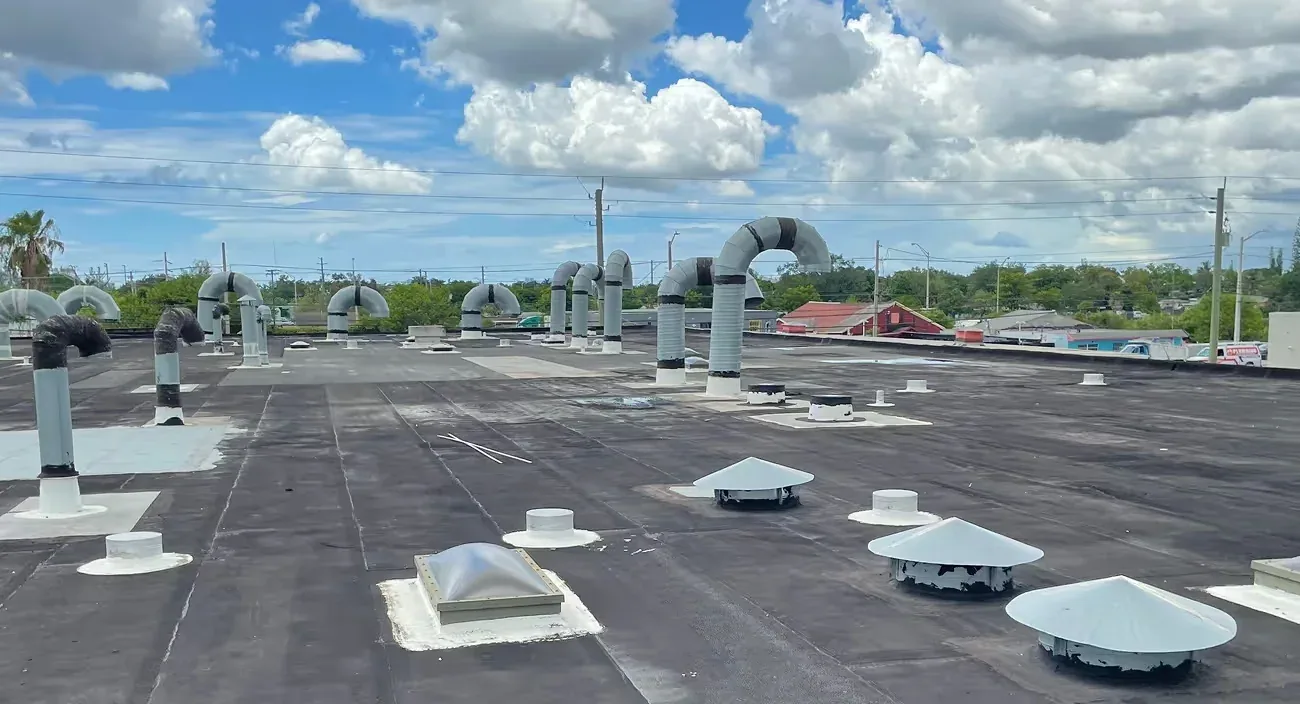
Heat can affect membrane, insulation, adhesives, sealants, metal components, and the deck. We inspect the reported area and the surrounding roof for blistering, distortion, loss of bond, open seams, or material that no longer holds its shape. Smoke residue on a surface does not by itself tell us whether the assembly can remain. We describe observable conditions and request testing or removal when the concealed layers could change the decision.
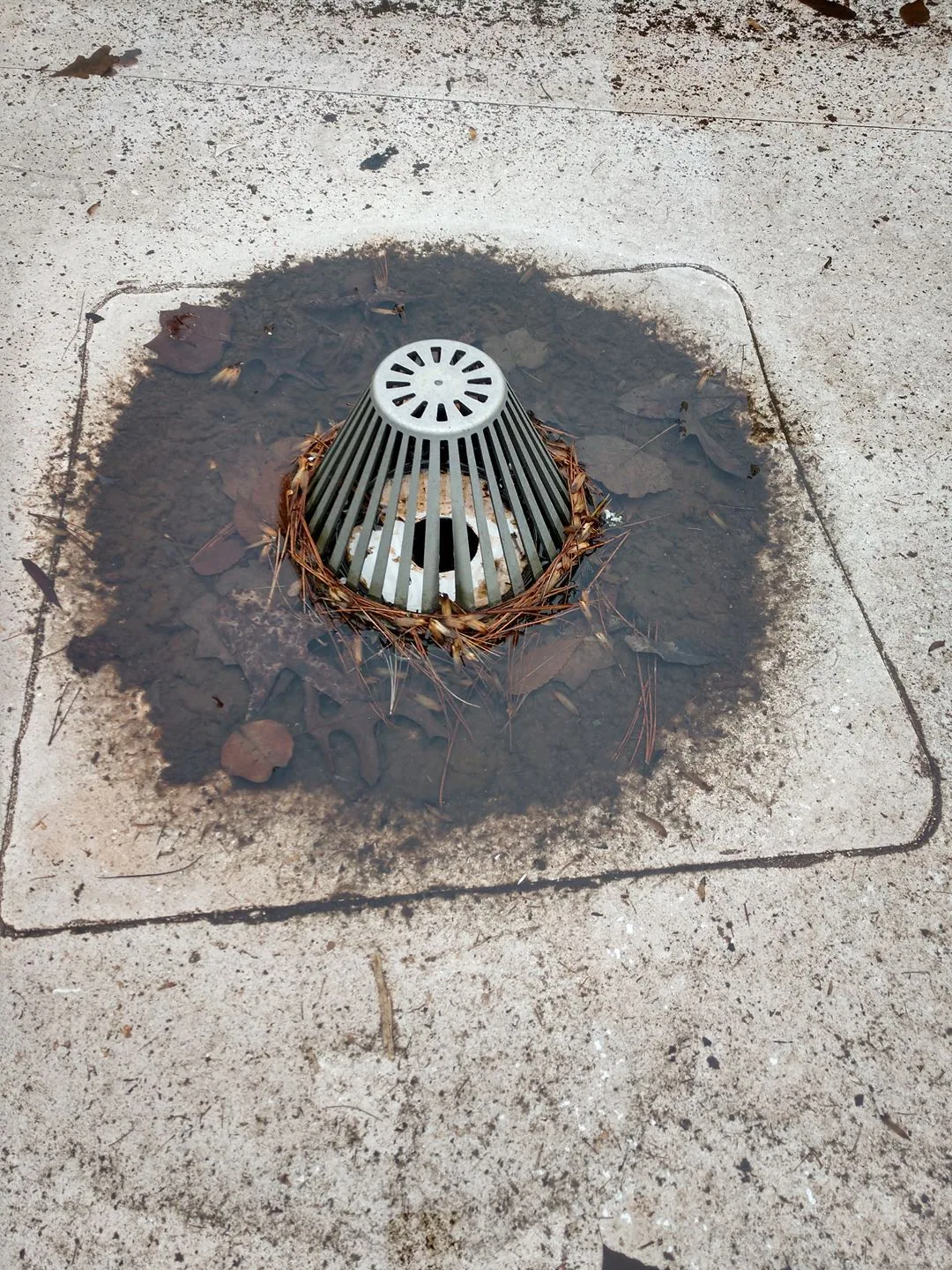
Suppression water can travel beyond the point where it entered. We check drains, scuppers, edge openings, equipment curbs, and temporary cuts made during emergency work. Inside, the owner or restoration team identifies wet rooms, ceiling removal, equipment, and areas still under containment. Our report ties the roof observation to a zone. It does not replace a structural, electrical, hazardous-material, or interior-restoration assessment.
Elgin’s 2021 International Building and Existing Building Codes, with city amendments, may affect repair scope and review. The property’s design professional and local authority determine project requirements. We identify the proposed roofing material and work limits for that review. If an adjacent area has wind or hail impact, a separate wind-damage inspection or hail review should document its own evidence.
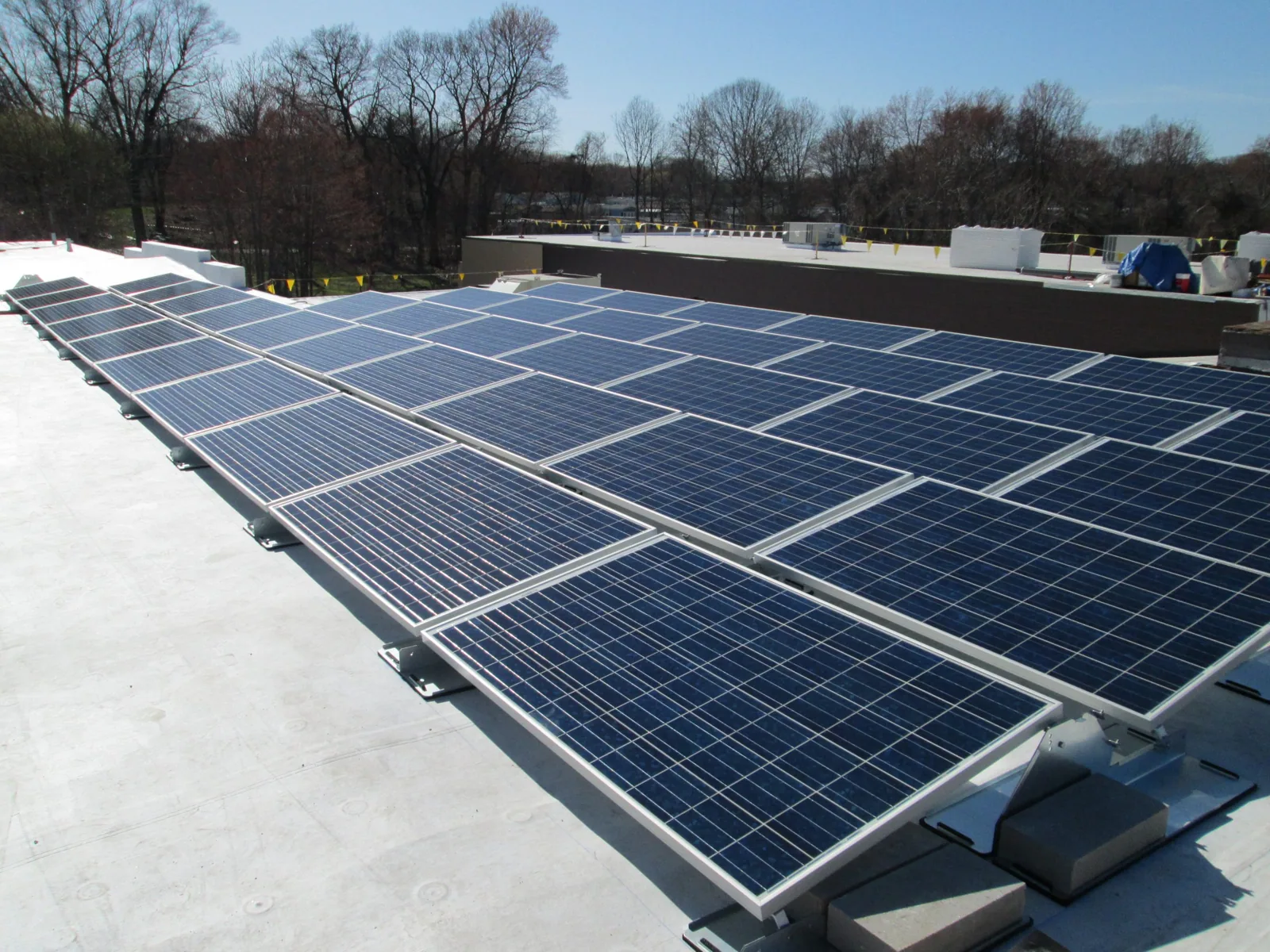
Temporary protection: limit weather exposure
A fire opening needs a cover that accounts for wind, drainage, and the damaged edge. We set a temporary boundary, secure the cover to a sound point approved for that condition, and keep water moving away from the opening where possible. The work order lists duration expectations and the monitoring contact. If the roof is not safe for entry, interior protection and an authorized return plan take priority.
Elgin’s annual snowfall averages 29 inches, and freezing temperatures occur on 137.9 days; crews wait for safe access. Snow, ice, and thaw can delay roof work or make a cover unsafe to install. A weather hold names the exposed area, safe interim step, next update, and condition for crew return.
Temporary protection does not establish the extent of heat damage or concealed moisture. A scan, test cut, or selective removal may be needed after the site is released. We identify the proposed test location, required interior protection, and repair boundary before opening the assembly. The owner approves added work before the crew moves beyond the emergency measure.
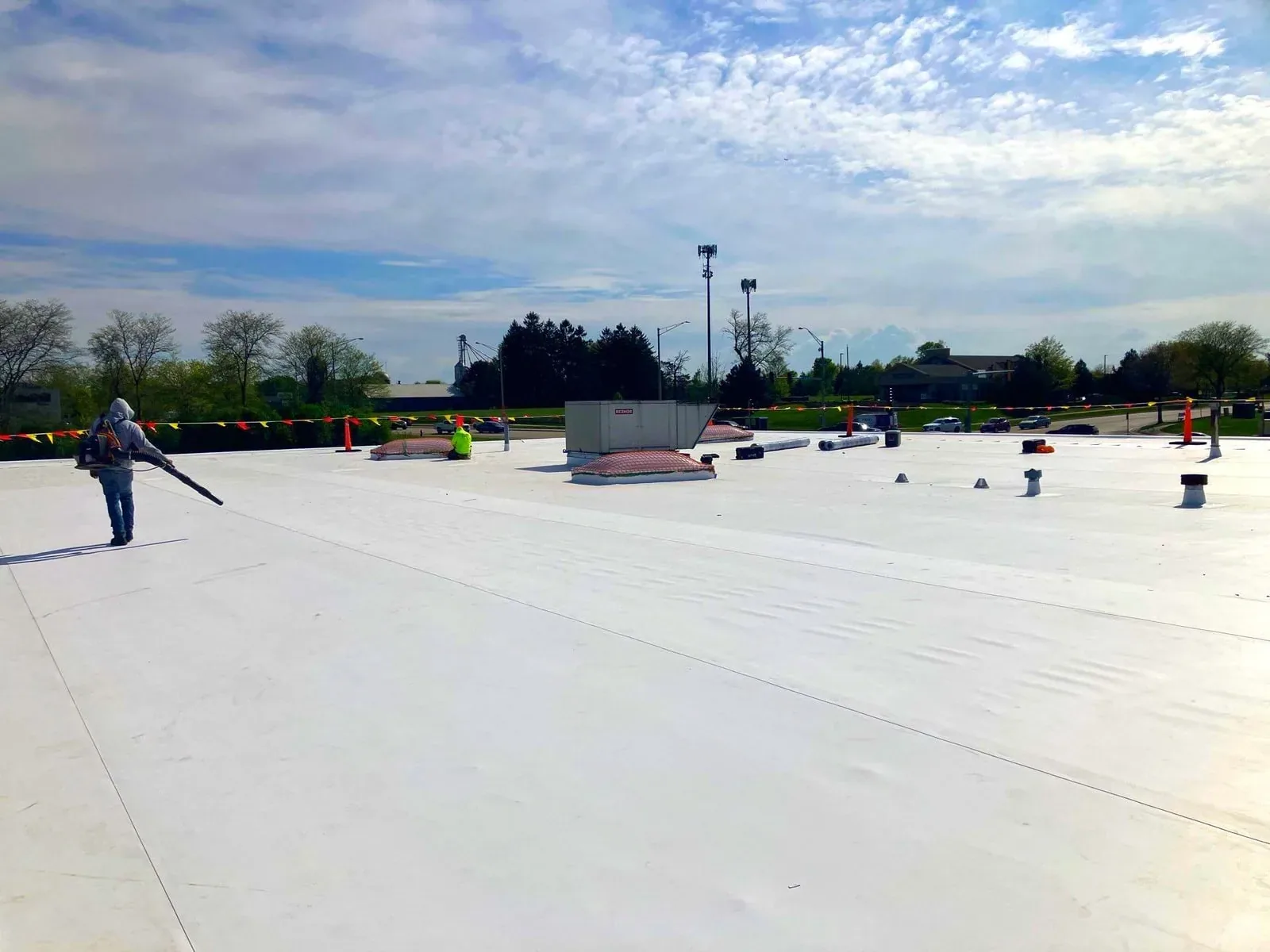
Permanent work: replace only confirmed damage
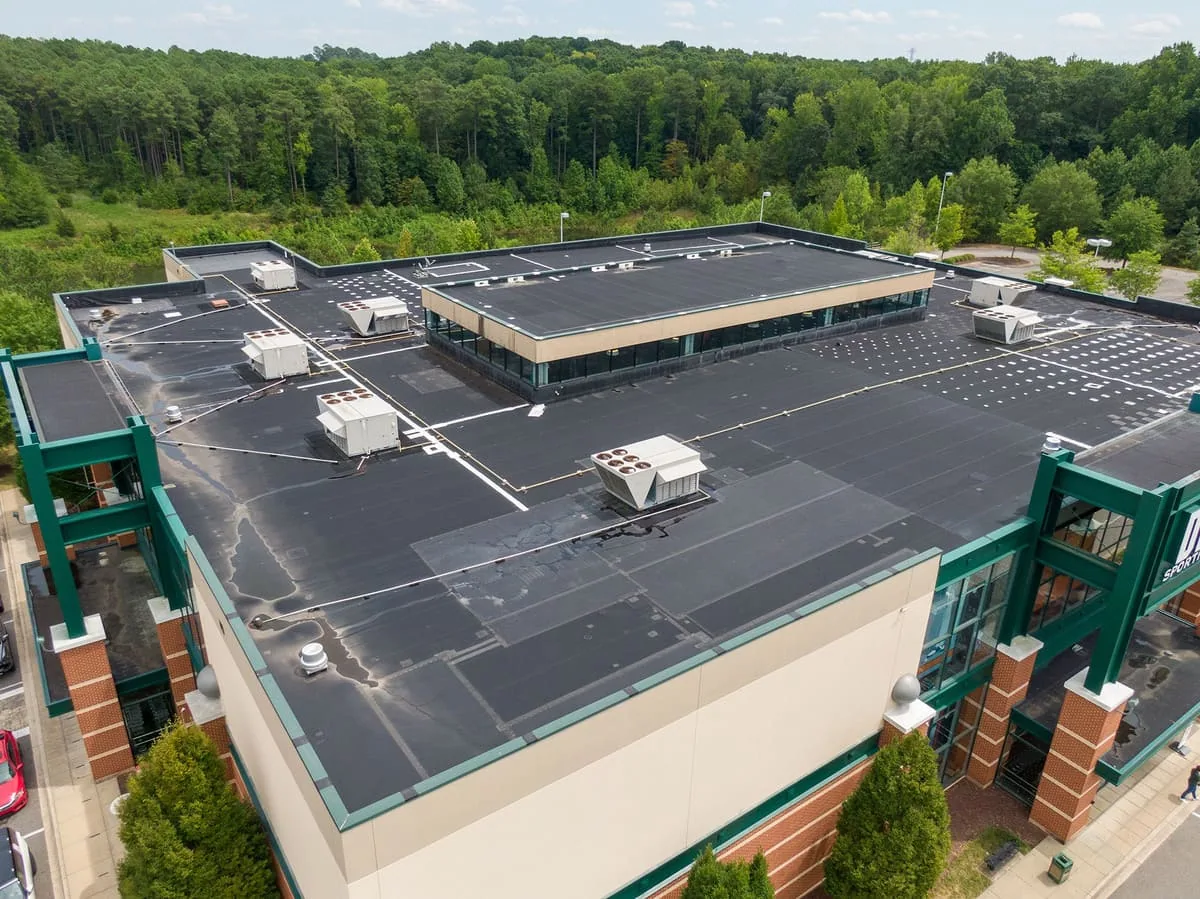
A permanent scope may include membrane patching, flashing replacement, new insulation, deck repair, or a larger roof section. The correct method depends on the installed system and the condition of material around the opening. A thermoplastic patch, EPDM detail, modified-bitumen ply, or metal panel replacement each has a different preparation and tie-in. We identify the system where verified and list any assumption that needs confirmation.
The estimate names each roof zone, material, removal limit, disposal, temporary protection status, access equipment, and test after installation. If removal reveals burned insulation, softened deck, or water beyond the approved area, the crew photographs it and pauses. The owner receives the new quantity and schedule effect before deciding whether to proceed. A replacement proposal may be appropriate if multiple sections have verified damage or the remaining assembly cannot accept a sound repair.
Coating should not be used to hide heat-affected material or an opening. Recover is considered only after layers, moisture, attachment, deck, and code review are understood. A localized roof repair remains distinct from structural or interior reconstruction. We separate the roofing work from electrical, HVAC, fire-protection, and finish trades so each team knows its limit.
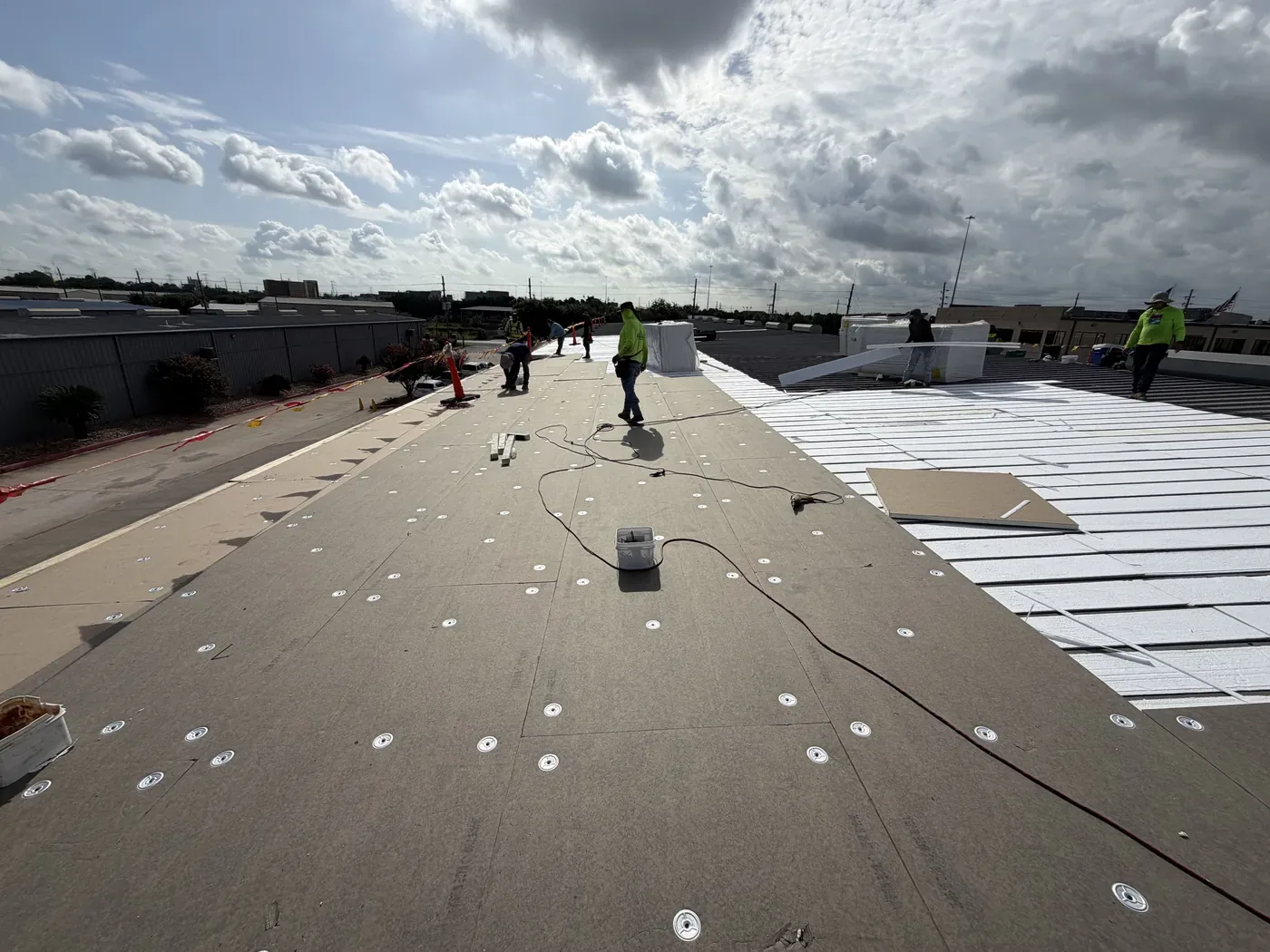
Coordination: sequence roofing with restoration
Fire restoration often involves several crews and changing access limits. The roofing lead coordinates with the owner’s representative and restoration contractor on entry time, roof openings, debris paths, and areas below. The site contact identifies what must remain operational and what is still under investigation. We set a dispatch window only after the approved work area is known.
I-90, U.S. Route 20, and Big Timber Road connect Elgin’s business and industrial areas. Those routes help orient dispatch but do not define a safe truck path at a fire-affected property. The owner confirms gate instructions, staging space, fire-lane requirements, and any escort. If equipment or structural review must happen first, the roofing schedule follows that release.
Elgin has three Metra stations and a Pace transportation center. The building contact provides current arrival directions and tells us whether tenant notices, public routing, or equipment shutdowns are required. Any work outside the roof boundary is documented as a separate approval.
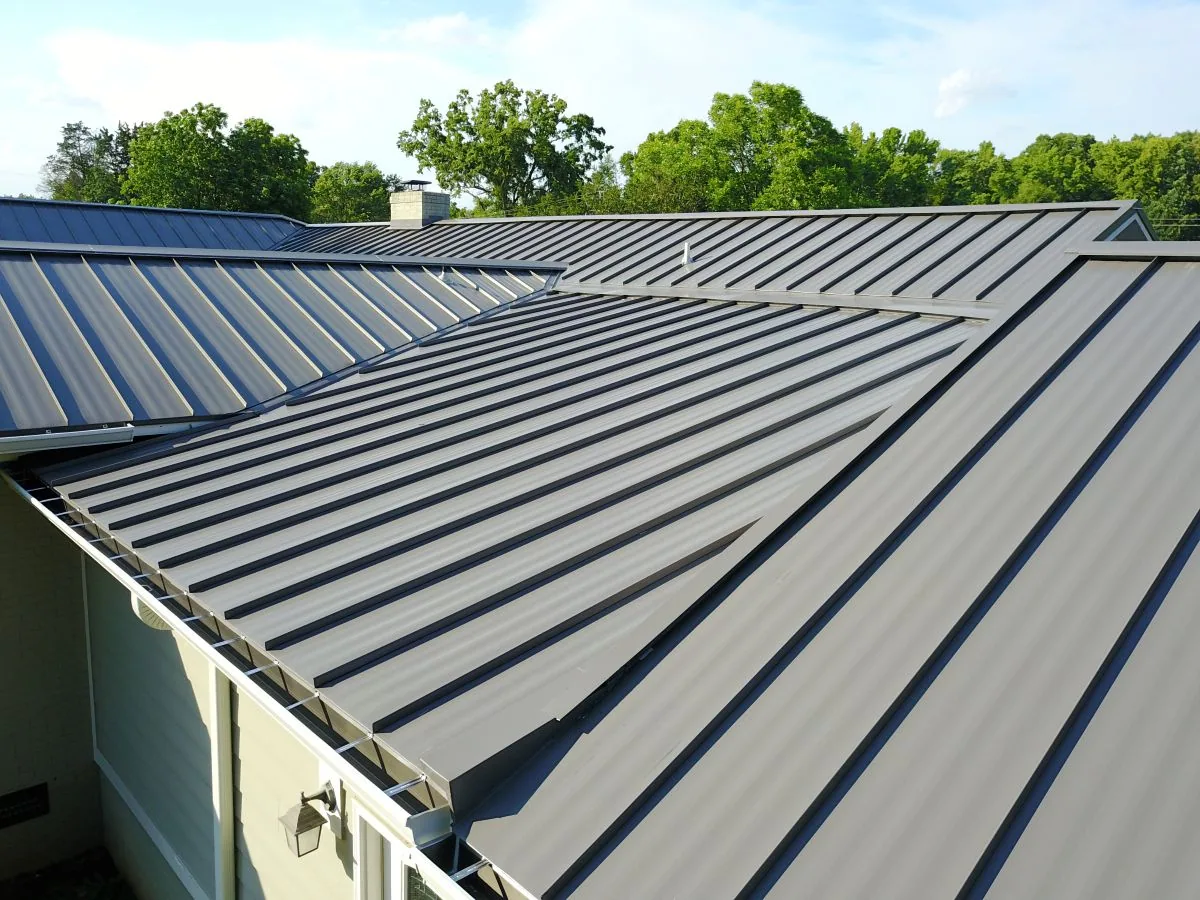
Closeout: record the roof status after fire
The closeout lists the roof zones inspected, visible heat or water effects, completed protection, materials installed, and areas not reached. Photos show the repair detail and its location. Open issues identify the next trade, test, or approval needed. If another inspection follows structural release or interior removal, its findings receive a separate date and scope.
Elgin’s July 2023 tornado history and winter freeze conditions are separate local roof exposures; neither determines the cause of a fire-related opening. A roof inspection can revisit the assembly after the property is released. Send the building, incident status, roof access contact, water condition, and any restrictions when requesting service. We will confirm the first safe step and who can authorize permanent work.
Questions About Commercial Fire Damage Roof Repair
Can a roofer inspect the roof while the fire scene is still restricted?
No. We need the owner’s or fire authority’s release and a safe access plan. If entry is not approved, we record the limitation and wait for the stated conditions.
Does visible smoke staining mean the roof membrane must be replaced?
Not by itself. We inspect the membrane, seams, insulation, and deck where accessible, then identify testing or removal needed to determine whether a repair can hold.
Who decides whether fire-damaged deck is safe?
The owner’s qualified structural professional makes that determination. We document the roof area and coordinate roofing work after the affected section is released.
Can you cover an opening before the full estimate is ready?
A temporary measure can be scoped separately when access is safe and the owner approves it. We identify the protected area, limits, monitoring contact, and return decision.
Will roofing work include smoke cleanup or interior restoration?
The roofing scope covers the exterior assembly and approved weatherproofing. Smoke cleaning, electrical work, contents, and interior finishes remain with their assigned restoration trades unless listed separately.