Commercial Wind Damage Roof Repair in Elgin, IL
Dispatch a wind-damage roof inspection
Share the building, reported wind date, affected area, current water status, roof-access contact, and operating limits. We will confirm safe entry and the first approval point.
Commercial Wind Damage Roof Repair
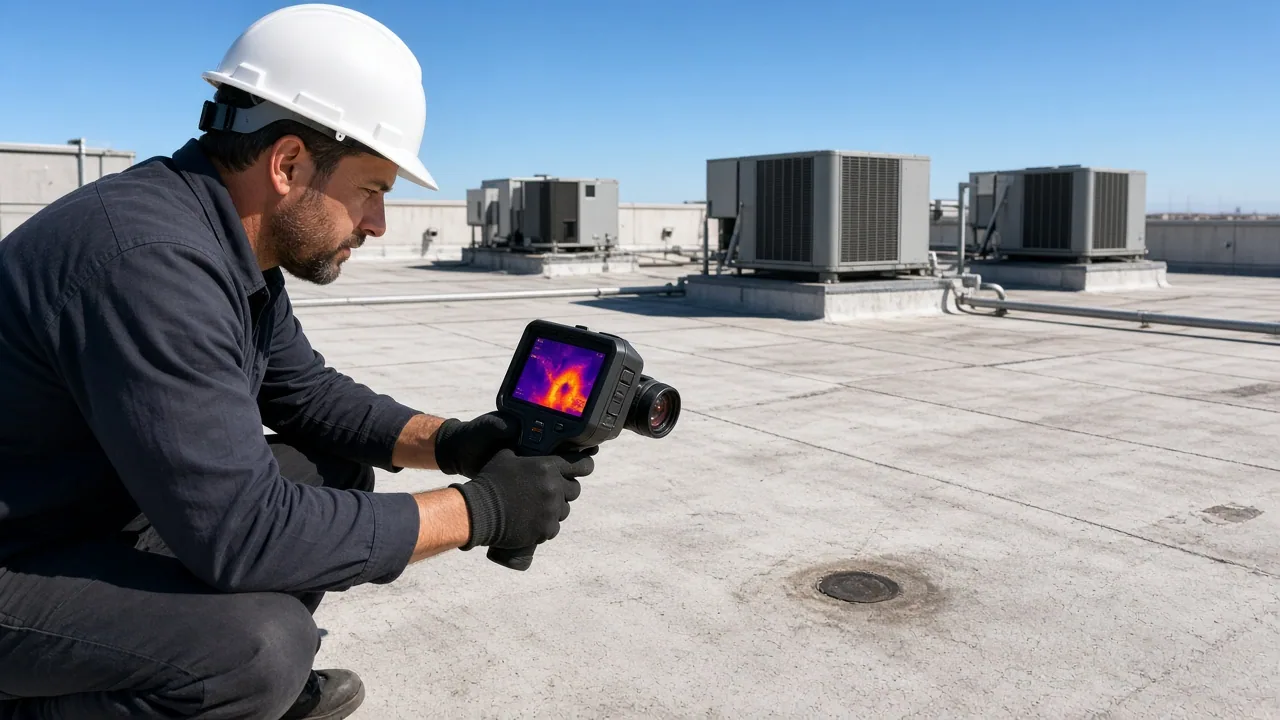
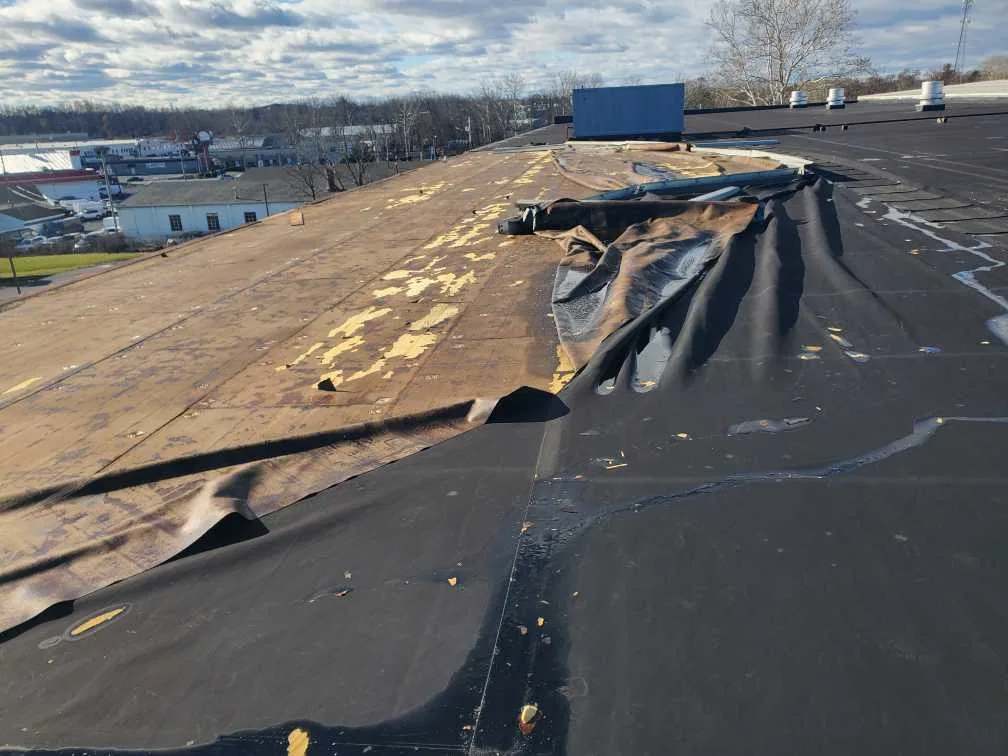
A wind report starts with safe roof entry and a clear affected zone. We confirm the building, operating contact, active water, and areas below before dispatch. Then we check edge metal, seams, rooftop equipment, and transitions for movement. A loose panel and a lifted membrane edge need different repairs. We mark what is visible, what remains unverified, and whether temporary protection is needed before permanent work.
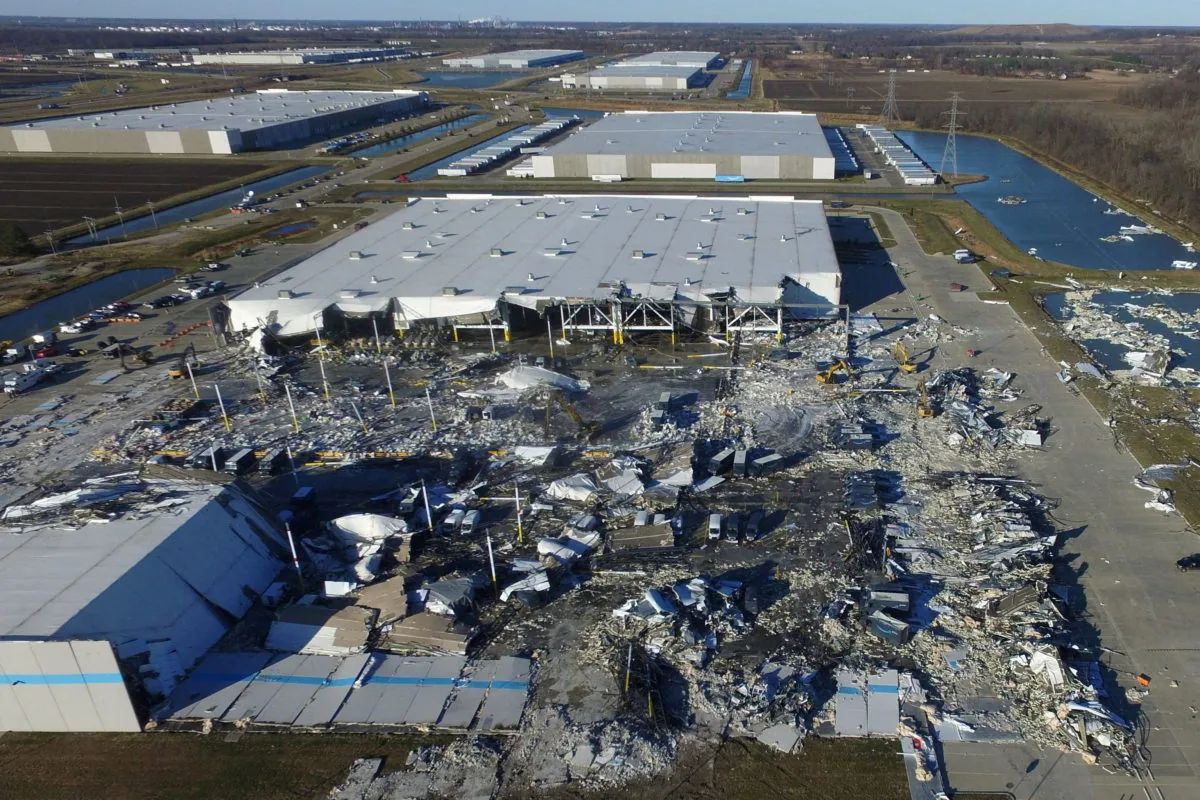
Elgin experienced an EF1-rated tornado in July 2023. The event is a reason to check for reported wind effects, not a diagnosis of one commercial roof. We document the property and sections reached. A tornado-related roof review records its own incident scope. A Northwest Business Park site or a Downtown Elgin property still needs its own access plan.
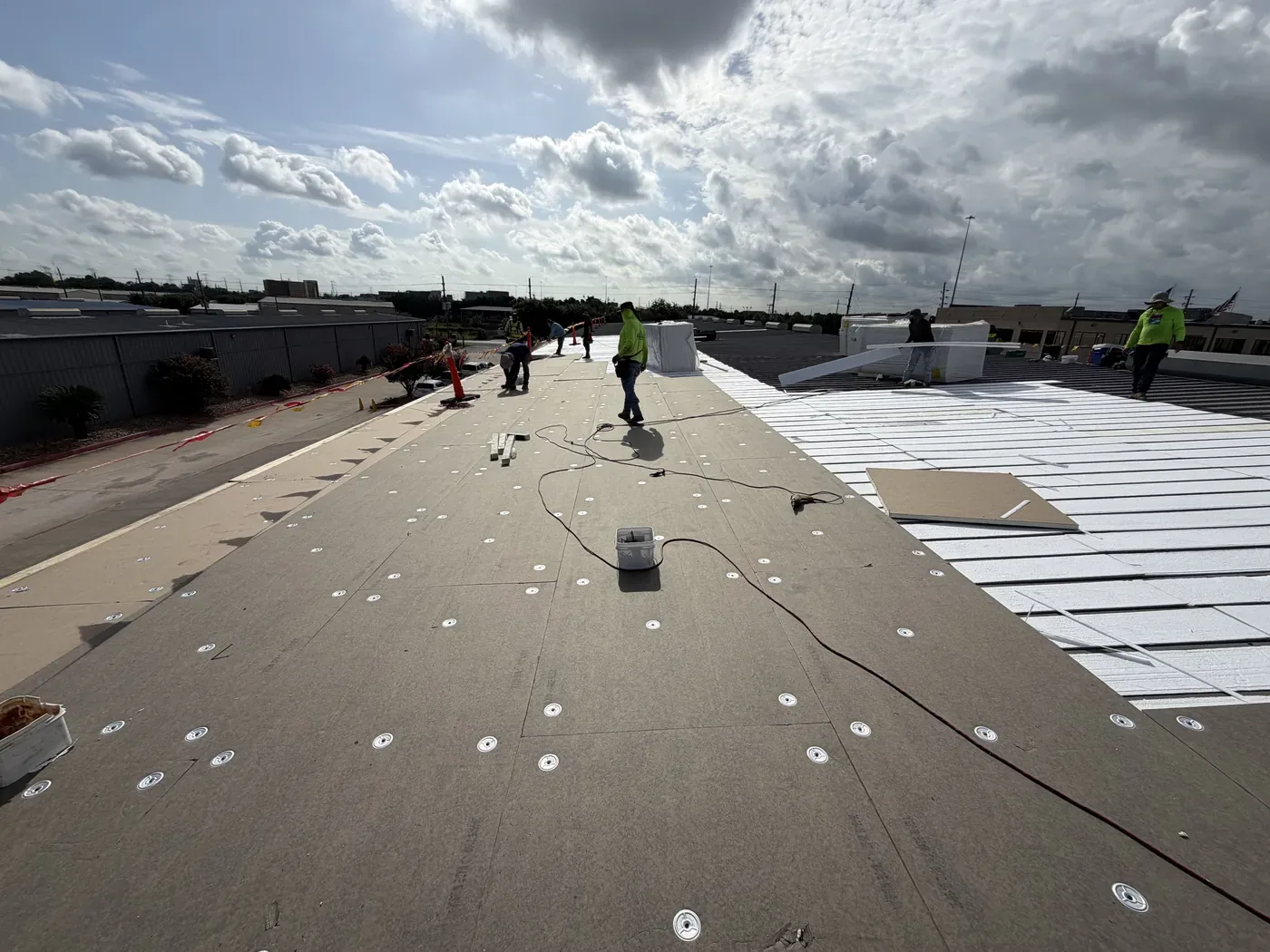
First pass: find movement before water spreads
Wind can stress roof edges, corners, flashings, and attachments before damage is obvious from the ground. We check whether membrane termination bars, coping, metal panels, or perimeter fasteners have shifted. On low-slope systems, a small opening at an edge can admit water beneath the surface. On standing-seam roofs, a bent panel or loose trim may change how water sheds. The observed detail determines the next check.
Photos should show both the close detail and its roof-zone location. We note the inspection time, conditions, access route, and sections not reached. If a surface is unsafe, the report says so and defers entry. A commercial roof inspection can document broader conditions when wind reports extend beyond one repair area.
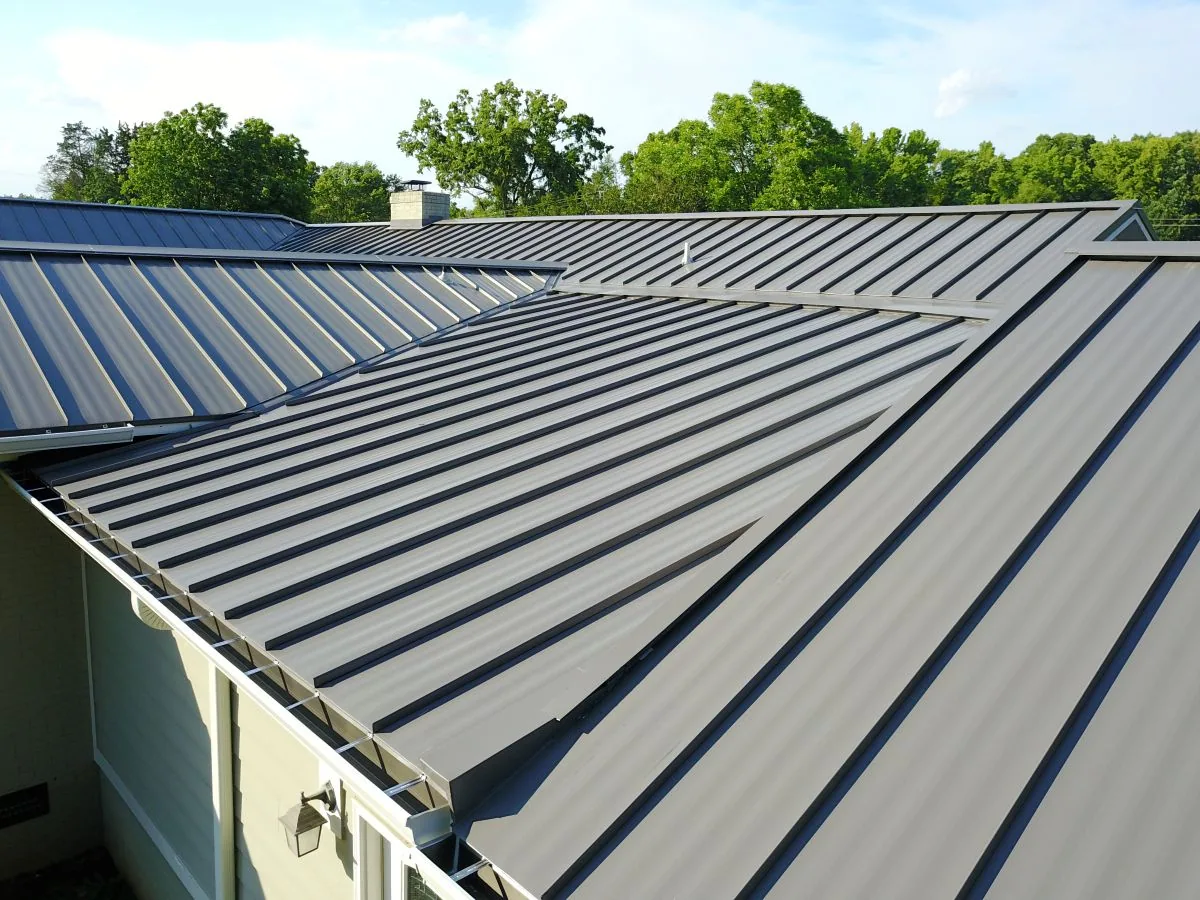
Roof details: distinguish uplift from surface wear
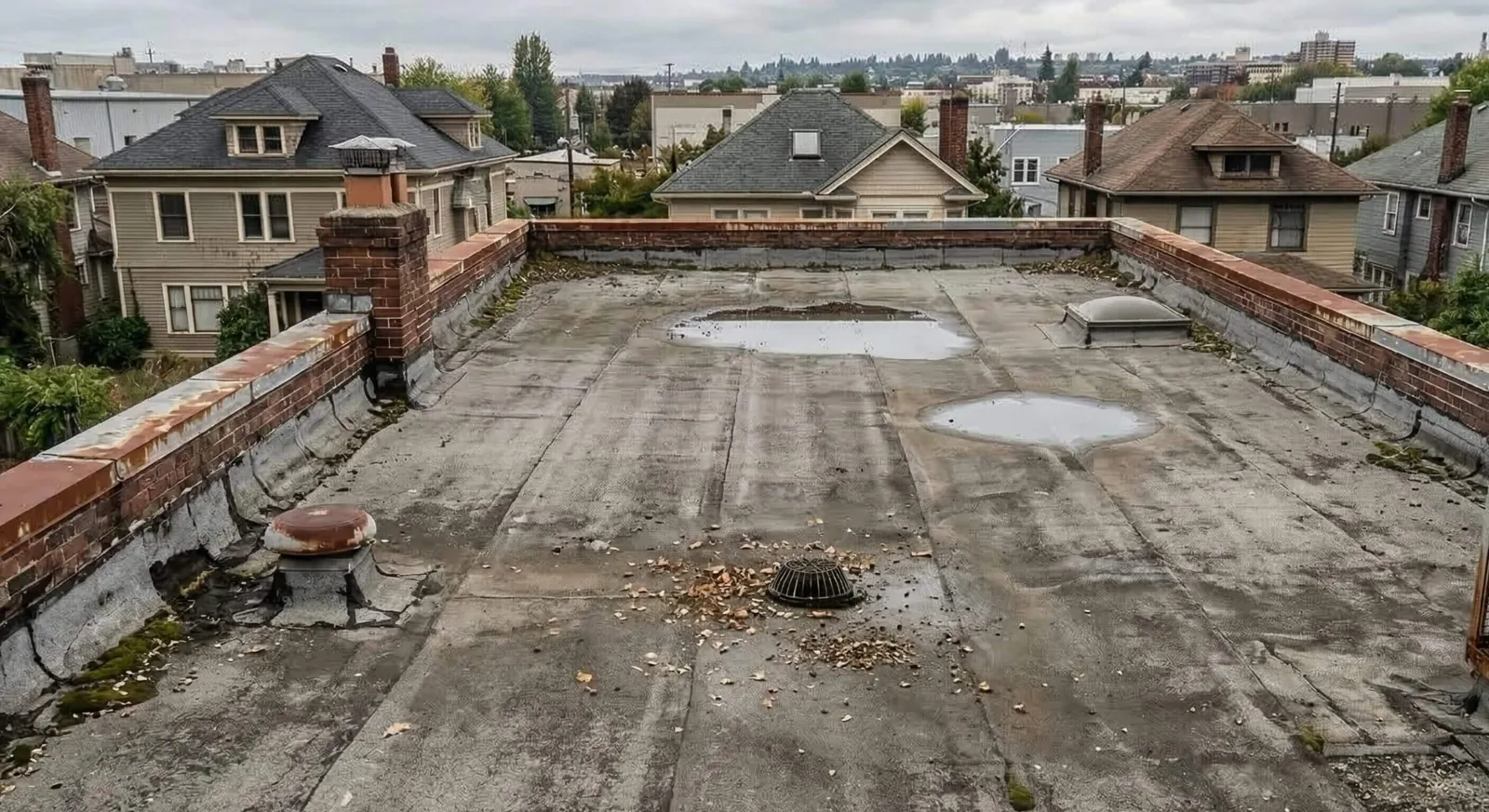
At a membrane perimeter, look for a separated termination, exposed fastener, torn corner, or open splice. A field seam may remain intact while an edge detail has loosened. We trace the condition to adjacent material and check whether water can reach insulation or a wall transition. A repair needs sound material beyond the visible opening. If the affected area continues under a cover board, testing or selective removal may be needed before a final quantity is known.
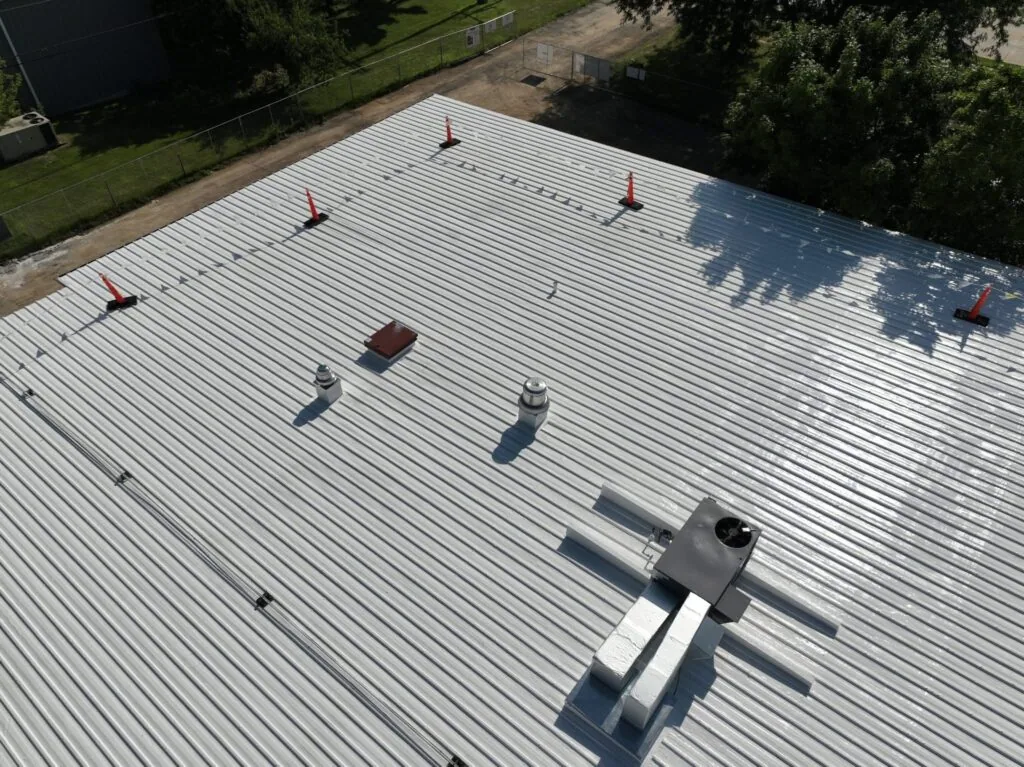
Metal roofs need a different review. We inspect panel laps, clips where accessible, ridge and eave transitions, closures, and exposed fasteners. A dent is not automatically a leak. A displaced panel edge or opened joint may change drainage and expose the underlayment. We record the affected run and whether the condition reaches a curb, gutter, or wall. Work on standing-seam metal roofing should match the panel profile and connection method.
Wind can also move equipment screens, signs, or branches against a roof. Contact marks may damage the membrane, but the surrounding path needs inspection. The site contact identifies what moved and when it was observed. We photograph the impact point, nearby seams, penetrations, and drainage path. If the roof includes a recent patch, we compare its edges with the new condition. A flashing repair may be separate from the wind-related membrane work.
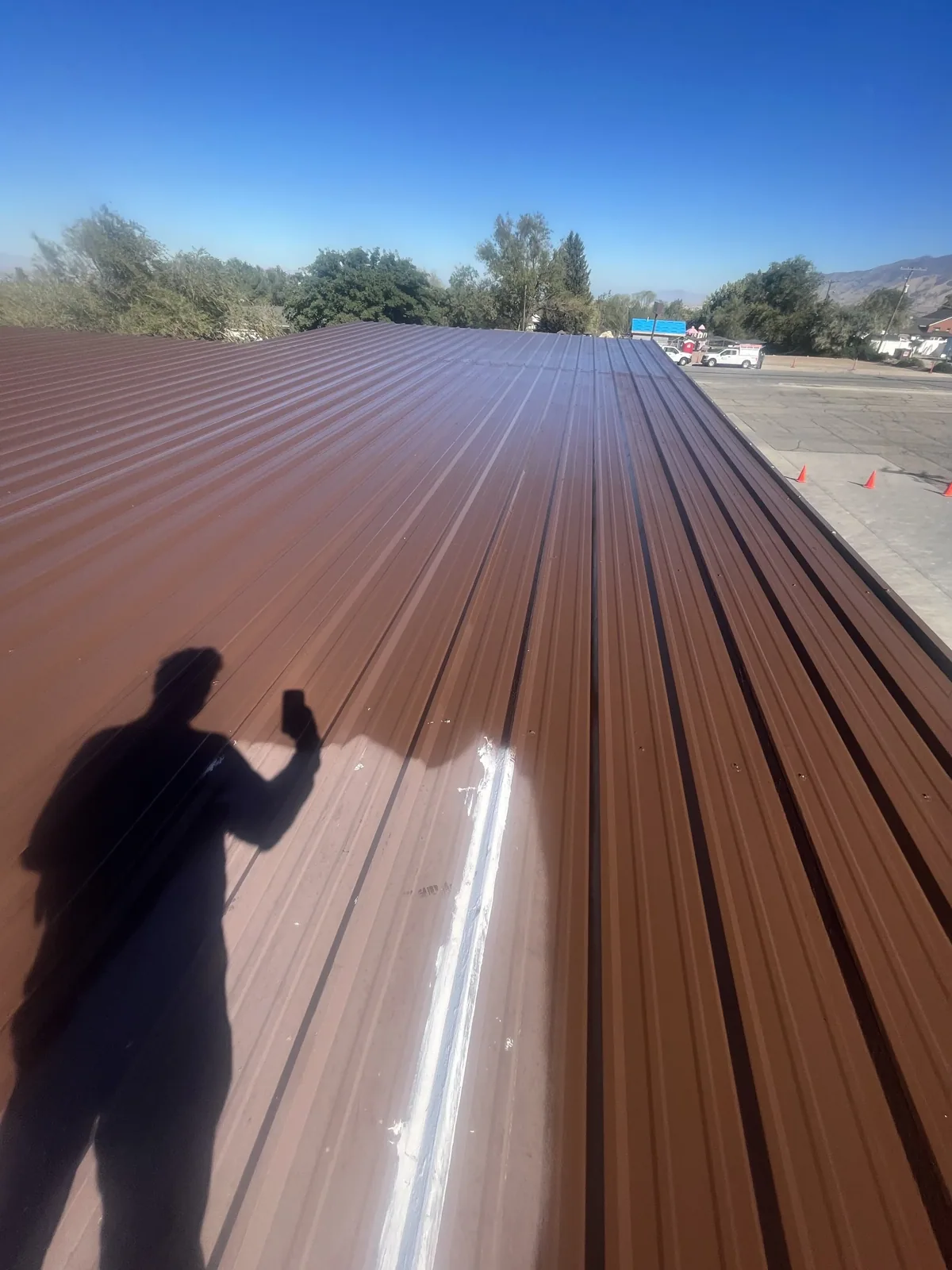
Temporary protection: secure the exposed area
For active water, we locate interior risk and confirm whether a technician can reach the roof. A cover goes only where stable material and drainage permit. The dispatch note records its footprint, attachment method, site monitor, and the condition that triggers permanent work.
Elgin averages 137.9 days below freezing each year and receives about 29 inches of snowfall. Ice and snow can restrict roof entry or keep a repair surface from being prepared. A weather hold does not remove the need to protect active water. We explain what temporary work can control and what remains exposed. For storm-related punctures or impact evidence, a focused storm damage assessment can separate emergency measures from permanent repair.
A temporary cover addresses the opening only. It cannot determine concealed moisture or the cause of each ceiling mark. If a scan or test cut could change the work, we identify its location and request owner approval. The update records current protection, remaining exposure, and the condition for another roof visit.
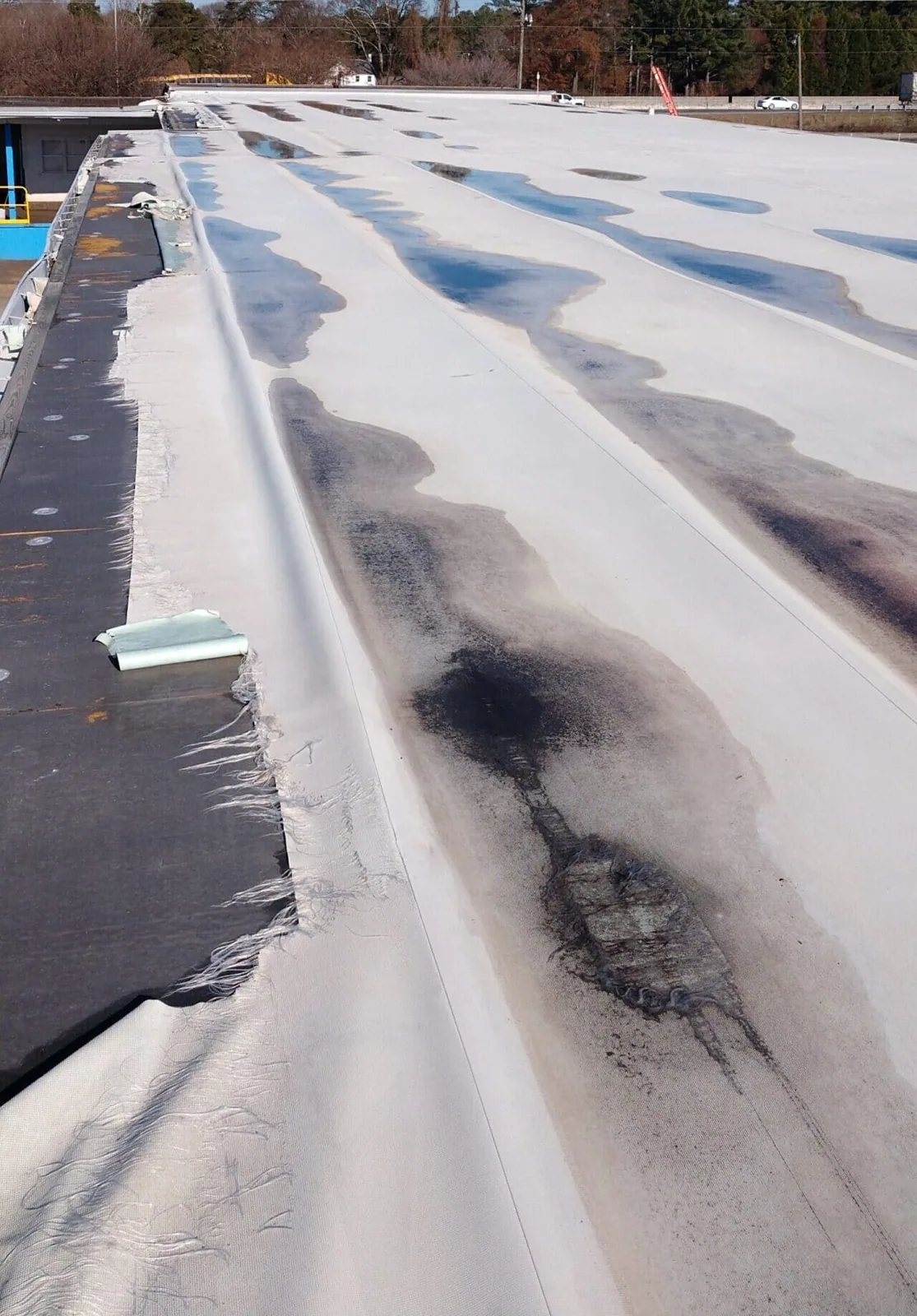
Repair boundary: match work to the installed system
A thermoplastic membrane may need a prepared, welded patch that extends onto sound material. EPDM repairs use compatible cleaners, primers, and cover details. Modified bitumen may require work through one or more plies. Metal panels call for profile-specific fastening or replacement, plus review of adjacent trim. The roof system, not the weather label, determines the repair method. We identify the material where verified and state any assumption that still needs confirmation.
The proposal lists the building, roof zone, preparation, repair size, flashing transitions, disposal, and any planned test after installation. If wet insulation or damaged deck appears during approved removal, the crew documents it and stops at the boundary. The owner receives the added quantity or uncertainty and decides whether to proceed. A broader commercial repair scope can include related defects when the evidence supports them.
Coating or replacement may be considered if wind exposure reveals widespread deterioration, repeated edge movement, or material that no longer supports a localized repair. Those choices require review of attachment, layers, drainage, insulation, deck, and warranty restrictions. We state why a larger option is being considered and what testing could change that recommendation. The estimate separates a confirmed repair from an allowance or future investigation so the approval point remains clear.
Dispatch window: protect business operations
Occupied buildings need a safe route for workers and a separate plan for people below. The site contact identifies roof access, loading activity, restricted rooms, and equipment that cannot be shut down. We set the dispatch window around those constraints and confirm who can release the roof. If the work requires a lift or material staging, the owner identifies the permitted area and any overhead conflict before the crew arrives.
Elgin’s business areas include office, research, and industrial sites. I-90 and Big Timber Road serve local business areas, but neither identifies a building’s truck entrance. The site contact confirms gate instructions and staging. Protection below must fit production or vehicle movement.
Closeout: record the repair and remaining exposure
After work, the closeout records the affected roof zone, materials used where known, completed repair, and post-work photographs. It also lists sections not inspected and temporary measures still in place. If a return visit is needed, the report states the reason, access requirement, and next action. The property manager can attach this record to maintenance history without treating it as a whole-roof condition survey.
Elgin’s July 2023 tornado and recurring freeze-thaw conditions make post-event and post-winter reviews useful. A maintenance visit can check a repaired edge and nearby drainage after the next safe access window.
Send the building address, reported event or wind date, interior impact, roof system if known, access contact, and operating constraints when requesting service. Include photos from the affected room and prior repair records. We will confirm the safe entry plan, inspection limits, temporary protection need, and the approval point for permanent work.
Questions About Commercial Wind Damage Roof Repair
What should the first wind inspection cover?
Start with roof access, affected rooms, and active water. We inspect edges, seams, penetrations, metal transitions, equipment, and nearby drainage. The report marks visible conditions and areas not reached.
Does the 2023 Elgin tornado mean my roof was damaged?
No. The tornado crossed Elgin and caused reported roof damage along its path, but each commercial property needs a separate inspection. We document the building and roof zone in front of us.
Can a loose metal edge be repaired without replacing the roof?
A localized repair may fit when adjacent panels, fasteners, and supporting material remain serviceable. We check the full affected run and identify any testing or panel work that could change the scope.
What happens if wind damage exposes the roof during freezing weather?
We first assess safe entry and active water. Temporary protection may limit exposure, while a permanent bond or metal repair waits until the surface and conditions support the specified work.
Will the inspection include interior damage?
The roofing report records the affected room and observed roof conditions. Interior finishes, electrical systems, and contents remain with the owner’s designated trades unless the approved scope assigns those tasks.