Commercial Ponding Water Roof Repair in Elgin, IL
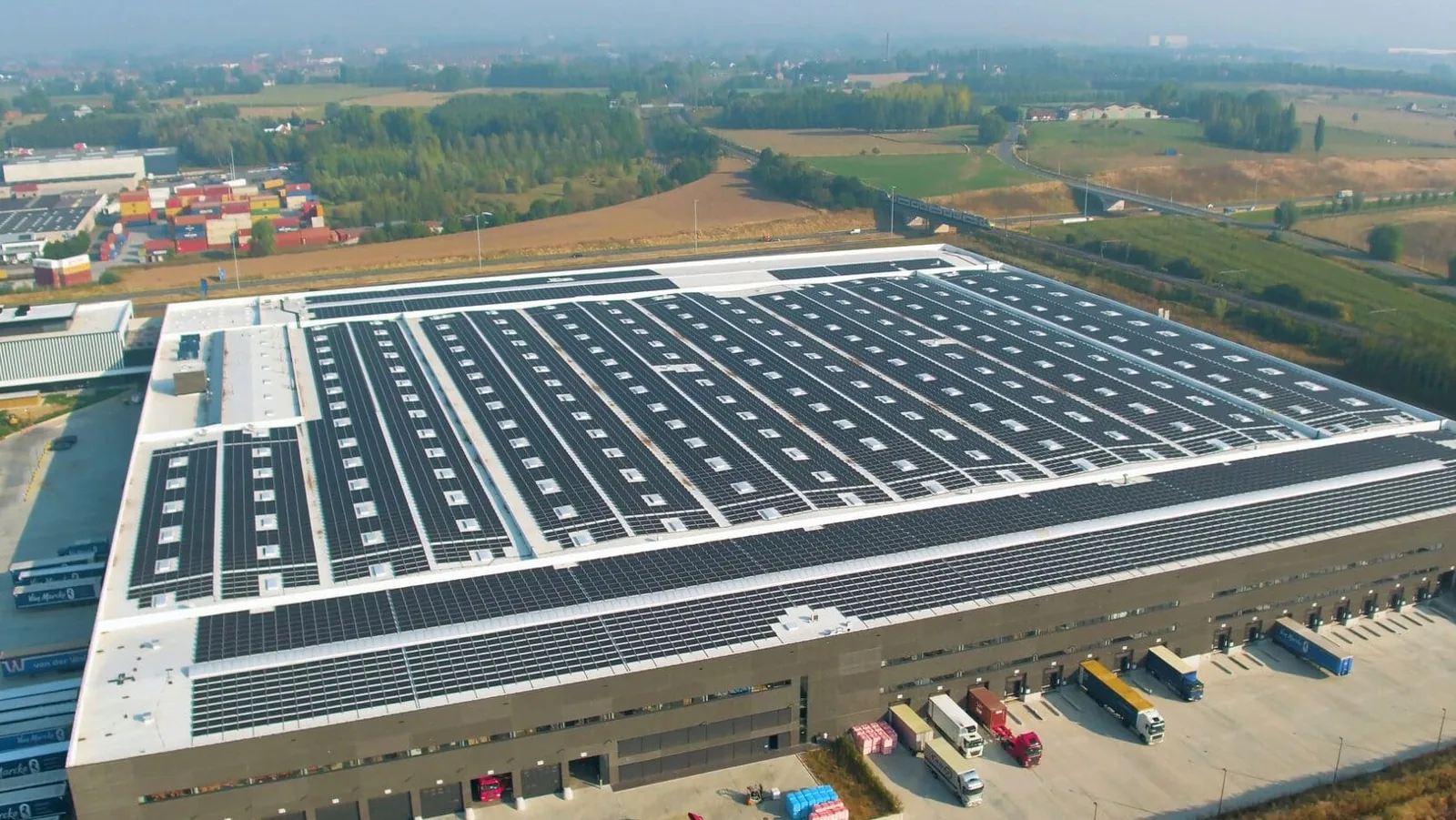
Request a ponding-water inspection
Send the property, roof area, duration of standing water, current leak status, access contact, and recent roof work. We will set the first inspection and approval point.
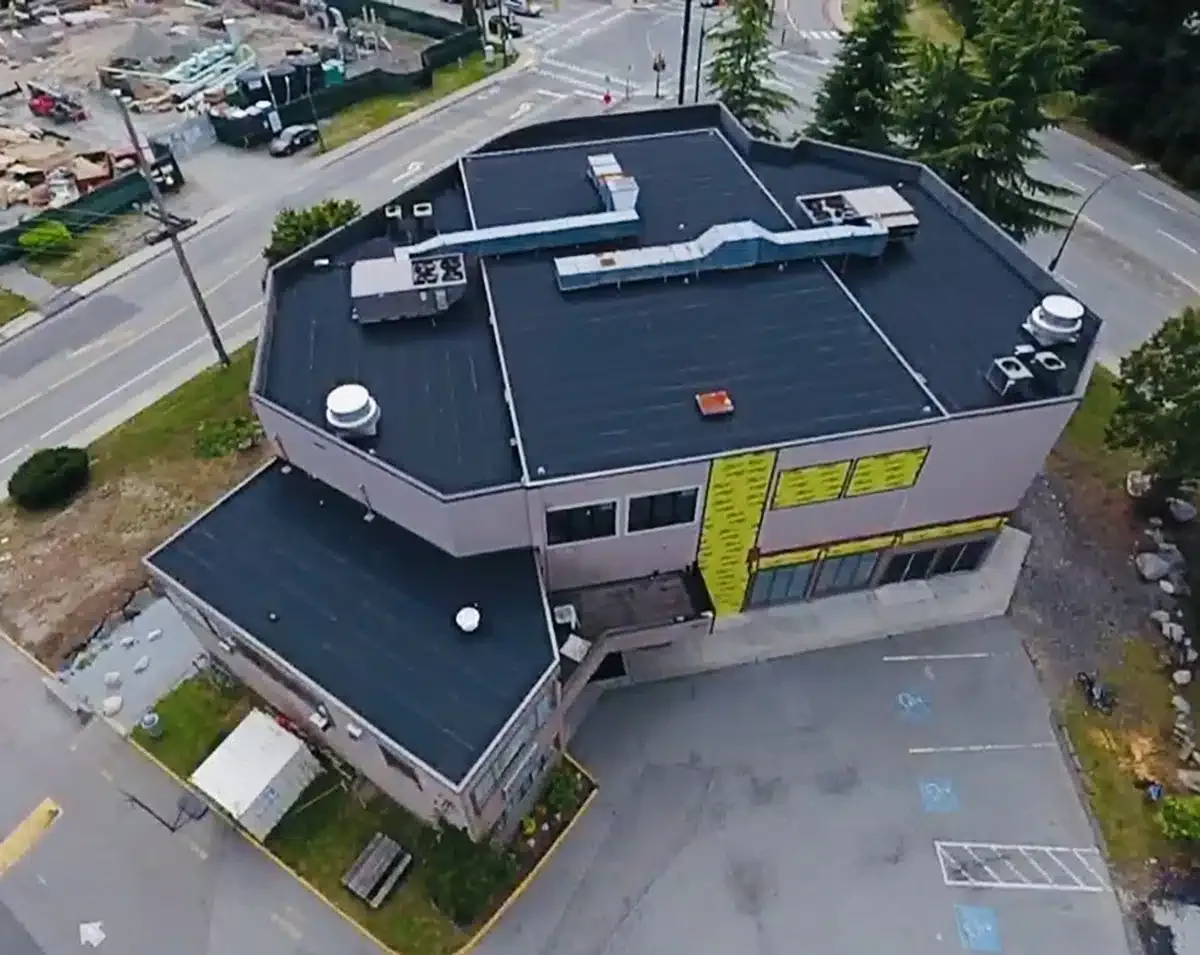
Commercial Ponding Water Roof Repair
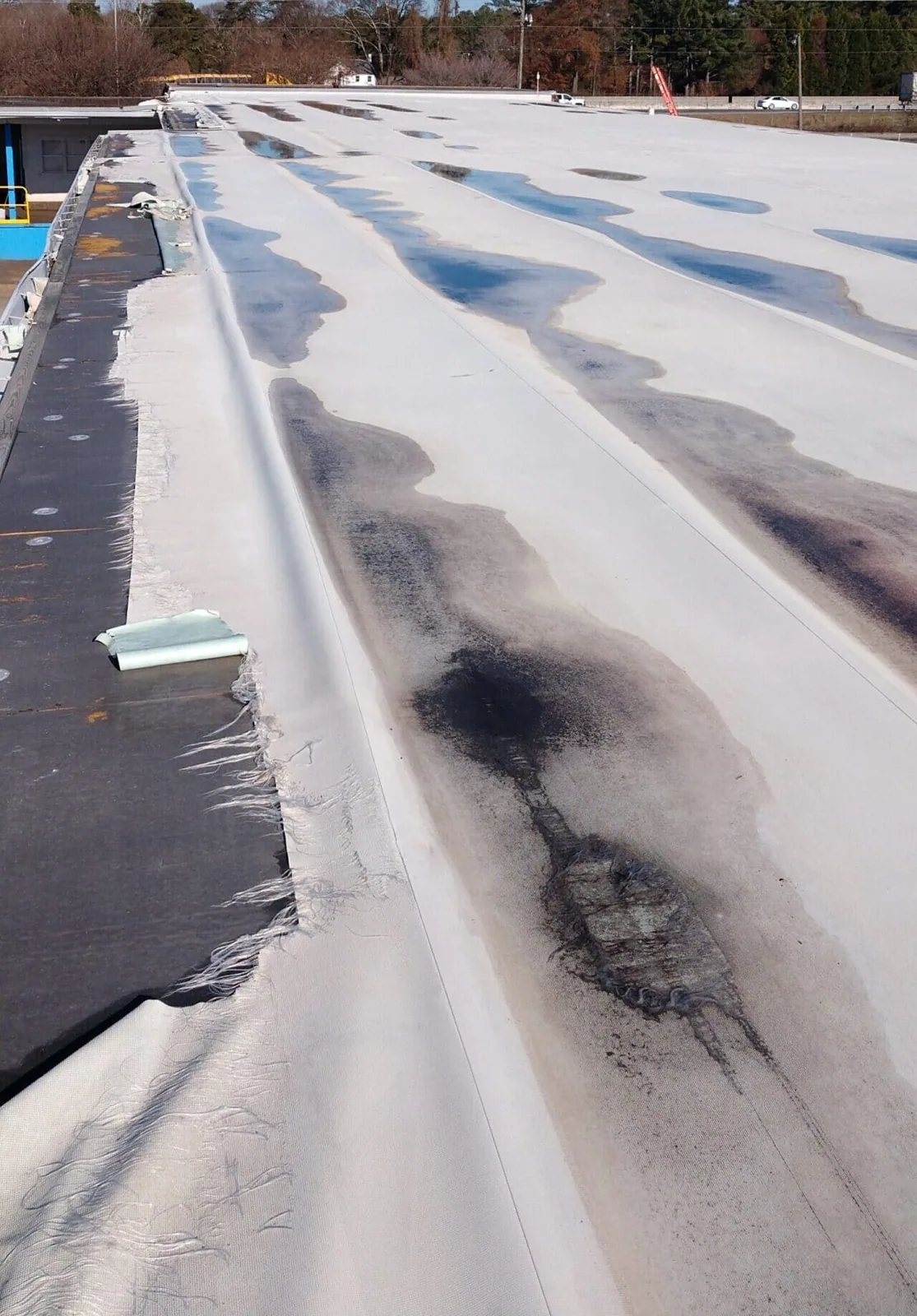
Standing water needs a roof-zone check before anyone selects a repair. We confirm when the water appeared, how long it remained, and whether the affected area is accessible. Then we inspect drains, scuppers, overflows, slope changes, membrane seams, and nearby penetrations. A low spot may be a drainage issue, a deflection concern, or a surface condition. The observed assembly sets the next step.
Elgin receives 37.76 inches of precipitation in an average year and about 29 inches of snow. Meltwater and rain can test different parts of the same drainage path. Commercial sites around Randall Point Executive Center and Downtown Elgin still require building-specific review. A weather average does not establish ponding or damage at an individual roof.
First check: map the water and its route
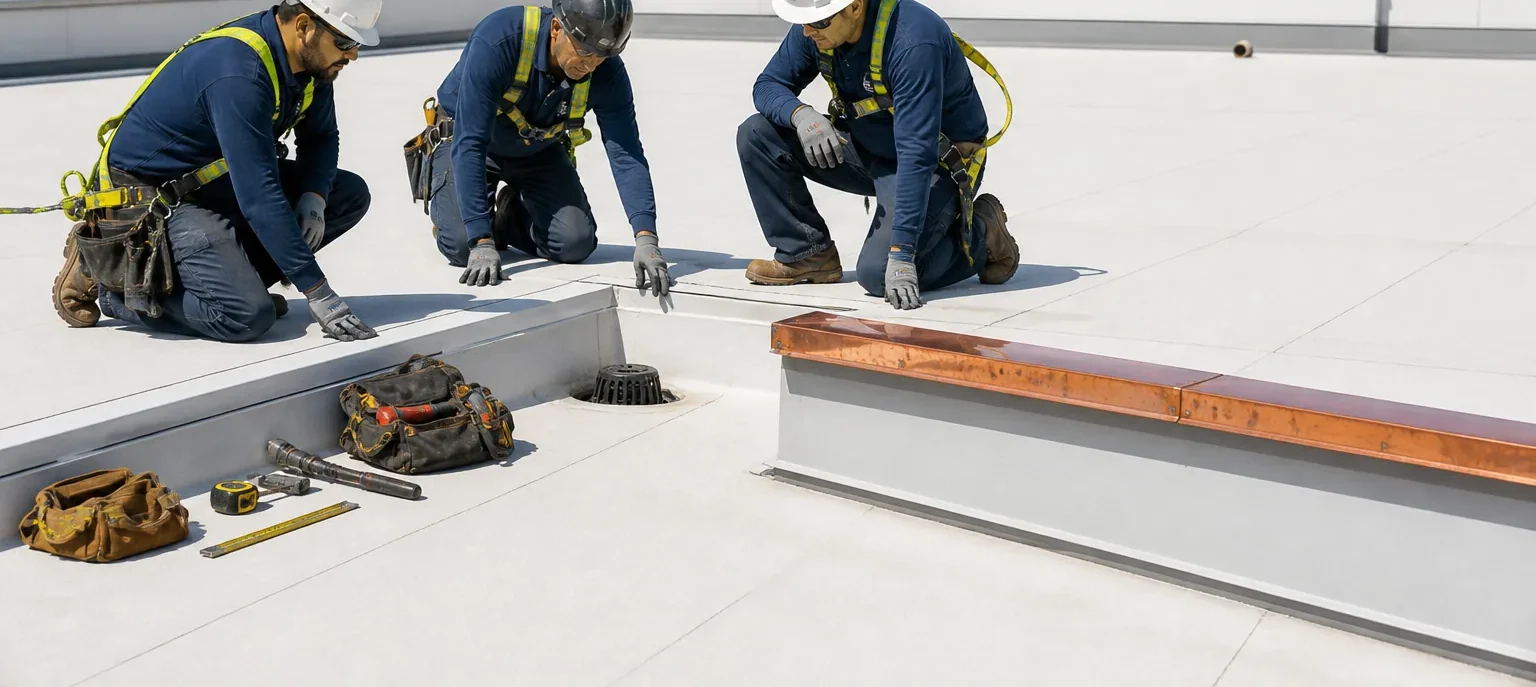
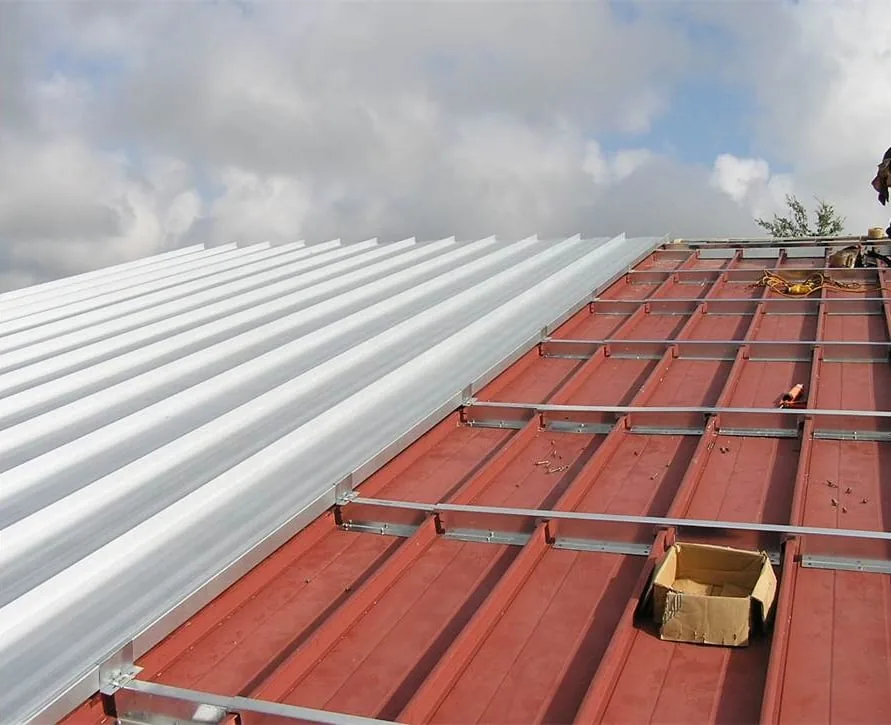
We record the roof area, depth or spread if measurable, weather timing, and nearby drains. Photos taken before and after the surface dries can show whether water remained or moved. The crew checks whether the drain bowl is clear, the strainer is seated, and the surrounding membrane directs water toward the outlet. We also inspect the overflow path. A primary drain can appear open while a blocked secondary path leaves water trapped during heavier rain.
Inside, the site contact names any ceiling stain, wall mark, active leak, equipment concern, or area that cannot be interrupted. Water may travel across a deck or through insulation before it shows inside. We compare interior reports with the roof plan and visible slope. A moisture scan can help identify wet insulation, but it does not by itself explain why water remained. The report separates the drainage observation from the moisture finding.
Drainage path: separate blockage from slope
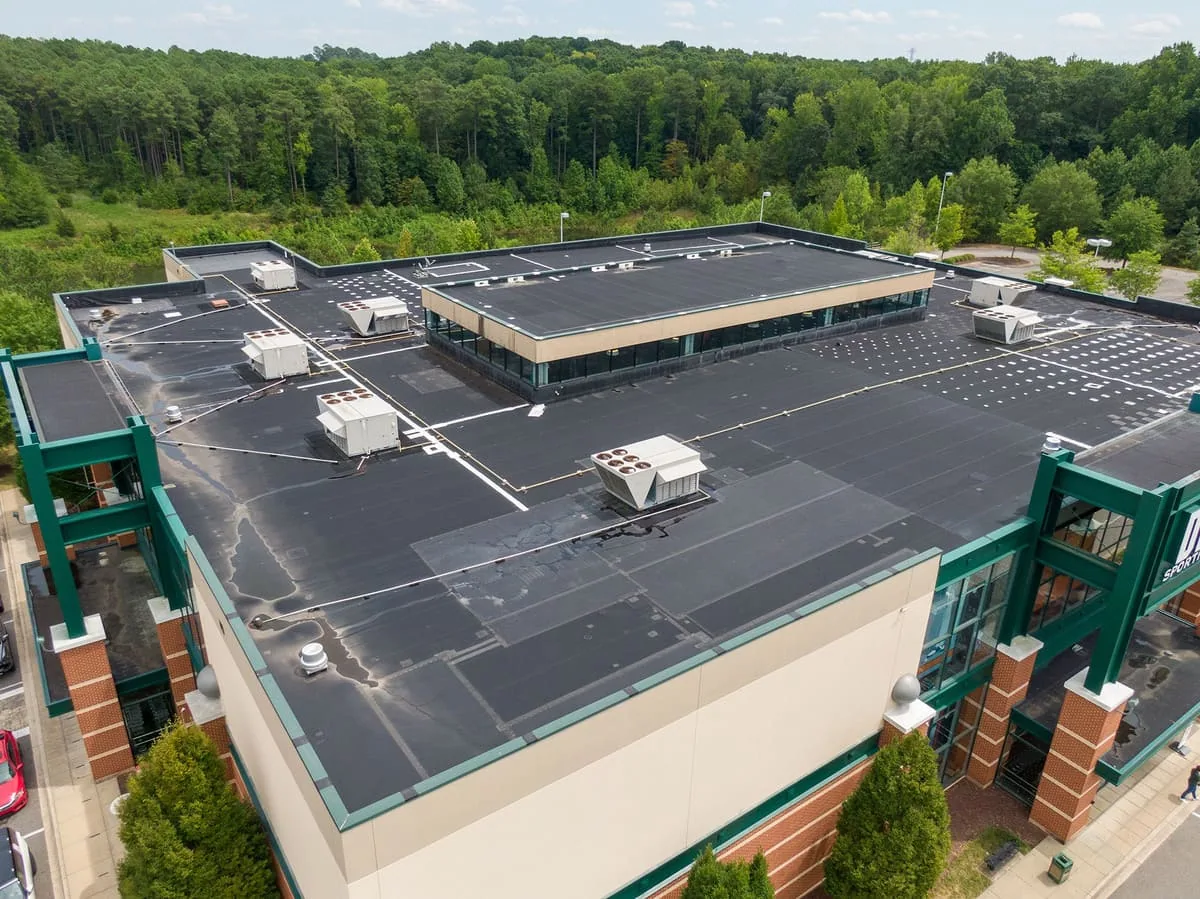
Debris at a drain, compressed insulation, a poorly placed cricket, or a changed roof detail can affect flow. We inspect what is visible and compare the actual route with the roof plan. If water crosses a seam or meets a curb before reaching the outlet, that junction deserves separate attention. A drain cleaning does not correct a low area if the surrounding slope still holds water. We note what the crew can address and what requires design or structural review.
Elgin’s recurring freezes add a timing question. Meltwater can refreeze at a drain, edge, or low point when the surface cools. We do not send a crew onto an unsafe or icy roof to clear an outlet. A weather hold is recorded, and the next visit is set for safe access. If an edge detail is also open, a flashing repair may need its own boundary rather than being grouped with drainage work.
Roof evidence: check membrane, insulation, and deck
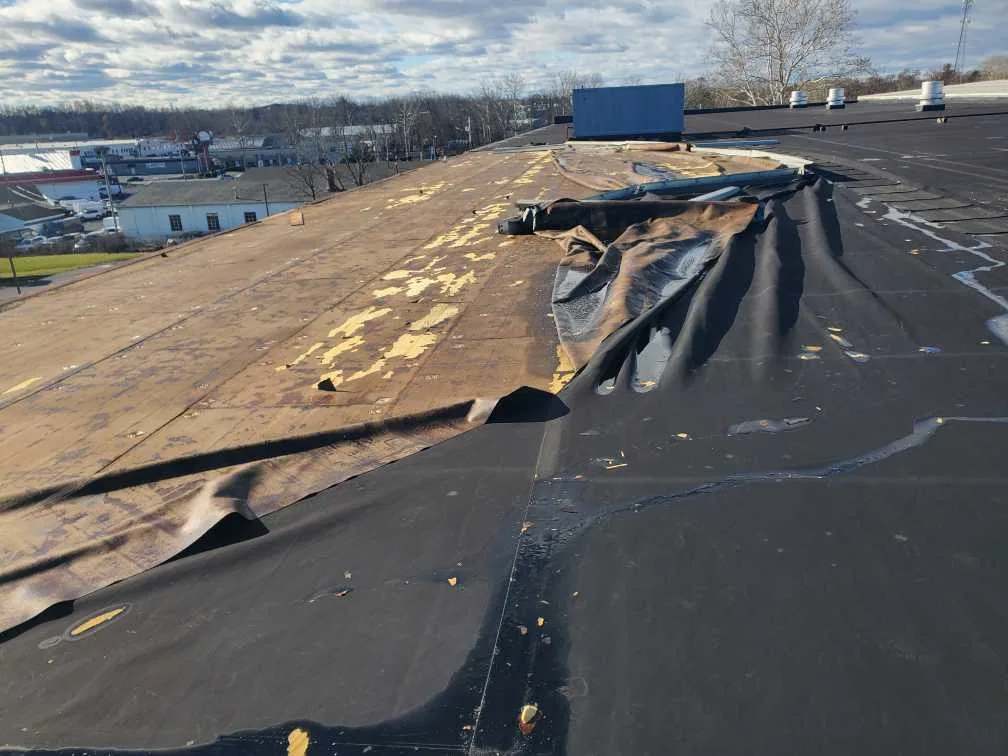
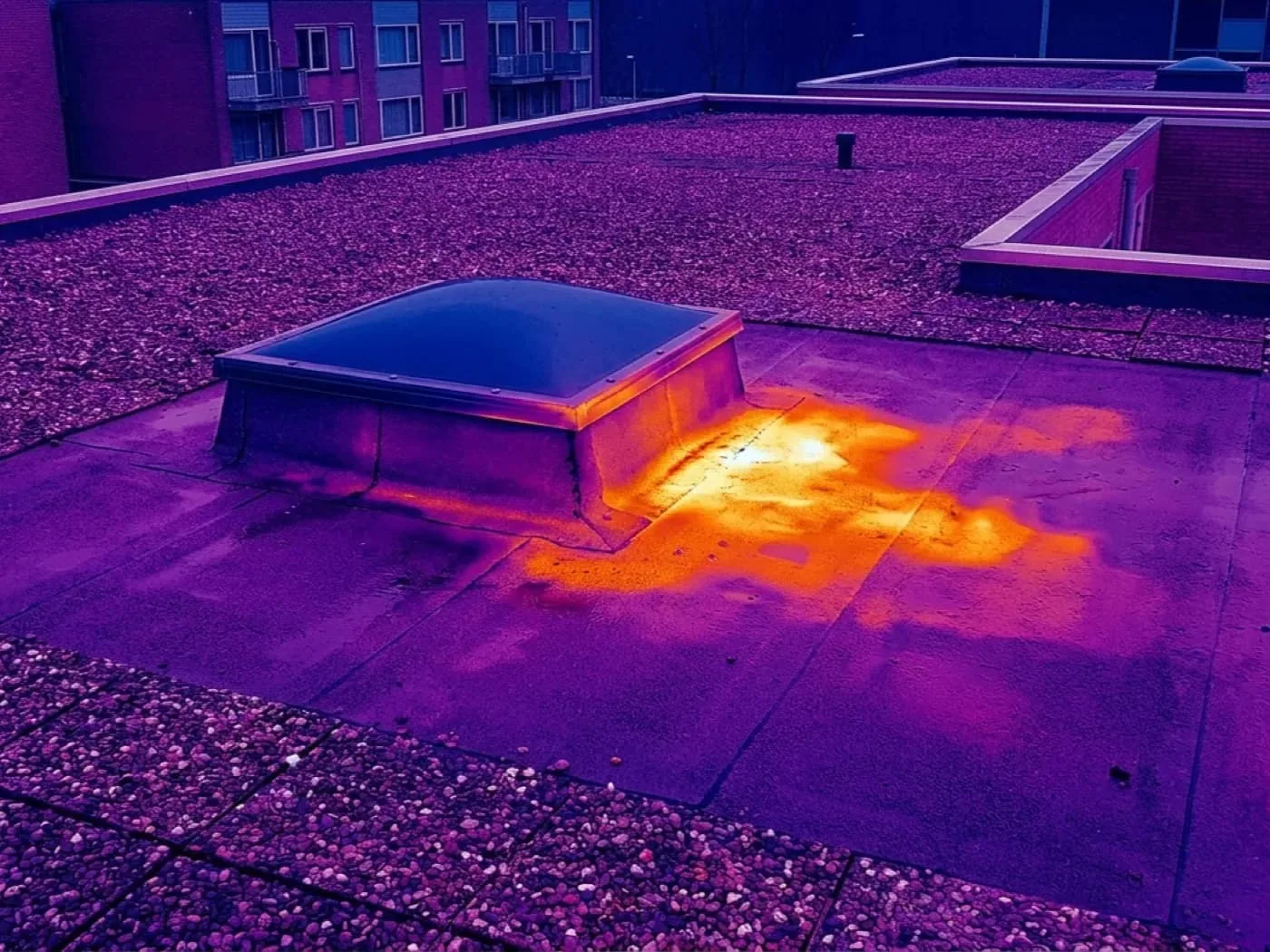
Water that remains on the surface can affect exposed seams, patches, and coating transitions. We inspect for open laps, blisters, surface erosion, displaced granules, or a patch edge that has lifted. Those observations do not establish concealed damage. If moisture may extend into insulation, the owner can authorize a scan or test opening at a selected location. The report names the method, affected roof area, and protection needed below.
We also look at drain clamping rings, flashing height, counterflashing, and the transition from membrane to drain bowl. A loose ring or split seal can let water enter even when the outlet passes water. The repair must connect to compatible, sound material. On a thermoplastic roof, cleaning and welding differ from an EPDM detail or modified-bitumen drain. We identify the system where verified before proposing materials.
For active water, the site contact identifies sensitive inventory, electrical equipment, and occupied rooms. Temporary control can reduce exposure while a permanent scope is prepared. It does not answer how far moisture has traveled. A wind-damage review may be relevant when displaced edge material affects the same drainage area, but the two conditions stay documented separately.
Repair scope: correct the confirmed condition
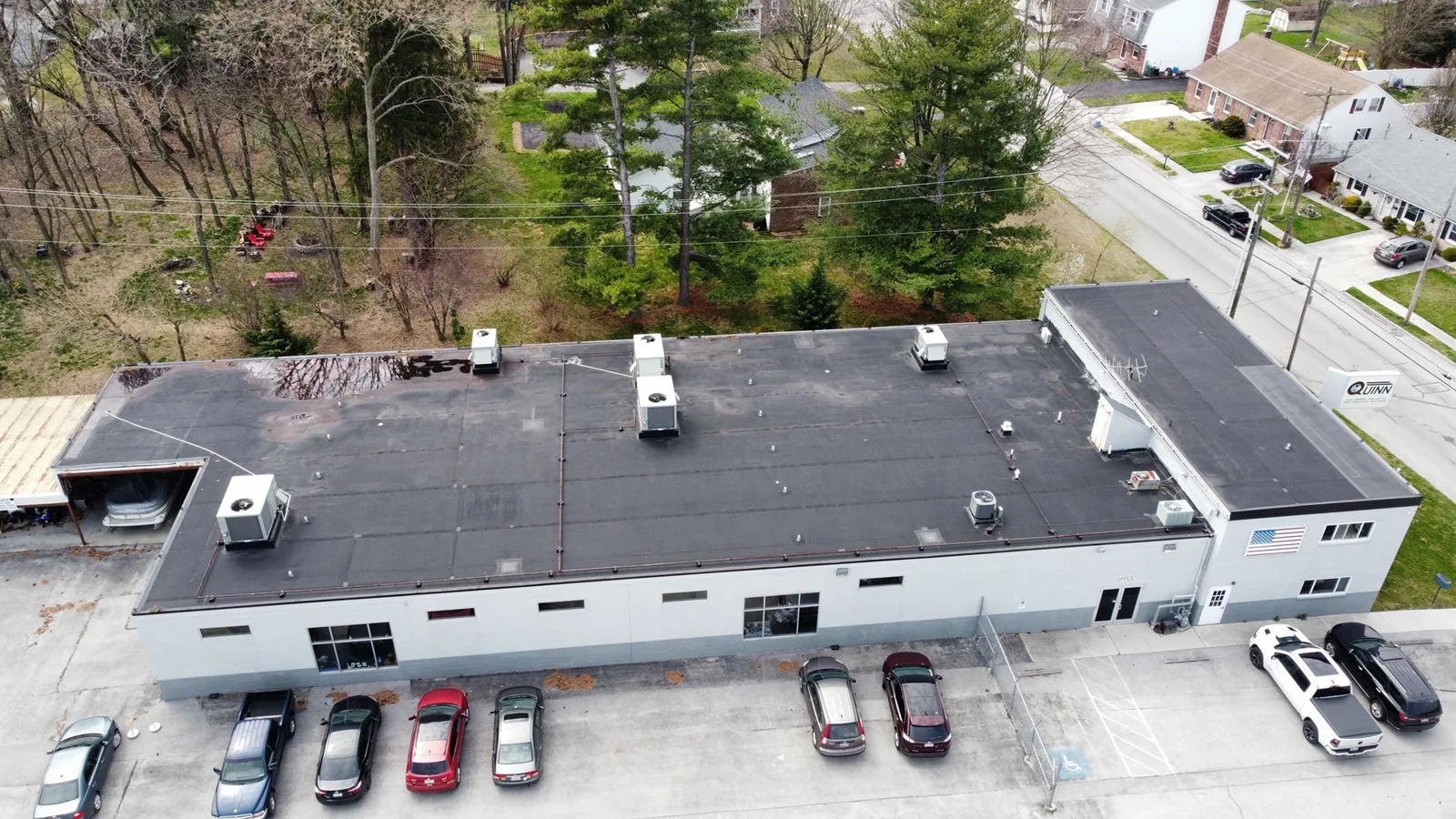
A focused repair may clear an accessible outlet, replace a damaged drain detail, restore a membrane seam, or address a compatible flashing transition. The work order states exactly which task is included. If drainage requires a new slope or structural correction, that work needs appropriate design direction and a separate scope. We do not describe drain cleaning as a full correction when the surface remains low.
The estimate identifies roof zone, measured work limits, material, preparation, disposal, access, and any test after installation. If removal exposes wet insulation or damaged deck, the crew documents it and pauses at the approved boundary. The owner receives the finding and decides whether to expand work. A commercial roof repair can address related defects if they are visible and authorized.
Coating or replacement may be considered when ponding accompanies broad surface deterioration, failed repairs, or multiple wet areas. Those options require review of roof layers, insulation, moisture, attachment, deck, drainage, and warranty restrictions. We state which evidence supports a broader alternative and what remains uncertain. A TPO system or another roof type has its own seam and flashing requirements; the proposal follows the installed assembly rather than using one detail everywhere.
Access and timing: plan a safe return
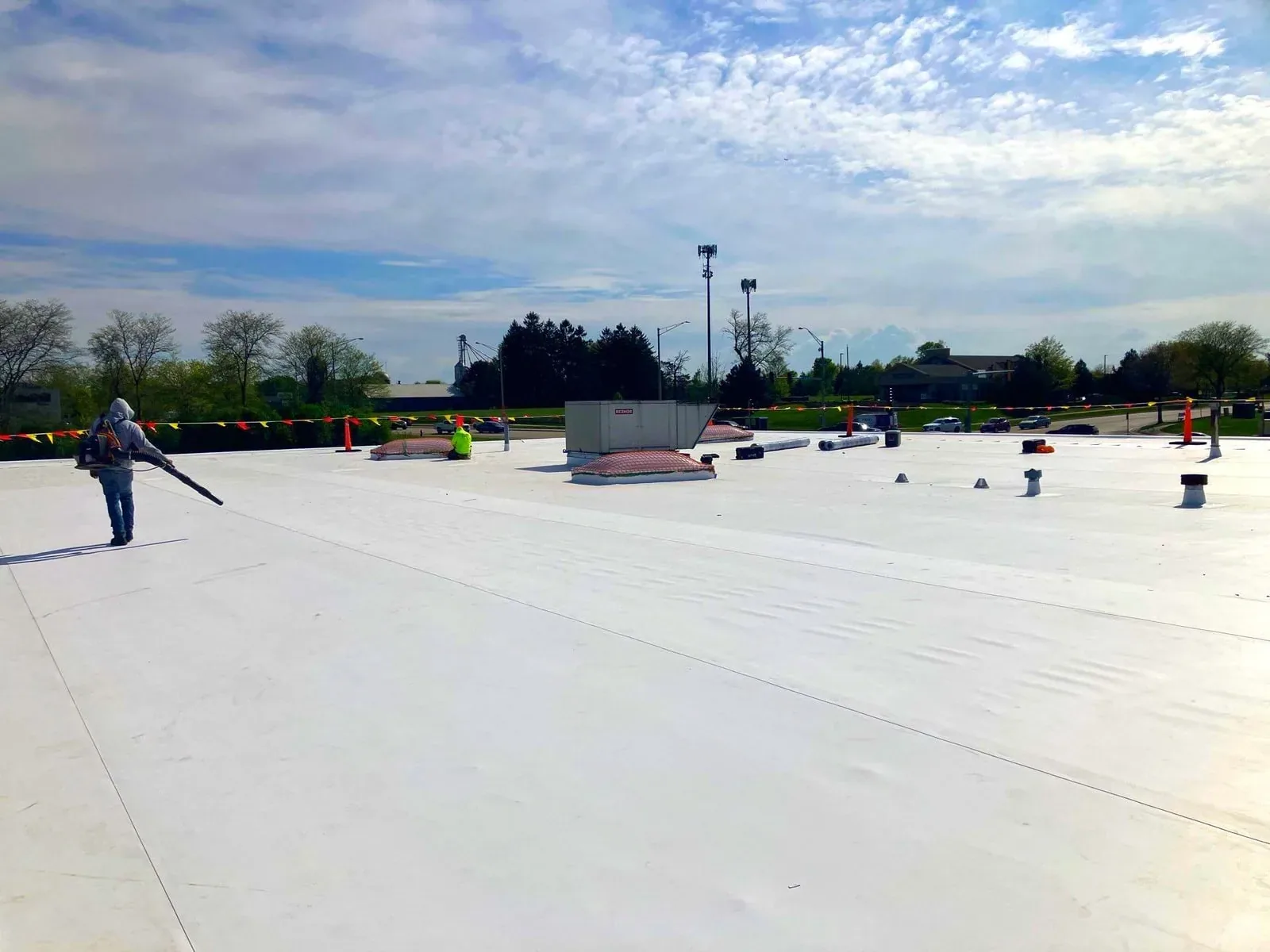
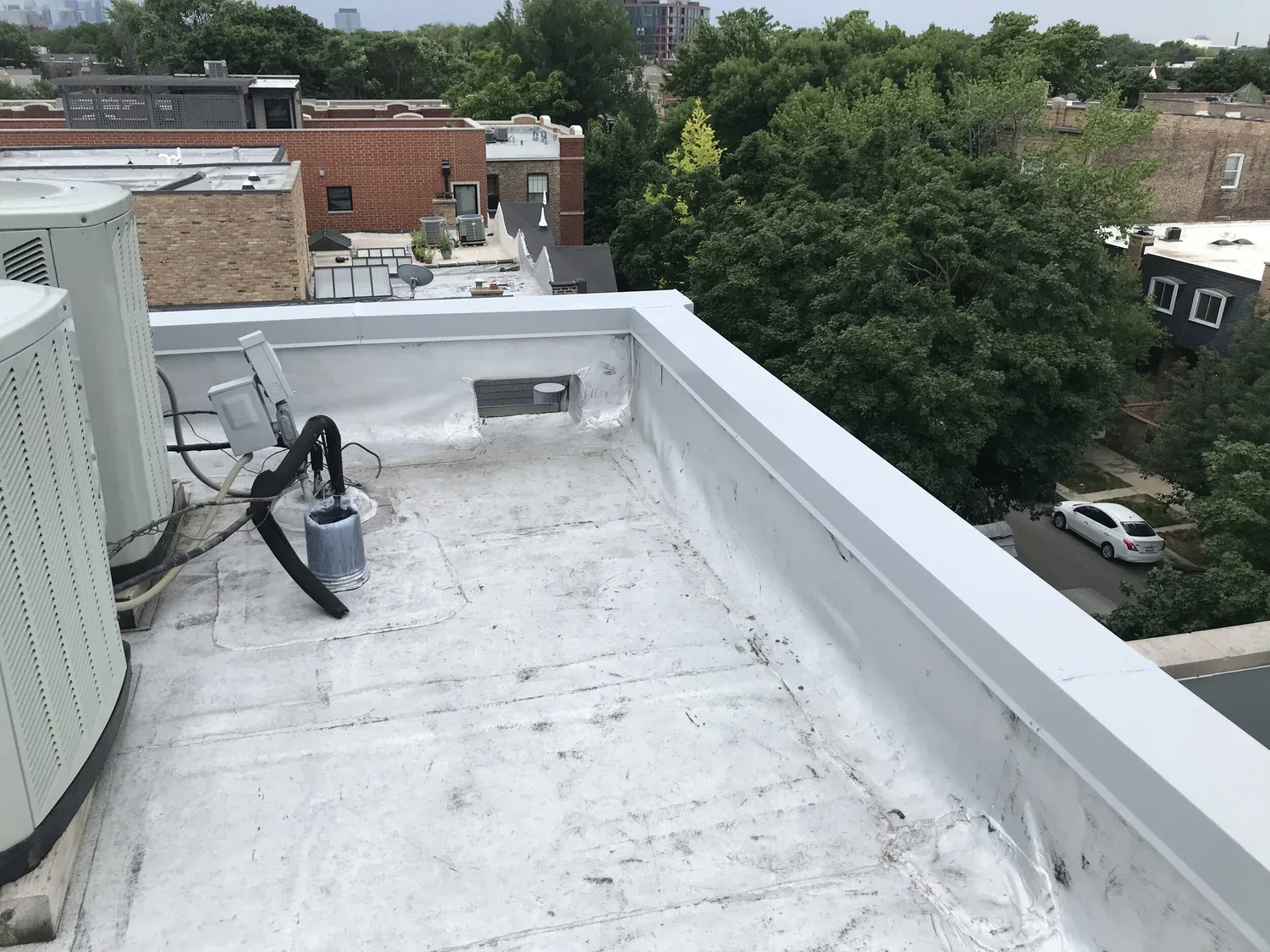
Elgin averages 137.9 days below freezing and experiences regular snowfall. Ice can cover drain bowls and conceal membrane conditions. The crew confirms roof access, fall protection, ladder or hatch location, and current surface condition before beginning. The owner identifies any tenant hours, equipment shutdown, or loading conflict. If a roof cannot be entered safely, the report records the limitation and sets a return window.
Dispatch around I-90, U.S. Route 20, and Randall Road can bring crews near commercial properties, but the property contact gives the correct entrance and staging area. A corridor does not determine the building’s roof access. Where a storm or heavy rain led to the report, the owner supplies the date and any photos. We note the weather context without assigning a cause that inspection cannot support.
Water on a roof can affect interior operations before a permanent repair is ready. The manager identifies rooms, work areas, or stock that need temporary protection. The roofing scope excludes interior restoration unless that work is explicitly included. If conditions change between dispatch and arrival, the site contact receives an updated status and any revised access plan.
Closeout: track water after the repair
Closeout photos show the drain, adjacent membrane, completed detail, and remaining limitations. The report records whether water cleared, which areas were inspected, and whether another observation is needed after rain or thaw. A single visit should not be described as proof of whole-roof performance. The property team can attach the record to the roof plan and compare later observations at the same location.
A condition report can organize photos, roof zones, open tests, and approval points for follow-up. Send the building, affected roof area, time water appeared, current status, access contact, and any recent repair or equipment work when requesting service. We will confirm safe entry, the first checks, and what requires owner authorization.
Questions About Commercial Ponding Water Roof Repair
How long can water stay on a commercial roof before it needs review?
The observed duration and roof condition guide the response. We record when the water was seen, whether it remained after nearby areas dried, and what drains or low areas need another check.
Will clearing a drain solve ponding?
A clear outlet helps only when the roof surface can move water toward it. We inspect both the drain and the surrounding slope, then separate cleaning from any needed repair or design review.
Can ponding cause a leak even when the membrane looks intact?
Water may reach a weak seam, drain detail, or penetration that is not obvious from a distance. We inspect nearby transitions and use testing only when it could change the repair decision.
Does Elgin snowfall make a ponding condition worse?
Snow storage and thaw can change water timing, and freezing can make roof entry unsafe. We document the actual roof condition and schedule any follow-up when the surface can be reached safely.
What if water remains after a drain is cleared?
The report can identify a low area, suspected deflection, or another path requiring review. We do not treat cleaning as a correction to slope; the owner receives the next step and responsible trade.