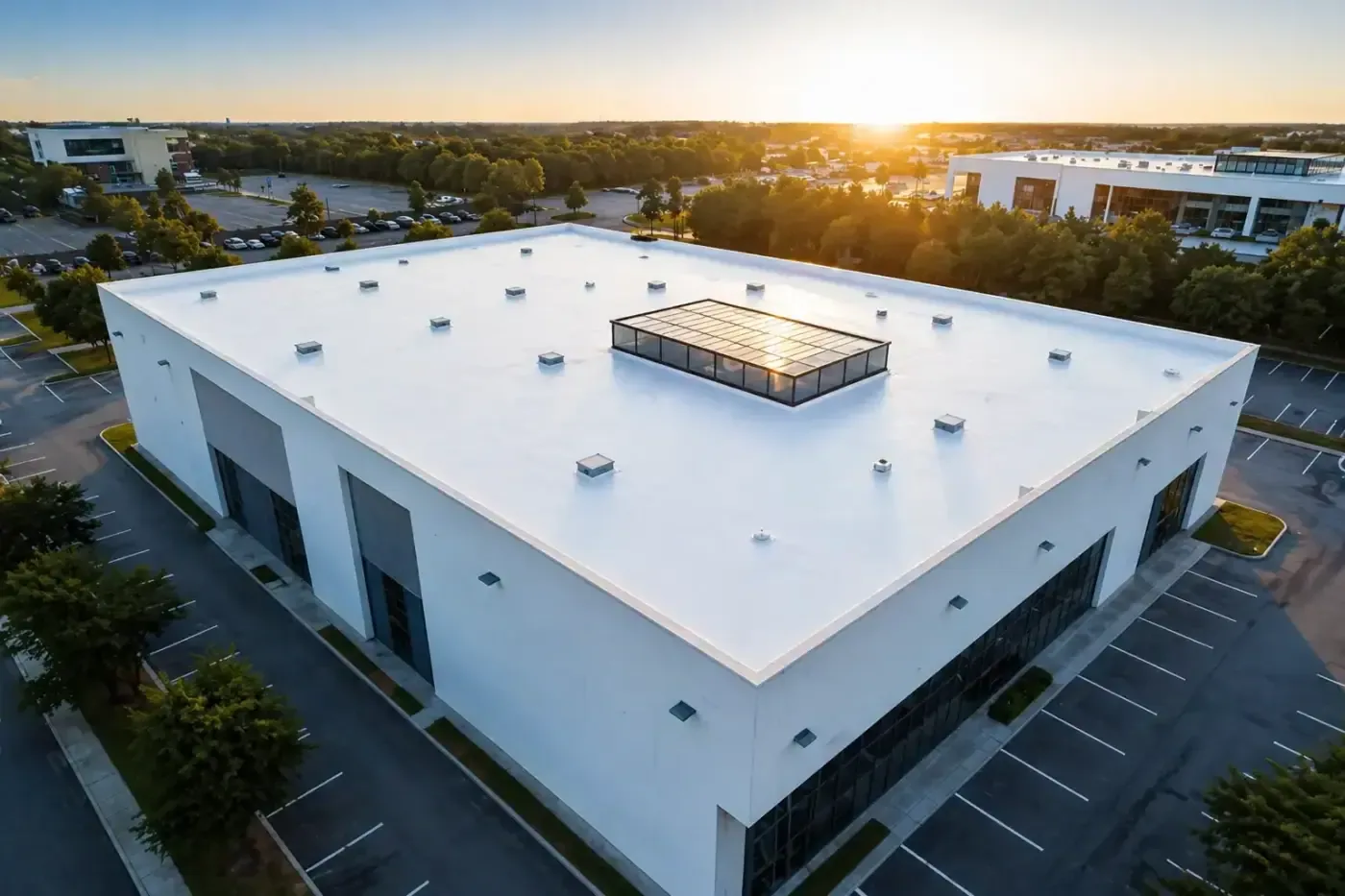
Versico Commercial Roofing in Elgin, IL
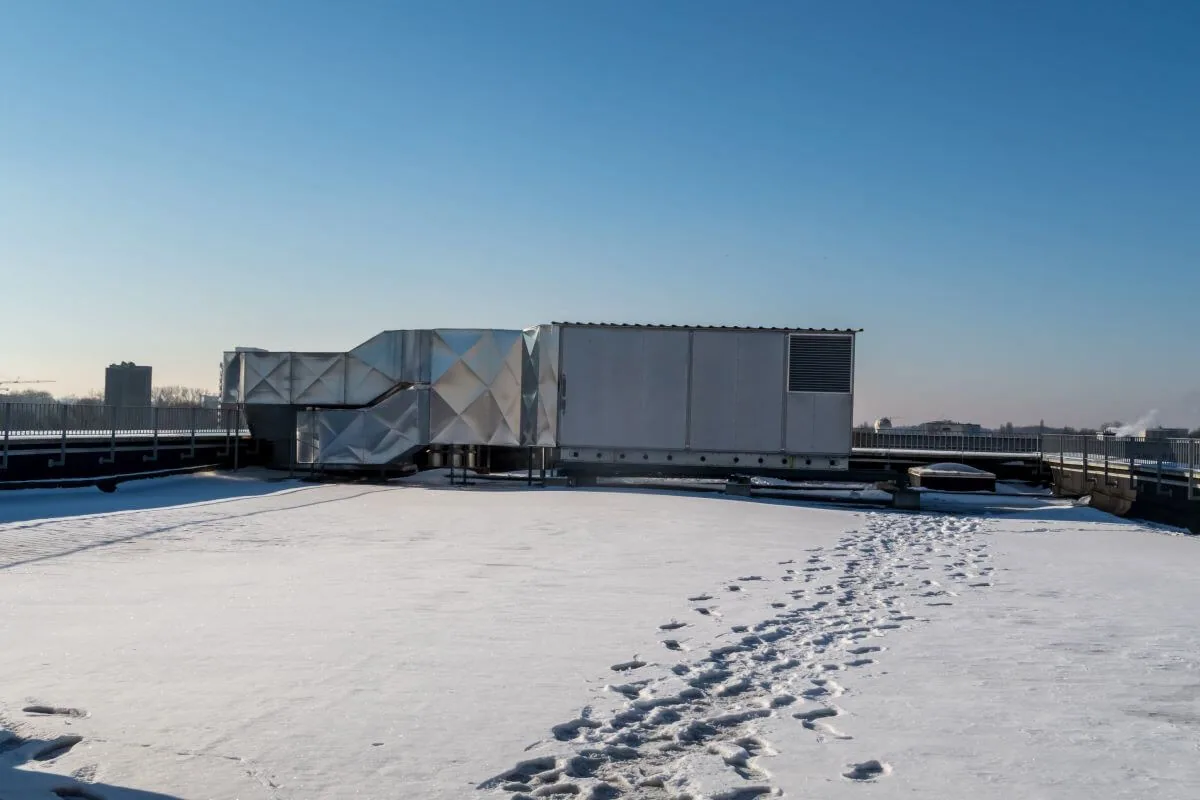
Versico Commercial Roofing
Versico offers commercial roofing products in several membrane families, including TPO and EPDM. A repair recommendation still depends on what is installed, how it is attached, and whether the substrate remains suitable. We inspect the roof in sections, document seams, flashings, drainage, and prior repairs, then identify the decision the owner needs to make. The report stays tied to conditions found at the property.
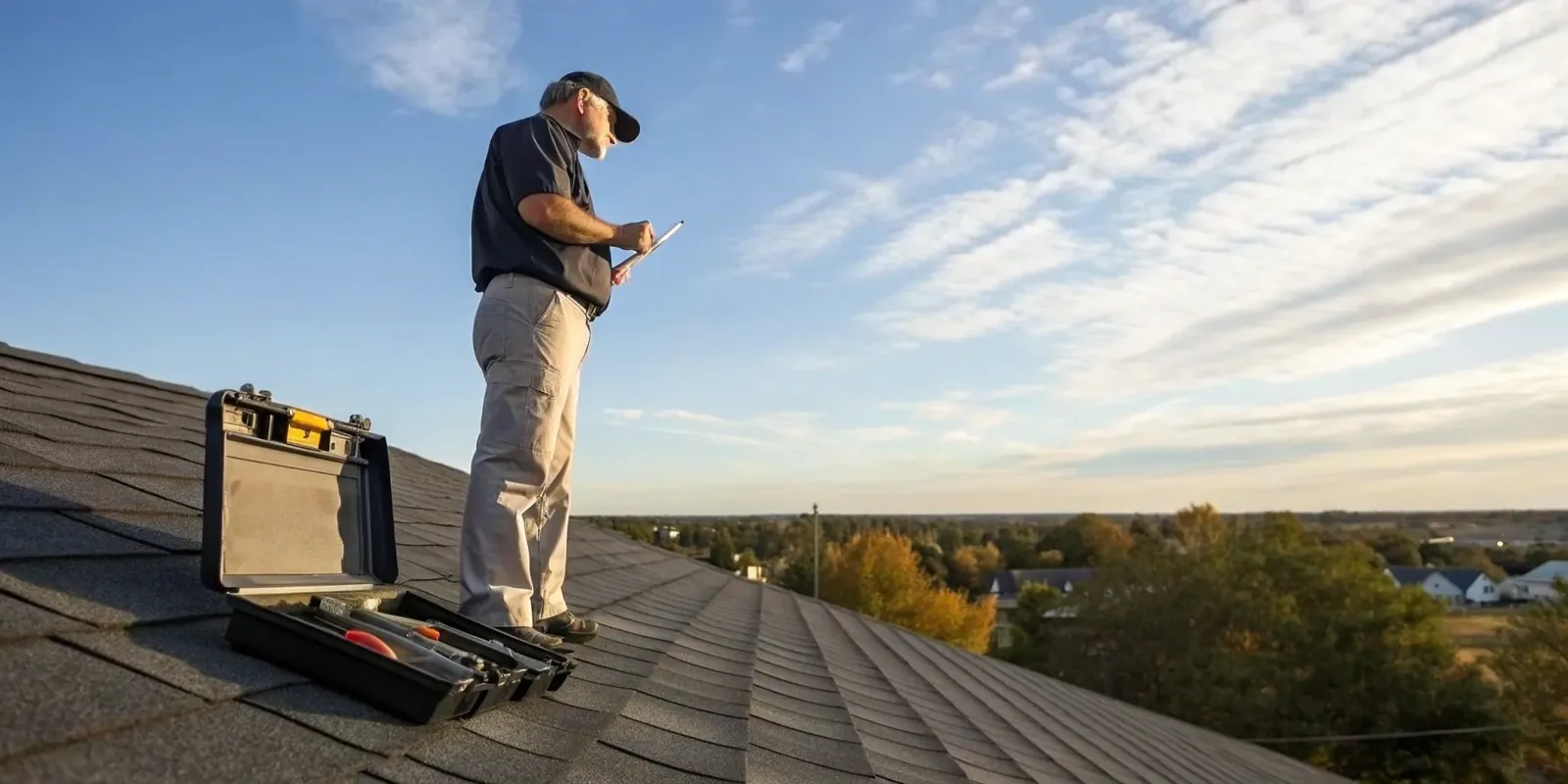
Track each roof zone and its details
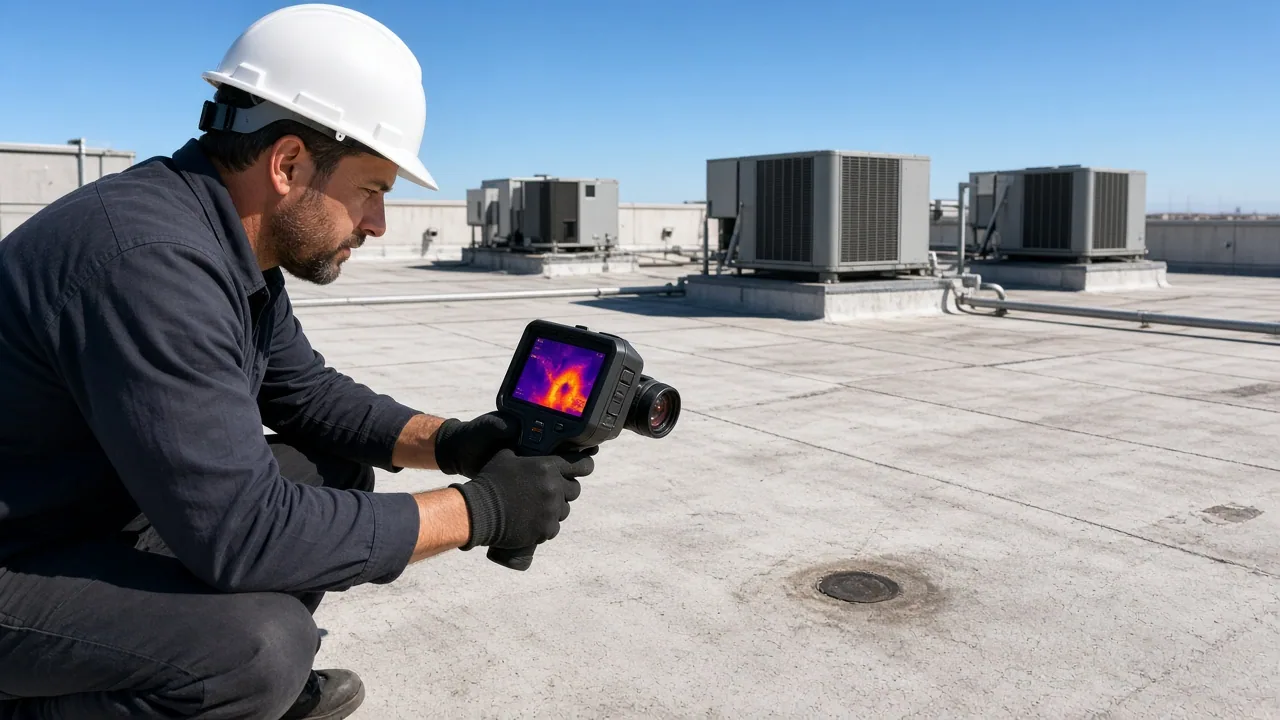
We start with a roof plan that identifies the area under review and the path water may take. The crew records membrane seams, wall transitions, drains, scuppers, penetrations, curbs, edge metal, and prior patches. A ceiling stain is a clue, not proof of the roof opening. Water can move beneath a membrane or follow a detail before reaching the interior. We report the likely source and any remaining uncertainty separately.
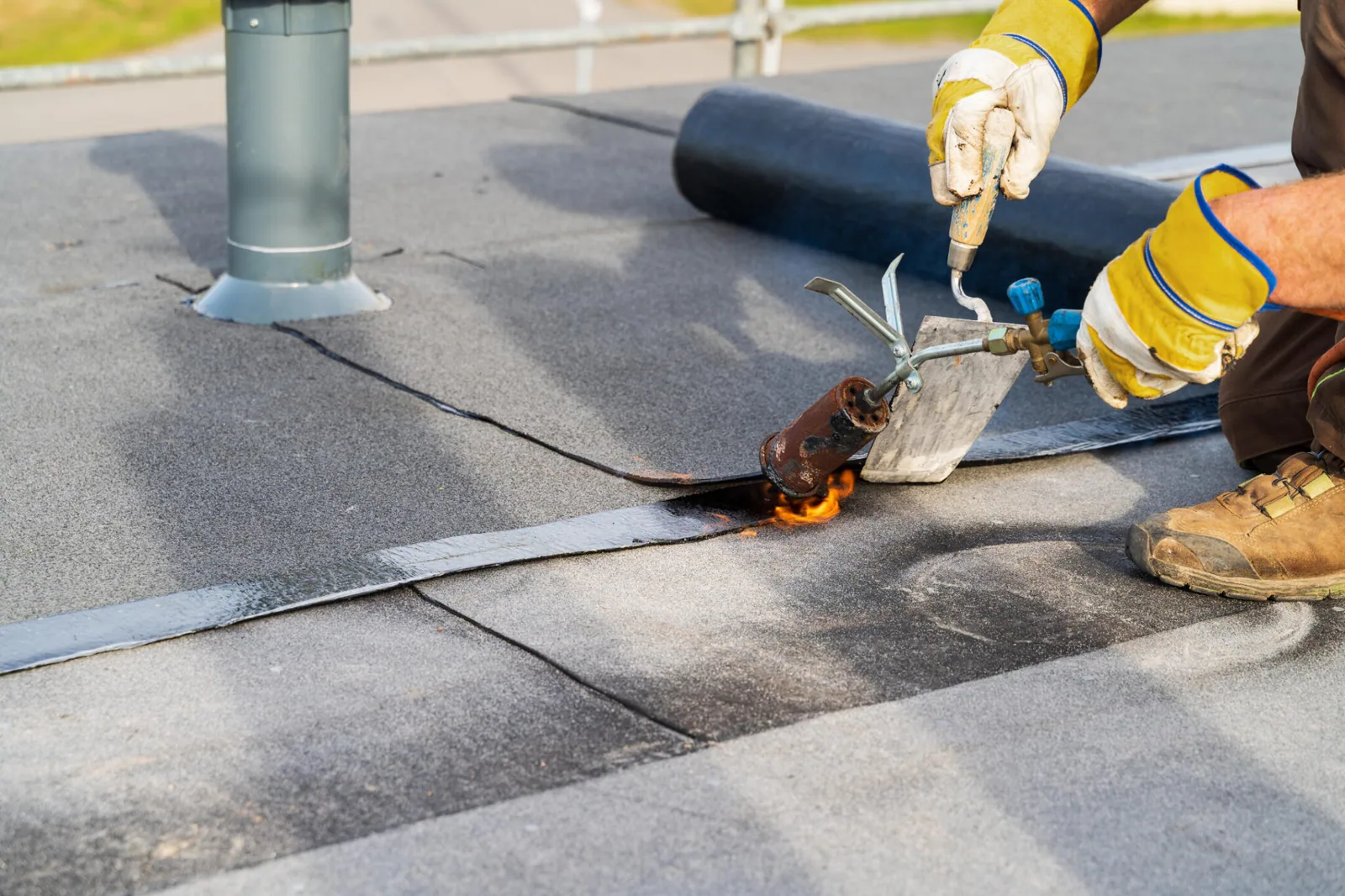
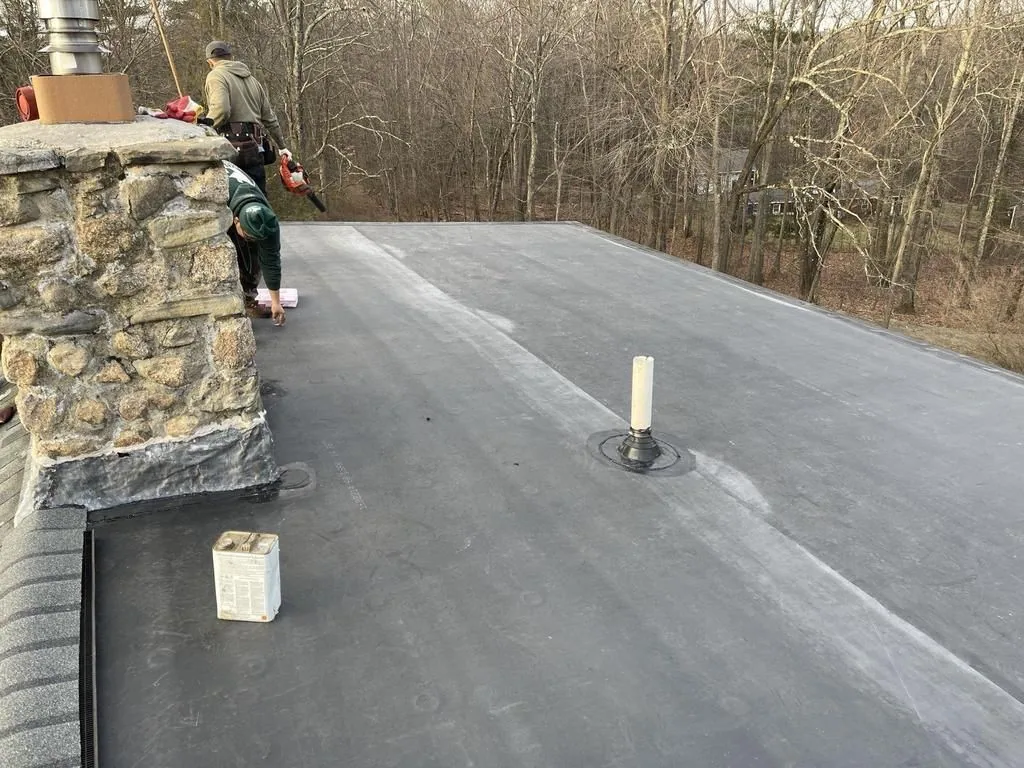
On an EPDM roof, we look closely at seams, flashing transitions, surface condition, and repair materials. For a TPO system, we check welded laps and the related flashing and termination details. Visible color does not confirm product or attachment. We compare field observations with project records and manufacturer labels where available. When there is a mismatch, we resolve it before choosing a product-specific method.
Owners with properties near the Randall Crossing Business Park or Northwest Corporate Park should expect access to vary by building. We coordinate escort rules, roof keys, work windows, and deliveries with the responsible site contact. If the leak is active, request commercial roof leak repair; for a condition baseline, arrange a roof inspection.
Versico product families need separate details
Versico’s commercial options include VersiWeld TPO and VersiGard EPDM, with additional PVC and fleece-backed offerings. These systems differ in seam construction, flashing, adhesives or attachment, and repair components. The specification has to identify the exact membrane and approved accessory set. A product name cannot answer whether the roof can be recovered, what insulation is needed, or how edges and drains should be built.
We review the full assembly: deck, vapor control where specified, insulation, cover board, membrane, fastening or adhesion, flashing, perimeter securement, and drainage. Wind and fire criteria apply to the designed system, not a product name alone. The designer and project team verify applicable approvals and code requirements for the building. Any changed substrate or hidden moisture condition gets documented before installation continues.
When comparing a Versico option with Sika Sarnafil or Johns Manville, compare the approved assembly and maintenance needs. Do not assume that two products with a similar appearance use the same repair material. We follow the current instructions tied to the selected membrane, and we explain where an unresolved identification issue affects the scope.
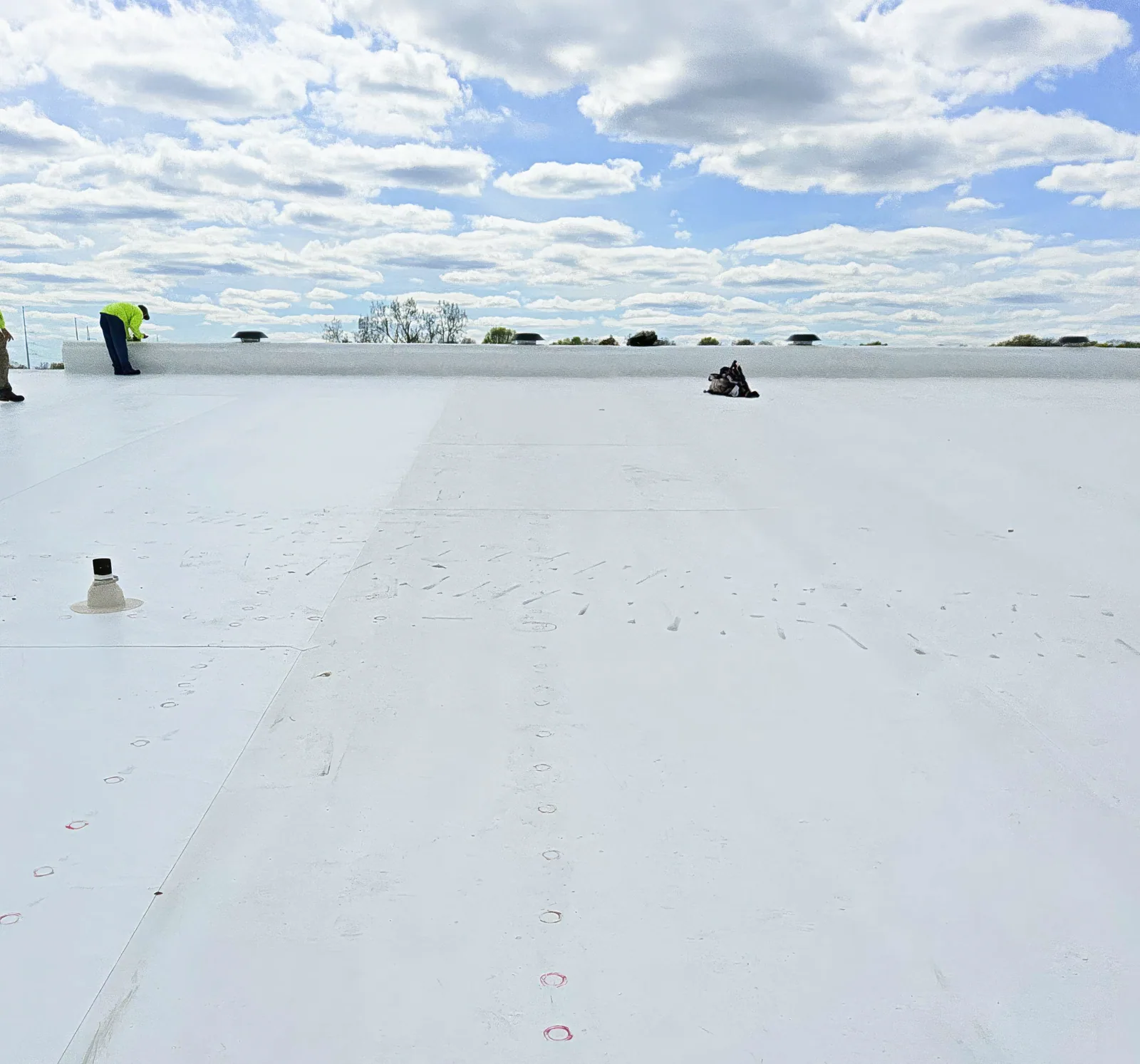
A leak repair needs a clear edge
The repair visit begins with interior protection and a focused roof review. We trace the likely entry around seams, penetrations, drains, roof-to-wall transitions, and previous repairs. The approved scope names the exact zone and the defect being addressed. If a temporary measure is needed to limit water while a permanent repair is planned, the work order labels it temporary and defines the follow-up.
Material compatibility matters at the patch perimeter. The surface needs preparation, and the underlying substrate must be suitable for the selected detail. When water has reached insulation or the roof deck, a surface repair may leave part of the problem concealed. We stop to explain the additional test or opening that would answer the question before expanding work.
After the repair, the site contact receives photos and a short note describing the work completed, the materials used, and any remaining concern. That record helps maintenance staff distinguish a treated defect from an adjacent seam that was not included. If interior moisture remains, the follow-up plan should say who will check the space and when.
Where access allows, we inspect the repair boundary after preparation and again when the detail is complete. The report notes conditions that could affect future service, such as adjacent foot traffic or equipment work. That makes the record useful to maintenance staff who may not have attended the original repair.
For repeat conditions, an inspection and maintenance plan can track the same roof zone through seasons. If repairs are multiplying or the assembly is broadly compromised, compare a replacement evaluation with continued patching. A written history helps ownership see what has been repaired and what remains outside prior scopes.
Design the whole assembly, not just the field sheet
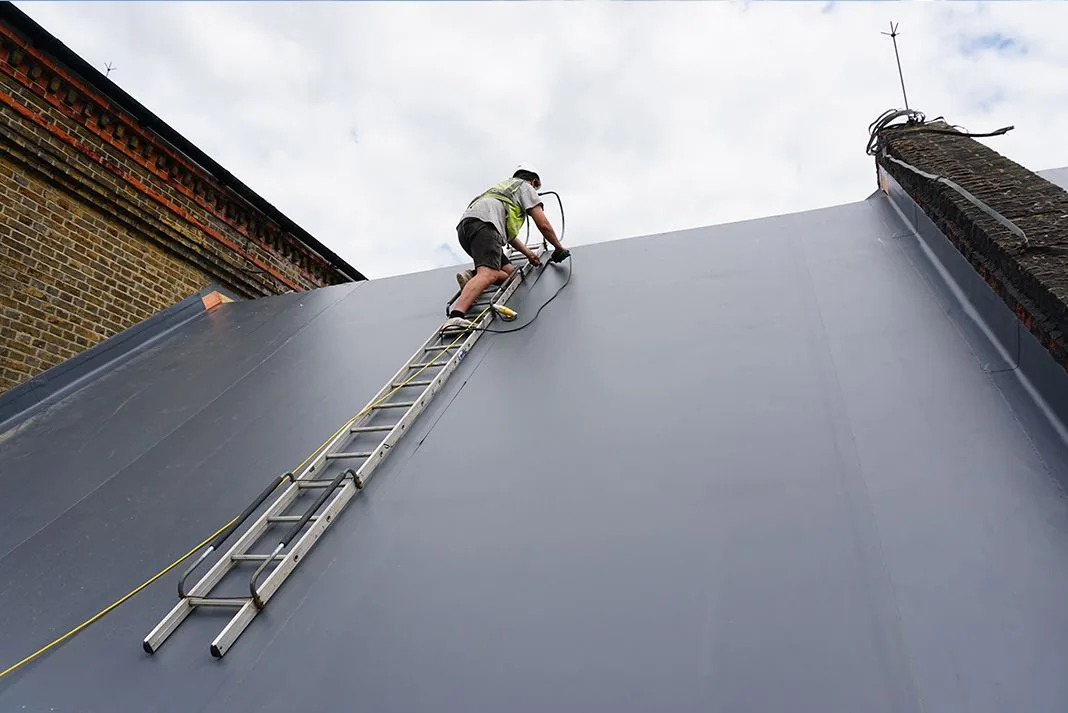
A replacement proposal should state tear-off or recover assumptions, existing layers, deck type where verified, insulation and cover board, attachment, flashing, edge metal, and drainage details. Recover work needs review of moisture, structural capacity, edge height, and code path. Where those facts are not yet known, the project documents should identify the test or opening needed before approval.
At tear-off, concealed conditions may change quantities or design. The owner and contractor should agree how the crew records wet insulation, damaged deck, or unexpected layers. Photos, measurements, and written authorization keep the decision traceable. No crew should cover an unresolved condition simply to stay on schedule.
Insulation and membrane quantities should be based on verified measurements, not approximate roof area. We record drains, expansion joints, equipment curbs, parapets, and changes in elevation because each affects material takeoff and detailing. Where drawings differ from what the crew sees, the project team should resolve the discrepancy before ordering components. This avoids short material, improvised transitions, and undocumented field substitutions.
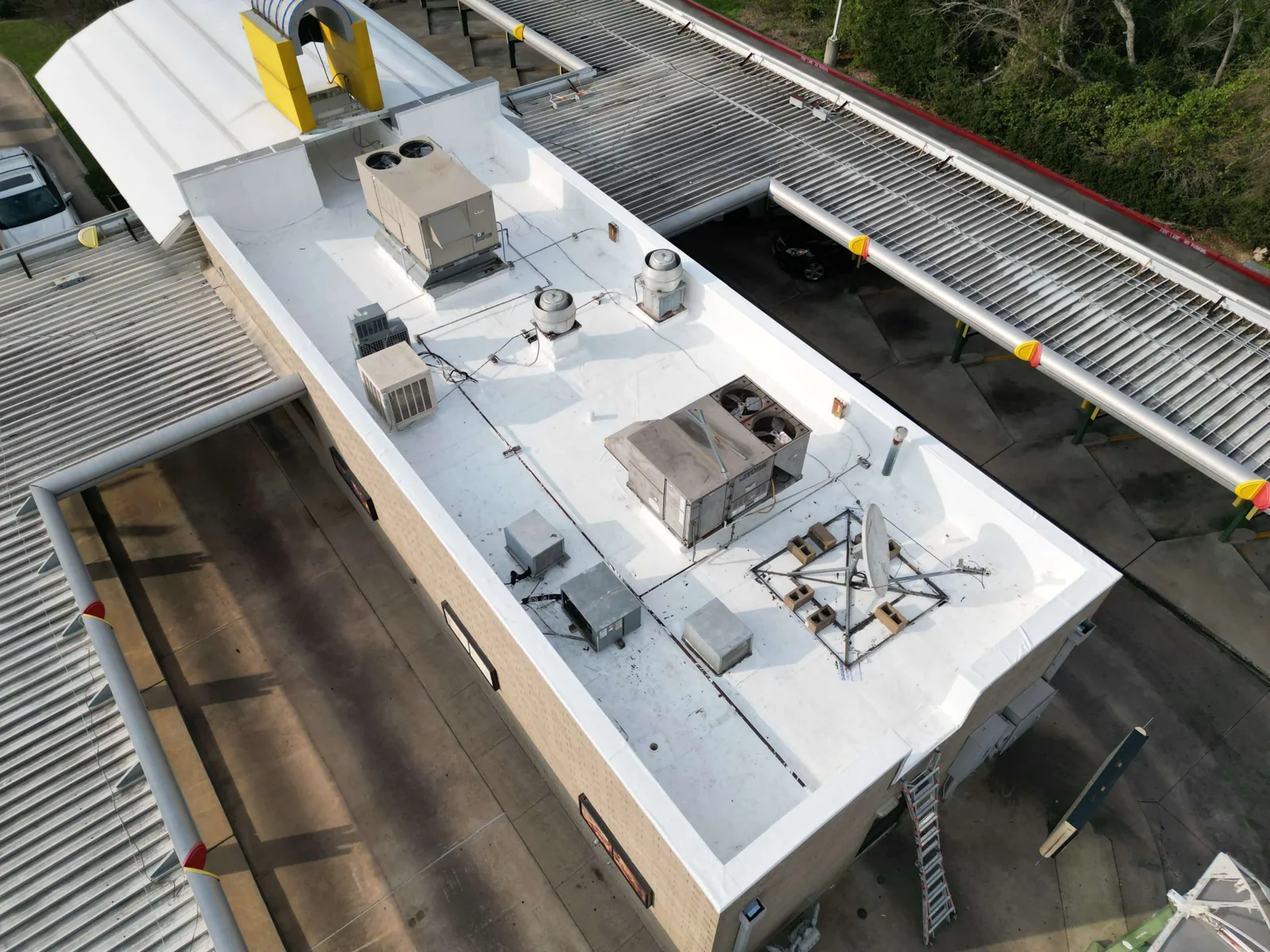
A field survey should also note how many penetrations interrupt each roof zone and whether equipment service requires repeated traffic over the membrane. Those points affect walkway protection, flashing count, and maintenance access. At edges, we measure transition lengths and note corners where securement changes direction. A roof with future mechanical upgrades may need coordinated curb details before a new system is installed. The designer confirms any wind criteria and attachment pattern for the actual deck; the installer follows approved drawings rather than selecting fasteners in the field by convenience. Before the bid is released, confirm that accessories and repair materials match the named Versico family. After installation, retain delivery labels, photographs, and change approvals with the roof plan.
Occupied properties need a sequence that protects entries and operations while keeping the roof watertight. The supervisor coordinates deliveries, lift access, tenant notices, material staging, and daily dry-in. Elgin’s winter freeze-thaw period can narrow work windows. The work plan identifies the maximum open area, who can call a weather stop, and how the roof is secured at shift end.
Elgin weather belongs in scheduling decisions
Elgin averages roughly 29 inches of annual snowfall, with regular periods near or below freezing. Summer also brings hot days; the area records more than a dozen days above 90°F in an average year. Those conditions affect crew safety, material handling, and temporary exposure planning. They do not prove a particular roof has a defect.
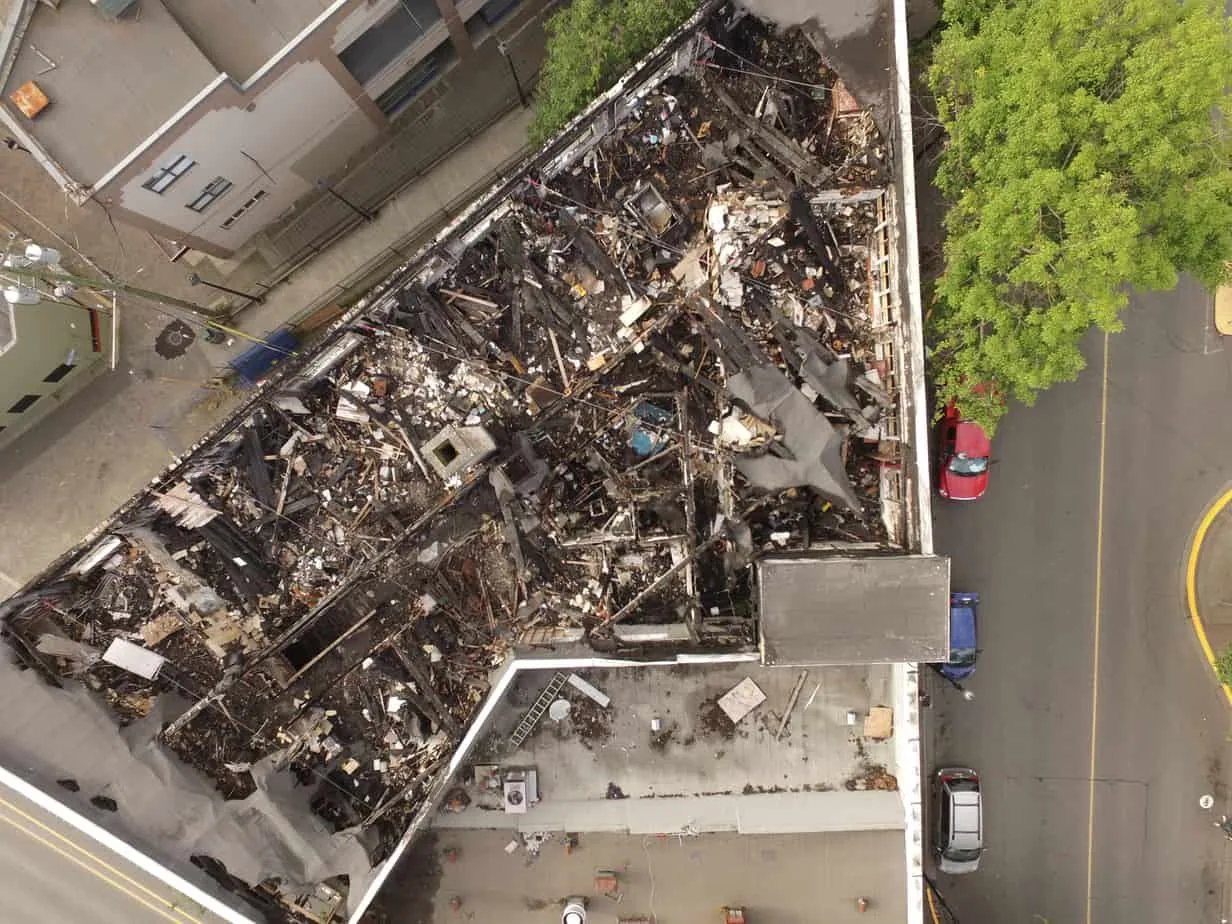
After the July 2023 tornado crossed Elgin, a property contact may reasonably request a review. The report documents present conditions: a lifted edge, a puncture, an open seam, damaged flashing, or an interior water mark. The event is not a substitute for a building-specific inspection, and we do not assume every site along a corridor was affected.
Sites near the South Elgin-LaFox corridor or Burnidge Big Timber Industrial Park can have different traffic, gate, and staging constraints. We confirm the actual roof route and work hours with each property contact. That is how the crew arrives prepared without guessing about a named site.
Questions About Versico Commercial Roofing
What Versico products do you review?
Commercial options include TPO and EPDM, plus other membrane families. We identify the installed product first.
Can you repair a VersiWeld roof?
Often. The seam, substrate, surrounding sheet, and compatible detail guide the repair.
Is EPDM handled like TPO?
No. Membrane and seam differences require product-specific materials and installation steps.
Do local weather averages prove roof damage?
No. An inspection records current evidence at the property.
Can an existing roof be recovered?
Possibly, after layers, moisture, deck, edges, code, and attachment are reviewed.