Aircraft Hangar and Aviation Building Roofing in Elgin, IL
Request an aviation roof assessment
Provide the site location, roof plans, bay-level leak reports, aircraft clearance rules, door details, and authorized access contact.
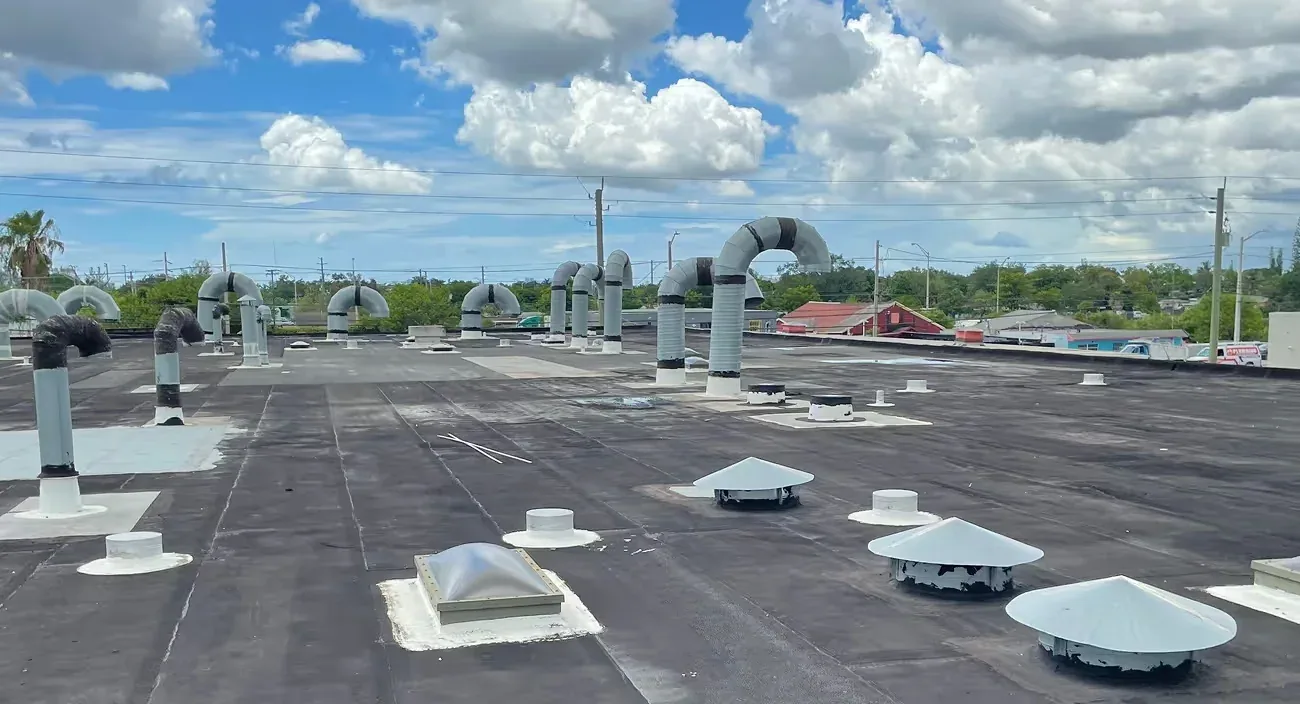
Aircraft Hangar and Aviation Building Roofing
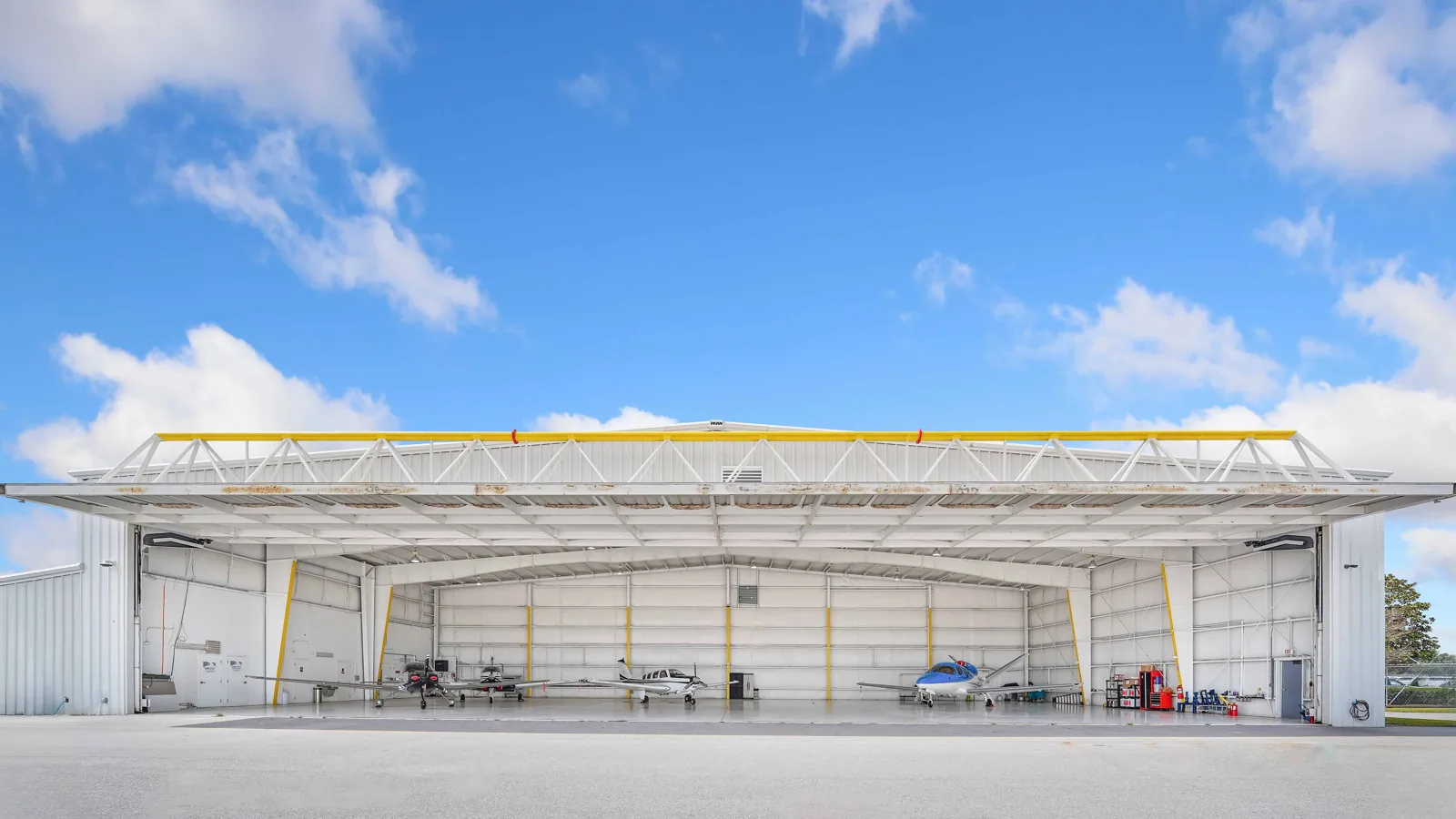
Hangar roof work has to protect the building envelope without creating an unplanned risk to aircraft or maintenance activity. We confirm the structure, roof assembly, door systems, access authority, and reported condition before proposing a repair. The operator identifies aircraft movement, maintenance windows, equipment storage, fire controls, and areas that must remain clear. We plan from the site’s own operating rules and do not assume aviation procedures are interchangeable.
Elgin-area service planning includes Downtown Elgin and Randall Point Executive Center as commercial locations. These names do not establish that a specific airport or hangar sits there. The facility owner provides the actual property location, route, access sponsor, and operating requirements before inspection.
Protect aircraft movement and door clearances
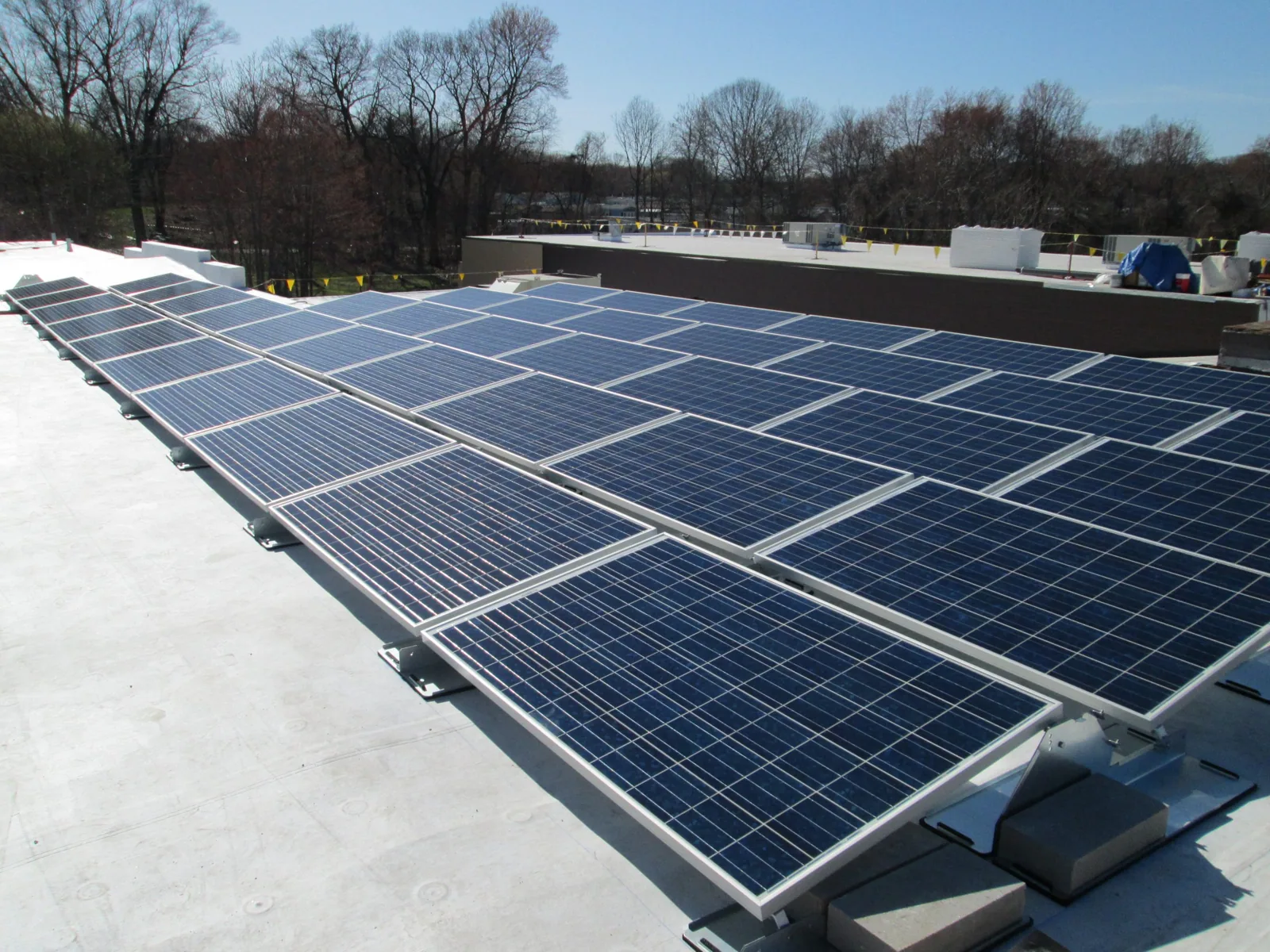
The operations contact identifies hangar-door travel, aircraft tow paths, apron access, maintenance bays, fuel or service areas, and emergency lanes. A lift, crane, truck, or material drop may conflict with a moving aircraft or door. The owner approves staging and any temporary exclusion zone. We do not place tools, debris, or roofing materials in an active path.
Hangar doors can be large moving assemblies with their own tracks, power, and controls. The roofing scope identifies work at the roof-to-door transition but does not assume door adjustment or electrical service. If a door must be disabled or tested, the operator assigns that task to a qualified specialist and confirms when normal operation may resume.
Work windows depend on the hangar’s schedule and safe weather. The plan records what remains operational, who controls the space, and how a hold will be communicated. If the work affects an aircraft bay, the owner decides whether equipment or aircraft must be relocated before roofing begins.
Trace water around broad-span roof details
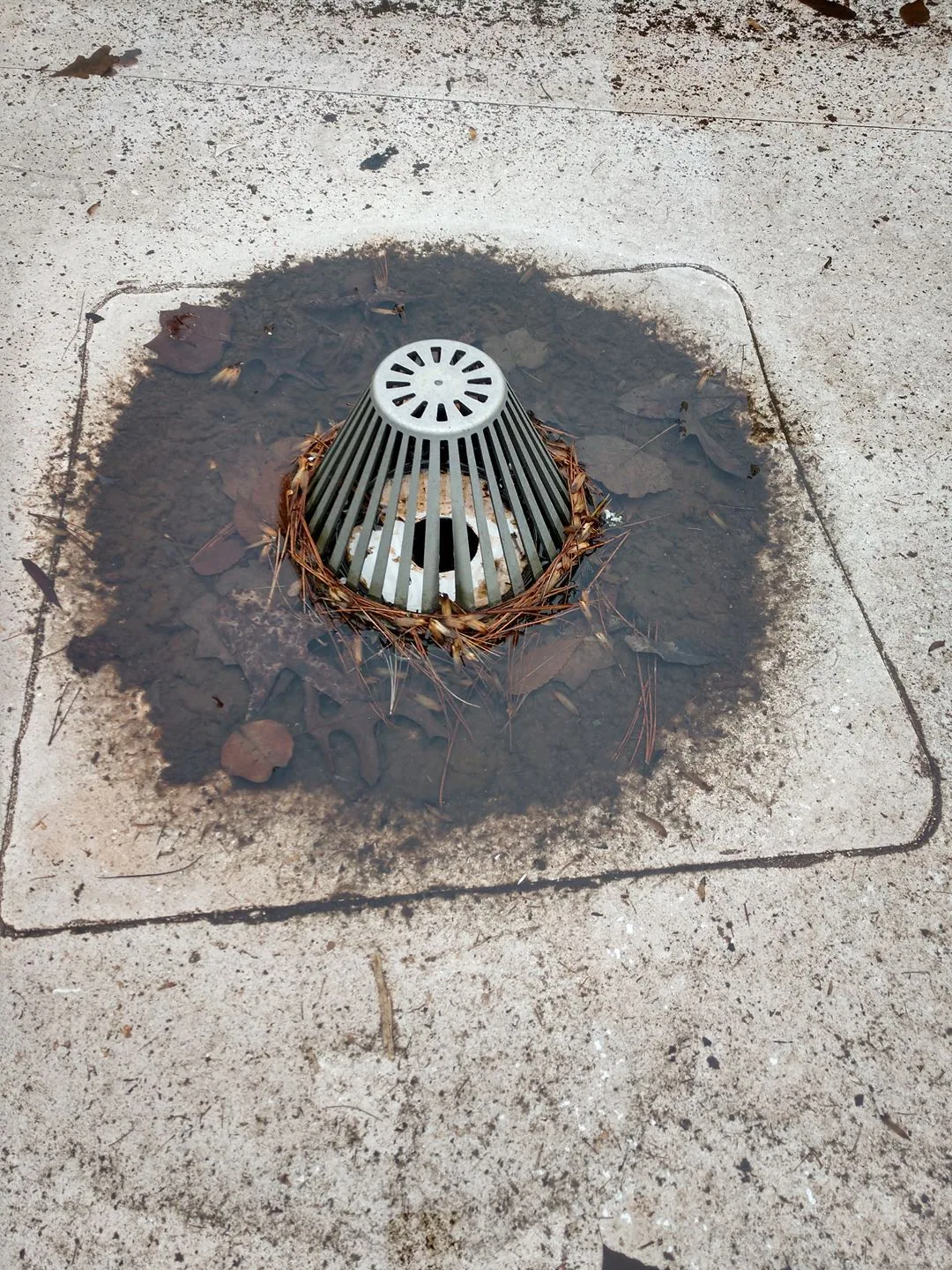
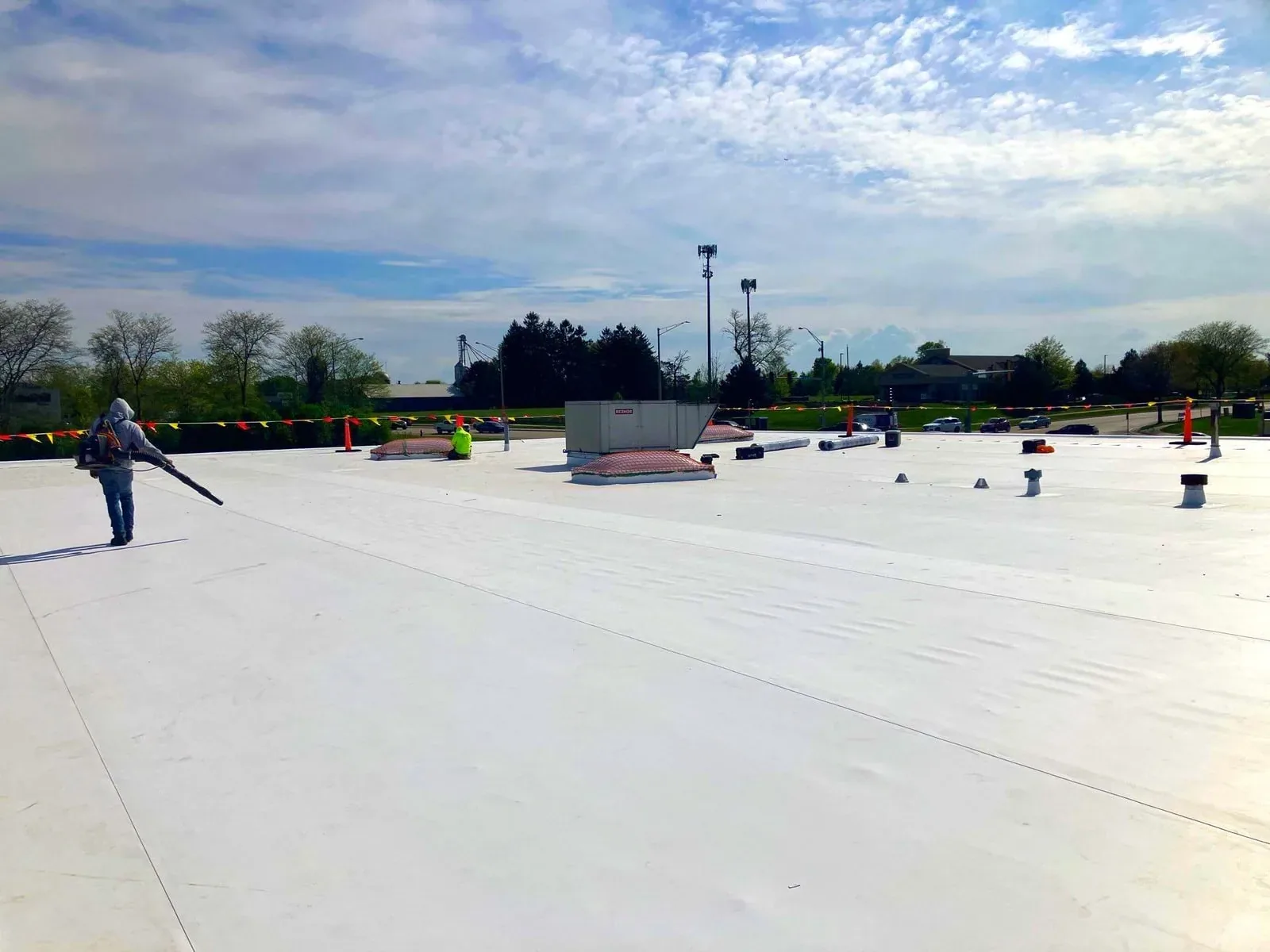
Log the bay, date, water status, and equipment below. On a broad deck, the visible drip may be offset from the entry; inspection compares it with fasteners, seams, drains, curbs, skylights, and edge transitions.
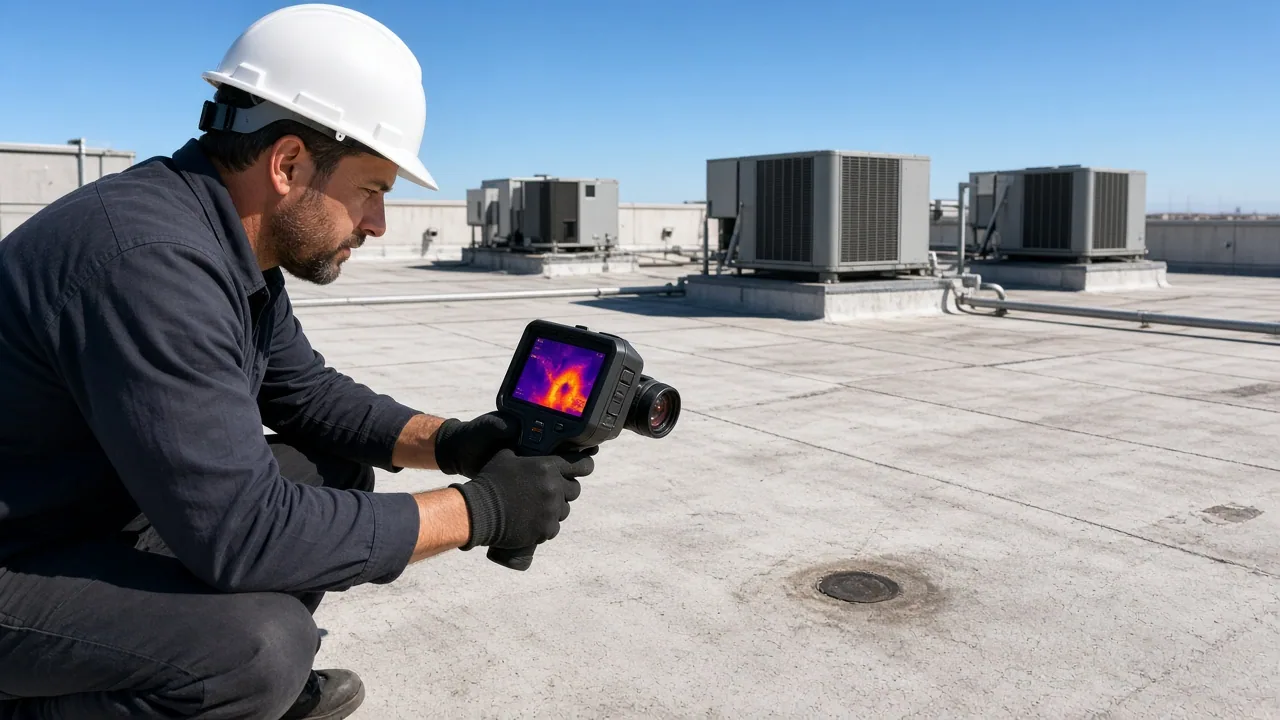
Metal panels, membranes, and insulated assemblies require different repair details. We review plans, prior repairs, available warranty records, and field conditions, then identify any area not reached. If a scan or test opening is needed, the owner approves the location and protection for aircraft, tools, and equipment below. The report separates visible damage from unconfirmed water paths.
For active water, request a leak investigation. A scheduled roof inspection can assess a larger section. If a seam, fastener, or panel transition is involved, the written scope names that detail rather than applying a generic patch to an entire roof plane.
Coordinate roof crews with aviation maintenance
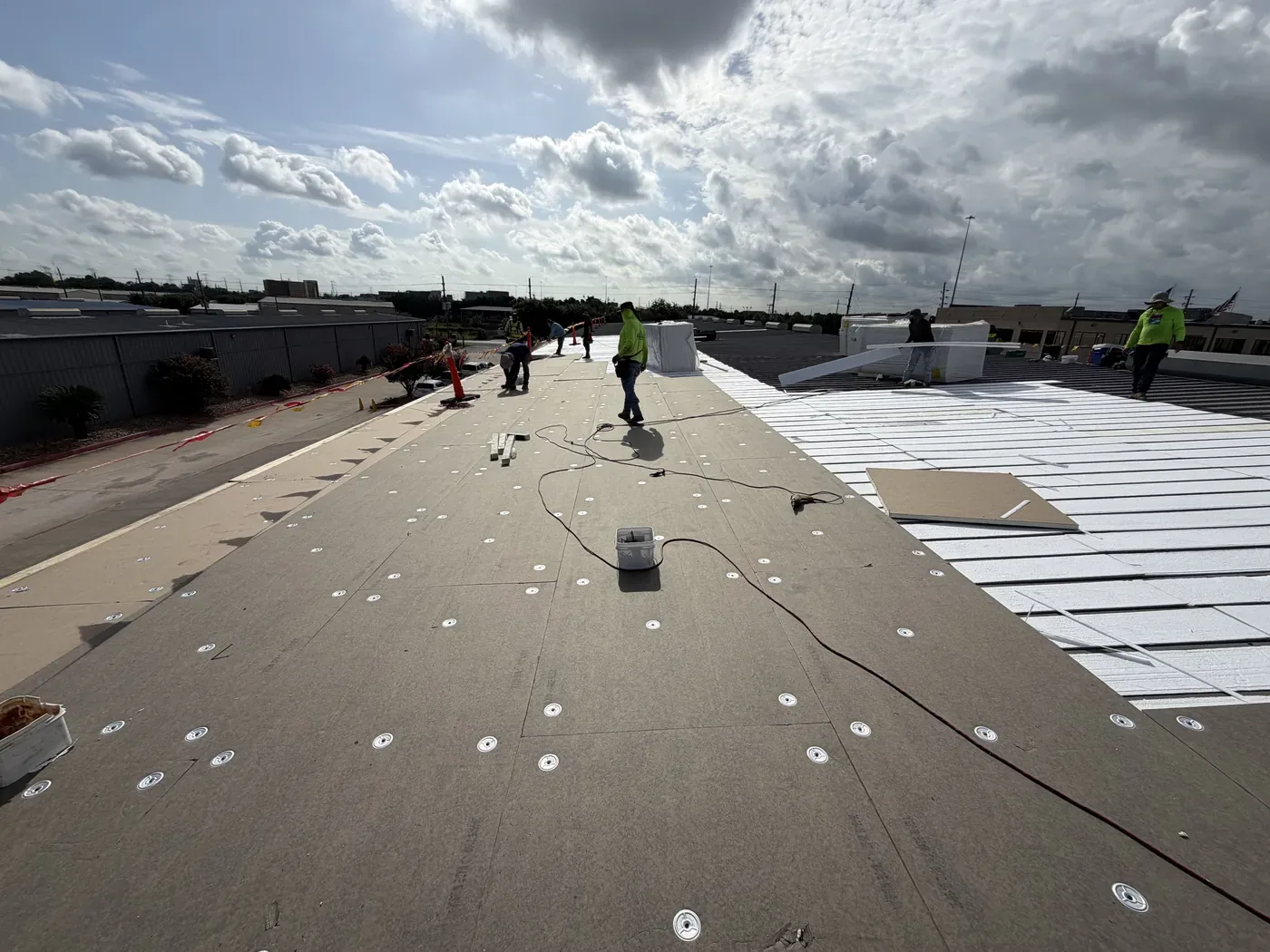
The operator identifies maintenance shifts, inspection windows, deliveries, and any time aircraft or specialized equipment must remain undisturbed. The roofing supervisor confirms who can authorize access and who can release a work zone. If an aviation maintenance team needs the same space, the parties agree on daily boundaries before a roof section is opened.
Electrical lines, exhaust, antennas, HVAC units, and door operators may cross the roof. We document their location and state whether an equipment contractor must isolate or move a component. That work is included only when specified. The owner’s specialist controls shutdown and restart; we do not alter aviation or building equipment as an assumed roofing task.
For occupied aviation buildings with multiple roof zones, phased reroofing can sequence the work around operations. Each phase lists clearance, access, protection below, weather cover, and return-to-service checks. The operator receives a status if wind or rain changes a safe work window.
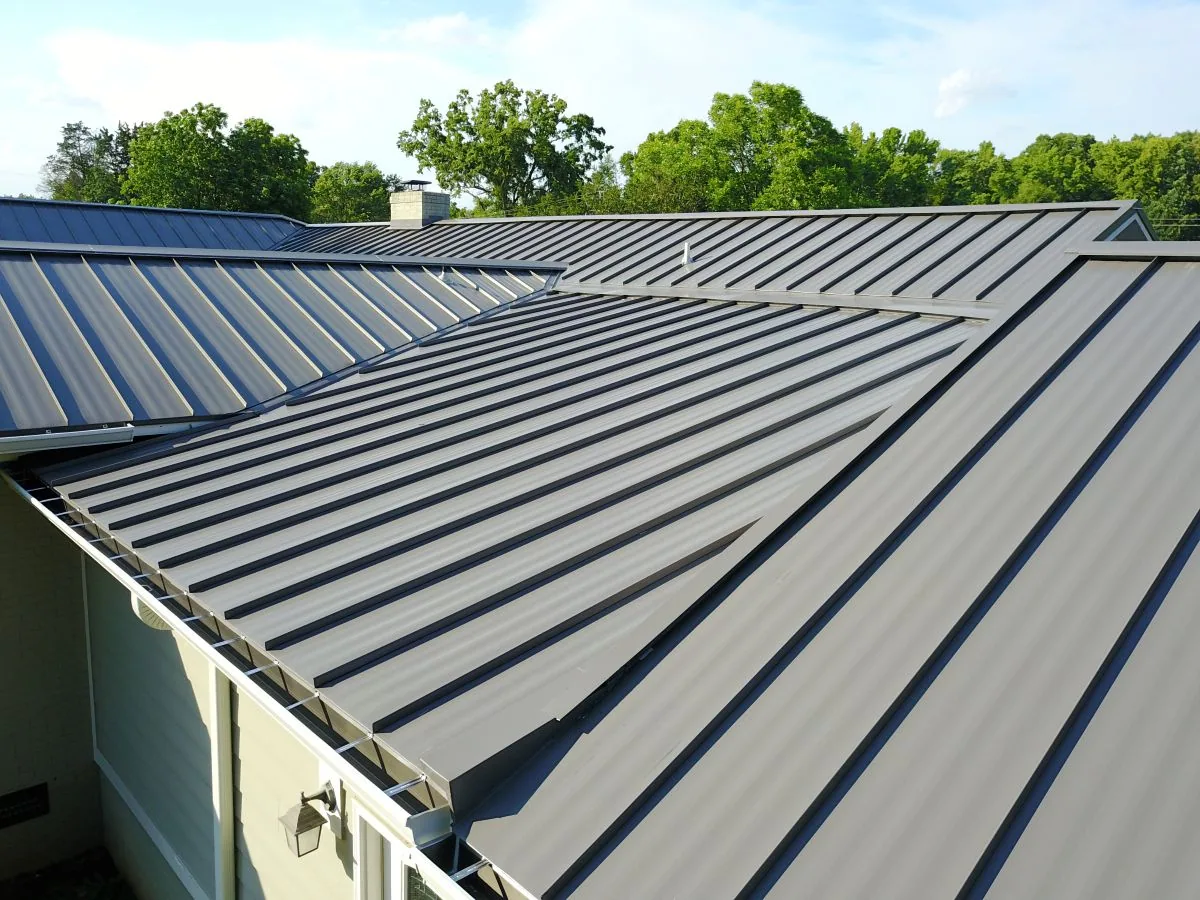
Account for Elgin’s rain, snow, and freeze cycles
Water discharge may affect an apron, personnel door, equipment pad, or lower roof. The operator identifies the areas where runoff must be controlled. Roofing work can address specified gutters, downspouts, and flashing; pavement or underground drainage is separate. A scope should state which trade handles any condition beyond the roof envelope.
Elgin recorded one-inch hail on February 27, 2024. That local storm does not prove a hangar was struck. If the operator reports a storm, we document visible dents, punctures, loose fasteners, displaced panels, or open seams by bay. A storm damage review can prioritize a verified opening and temporary protection.
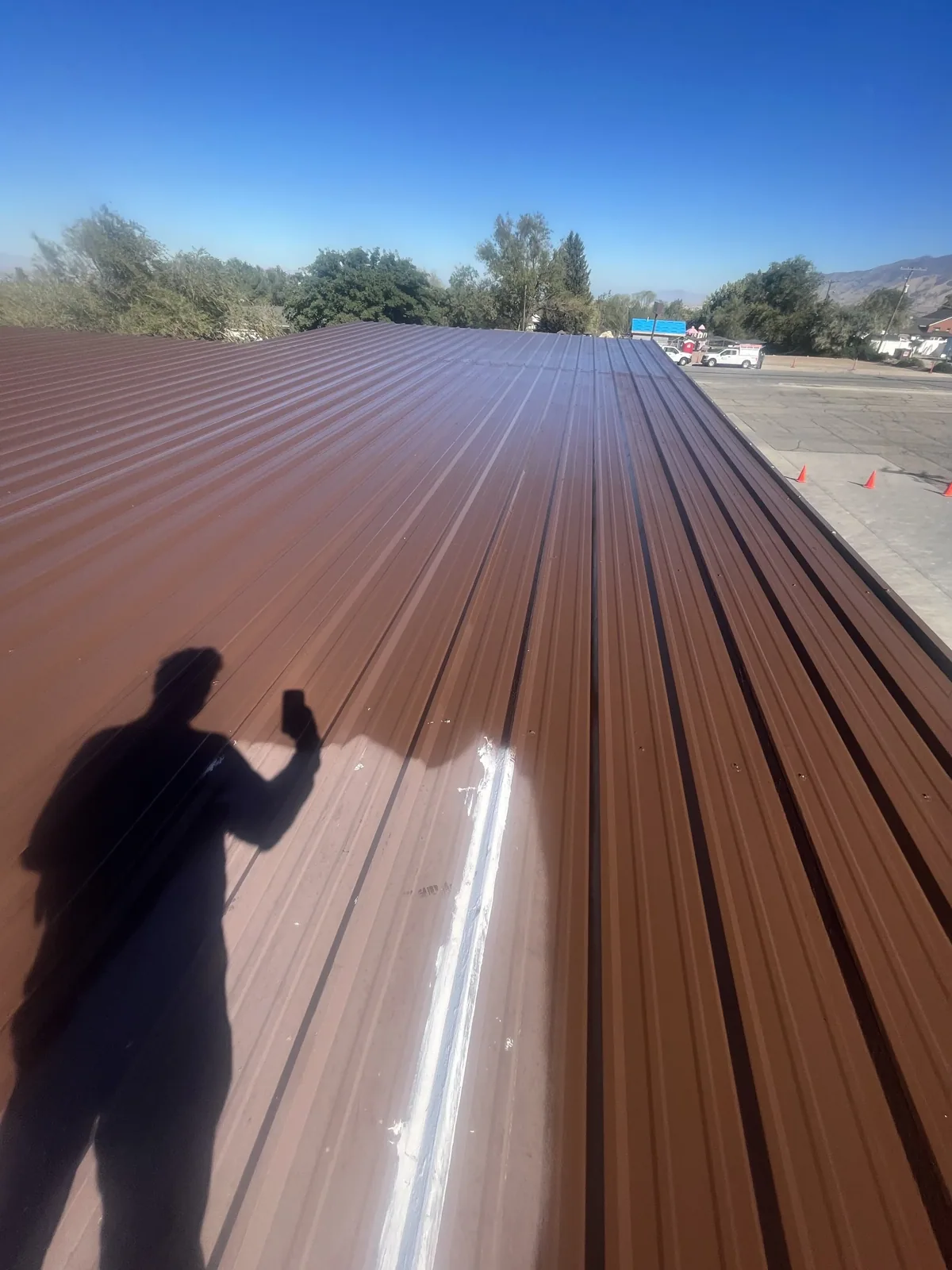
Select repairs around the assembly and facility plan
Repair, coating, recover, and replacement choices depend on roof material, fastener or seam condition, insulation, deck, moisture, drainage, and documented layers. A localized defect may support a repair. Coating requires compatible substrate and preparation. A broad-span roof may need separate review of panel movement, clips, curbs, and door interfaces. We document assumptions and limits.
The estimate names roof zones, system components, insulation, attachment, flashing, access controls, aircraft protection, and closeout records. A capital plan can sequence repairs and future work across facilities while maintaining separate condition histories. A warehouse roof plan prioritizes dock and vehicle clearance. Manufacturing plant roofing adds equipment uptime and production sequencing to the access plan.
Elgin uses city-amended editions of the 2021 IBC and IEBC. The property owner confirms which permits and facility approvals are needed. The property owner confirms permit requirements for the project. The roofing contractor describes the proposed assembly; the owner’s design professional reviews code, structural, and aviation-specific requirements.
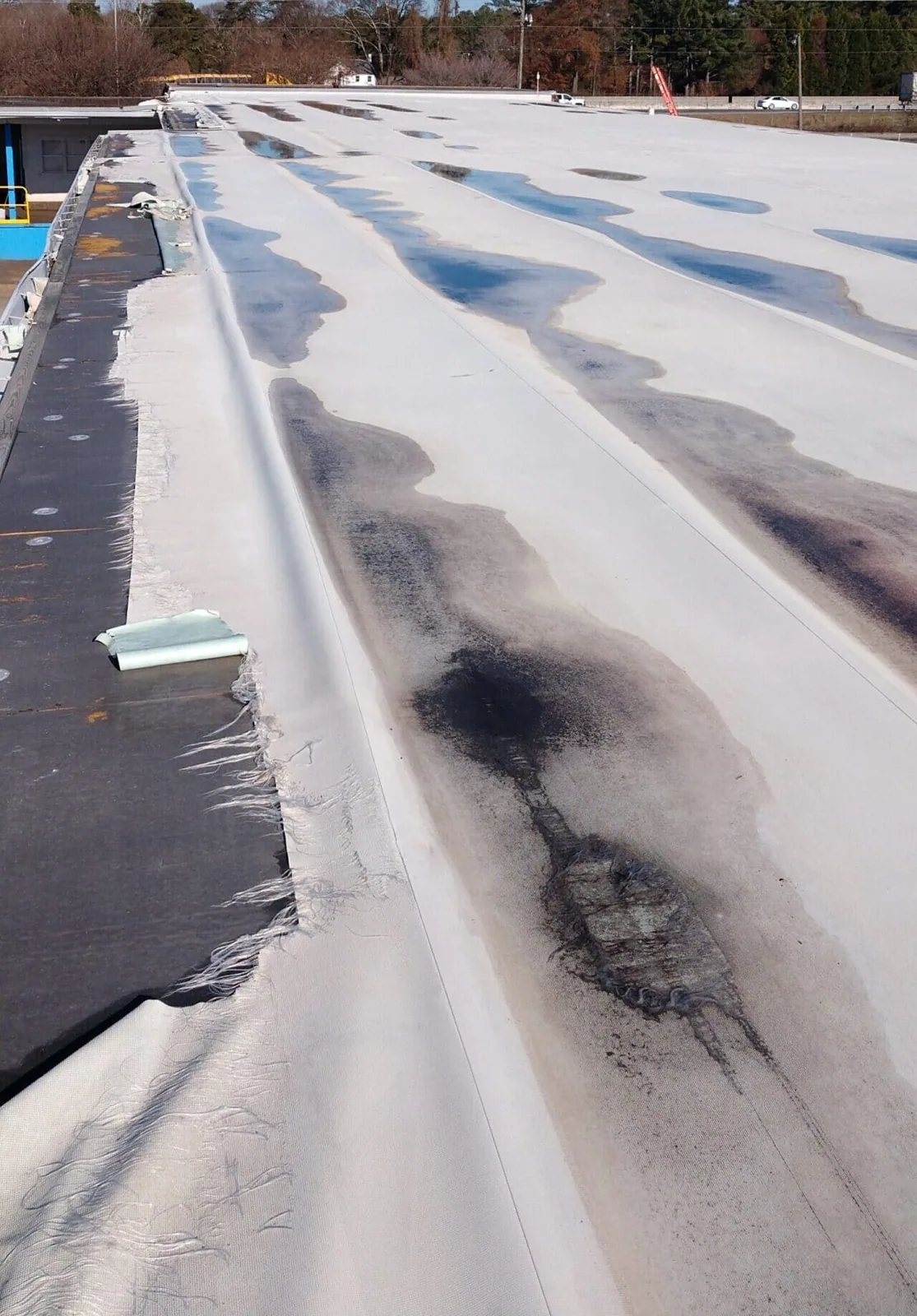
Confirm the actual property and access process
Elgin’s commercial areas include Downtown Elgin and Randall Point Executive Center. These names provide local orientation only; they are not evidence of an airport, hangar, tenant, or service arrangement. The owner supplies the site address, aviation authority, entry process, and any airport-specific work permit or escort rule.
Before mobilization, the site lead confirms badges, safety briefings, vehicle routes, prohibited zones, communications channel, and emergency response. Any need to coordinate with airfield operations or security belongs in the project plan. The roofing crew follows the facility’s instructions and does not infer permission from a gate being open.
If the property is outside Elgin proper, the customer confirms the jurisdiction and service-area fit. Local roof conditions are established by inspection, not by proximity to a named commercial corridor. Project documents should identify the correct owner and the approved representative before work is scheduled.
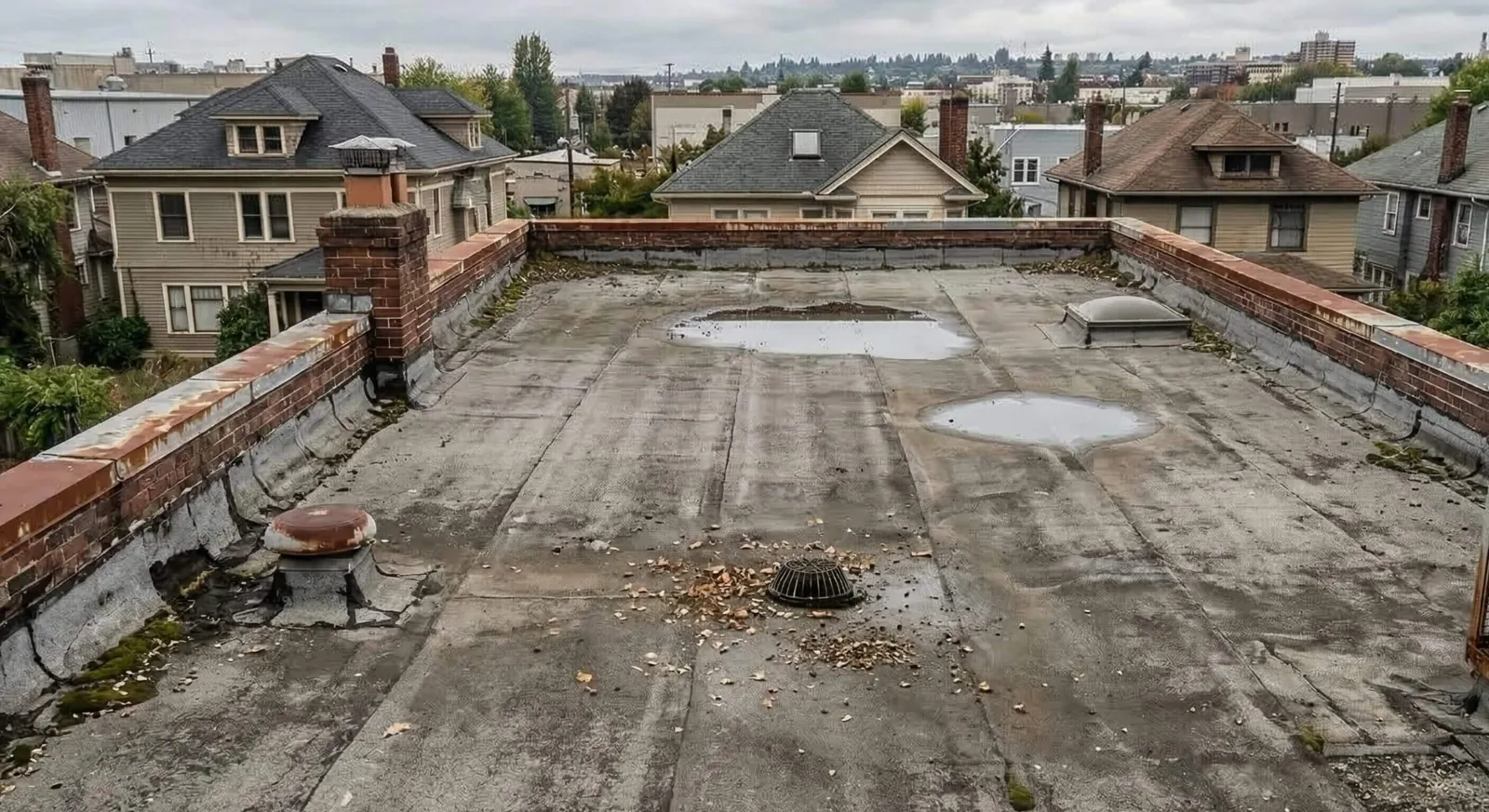
Return the hangar to its documented operating state
Closeout lists roof sections repaired, materials where verified, photos, open observations, temporary protection status, and any recommended inspection. It records whether door clearance, aircraft paths, and staging zones returned to the approved condition. Any maintenance by a separate door or equipment specialist is identified as an owner follow-up.
For an assessment, send the hangar location, roof plans, system records, leak reports by bay, door information, maintenance schedule, access rules, and the person who can authorize work. Tell us whether aircraft or equipment will occupy the work area. We will confirm a safe inspection boundary and identify any test needing approval.
Keep the closeout with facility maintenance records. It gives the next crew the roof zone, detail, and work limits without assuming the full hangar received the same repair. If water appears again, report its date, bay, and current status to start a separate review.
Questions About Aircraft Hangar and Aviation Building Roofing
Can a hangar stay operational during roof work?
Possibly, if the operator approves aircraft clearances, work boundaries, equipment movement, and schedule. The plan identifies any bay that must remain empty.
Do you work on hangar doors as part of roofing?
The roof-to-door flashing can be scoped. Door tracks, controls, power, and adjustment require a separate specialist unless expressly included.
What information helps assess a hangar leak?
Send the bay, date, active-water status, roof drawings, panel or membrane records, equipment below, and the contact who can arrange access.
Who coordinates aircraft or equipment relocation?
The aviation operator controls its aircraft and equipment. The roofing proposal identifies the roof work zone and the clearance needed before mobilization.
Does an Elgin hail event show that my hangar was damaged?
No. An event record does not establish impact at an individual property. An inspection documents visible conditions on areas safely reached.