Commercial Roofing in Crow Commerce Center, Elgin, IL
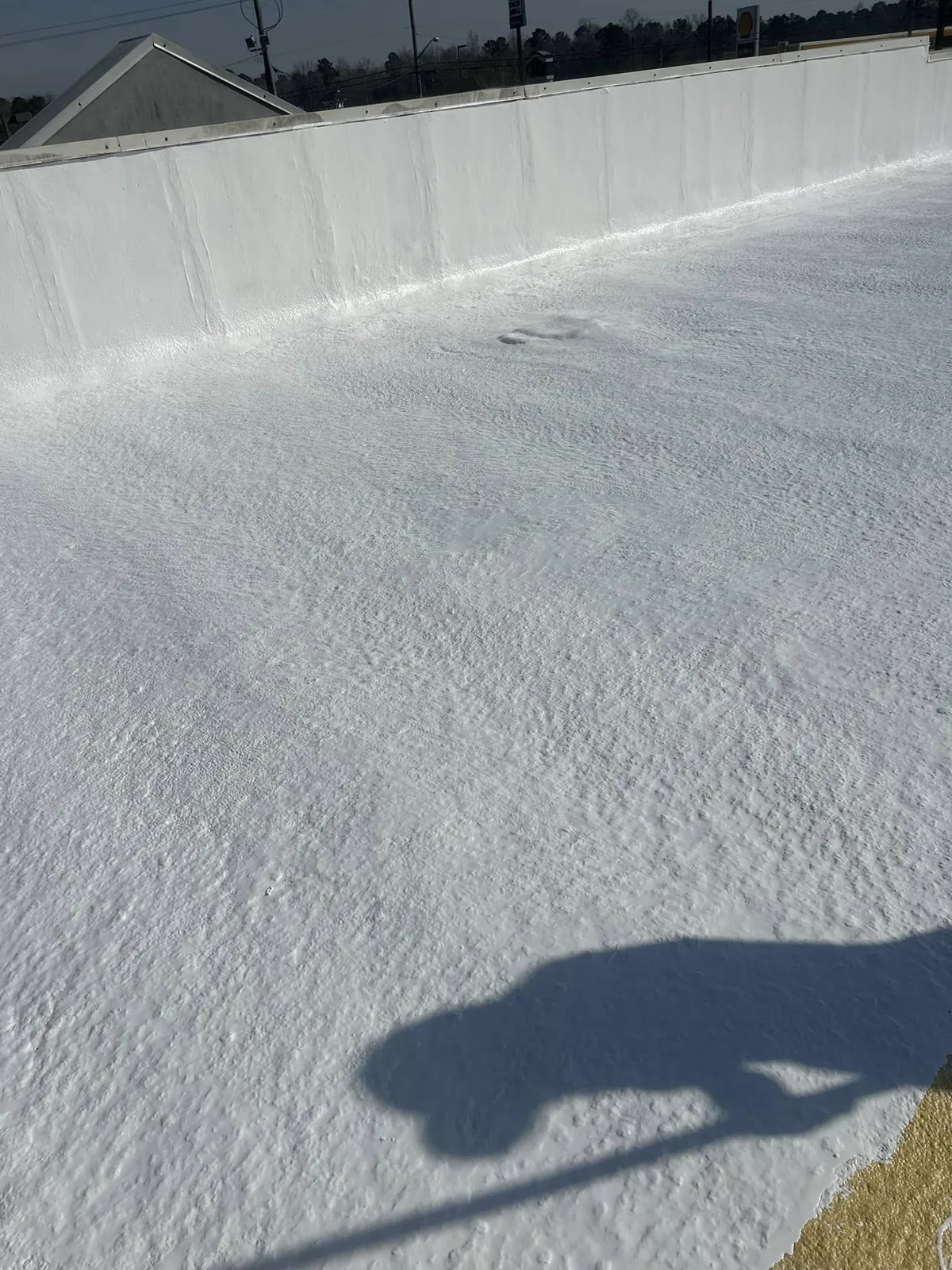
Set a Crow Commerce Center roof visit
Send the building, reported condition, roof access contact, and operating limits. We will confirm the inspection window and next decision.
Crow Commerce Center
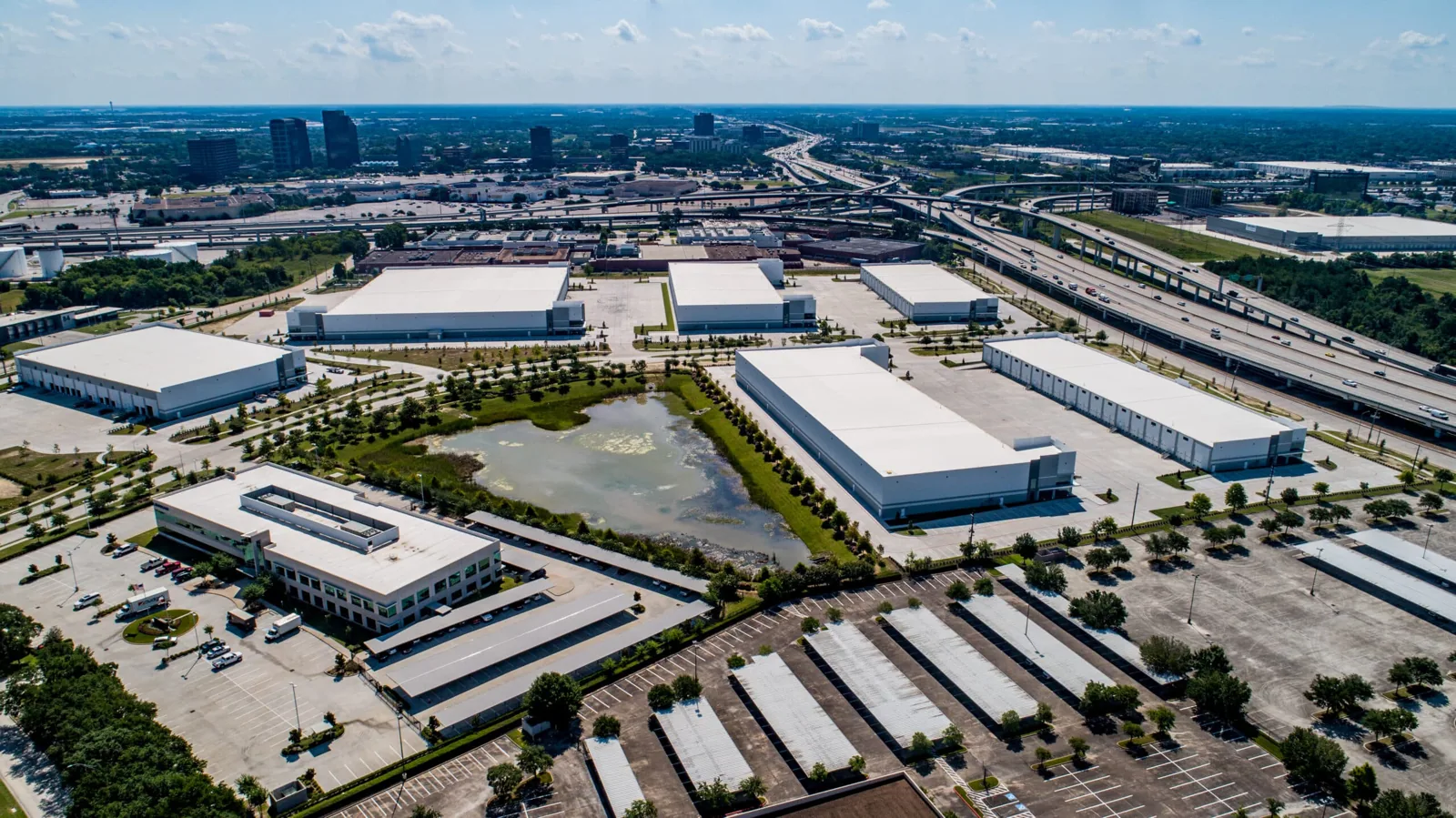
Crow Commerce Center is a 43-acre Elgin business area with PORI zoning categories for office, research, industrial, and planned-business uses. That designation provides area context; it does not identify a particular building's tenant or roof. We start with the property, current operations, and reported condition. The crew confirms access and inspects the roof section that can answer the owner's immediate question.
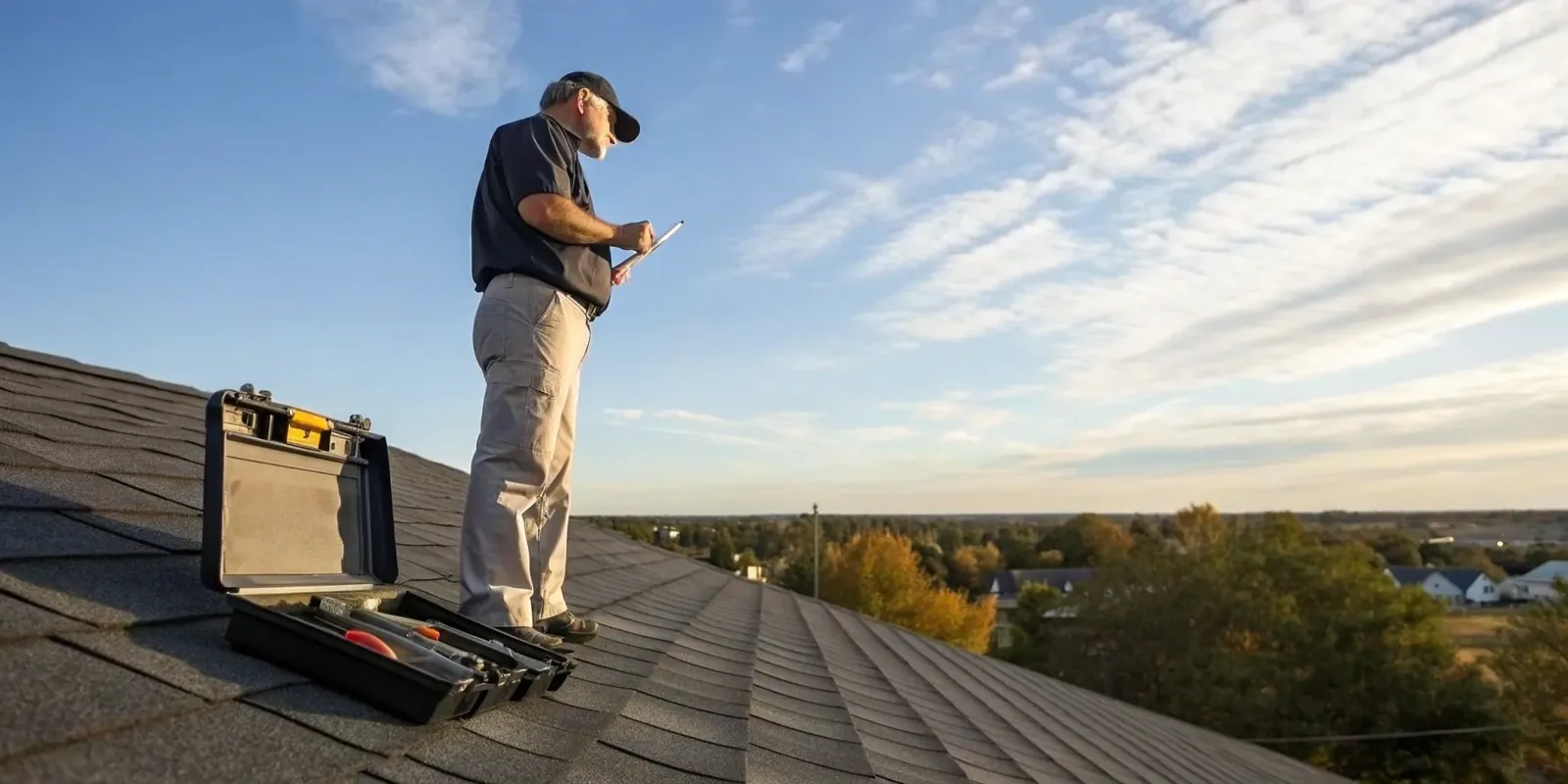
Elgin winters bring snow and frequent freezing weather. A roof can hold snow over a drain or seam, then expose the detail after a thaw. Ice can block safe entry. Our field update identifies the zone reached, any weather hold, and the return step needed to inspect what remains. If water is active below, we prioritize interior protection while confirming the roof path.
A service record should help an owner act. It identifies what the crew observed, what repair is proposed, and what question remains. Photos show the roof zone and detail; scope language sets the repair boundary. This helps distinguish an urgent leak from routine maintenance, investigation, or a capital project.
Triage: start with the reported building
The first call establishes whether water is still entering and what it can affect. We ask which room or operation is involved, whether equipment or inventory needs protection, and who can arrange roof access. The site team may need to isolate a work area or move contents. These steps happen while the superintendent confirms whether the roof can be entered safely.
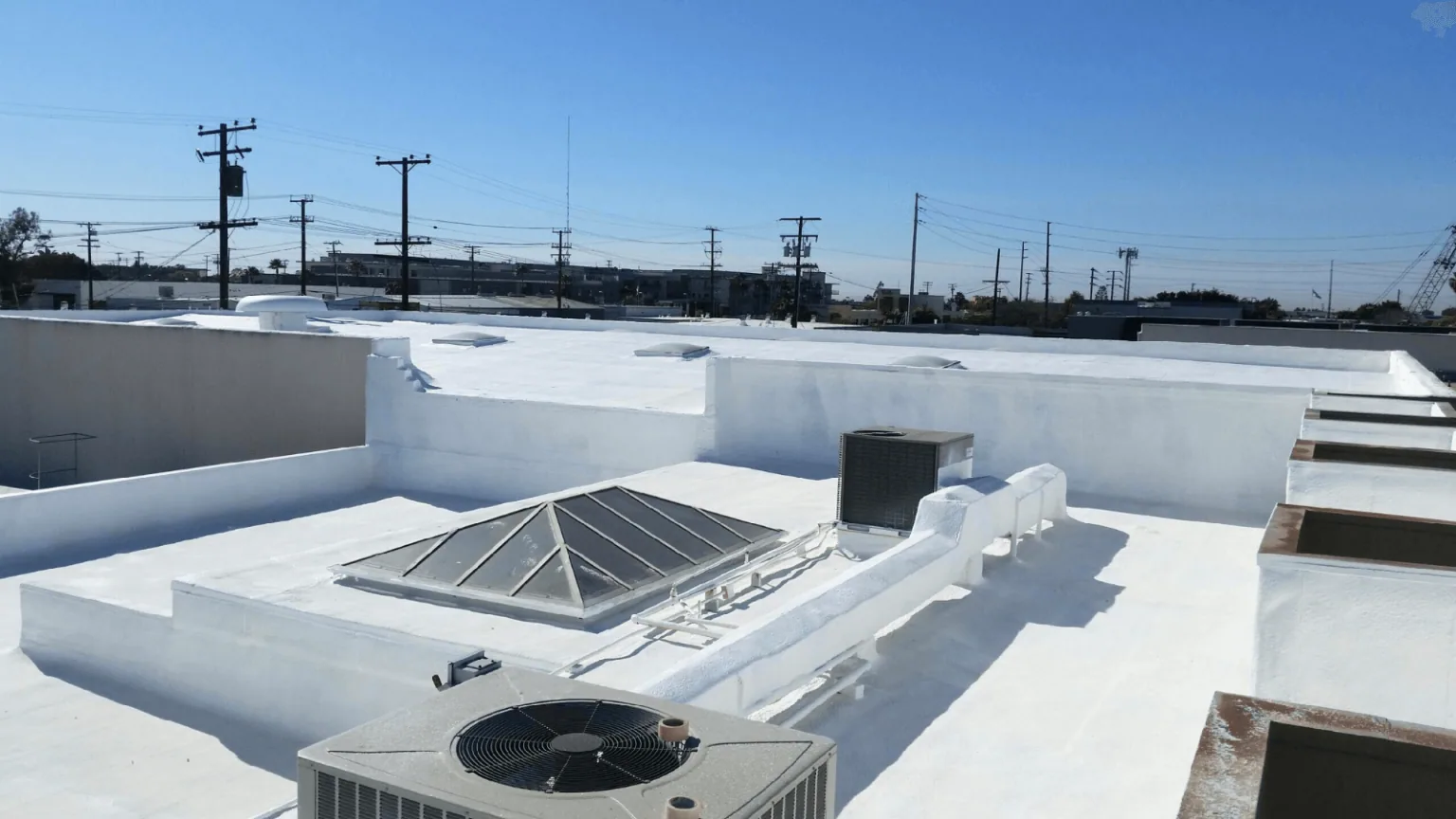
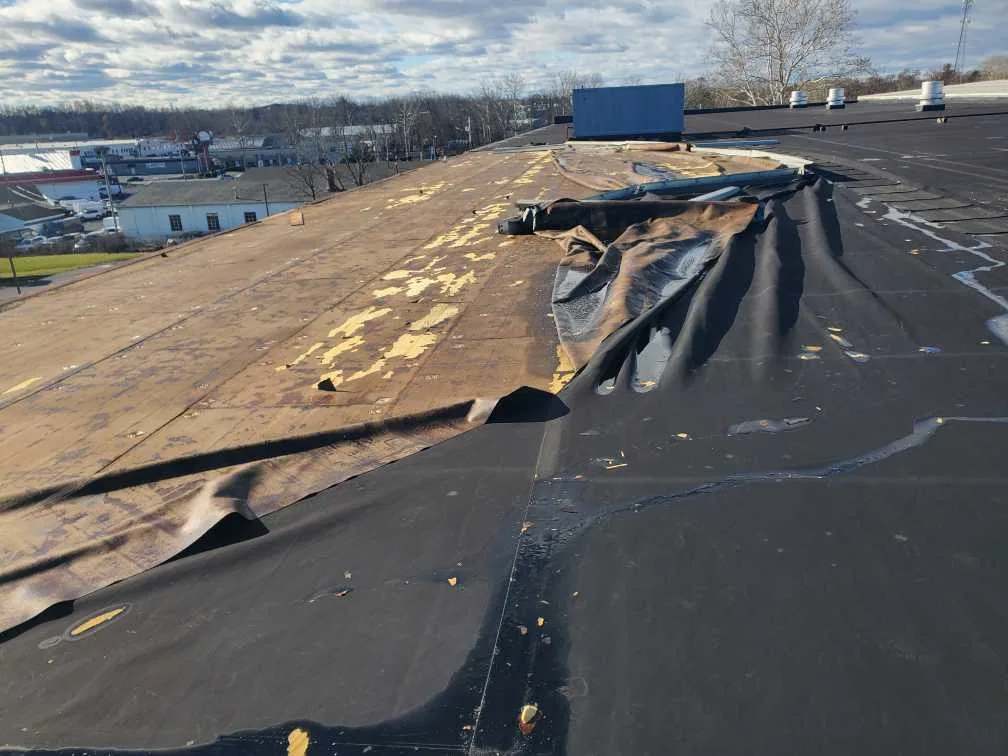
On the roof, the crew checks the field, seams, laps, flashings, penetrations, curbs, parapets, drains, scuppers, and perimeter metal around the likely water route. A stain on the ceiling may not sit below the opening. Water can track along a deck or move around insulation before reaching the interior. We document the likely path and separate confirmed defects from conditions that still need a test.
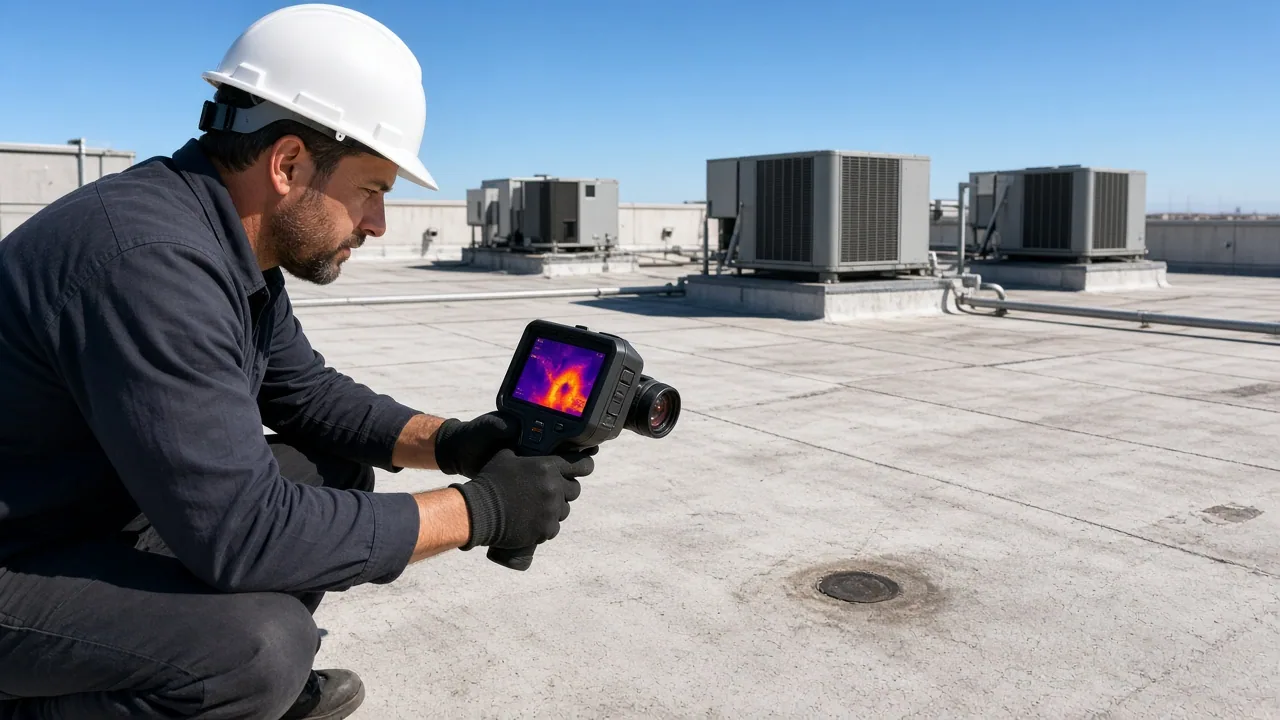
Photos and notes should support the next decision. We record roof zone, visible material, weather, and access limits. If the source is hidden, a moisture survey or controlled opening may reduce uncertainty. The proposal says what the test might show and whether it could change a repair or replacement recommendation. The owner approves the investigation before it becomes added work.
When a building hosts several business functions, we ask which areas can accept short interruptions and which need advance coordination. Roof entry may affect a service corridor, a delivery route, or a protected interior zone. The property contact identifies those constraints. We note them with the inspection so later repair or replacement planning reflects the actual operation rather than a generic daytime schedule.
Work timing depends on safe access, material requirements, and operation below. Before mobilization, the site contact confirms roof keys, escorts, staging, deliveries, work hours, and any tenant notice. If a different trade will be on the roof, the supervisor sequences work to keep completed details protected. When a weather hold shifts the schedule, the daily note gives the reason and next safe start.
Service scope: stop active water without losing the boundary
Temporary protection can reduce exposure while a permanent repair is prepared. The record states which zone was covered, what material was used, and what condition remains. A temporary measure does not prove the source is corrected. If roof entry is unsafe, interior protection may be the first action. The next visit is scheduled after the surface can be examined safely.
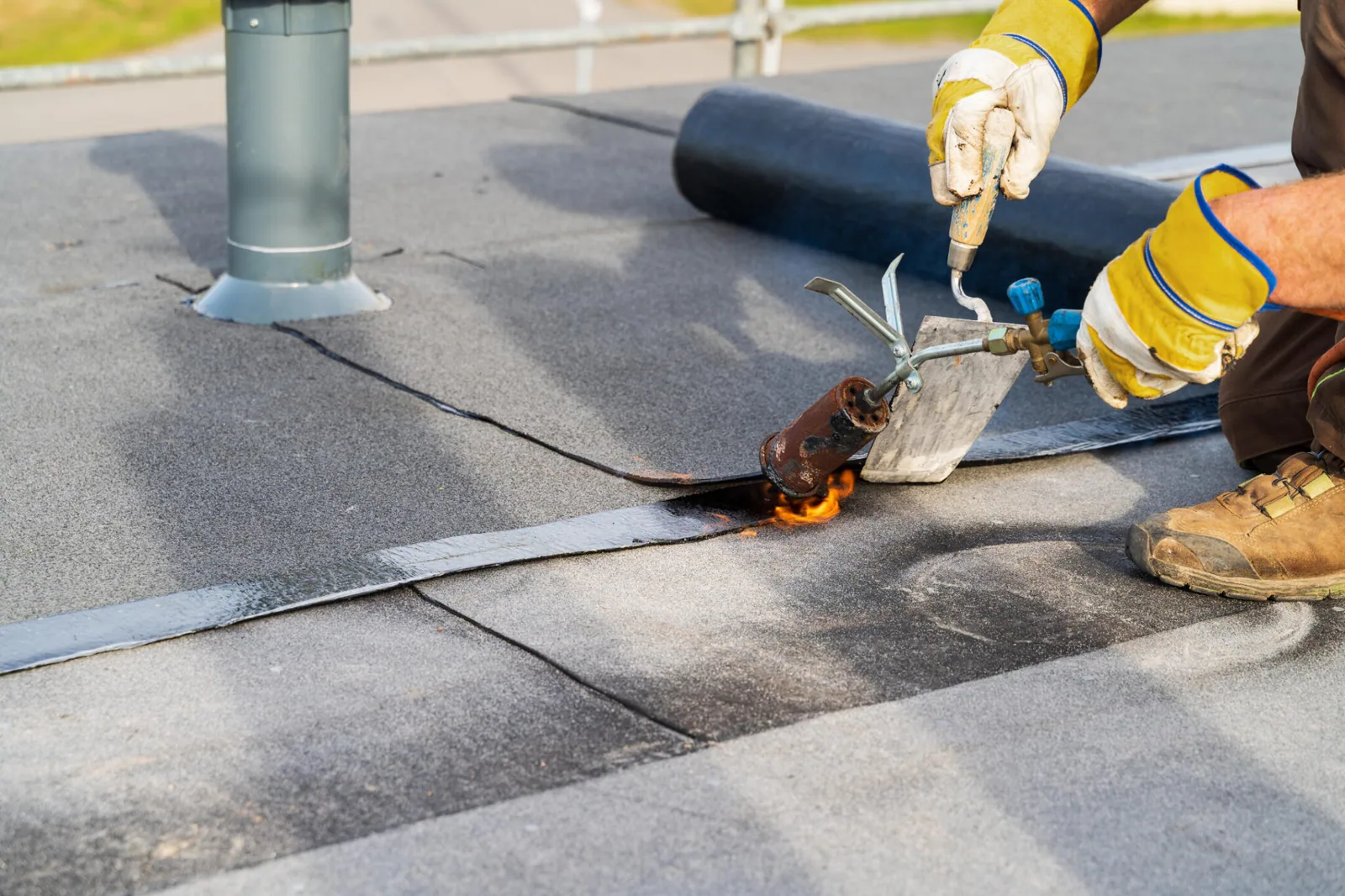
A permanent repair scope names the defect, preparation, compatible material, tie-in, and perimeter. The crew checks whether the surface and substrate are dry and stable. If removing a failed patch reveals wet insulation or damage beyond the approved area, the crew photographs and measures it. The owner receives the cost and schedule effect before the boundary is extended.
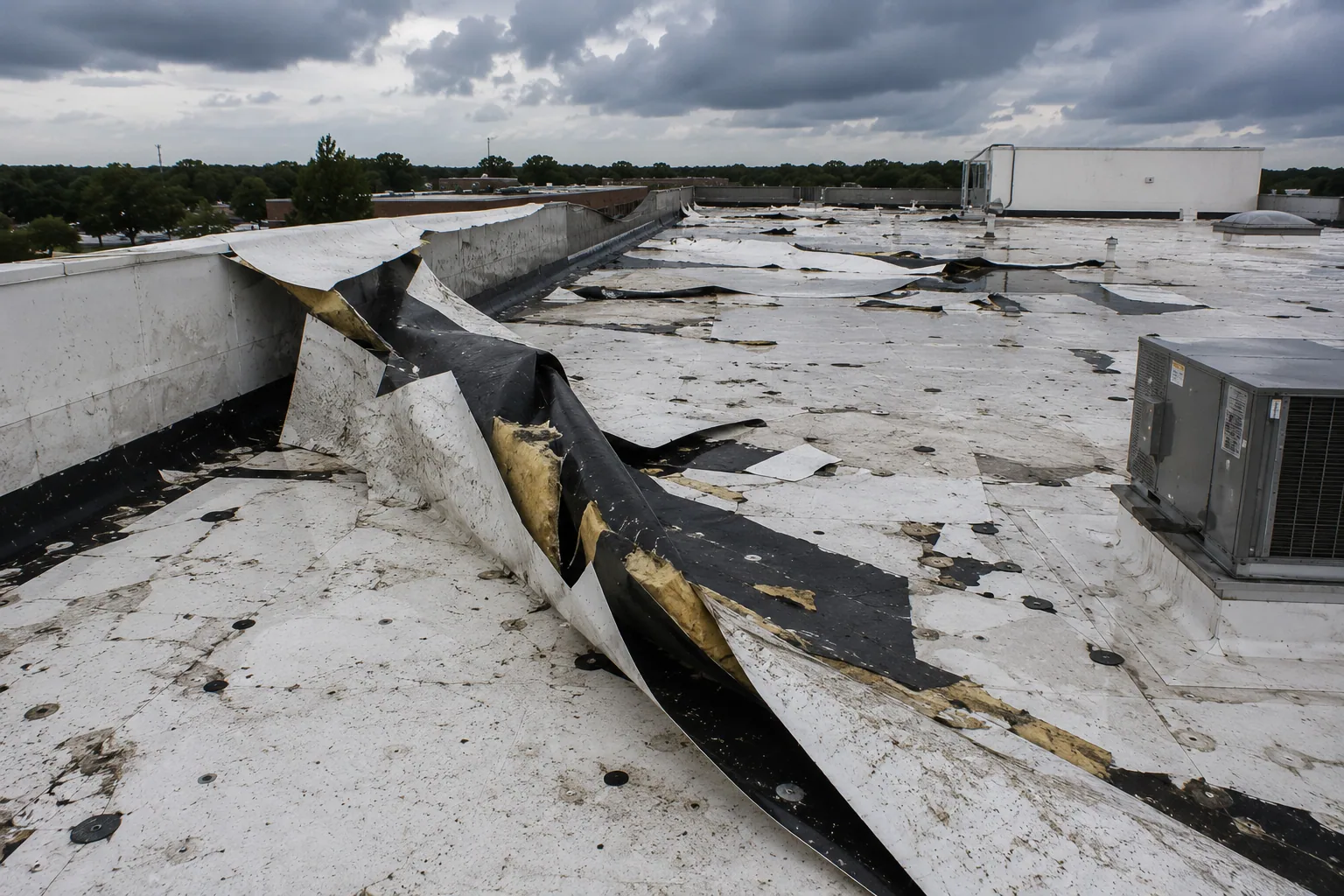
A city-crossing EF1 tornado in July 2023 left roof damage in Elgin. A visit at Crow Commerce Center still starts with current roof evidence, not assumptions. That event may lead a Crow Commerce Center owner to request a survey. Current conditions still need to be checked at the property. We look for displaced edge pieces, torn flashing, punctures, open seams, or movement around equipment. A field report documents evidence and remaining questions; it does not turn the regional event into a building-specific conclusion.
For an active leak, leak repair service follows the reported interior impact and roof path. An inspection report can map a broader area. If material is damaged after severe weather, a storm-related inspection can document conditions and define the repair boundary. The next step depends on what is found and what the owner authorizes.
Planning: evaluate the whole assembly
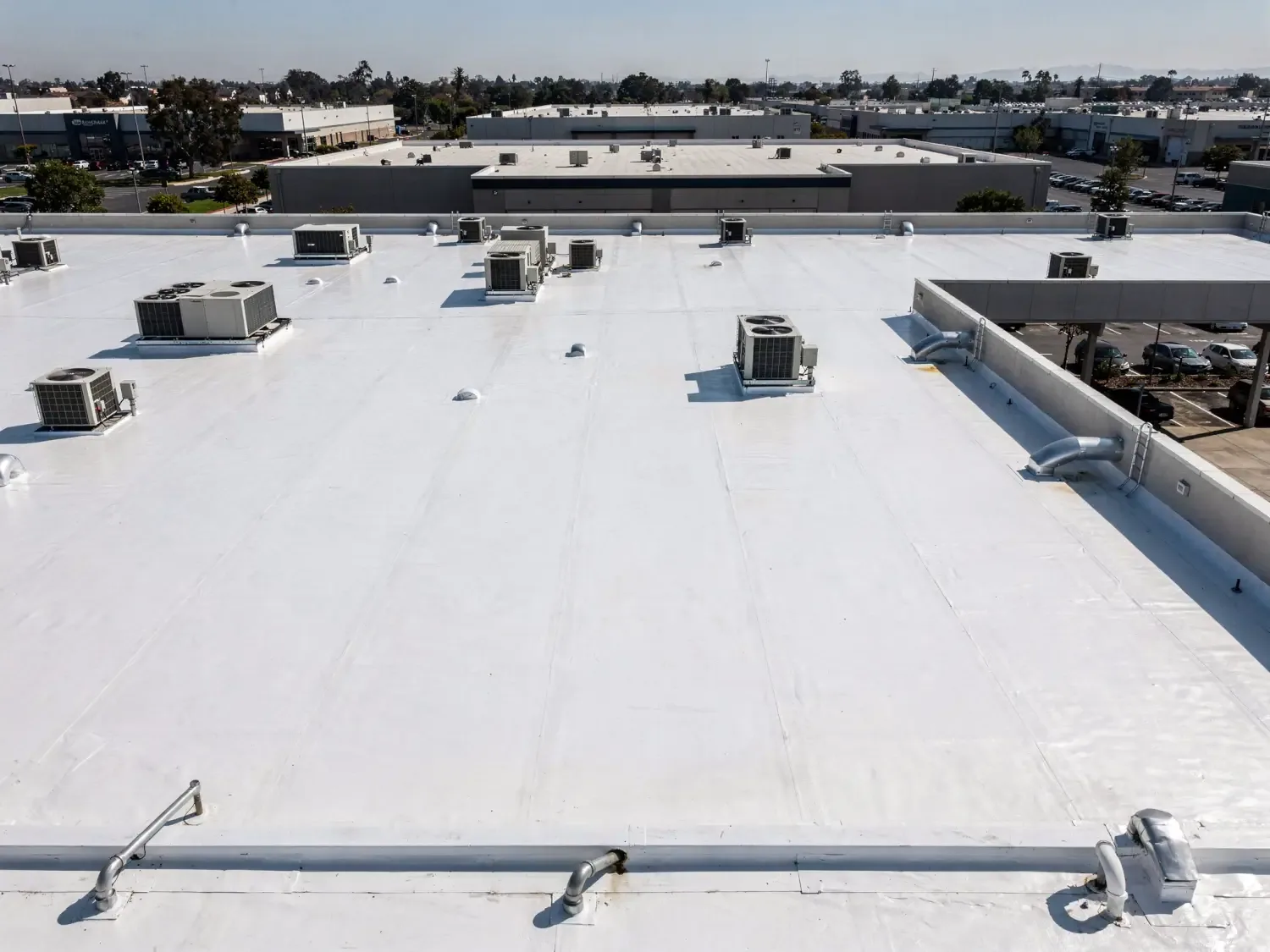
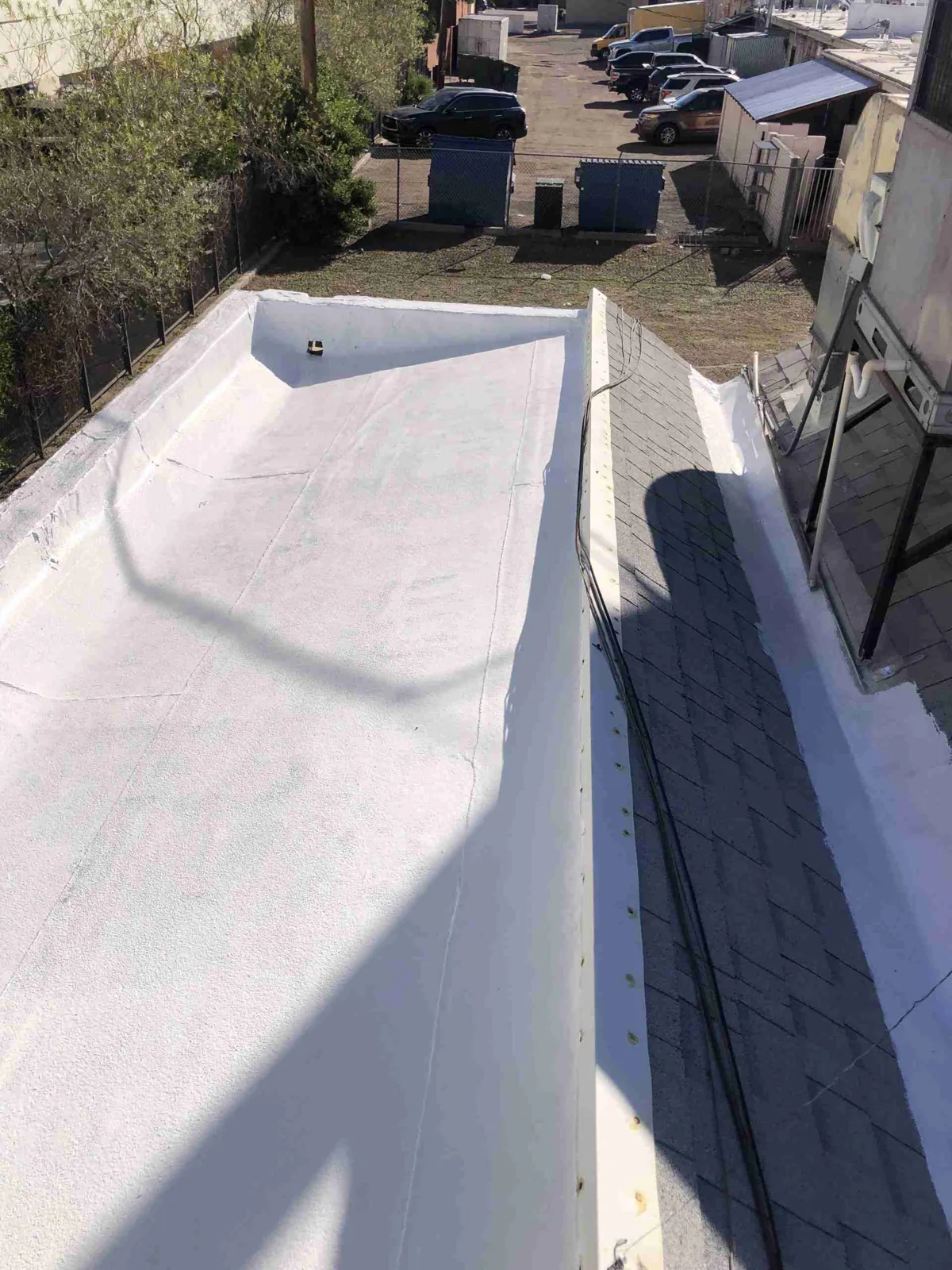
When repair calls recur, the owner may need a system review. We examine visible layers, roof surface, seams, insulation clues, drainage, edge height, penetrations, equipment, and prior patches. A test opening may be needed where concealed materials affect the decision. Recover is considered only if moisture, deck capacity, attachment, and code conditions allow it. A new layer is not a cure for a wet or unsound assembly.
Replacement estimates should show tear-off, disposal, deck repairs, insulation, cover board, membrane, flashings, curbs, drains, edges, access, and phasing. We state which quantities were measured and which remain assumptions. A concealed-condition allowance identifies the trigger and approval process. The project plan should include how each roof section will be made watertight before the crew leaves each day.
Where an owner is comparing roof options, we describe the consequences of each scope. Continued repair may preserve the current system but leave other aging details for later. Restoration depends on adhesion and moisture conditions. Replacement changes the assembly and usually requires a longer operating plan. We identify the observations that support each route so the decision is tied to the building rather than a broad product preference.
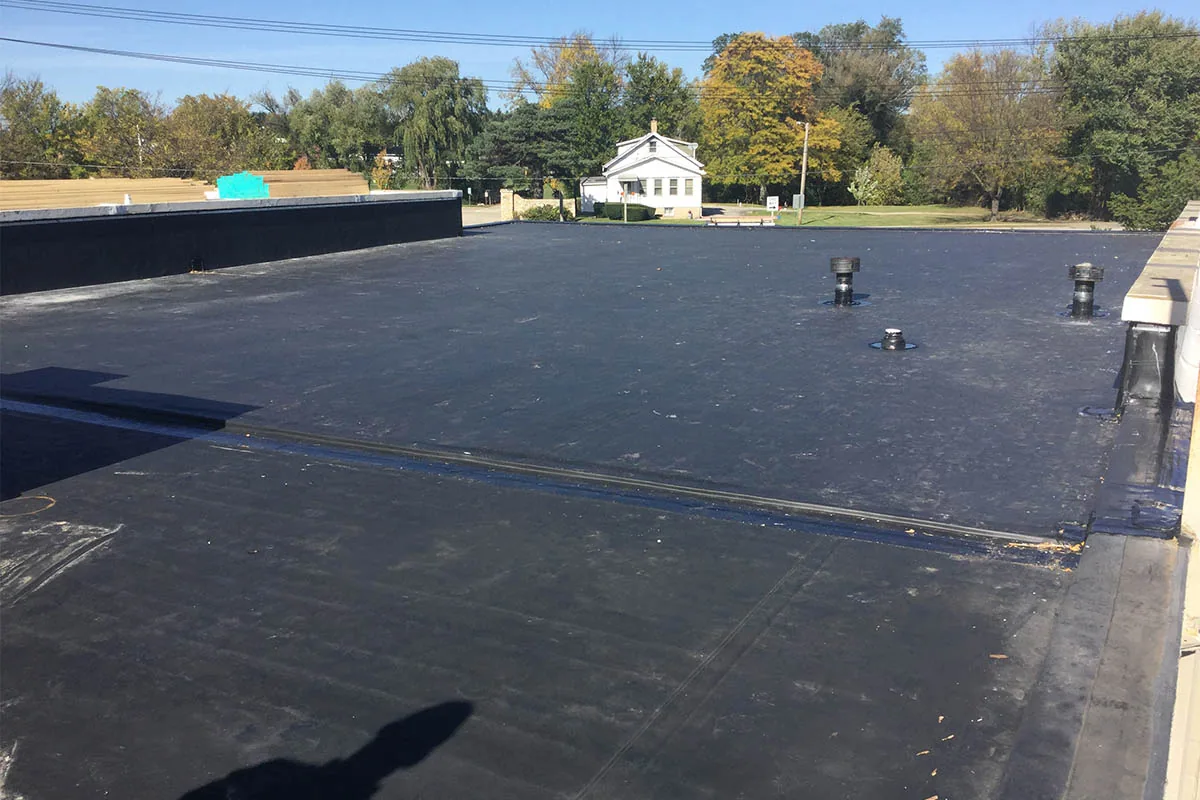
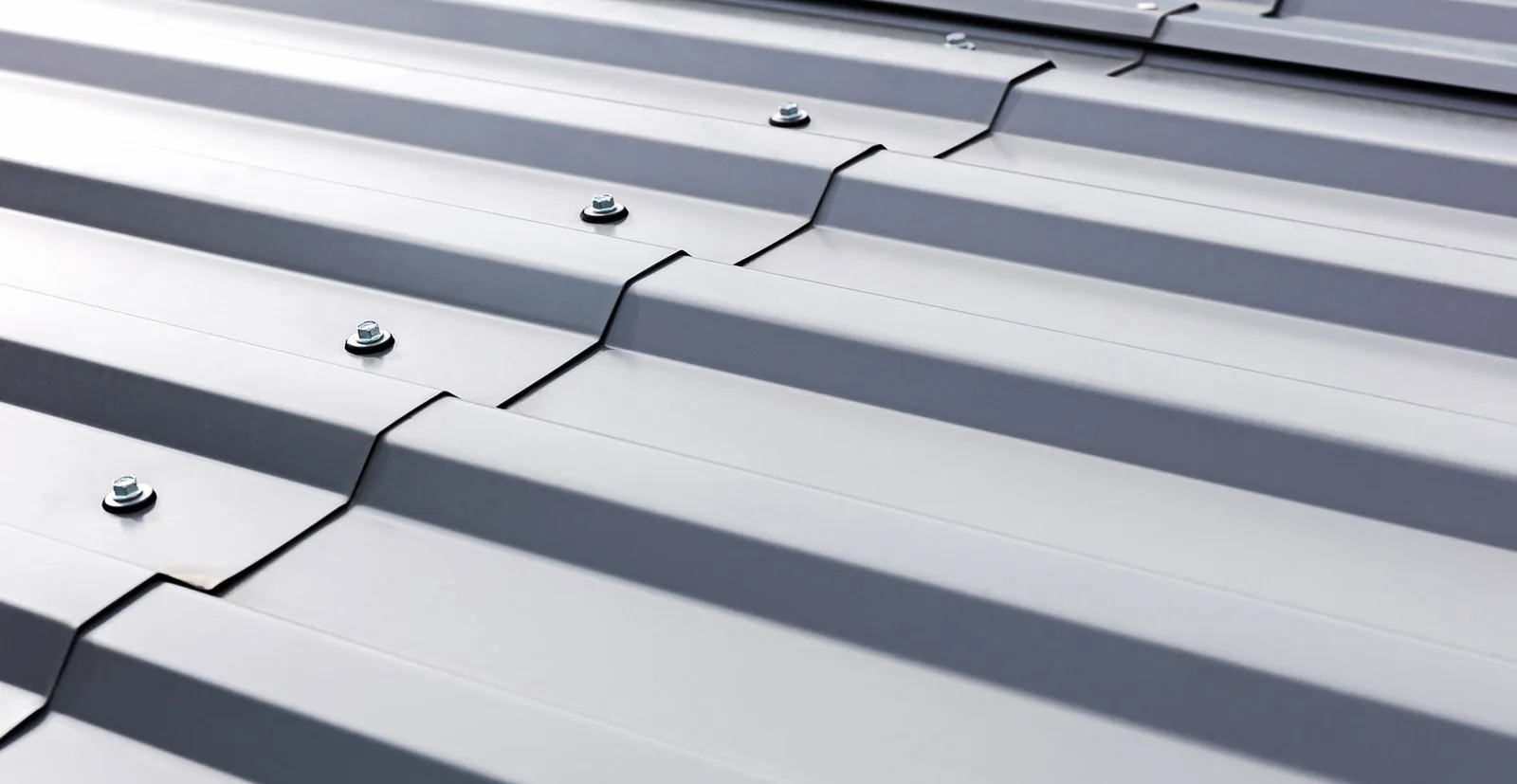
Elgin uses the 2021 International Building Code with local amendments and the current Illinois energy code for commercial projects. The project team checks which requirements apply before selecting materials. A rubber membrane assembly has different seam details than modified bitumen or a metal retrofit system. The existing roof and design criteria govern the choice.
For near-term work, a maintenance visit can check drains, flashings, penetrations, and previous repairs. A replacement proposal becomes useful when findings support a broader project. Capital planning can sequence that work based on condition, operating needs, and confirmed scope.
Closeout: hand off an actionable record
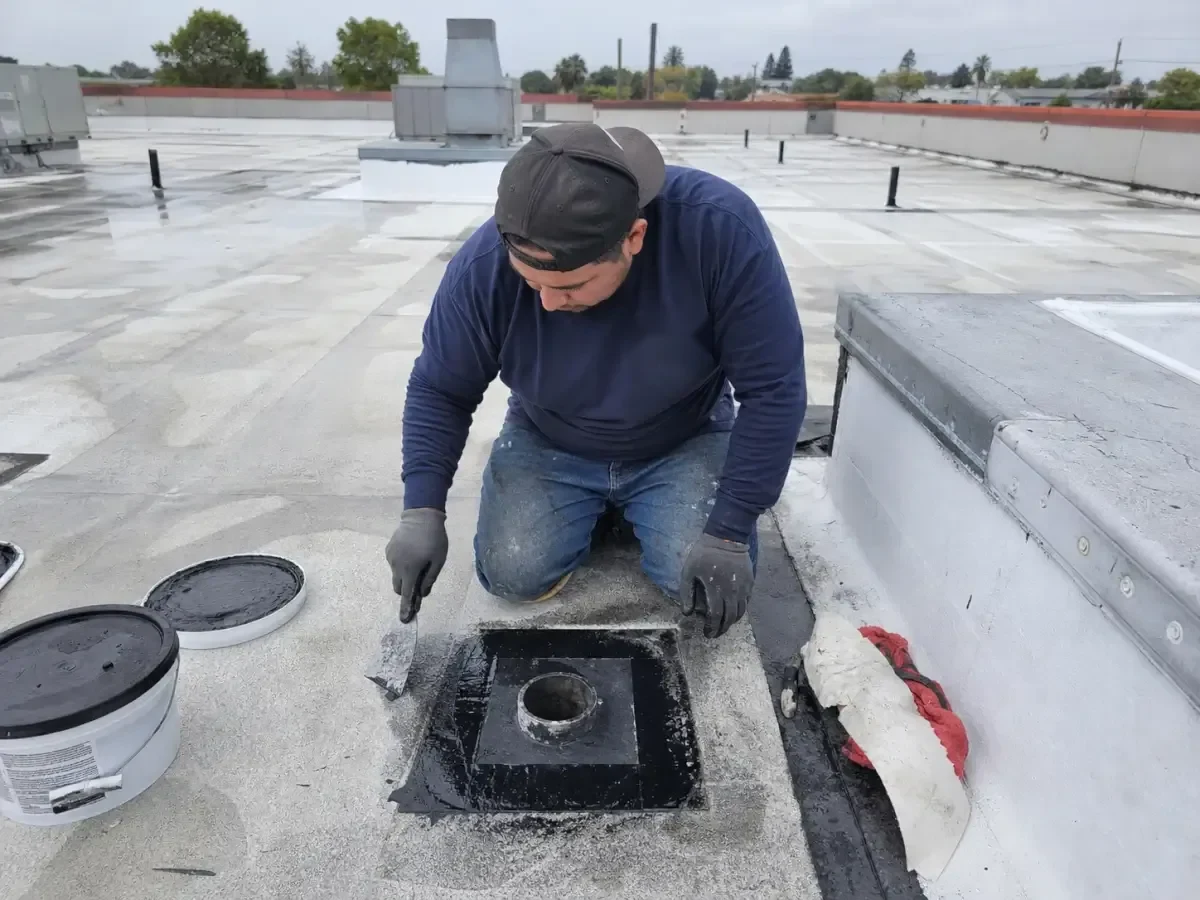
The final update identifies inspected areas, findings, completed work, photos, materials, and the remaining action. Each item is tied to its roof zone. If access prevented a complete route, the record states that limit. If a test remains open, it names the question that test can resolve. A clean handoff helps the next property contact continue from the current state.
When owners coordinate more than one building, the schedule can group visits while each report remains separate. Fox River Business Center and Elgin-O’Hare Business Center are other named Elgin business areas. We verify their access, roof construction, and conditions independently. Shared dates do not mean shared roof assumptions.
Routine inspection can track recurring drain, seam, flashing, edge, and penetration observations. A condition report can preserve findings for a budget meeting; a warranty record can keep documents and service notes together when the roof has applicable warranty terms. We report the condition and scope without promising a coverage or warranty outcome.
Call with the building, reported roof zone, site contact, and work-hour limits. If water is active, identify the affected interior area and any exposed equipment. We will confirm safe entry and send an update with observed conditions, open questions, and owner approvals.
Questions About Crow Commerce Center
Does Crow Commerce Center zoning tell you what is on the roof?
No. It describes allowed use categories. We inspect the individual property and confirm its assembly before recommending repair.
What information helps with an active leak?
Tell us the room, whether water continues, any contents at risk, and who can arrange access.
Will a temporary patch be treated as a final repair?
No. The closeout labels temporary protection and identifies the permanent work or test still needed.
When should replacement be compared with repair?
Repeated failures, wet layers, broad deterioration, and the remaining serviceable roof affect that decision.
Can you coordinate several business-area inspections?
Dates can be grouped, while each site receives its own access plan, photos, findings, and approval record.