Commercial Roofing in Elgin-O’Hare Business Center, Elgin, IL
Set an Elgin-O’Hare roof dispatch
Share the building, reported area, access contact, and operating limits. We will confirm a safe first visit and next approval point.
Elgin-O’Hare Business Center
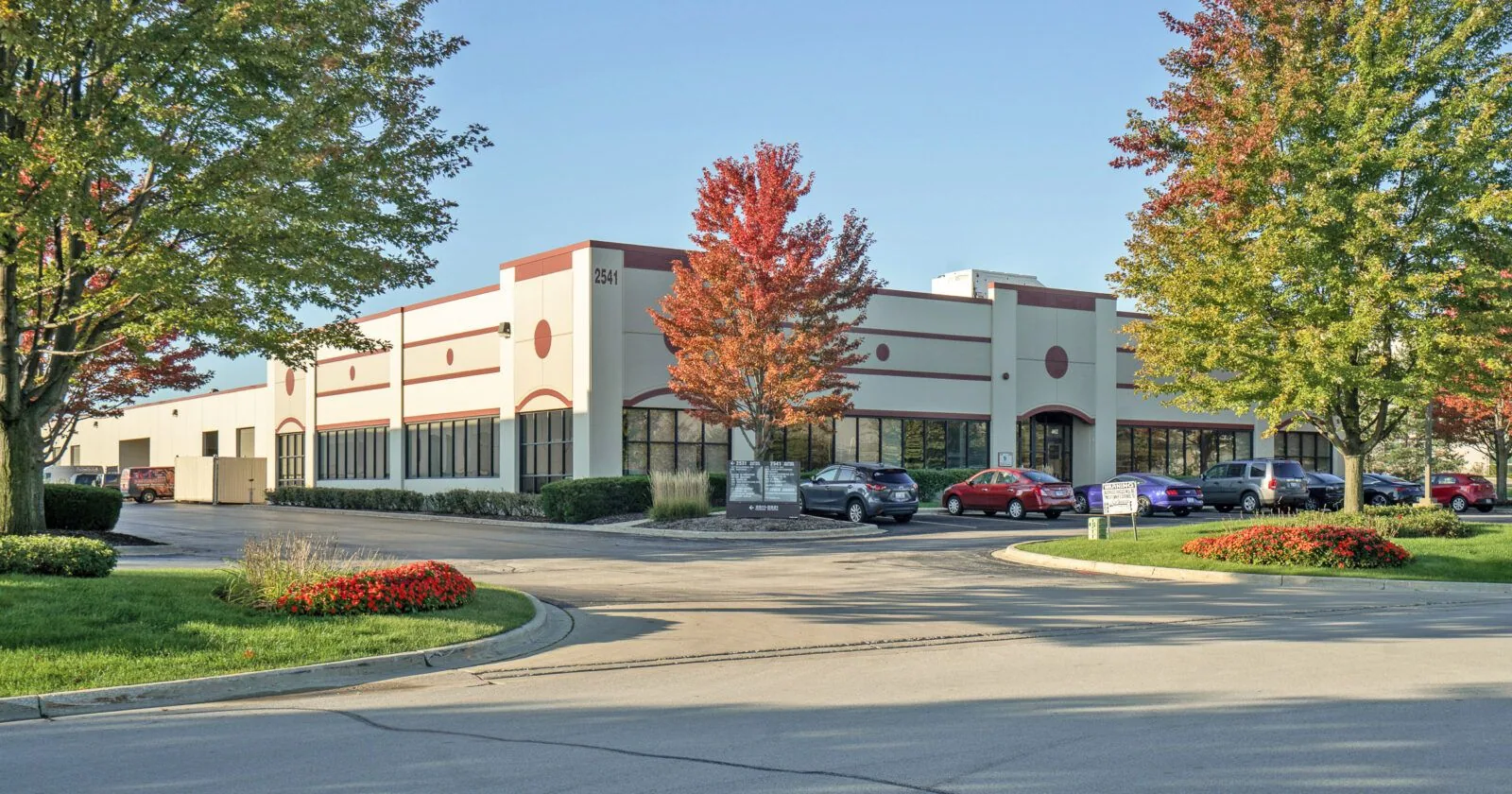
Elgin-O’Hare Business Center is a 40-acre Elgin business area with a PAB land-use designation. That category allows office, research, industrial, and planned-business uses. It does not identify the active use or roof assembly at any one property. We confirm the building contact, reported concern, access window, and operating limits before dispatch. The first walk then ties roof conditions to the decision the owner needs that day: stop water, scope a repair, or plan a larger project.
Elgin sees winter snowfall and repeated freezing weather. A thaw can send water toward a seam or drain, while snow and ice can obscure roof details or close access. We record the areas reached, defer unsafe sections, and provide a return plan. The update identifies what was observed and what remains open, so a partial walk is not mistaken for a complete inspection.
When a roof serves an occupied business, access and work timing can matter as much as material selection. We coordinate staging, deliveries, roof entry, and protection below with the current site contact. A property name gives us a location, not permission or a work plan. Those decisions are confirmed before the crew starts. The contact can also flag restricted roof zones early, avoiding a second access setup when possible.
Dispatch: identify the first decision
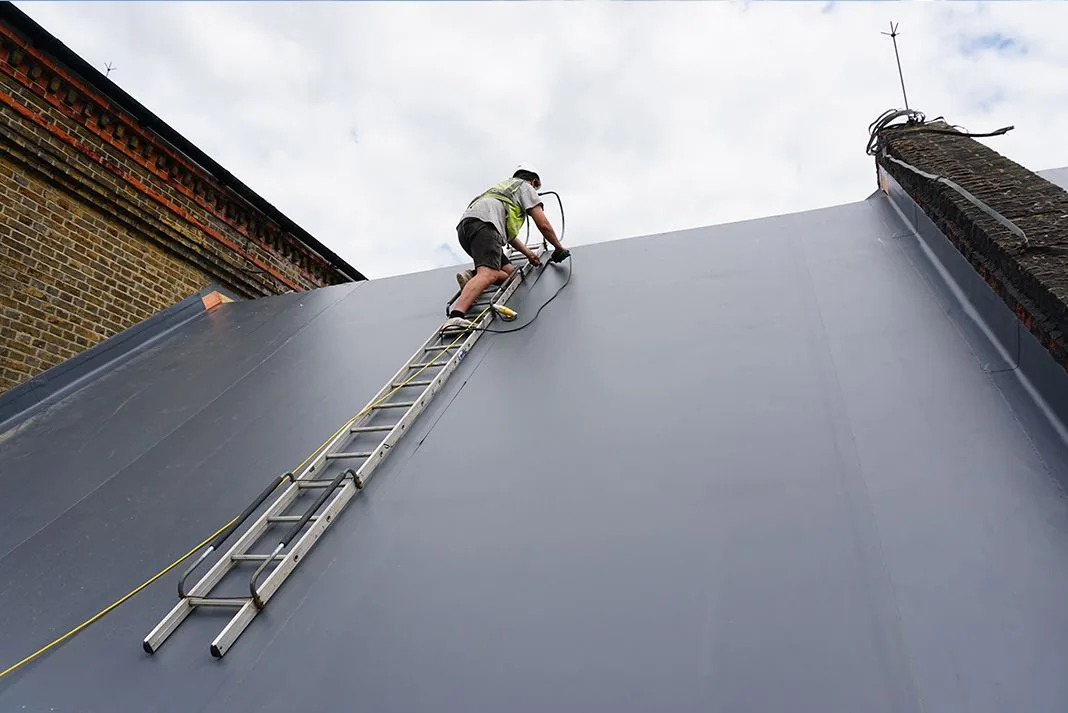
The call begins with the reported area and its effect below. We ask whether water is active, whether equipment or inventory is at risk, and who can approve roof access. If the concern is a ceiling stain, we treat it as a starting point rather than a location pin. Water may travel through a deck, follow insulation, or move along a curb before showing indoors. The roof inspection compares the report with plausible paths.
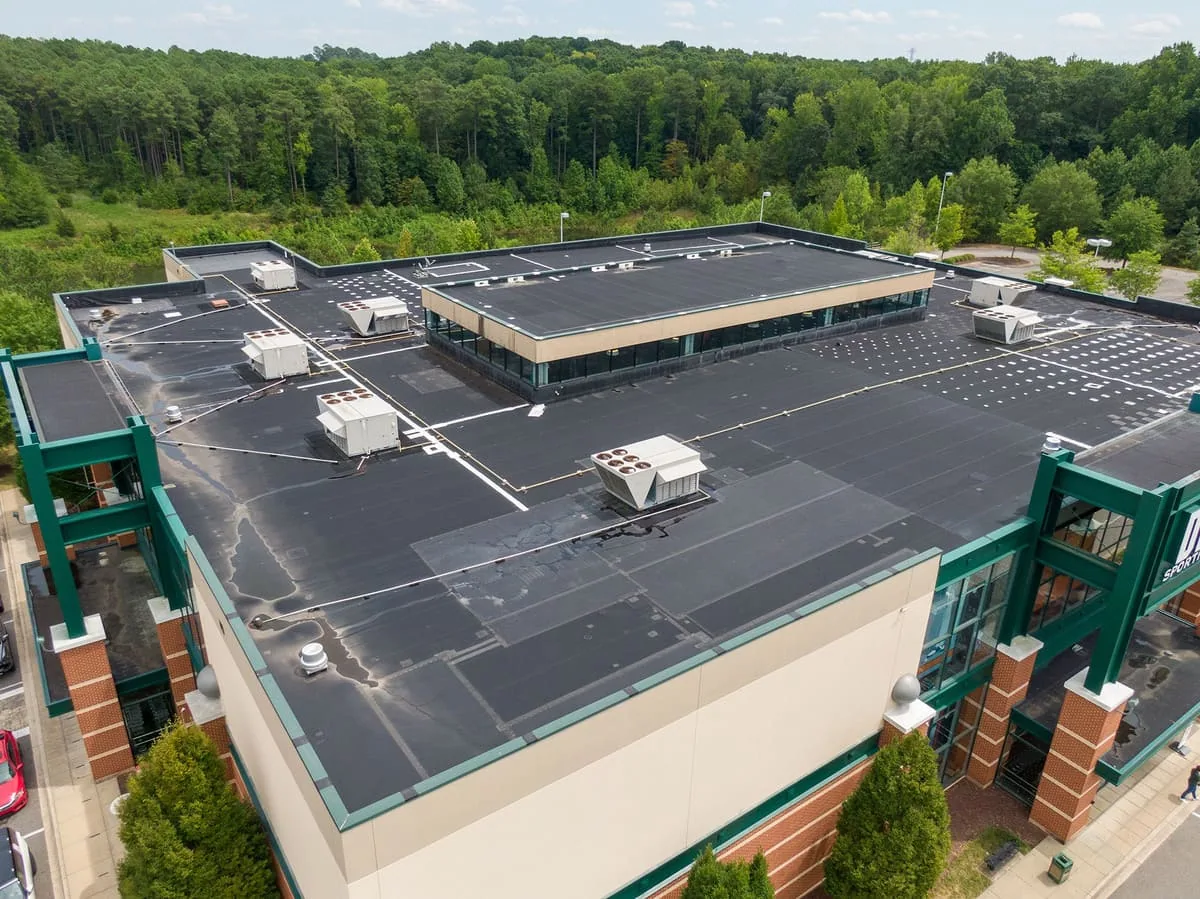
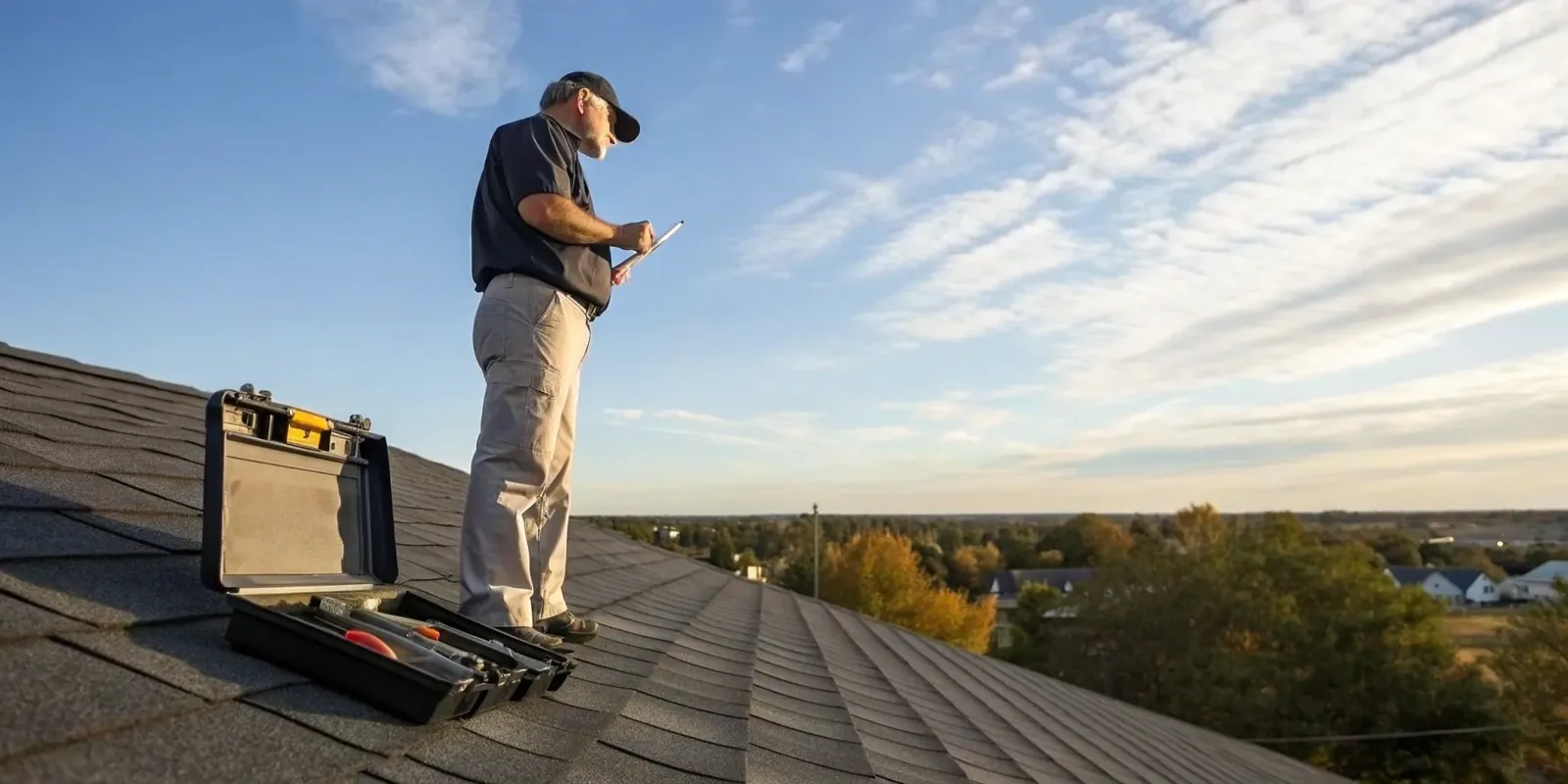
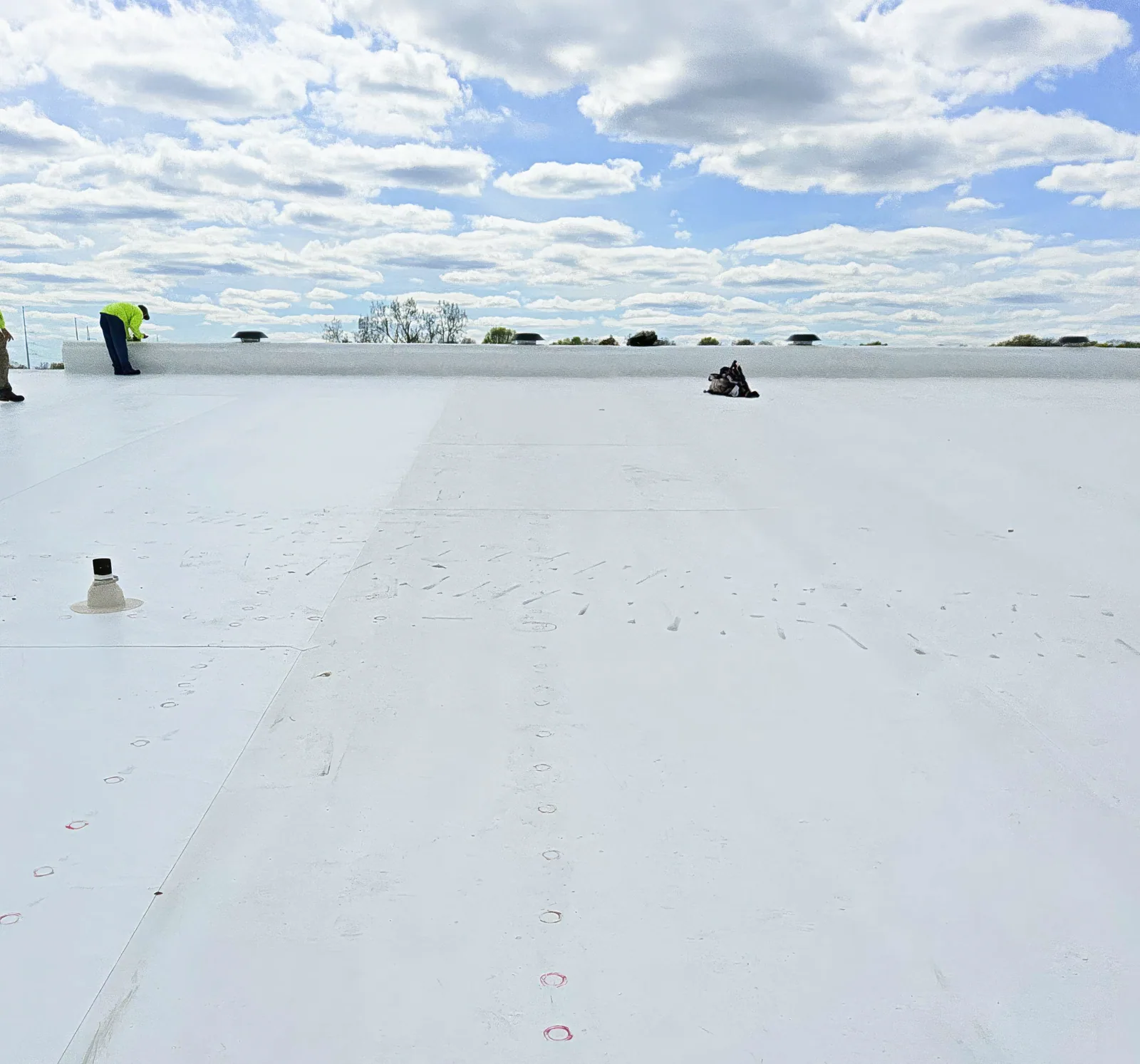
On entry, we check the membrane or covering, seams, laps, penetrations, roof-to-wall transitions, curbs, edge metal, drains, and visible prior work. We photograph the suspected area and nearby details. Each image needs enough context to help the next visit locate the condition. If the source remains unclear, we state whether testing or a controlled opening could answer the question. The owner sees that step before the scope expands.
Safe access is verified for the day's conditions. The crew checks the roof route, hatch or ladder, fall-protection needs, surface temperature, ice, and wind. If equipment blocks an area or a tenant schedule narrows the work window, the report says which zones were not reached. The site contact can then set an escort or move a restriction before the next dispatch.
Where production continues during a repair, the roof crew needs to know which access doors remain available and what hours equipment can move. The site contact may also set a quiet period or restrict certain roof zones. We put those limits into the daily sequence so a needed repair does not interrupt an unrelated operation. If the sequence changes, the owner gets an update before the crew shifts locations.
A short first update should answer four things: active water status, immediate protection, observed roof evidence, and the next approval point. It should not blend confirmed defects with suspected causes. We can provide emergency roof response for an active condition, or a inspection when the question is broader. A defined repair visit follows once the work boundary is clear.
Access and phasing: keep operations informed
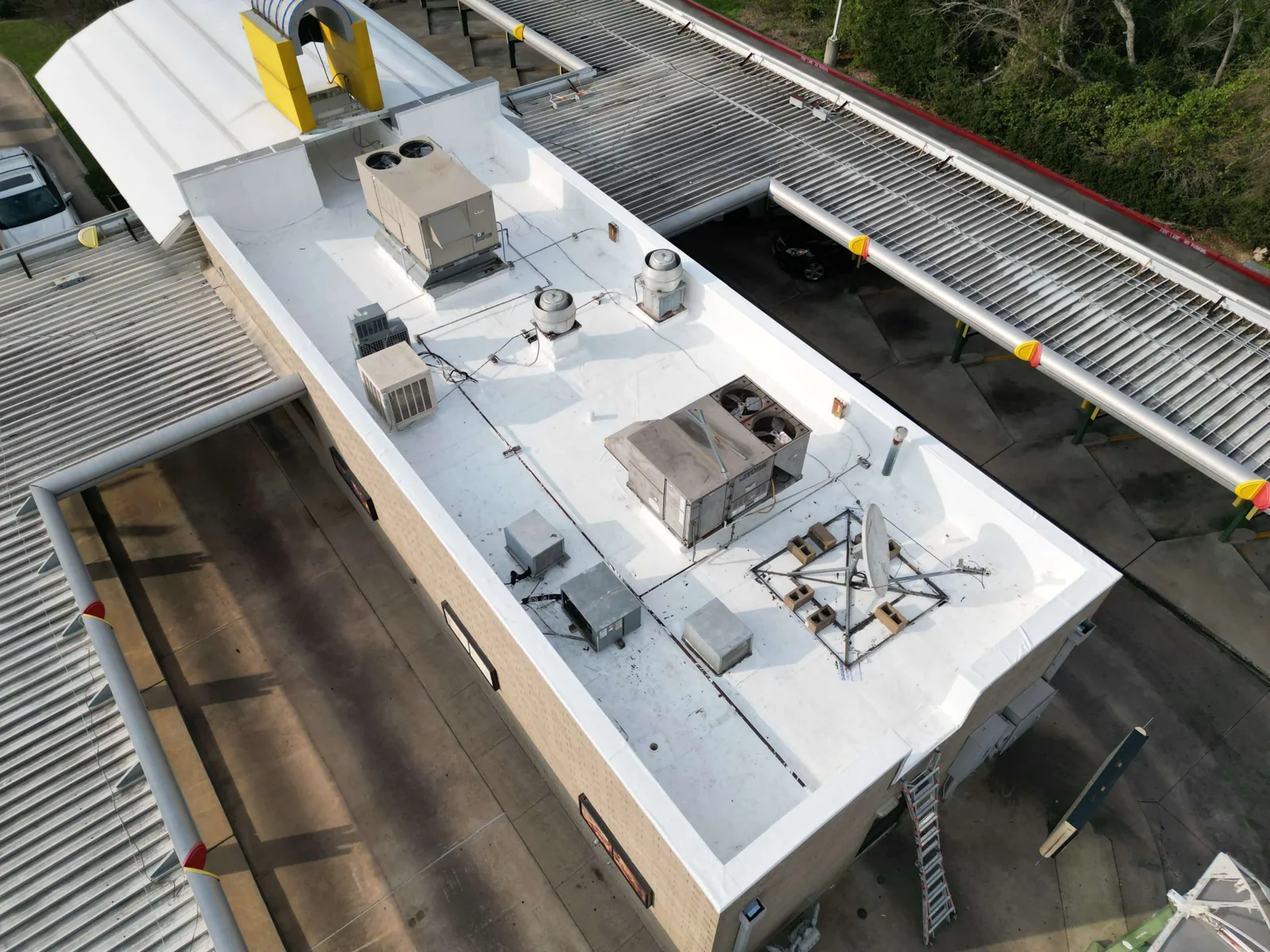
Before mobilization, the property contact and superintendent agree on roof entry, deliveries, staging, work hours, lift placement, and any interior area that needs protection. If the building stays open, the schedule should identify where occupants may notice noise or temporary access changes. When another trade needs the roof, the supervisor sequences work so completed membrane and flashing are protected from later traffic.
Some repairs can be completed in a visit. Others require a test, material order, or dry weather. The daily record shows what was finished, what was secured, and what remains. If demolition exposes an unexpected layer or wet insulation, the crew photographs and measures the finding. The owner receives the cost or schedule effect and approves the change before that portion proceeds.
Elgin had an EF1 tornado cross the city in July 2023, with roof damage reported along its path. A later call at Elgin-O’Hare Business Center still needs an inspection of the specific property. We look for current evidence: displaced metal, torn flashing, a puncture, an open seam, or movement around equipment. The event itself does not determine the cause or extent of a roof condition.
For a multi-phase replacement, the work plan identifies how much roof can be opened at one time and how the crew will secure it before leaving. Delivery and staging areas are confirmed with the site contact. A weather hold can change the sequence, so the daily update should note exposed work, protection, and the next safe start. Those details help operations plan the day without treating a forecast as a fixed work window.
Scope: separate a repair from a system project
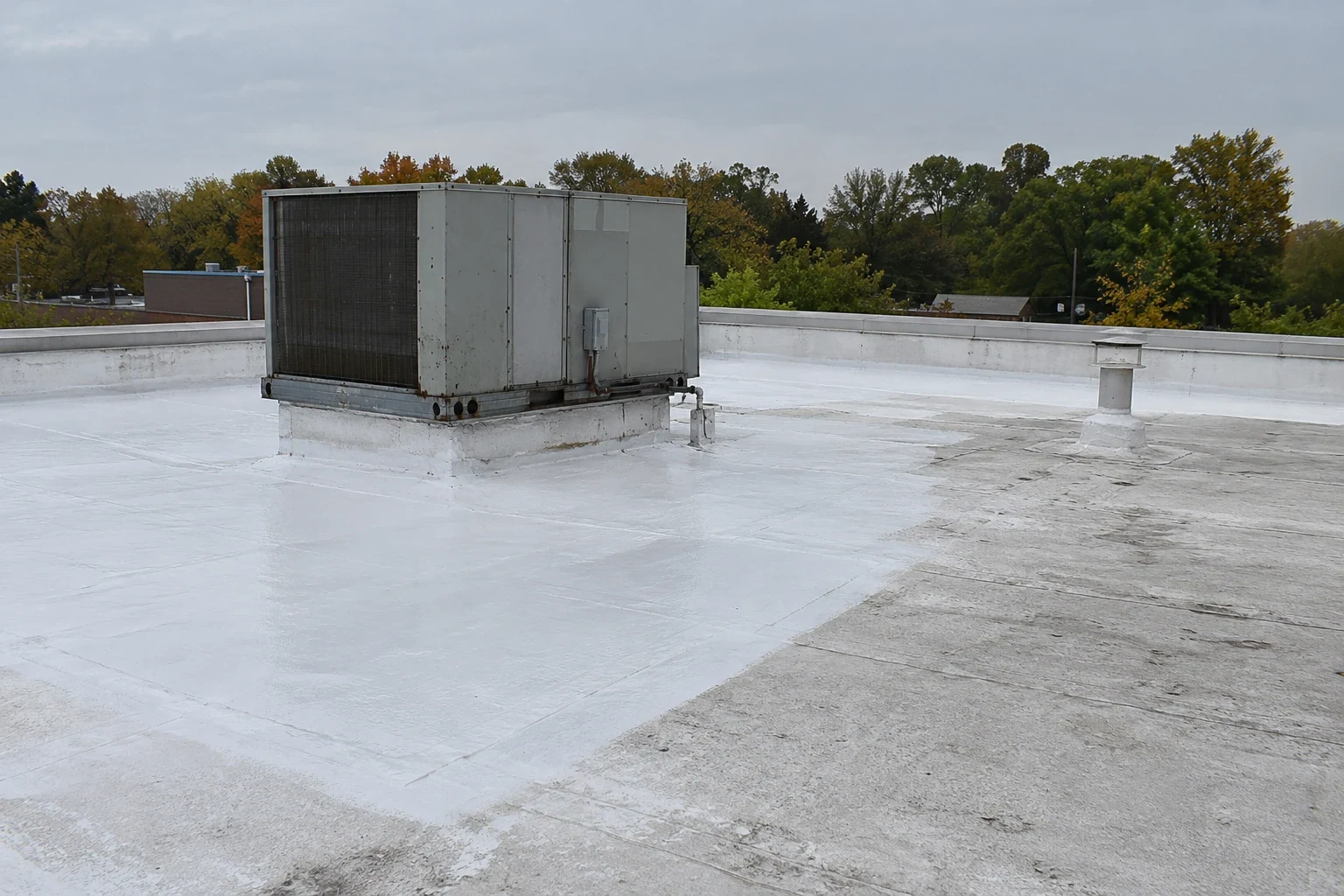
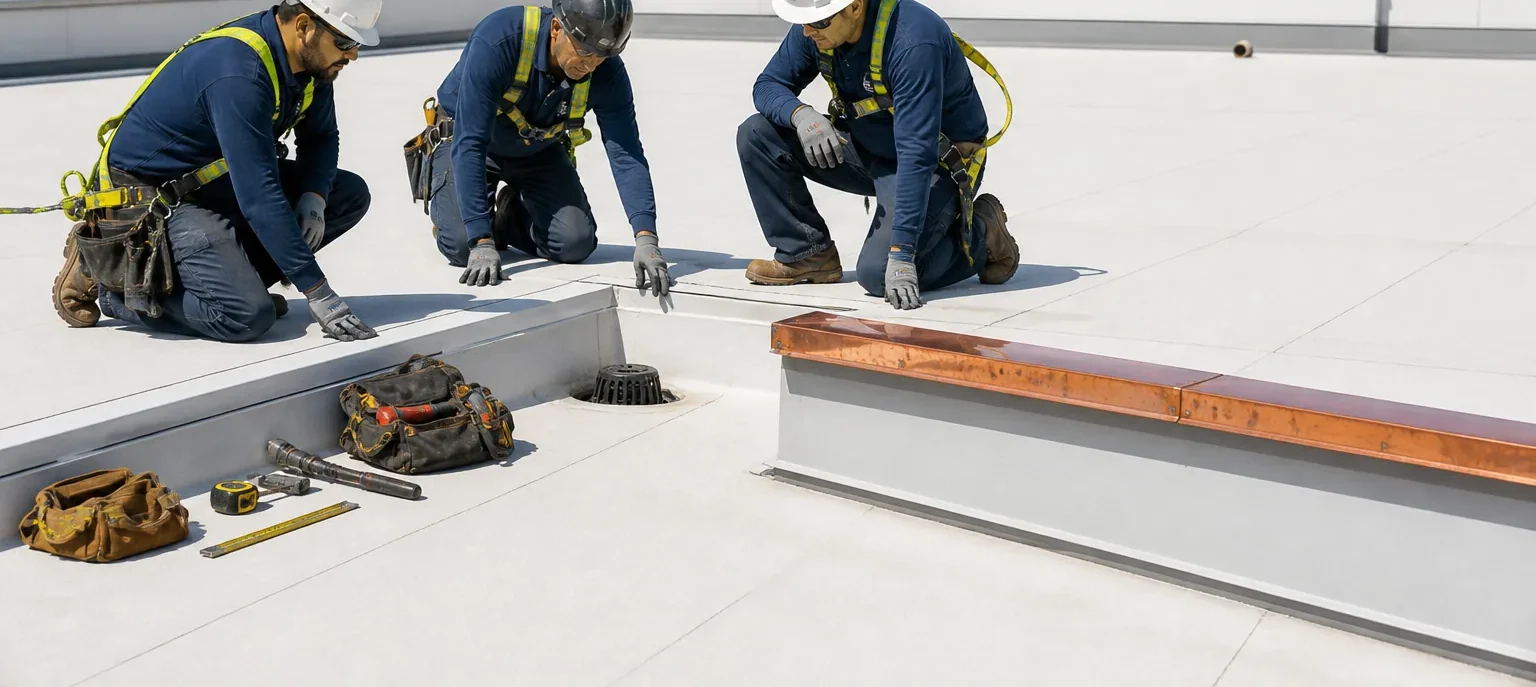
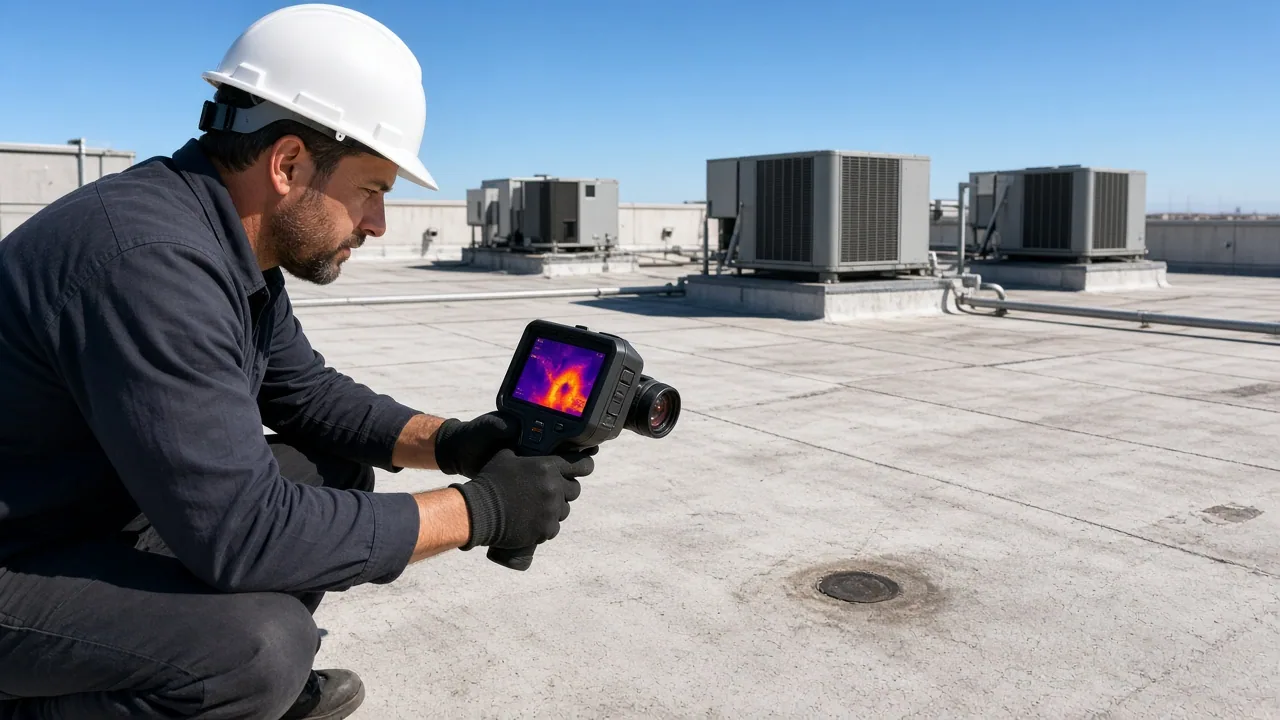
A repair estimate identifies the observed defect, preparation, material, repair perimeter, and limitations. A patch cannot correct every water path. If the substrate is not dry or stable, a permanent detail may require more investigation. We explain what a moisture survey or opening would establish. If the test finds a broader wet area, the owner can decide whether to expand work or reassess the system.
Replacement review begins with visible layers, attachment, insulation, deck observations, roof edges, drains, penetrations, and equipment supports. A recover depends on moisture, structural capacity, code, and compatibility. We do not assume a new membrane can go over existing material. The proposal separates measured quantities from concealed-condition allowances and explains what triggers additional work.
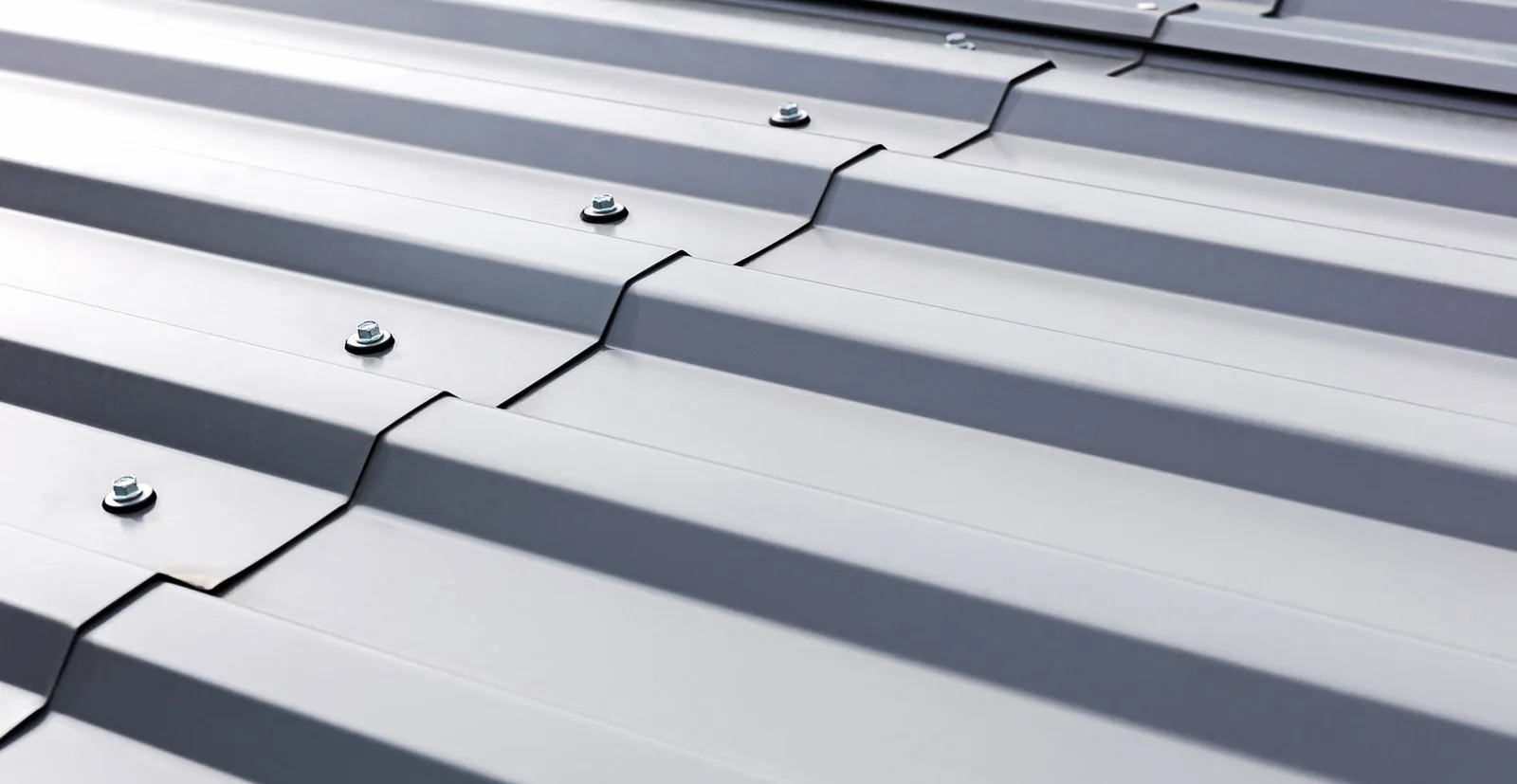
For an Elgin commercial reroof, the design team checks the locally amended 2021 IBC alongside current state energy requirements before settling the assembly. A TPO assembly uses different seam details than an EPDM roof or a metal retrofit. Existing construction and project criteria guide the system choice.
Owner comparisons work best when bids show matching areas and details. Review tear-off, disposal, deck repairs, insulation, flashing, edge metal, drains, curbs, access, phasing, and occupied-building protection. If one proposal omits a line item, the base price may not represent the same scope. A capital plan can organize near-term corrections and longer-range work using inspection evidence.
Closeout: preserve the work history
The closeout record lists roof zones inspected, completed repairs, materials used, temporary protection, and unresolved questions. Dated photos let the owner compare the condition before and after work. If the crew could not access a section, that limit is recorded. A later inspection can start with the open area instead of repeating the same walk.
Routine care checks seams, flashings, penetrations, drains, scuppers, edges, and past repairs. The schedule should reflect the roof and access conditions. A preventive visit records routine tasks; the closeout can group findings by urgency and approval status.
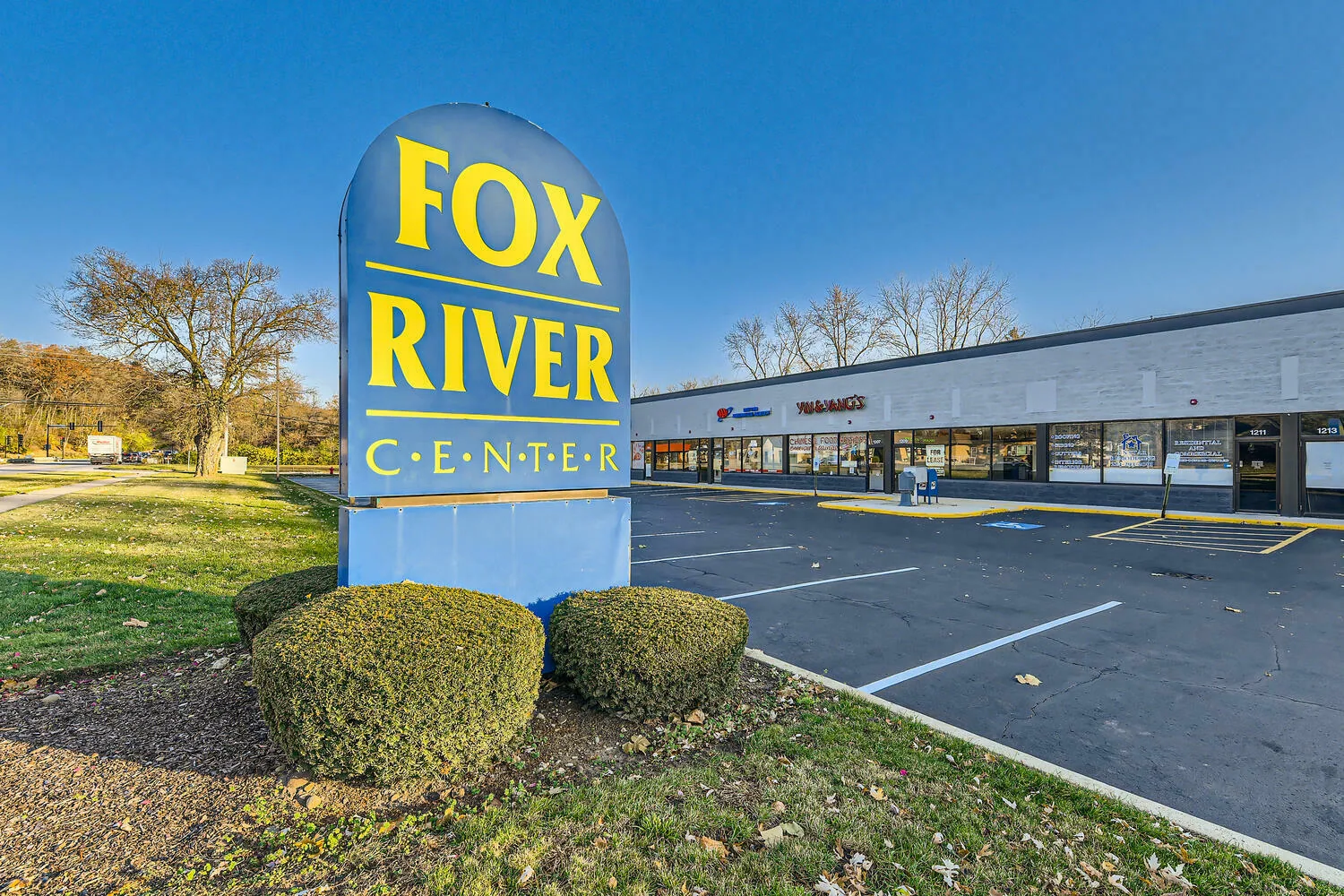
Elgin-O’Hare Business Center is one city business area. Separate records can also be kept for Fox River Business Center and Crow Commerce Center. Scheduling several visits together can help with coordination, but each building still needs independent system identification, access confirmation, and repair authorization.
Call with the property, roof zone, access contact, and operating constraints. For active water, identify the affected interior area and equipment at risk. We will set a safe dispatch window and provide an update with observed conditions, remaining questions, and the owner decision needed next.
Questions About Elgin-O’Hare Business Center
Does the PAB designation identify the current roof type?
No. It describes allowed use categories. We verify the roof assembly and condition at the individual building.
What should I report when requesting a leak visit?
Tell us the building, affected room, whether water is active, access contact, and any equipment or operation at risk.
Can repairs be phased around business hours?
Yes. We confirm entry, deliveries, staging, occupied areas, and approval contacts before setting the work sequence.
How do you handle a concealed wet area?
We photograph and measure it, explain the test or scope change, and get owner direction before expanding approved work.
What belongs in the final roof record?
Include dated photos, roof zones, repairs, materials, access limits, temporary measures, and unresolved follow-up.