Commercial Roofing in Windsor Commerce Center, Elgin, IL
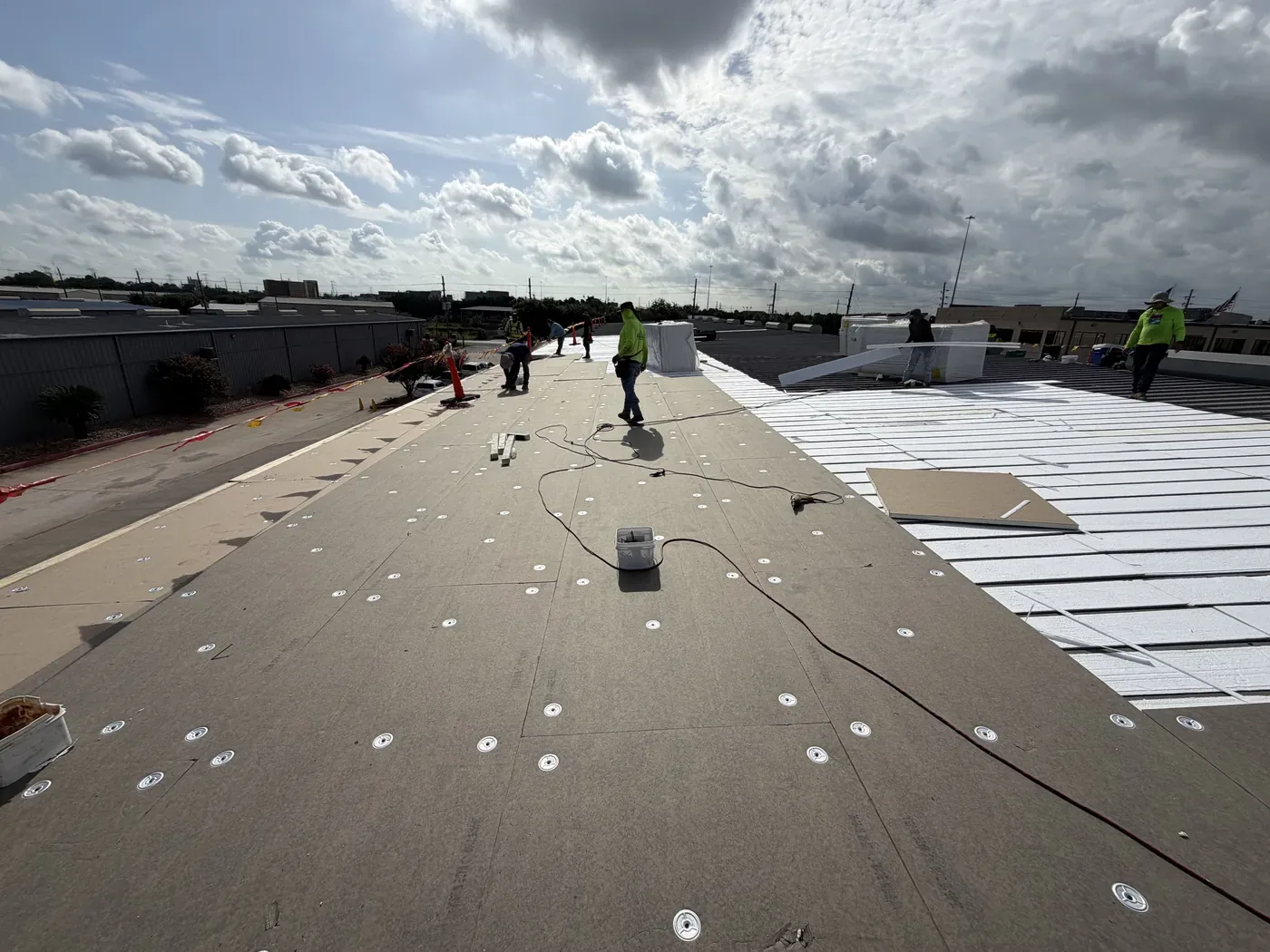
Set the first roof dispatch
Share the building, reported area, access contact, and operating limits. We will confirm a safe visit window and next approval point.
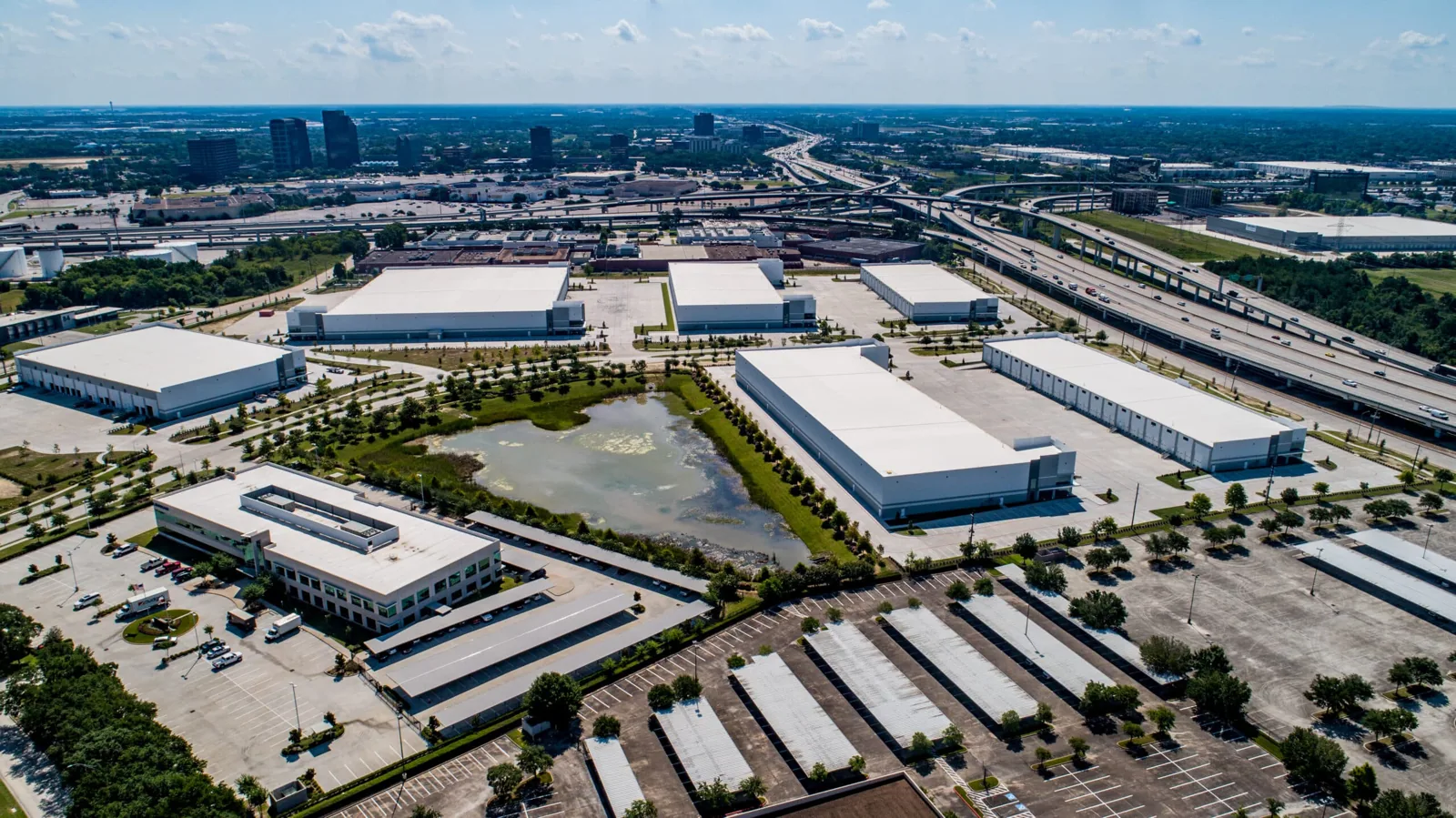
Windsor Commerce Center
The first roofing decision at Windsor Commerce Center belongs to the individual building. The Elgin area includes a 50-acre business center with office, research, industrial, and planned-business zoning categories. Those categories describe allowed uses, not a roof assembly or condition at any specific property. Each building needs its own access plan, system check, and work boundary. We confirm the site contact, reported condition, operating limits, and safe roof entry before the first walk. Then we map the affected zone and choose whether the next step is water control, testing, or a priced repair.
Elgin's winter climate brings freezing conditions and snowfall. A thaw can send meltwater across a detail that stayed dry during cold weather. Ice can also close a roof route before inspection starts. We record the area that can be reached, set a weather hold when needed, and state when the remaining zone can be checked safely.
When the concern follows a storm, the event itself does not tell us what happened at Windsor Commerce Center. The crew looks at current roof evidence: displaced metal, split flashing, punctures, open seams, or movement around a curb. Each observation receives a photo and a location. The owner gets a clear distinction between what is confirmed and what still needs investigation.
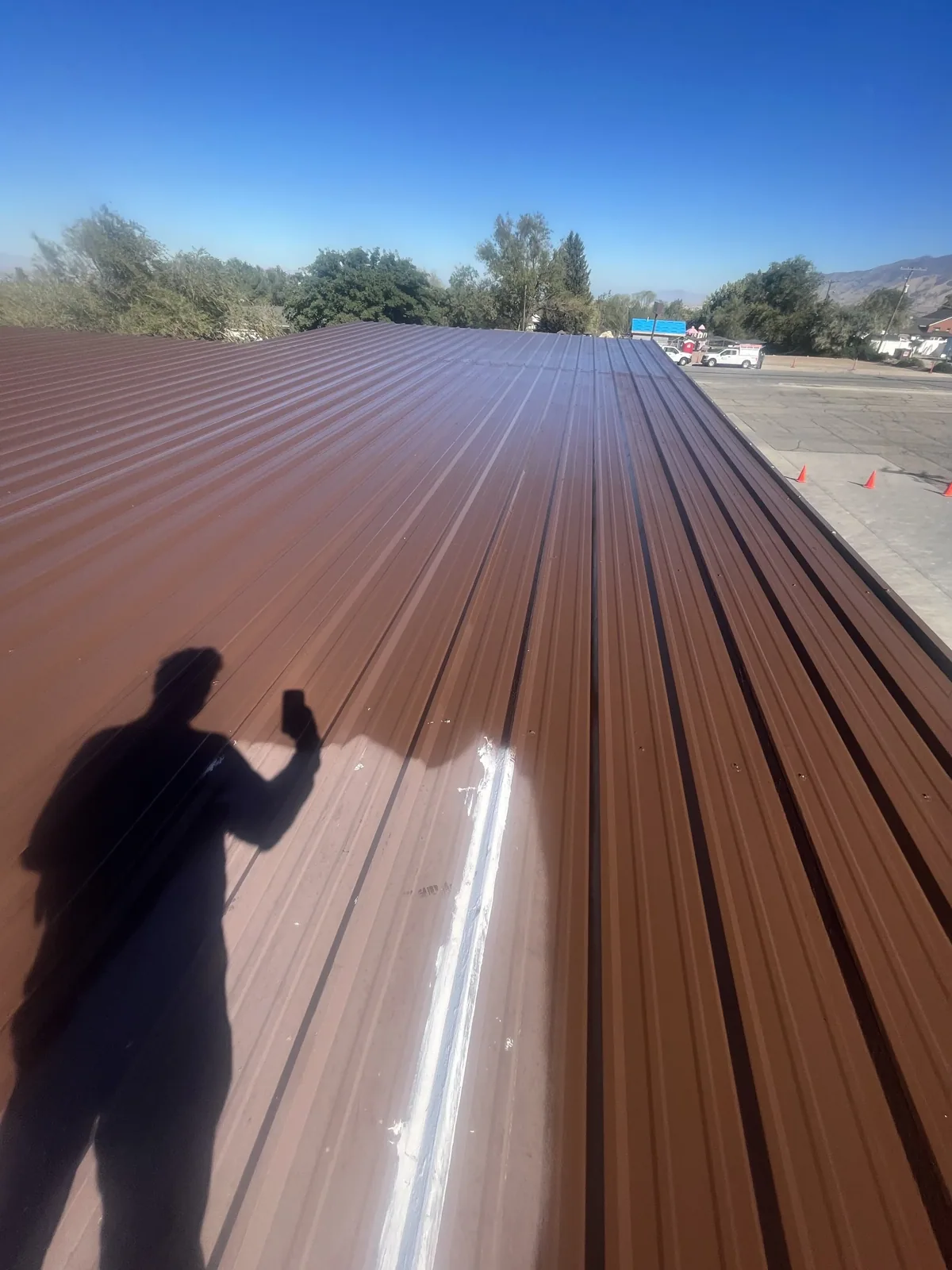
Dispatch order: stabilize, inspect, report
An active drip changes the sequence. First, we ask which room is affected, what equipment or inventory may be exposed, and who can approve roof access. Interior protection starts while the crew checks the corresponding roof zone. A ceiling stain is a clue, not a map of the opening. Water can travel along a deck, insulation layer, seam, curb, wall, or drain before it appears inside.
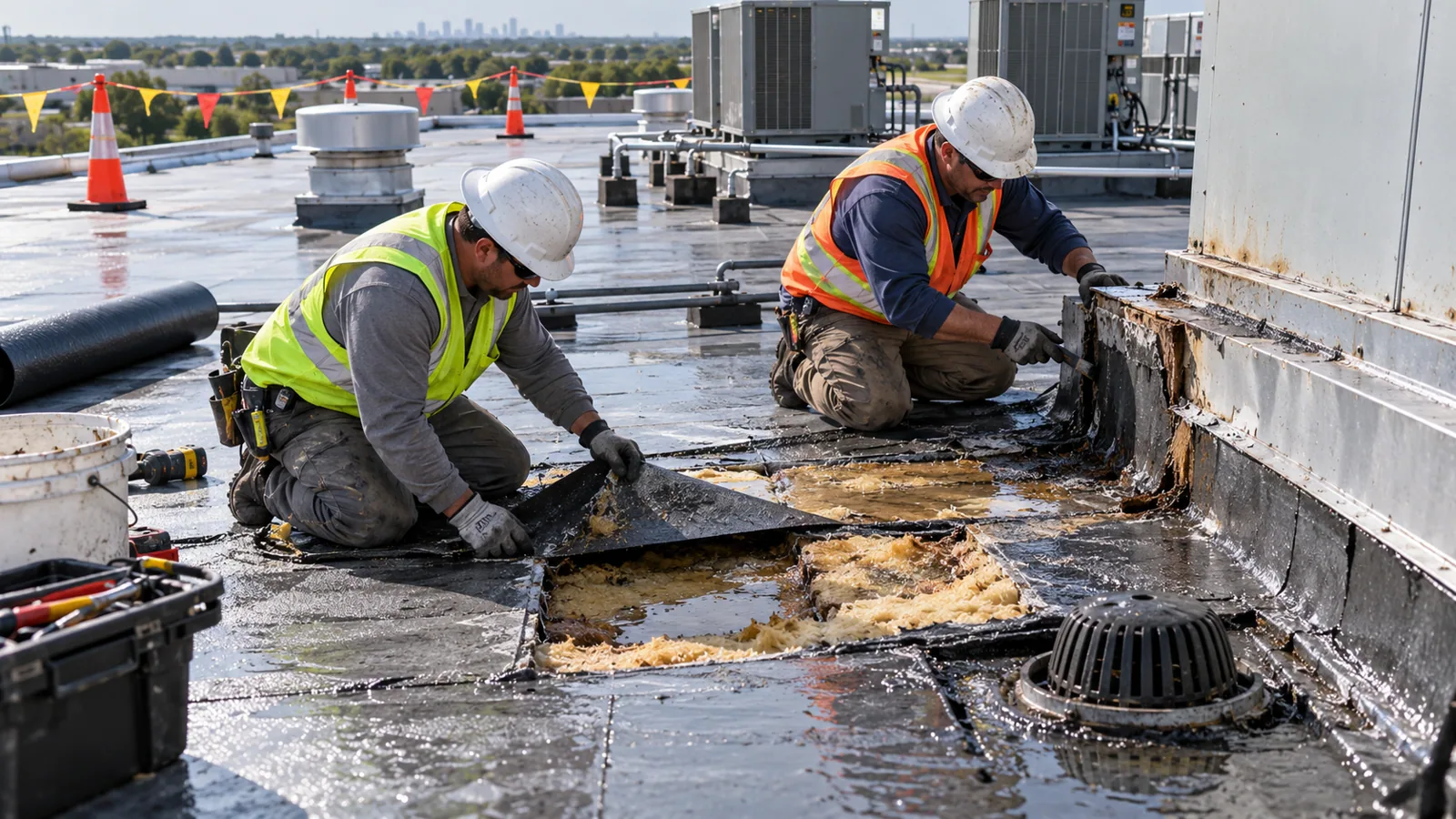
At roof level, we inspect accessible membrane, seams, laps, penetrations, perimeter metal, parapet transitions, drains, scuppers, and earlier patches. The report ties the finding to a roof zone and records the condition before a repair changes it. If the suspected path remains uncertain, we explain whether a moisture survey or test opening can resolve the question. We do not price concealed work as though it were already confirmed.
Safe entry affects the visit. We confirm the hatch or ladder, fall-protection requirements, escort, equipment route, and any area that must remain clear. The property manager can identify production periods, deliveries, restricted rooms, and tenant notice requirements. If these details limit the inspection, the closeout names the sections we did not reach. The next dispatch can then focus on the unresolved area instead of repeating work already documented.
The written update is short and decision-ready. It states whether water is active, what temporary protection was installed, what evidence supports a repair, and what approval is still needed. Photos include a close view and enough surrounding context to find the condition again. An asset manager can send the record to operations, ownership, or a claims contact without translating inspection notes.
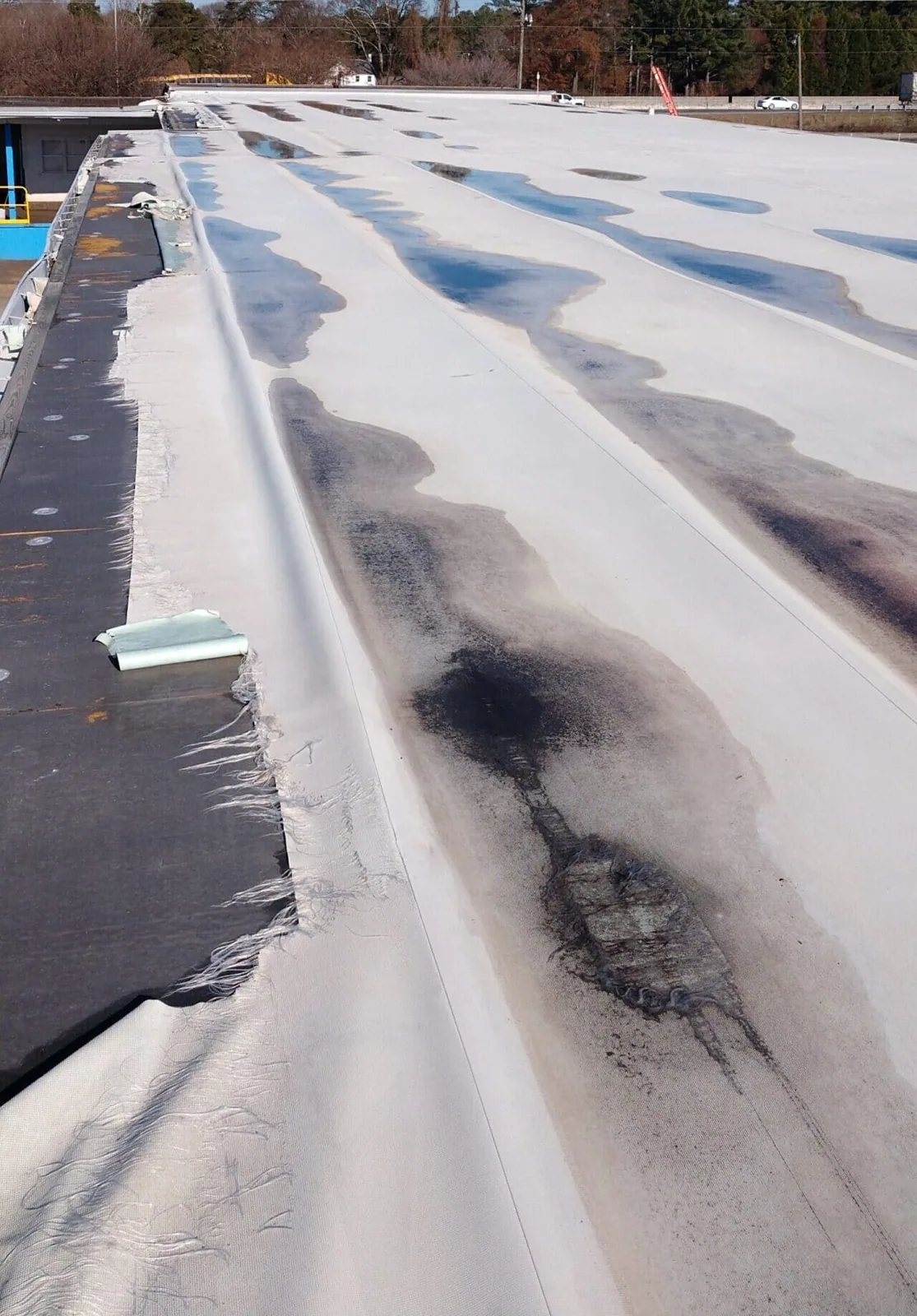
Operating plan: protect the work area
Roof work at a business center must respect each building's operating schedule. Before mobilization, the site contact and superintendent agree on access time, staging limits, delivery route, lift placement, and any occupied area that needs protection. If another contractor will use the roof, work is sequenced to protect completed membrane and flashing. We record who can approve a scope change so field decisions do not sit unanswered.
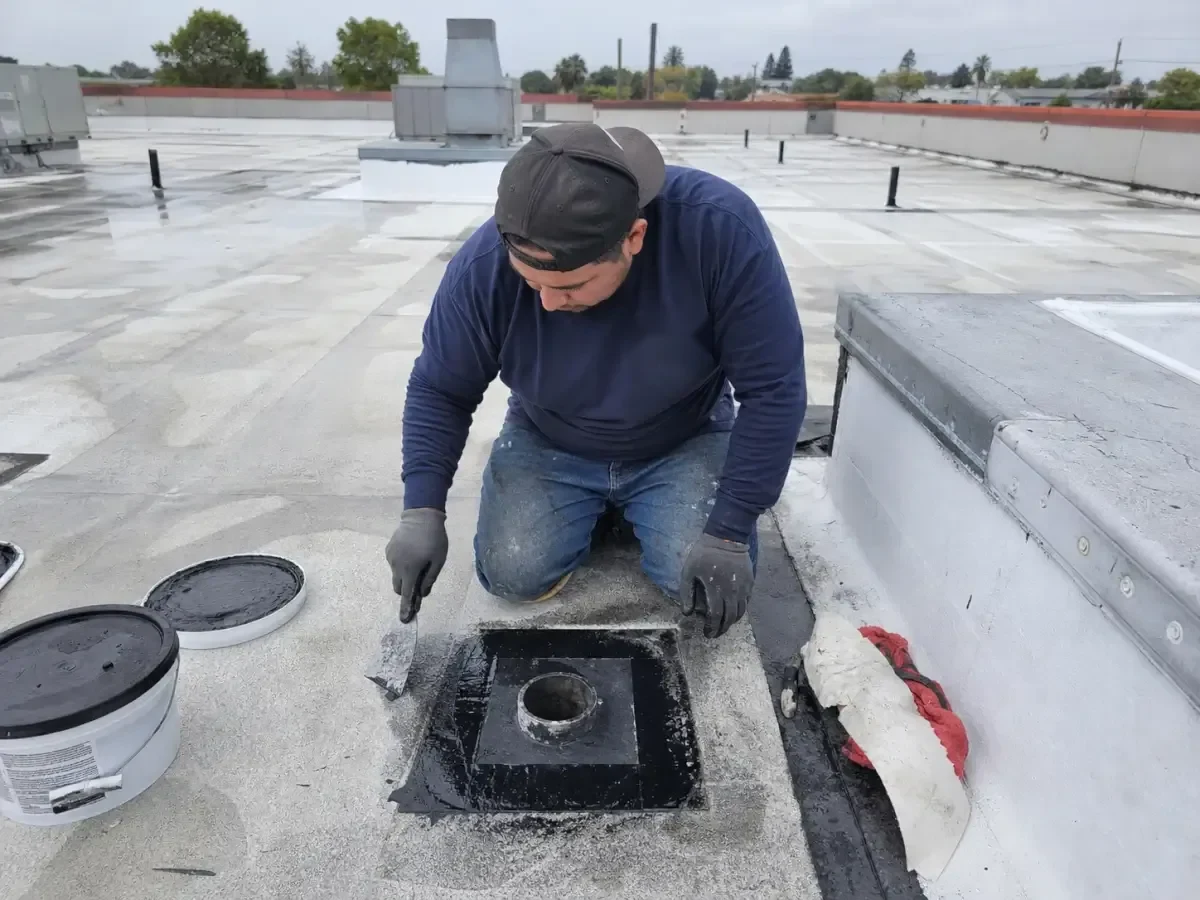
For a repair, the scope identifies the failed detail, preparation, compatible material, and repair perimeter. The crew removes loose or unsound material only within the approved boundary. If opening the area exposes wet insulation, corroded deck, or a larger separation, photographs and measurements go to the owner before the work expands. That keeps an added condition separate from the original authorization.
Elgin's documented July 2023 EF1 tornado is a reason some owners request a later roof review. It is not proof of damage at a particular Windsor property. We inspect the actual roof for displacement, impact marks, seam separation, loose edge details, and interior water reports. If the surface cannot be safely accessed, that limitation is part of the update and the return visit is scheduled for a workable window.
A permanent correction should address the cause, not only the visible symptom. A patch over an unprepared surface may not hold. A leak around a curb may involve flashing, fasteners, or movement in the equipment support. A drain complaint may require assessment of the outlet, sump, and surrounding slope. We state which parts are verified and where further testing could change the recommendation.
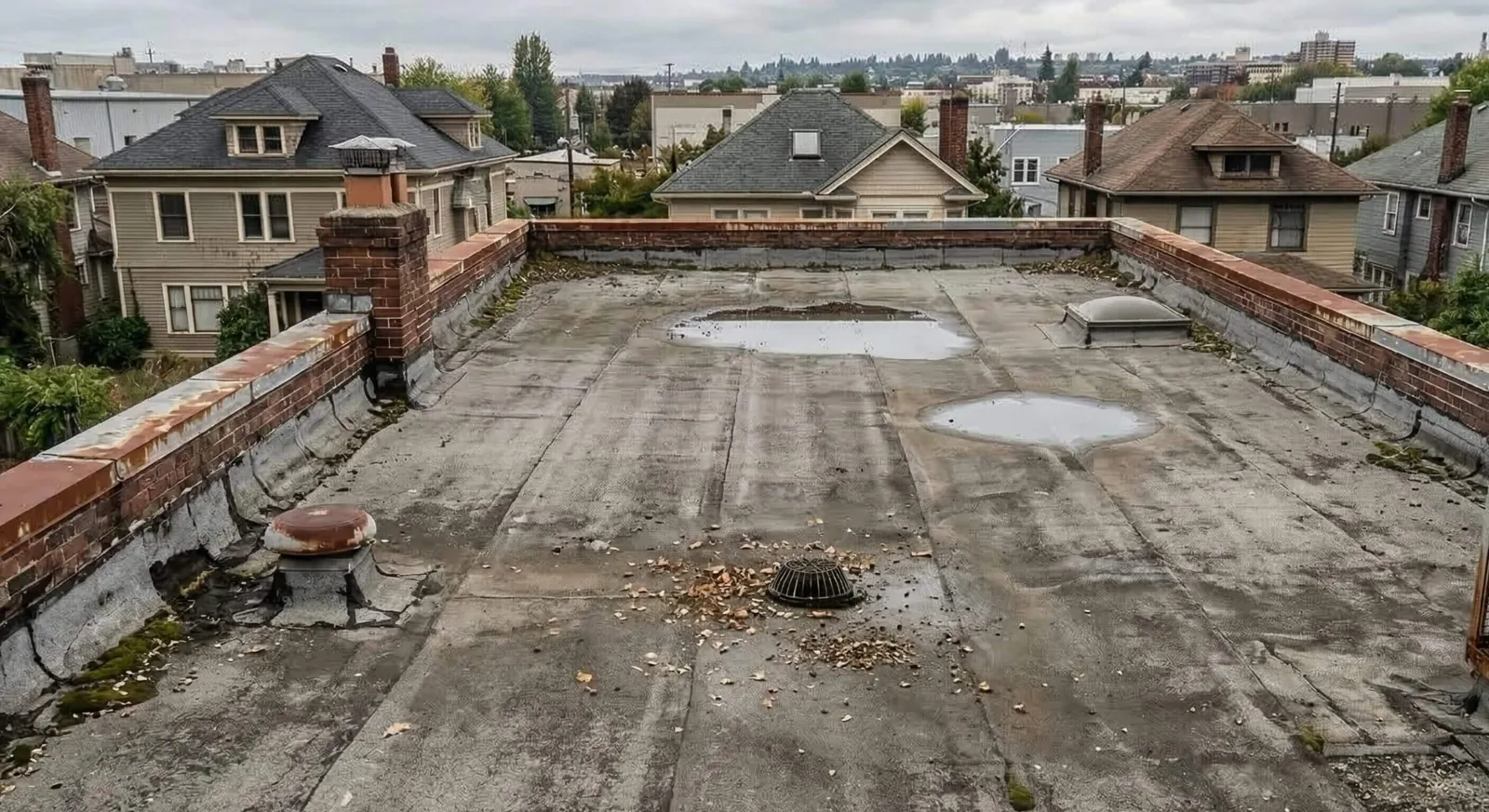
Assembly review: match the repair to the roof
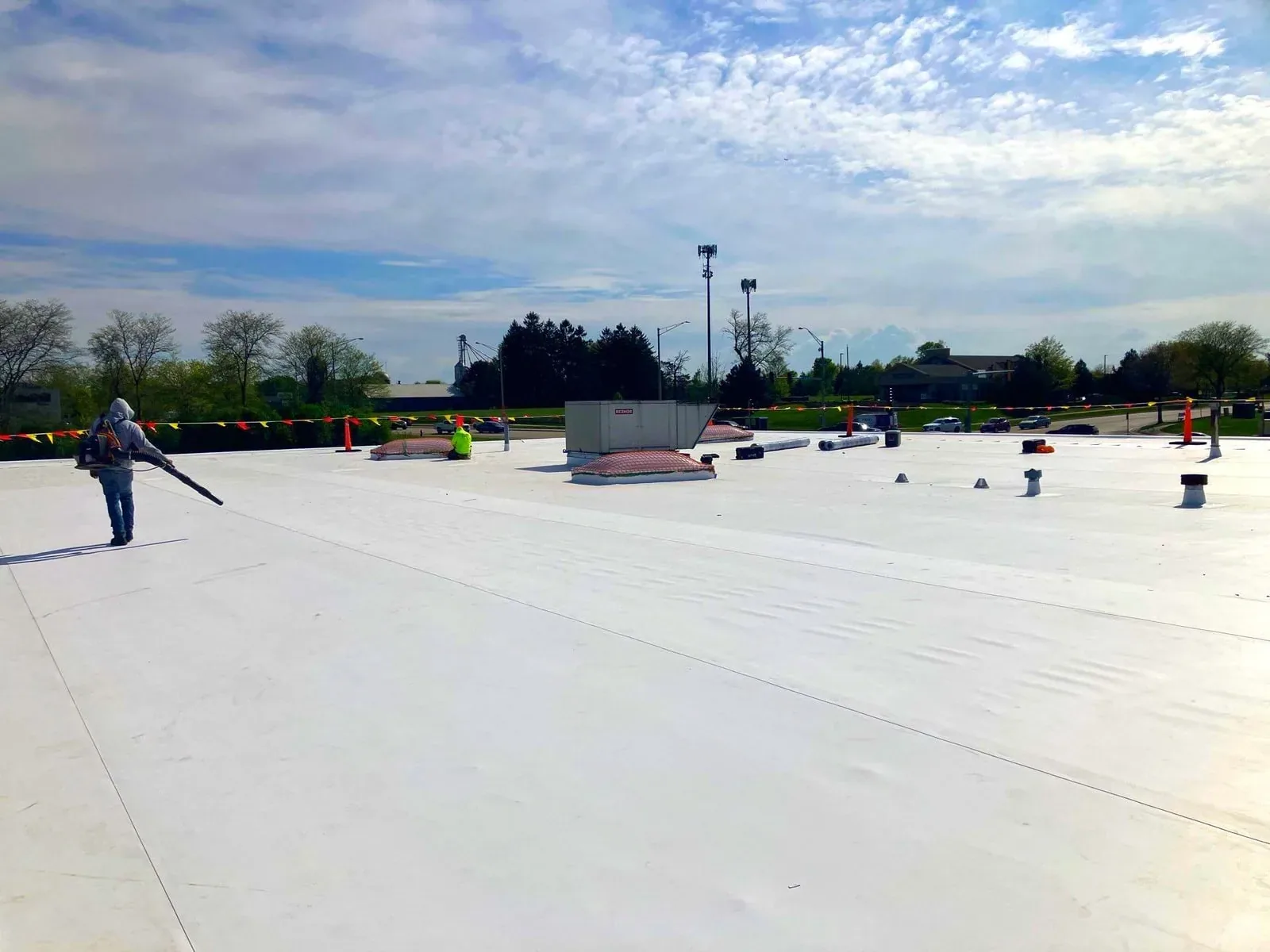
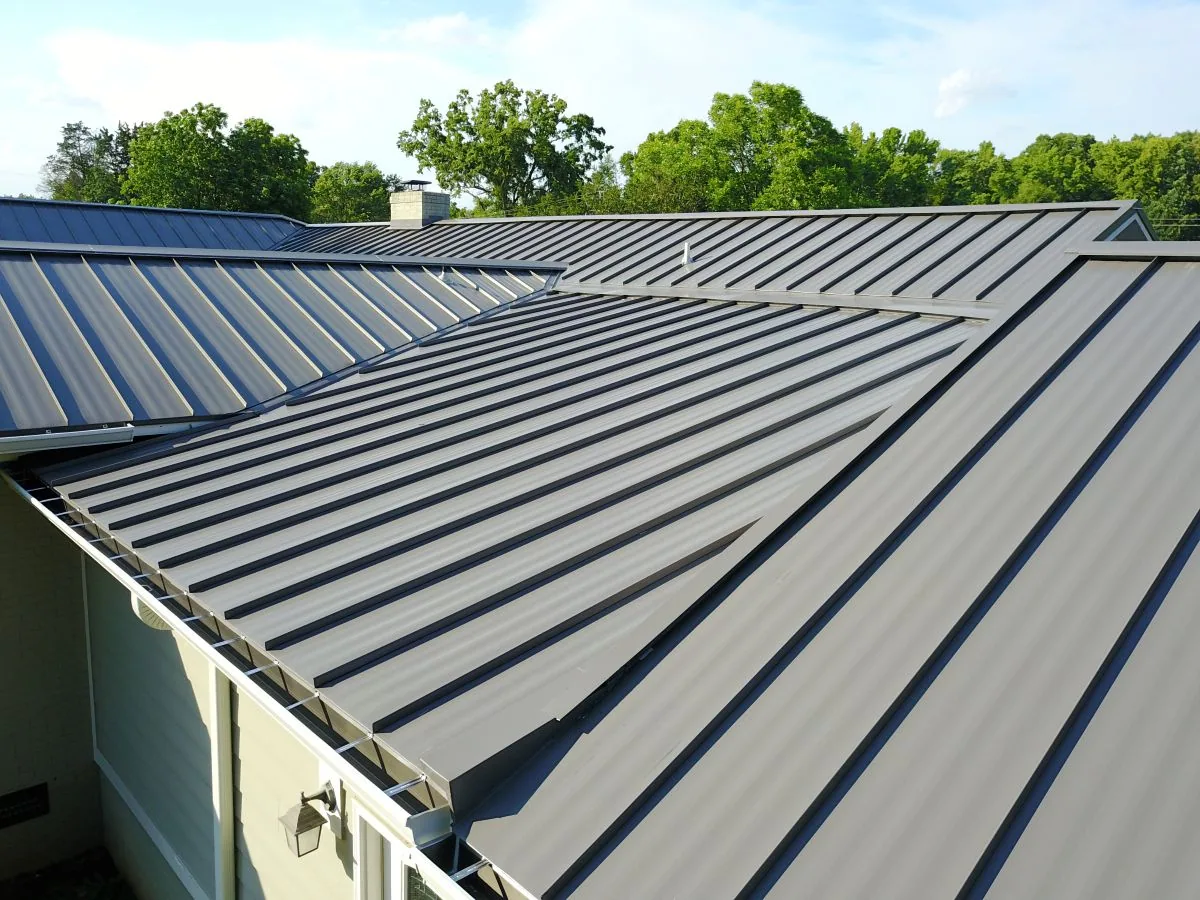
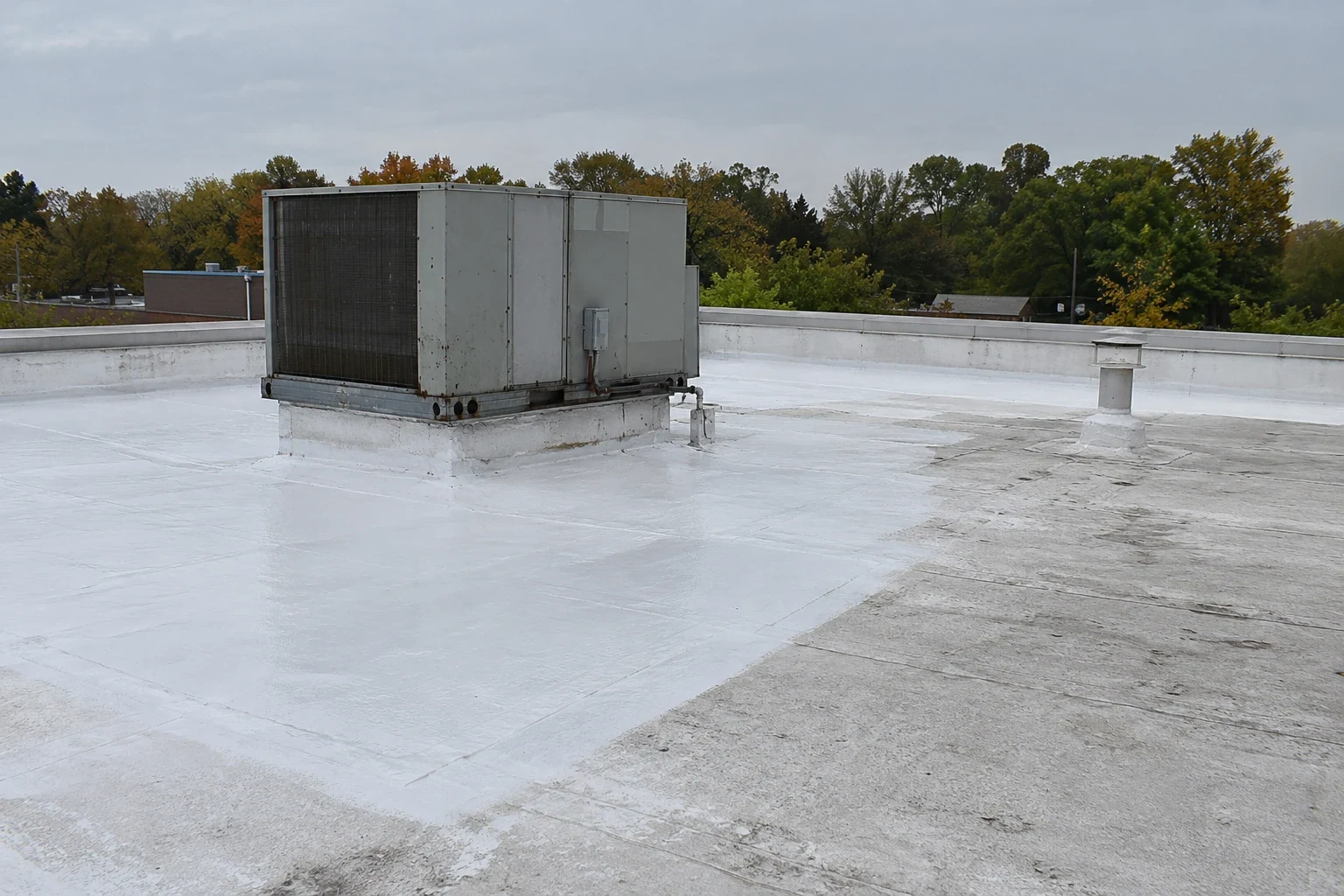
Before selecting a repair material, we identify the roof system where possible. TPO, PVC, EPDM, modified bitumen, standing-seam metal, and coating assemblies use different preparation and attachment details. A repair should be compatible with the surface and should tie into sound material. If the roof has multiple layers or an unknown coating, we document that uncertainty and ask whether a test is justified before proposing a broader repair.
When a roof is approaching replacement, we check visible layers, membrane condition, drainage, edge height, insulation, deck observations, penetrations, and equipment spacing. Recover eligibility depends on moisture, structural capacity, code, attachment, and manufacturer system requirements. If those inputs are not known, a survey or test opening may give the owner a more reliable comparison than a premature assembly assumption.
A replacement proposal should identify tear-off and disposal, deck repairs, insulation, cover board, membrane, attachment, flashing, edges, drains, and occupied-building protection. We separate confirmed quantities from assumptions. Any allowance for concealed conditions names what could trigger additional work and how the owner authorizes it. A phasing plan should show open-roof limits, temporary dry-in, daily closeout, and weather contingencies.
Elgin applies the 2021 International Building Code with city amendments. Its commercial work also falls under the current Illinois energy conservation code. The project team confirms the applicable requirements before final material selection. For an existing roof, a TPO repair or standing-seam metal detail must follow the actual assembly. If restoration is considered, coating restoration is only appropriate when the substrate and existing roof qualify.
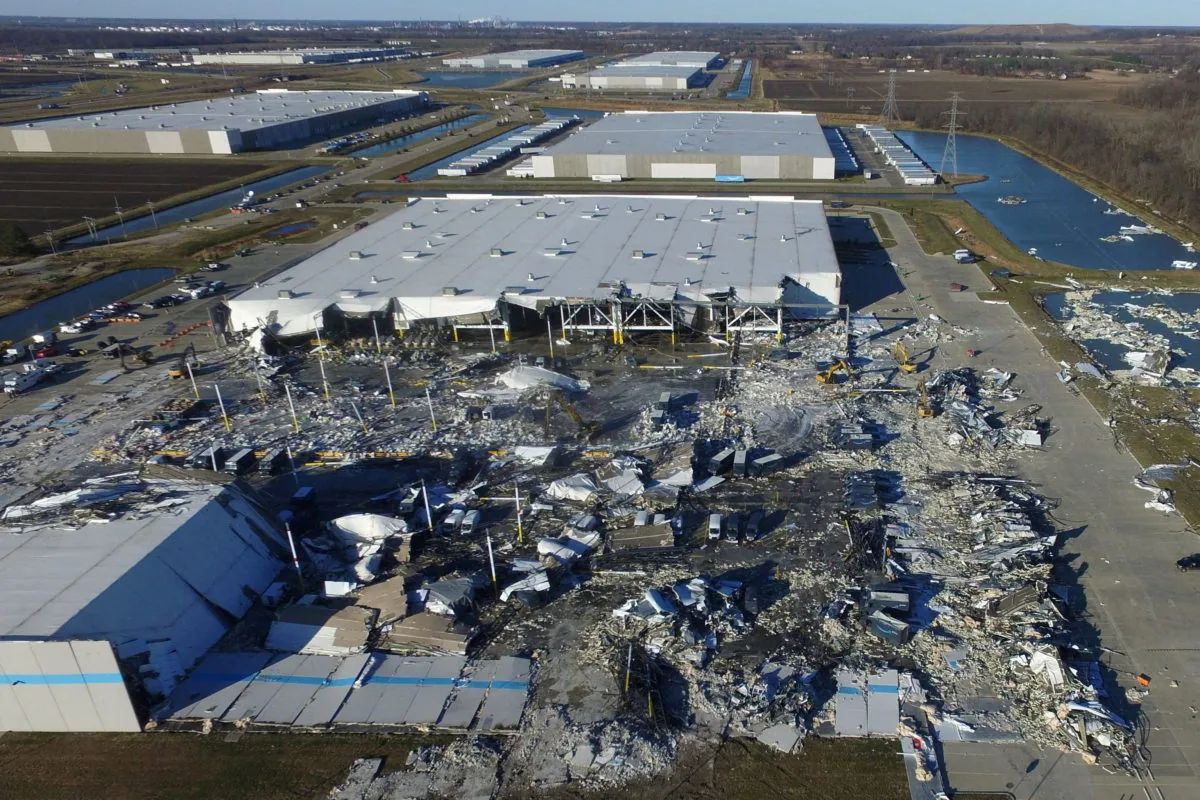
Closeout: leave a usable roof record
A useful closeout lets the next person understand what changed. A dated photo log keeps each approval tied to its roof zone. We provide dated photos, completed work zones, materials installed, temporary measures, and open recommendations. If water testing or a follow-up visit remains, we name the question it will answer. The property record should not imply that an inaccessible area or concealed layer was verified.
Maintenance can reduce surprise calls when the visit checks drains, scuppers, seams, sealants, flashing, edge metal, and penetrations. The interval should fit the roof condition, exposure, and building operations. A prior repair log helps crews distinguish a recurring defect from a new observation. A preventive maintenance visit can document those points, while a condition report can group findings by urgency and scope.
Windsor Commerce Center is one of several named Elgin work areas. Owners may also coordinate inspections at Jaynes Industrial Park or Northwest Corporate Park, while keeping each property record separate. The same crew schedule can support multiple visits; the roof system, condition, and access plan must still be checked building by building.
For dispatch, share the property name, reported room or roof zone, access contact, operating constraints, and any active water concern. We will set a visit around safe entry and provide the next update with observed conditions, unresolved questions, and the approval point.
Questions About Windsor Commerce Center
What information helps dispatch a Windsor Commerce Center inspection?
Name the property, affected room or roof zone, access contact, operating limits, and whether water is active.
Does the 2023 tornado show that a building was damaged?
No. The event crossed Elgin; inspection findings must come from the specific building and accessible roof areas.
Can the crew price a hidden roof condition?
A concealed layer may need a test opening or moisture survey before the repair boundary and cost can be set.
What is included in replacement planning?
The scope can identify tear-off, insulation, membrane, flashing, drainage, deck contingencies, access, and phasing.
Can work be scheduled around building operations?
Yes. We confirm access, delivery windows, staging, tenant notices, and approval contacts before mobilization.