Commercial Roof Membrane Puncture Repair in Elgin, IL
Dispatch a puncture inspection
Share the building, roof area, date found, likely activity if known, active-water status, interior concern, and roof-access contact. We will define the first visit and repair limit.
Commercial Roof Membrane Puncture Repair
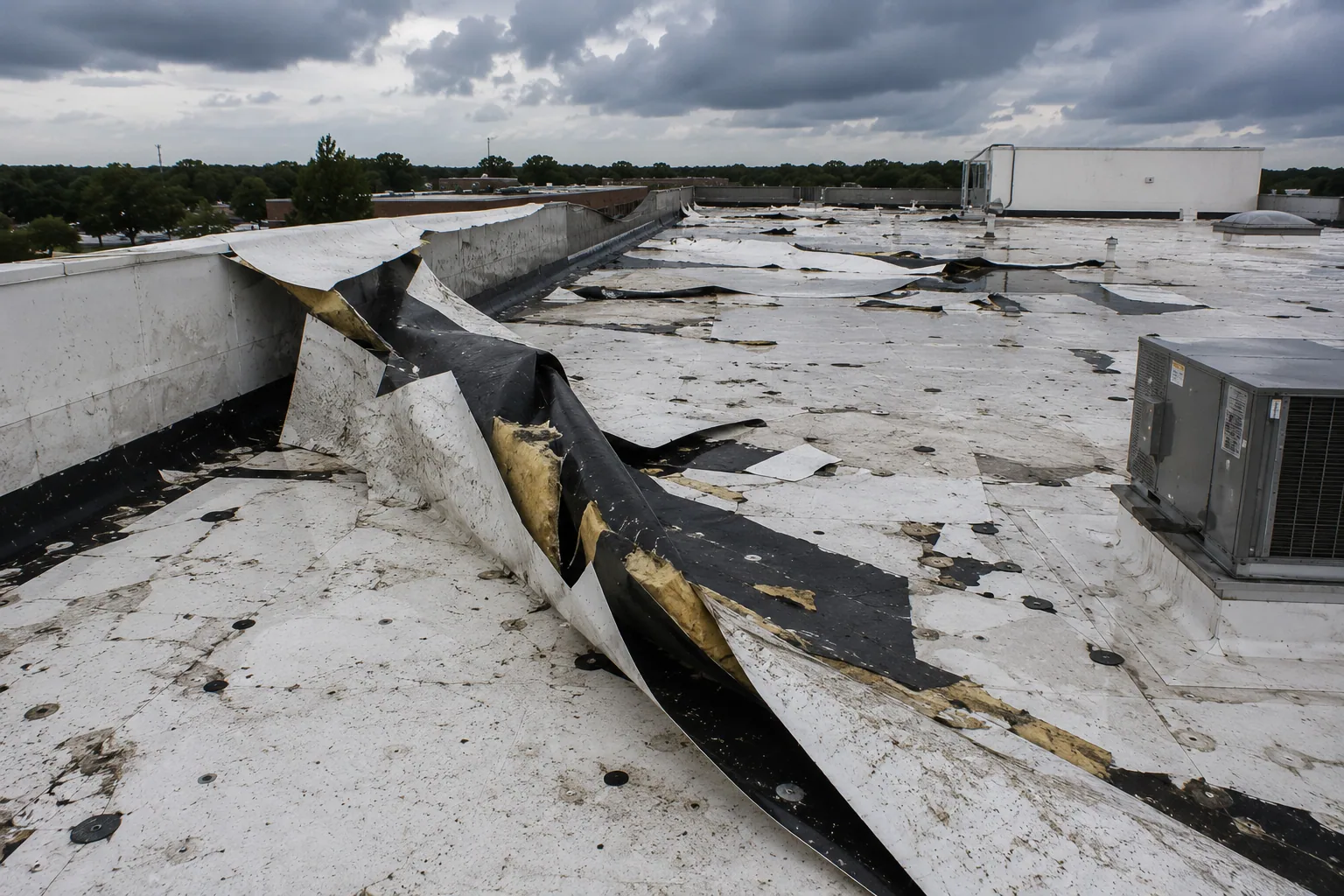
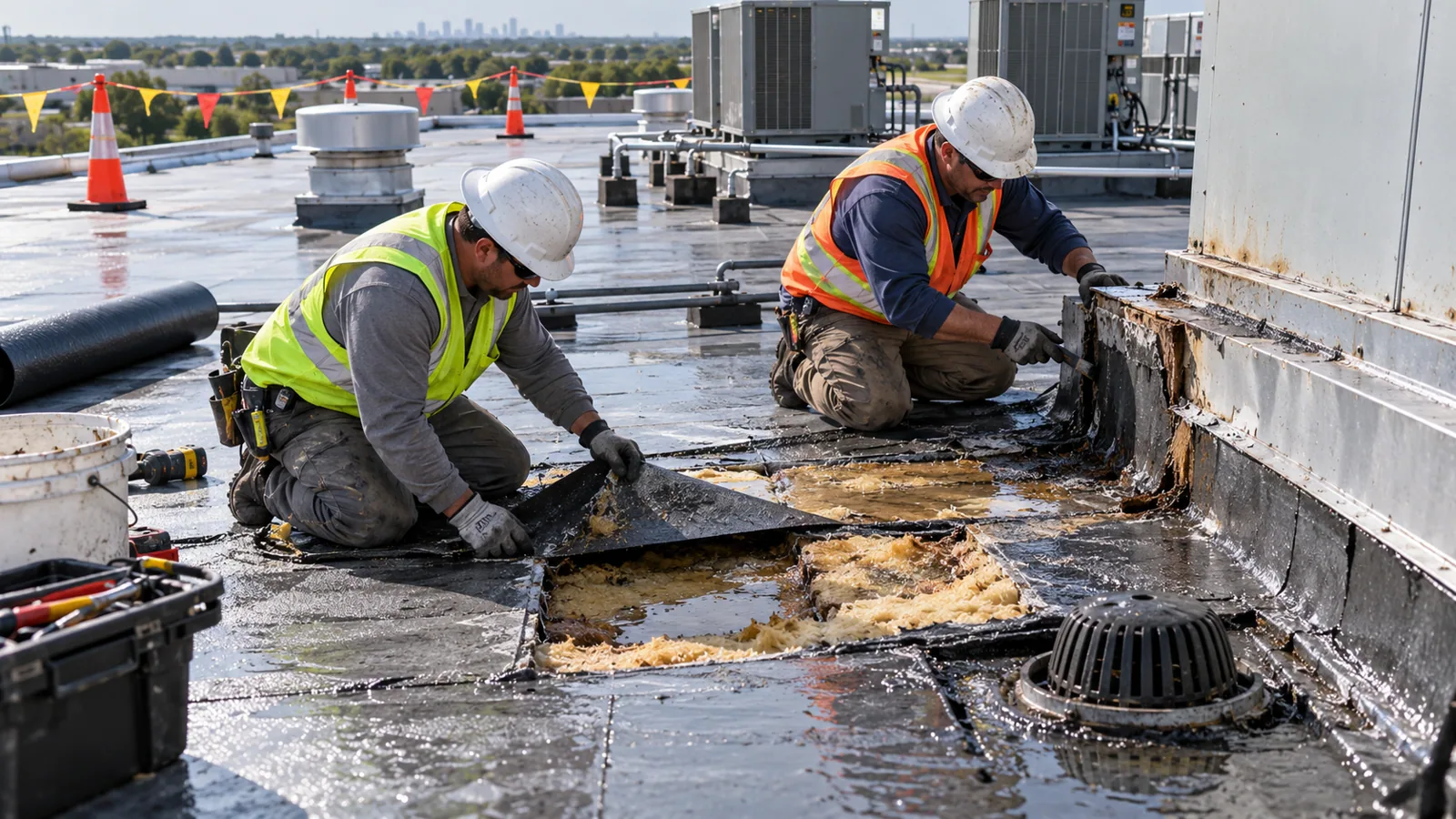
A puncture is small at the surface and can still affect insulation or deck below. We confirm the reported roof area, access contact, and activity underneath before inspection. Then we locate the opening, check nearby seams and penetrations, and document the material around it. A fastener, dropped tool, foot traffic, or loose debris can leave different evidence. We repair what the inspection supports and mark any concealed condition for owner review.
Elgin’s employment base includes manufacturing, food processing, and commercial equipment. That mix makes equipment access and material handling relevant to a roof visit, but does not tell us how a particular building is operated. A property at Burnidge Big Timber Industrial Park or near Downtown Elgin needs its own access and protection plan.
Locate: mark the opening and area below
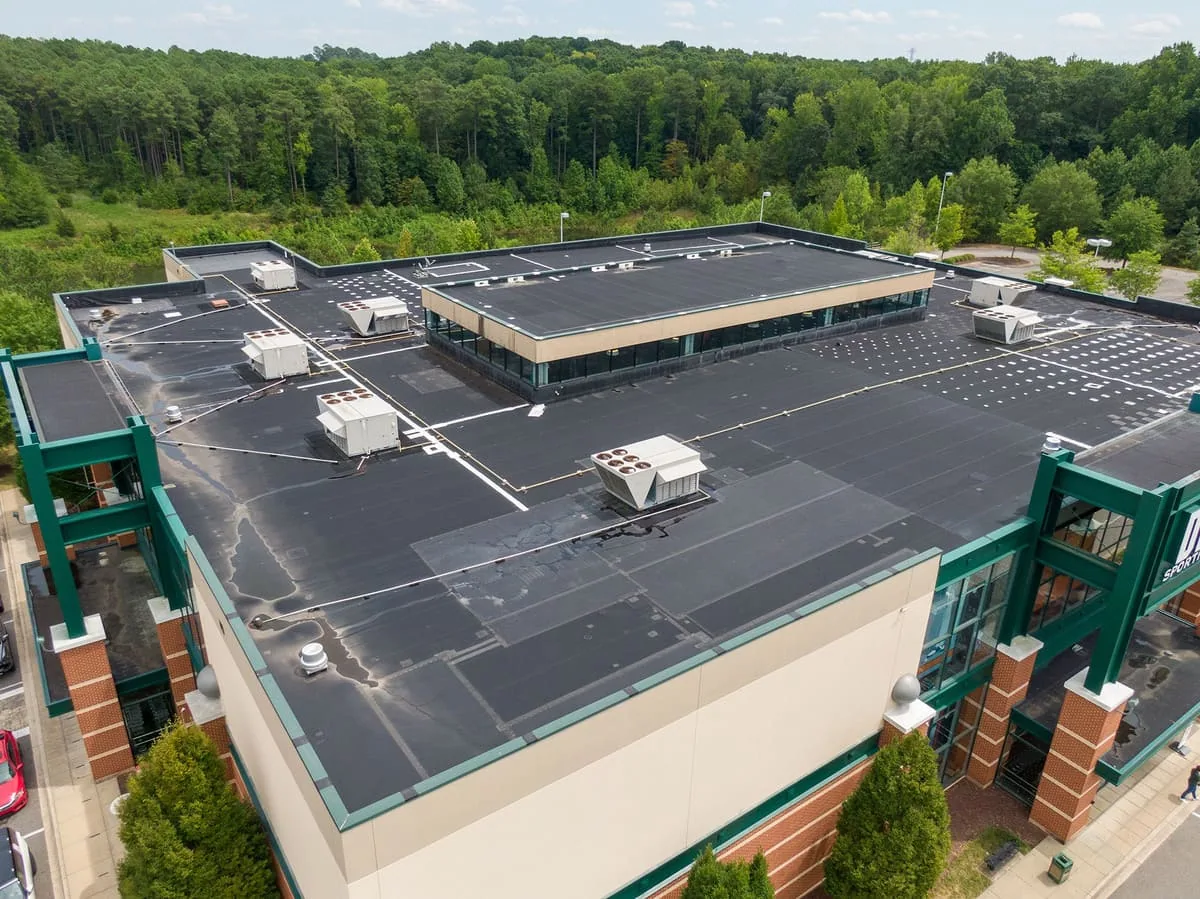
The site contact identifies when the puncture was noticed, whether water is active, and what is stored or operating underneath. The crew photographs the opening with a scale or nearby detail for context, then marks its position within the roof zone. A ceiling stain may be offset from the damage. We compare interior reports with roof slopes, drains, seams, equipment, and deck direction where known.
Debris impact, a dropped fastener, or a cut from maintenance equipment can look similar from a distance. We inspect the membrane edge, exposed reinforcement, surrounding surface, and any mark that could show a tool or contact point. We do not infer cause from a hole alone. If the owner has work tickets or photos from a recent rooftop visit, those can help establish timing and the activity reported.
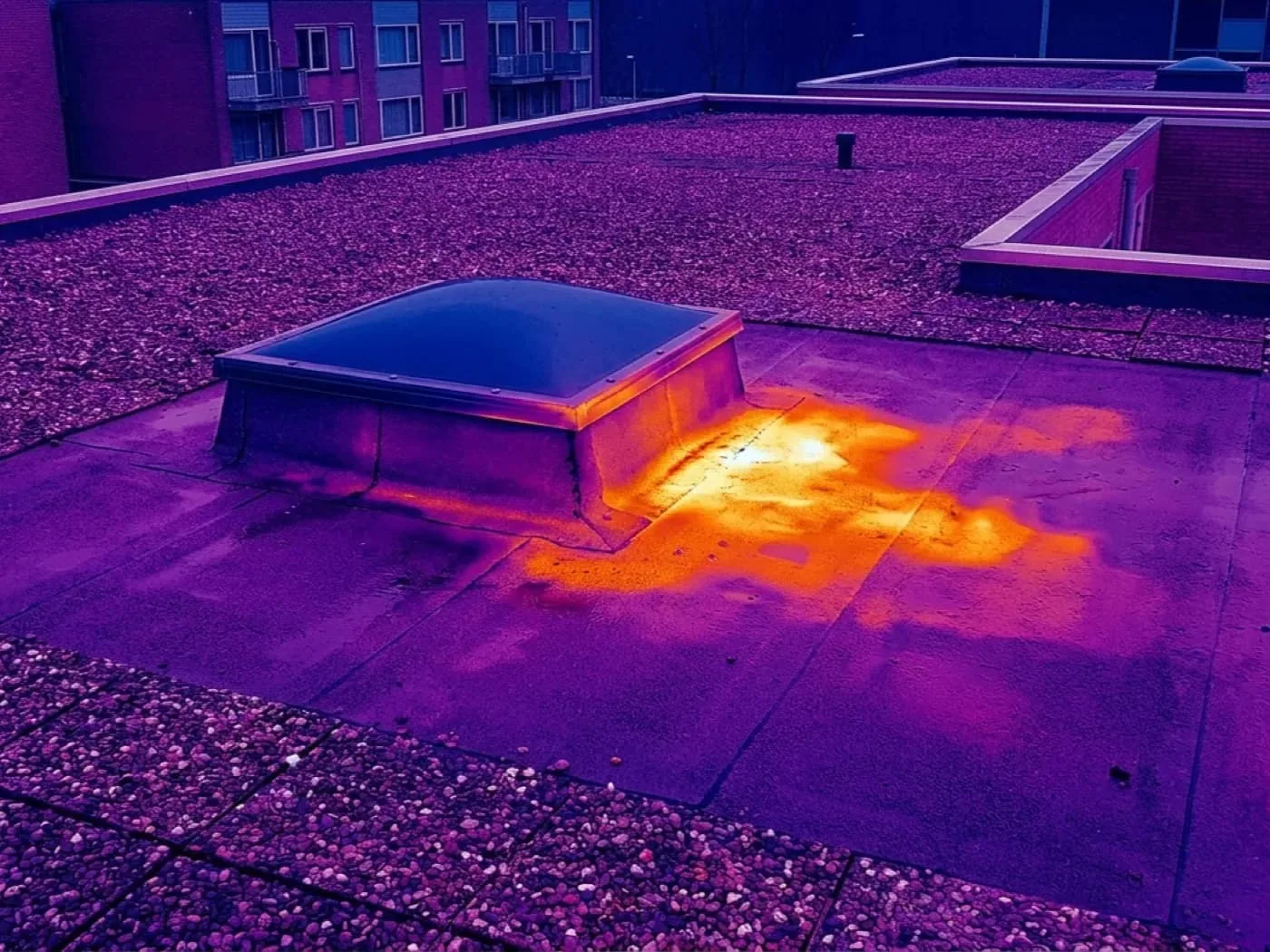
Moisture may extend beyond the visible opening. A scan can help map areas for further review, but it does not prove that every wet reading began at the puncture. The written findings distinguish the surface defect, test result, and any area that remains uninspected. A moisture survey is useful when its result could change the removal limit or repair decision.
System check: use a compatible patch detail
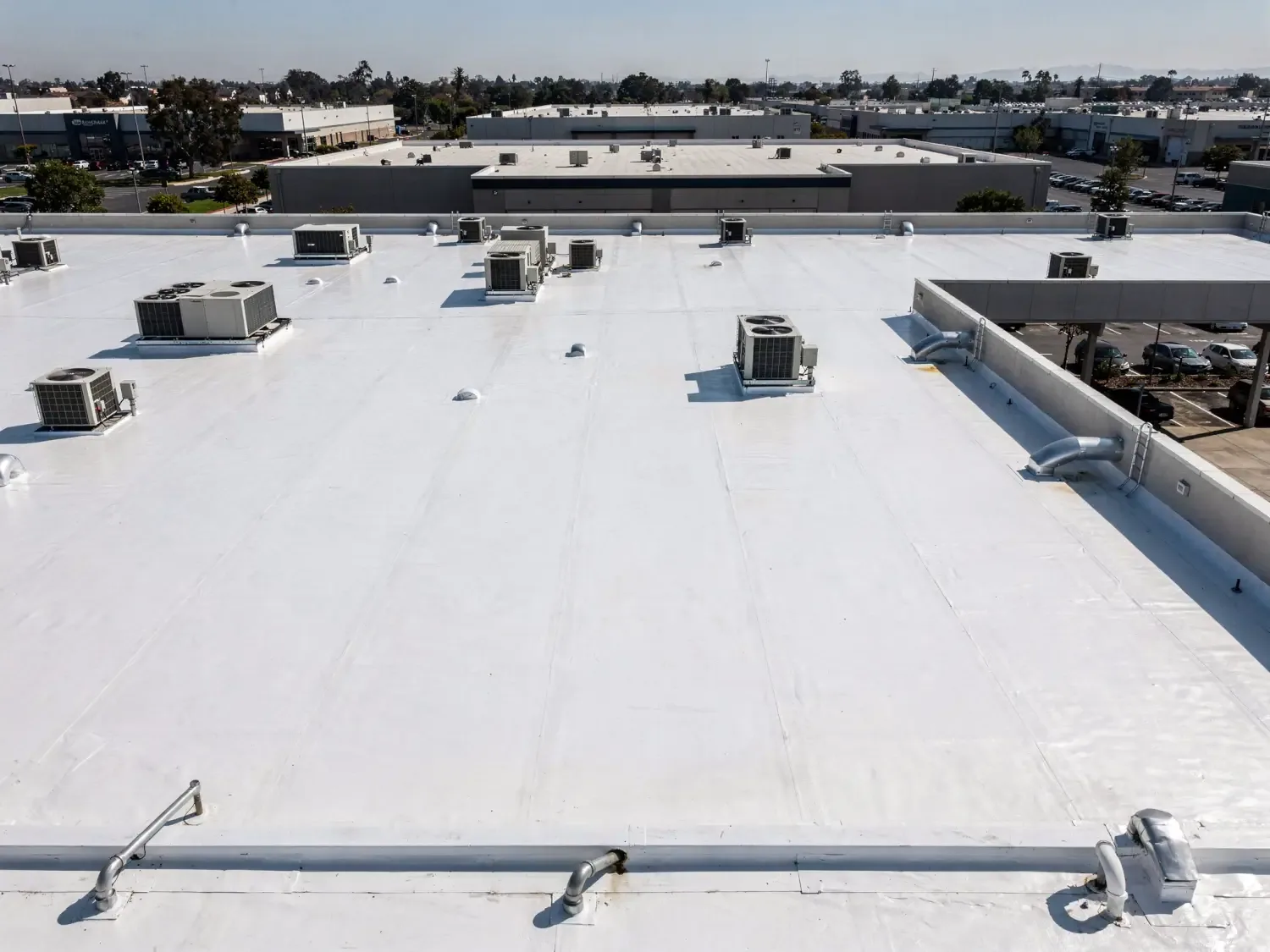
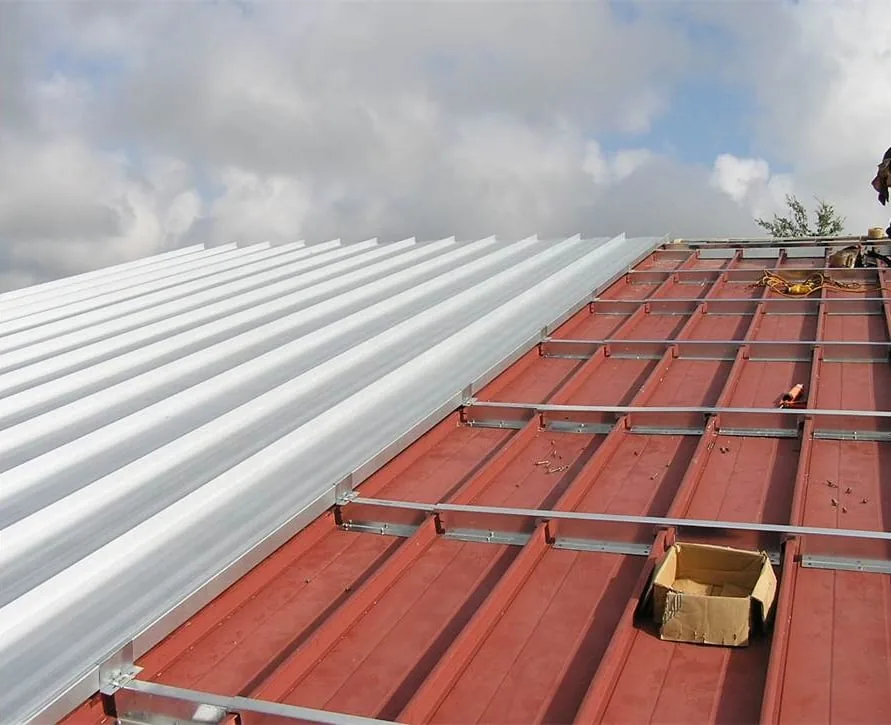
Thermoplastic membranes require clean, prepared surfaces and a welded patch sized to reach sound material. EPDM uses compatible primer and a cover detail. KEE, PVC, and TPO systems may look alike to an untrained observer, so we confirm markings or reliable roof records before choosing a process. Modified bitumen needs a compatible ply repair and surfacing treatment. Metal panels require inspection of the panel and underlayment, not a membrane patch.
The crew checks whether the puncture crosses a seam, flashing, or prior repair. If two details overlap, the scope identifies each one. A patch should have rounded or otherwise appropriate corners, sound adhesion or weld, and a finished edge compatible with the system. We inspect the repair after preparation and record the material and limits. An unrelated open seam or hail impact review stays a separate finding.
A roof with multiple punctures may need a wider walk and condition review. We record the count and locations observed during the visit without claiming to have found every hidden defect. If repeated damage follows a work path, identify the access route and nearby equipment. A maintenance inspection can check high-traffic areas, exposed details, and previous patches on a planned visit.
Before repair: protect active operations
If water is entering an occupied area, the site contact identifies people, equipment, and inventory that need protection. The roofing lead confirms whether safe roof entry is possible. A temporary patch or cover may reduce exposure until the permanent detail can be prepared. The work order states what is covered, how the measure is secured, and what remains unprotected. Interior drying or electrical work remains with the owner’s assigned trades unless written into the roofing scope.
Freezing conditions return through much of an Elgin winter. Ice or meltwater can affect roof entry and patch preparation. We record a weather hold and give the contact a next update. If work cannot proceed, the owner still receives the observed condition and the safe interim step.
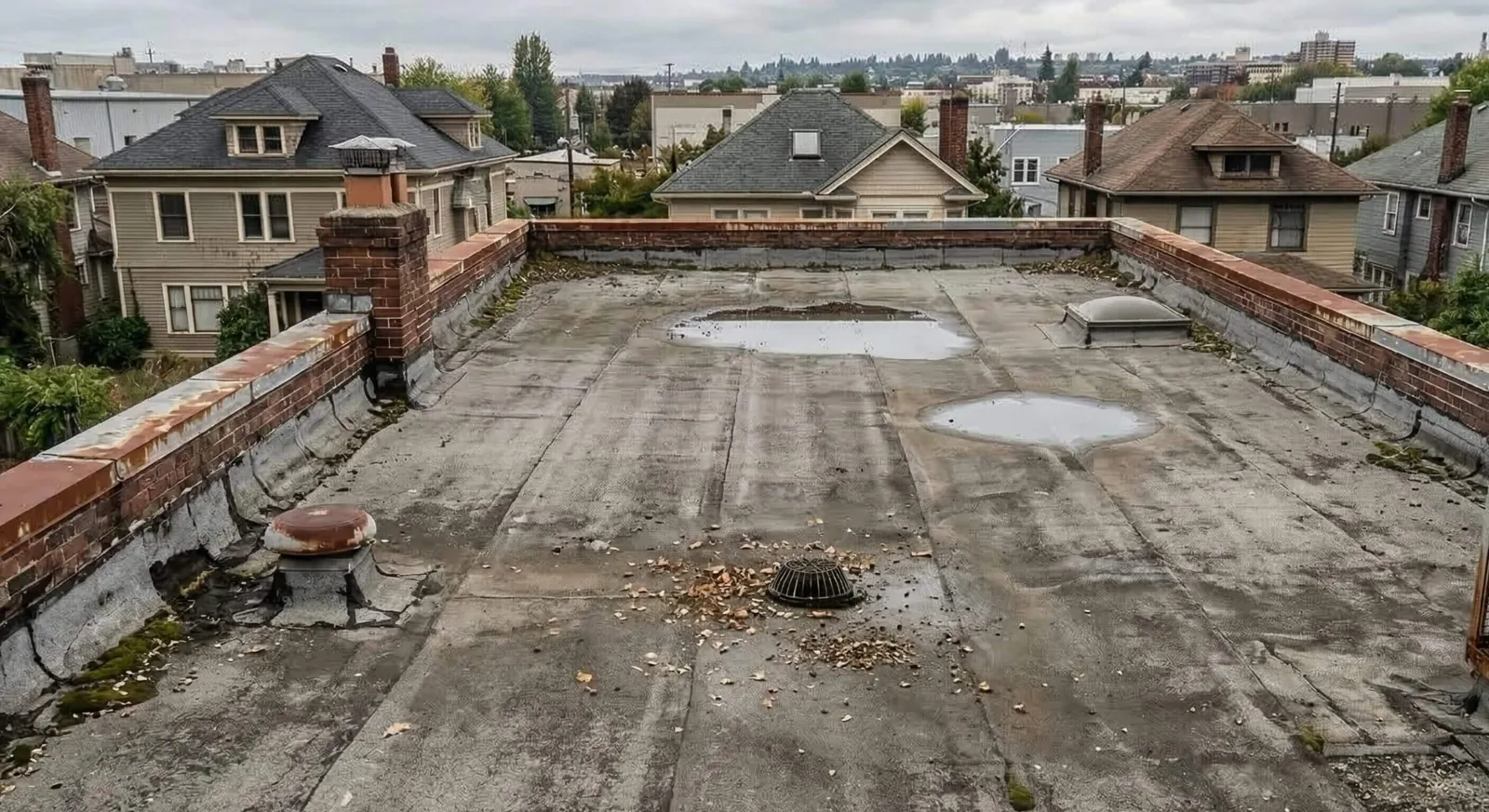
A puncture close to a drain or edge can create a second concern if runoff backs up or crosses the area. We photograph the route and label that observation separately. A drain inspection can be included when the outlet itself needs review. The repair boundary should not silently expand into drain, gutter, deck, or equipment work.
Repair scope: state the quantity and limits
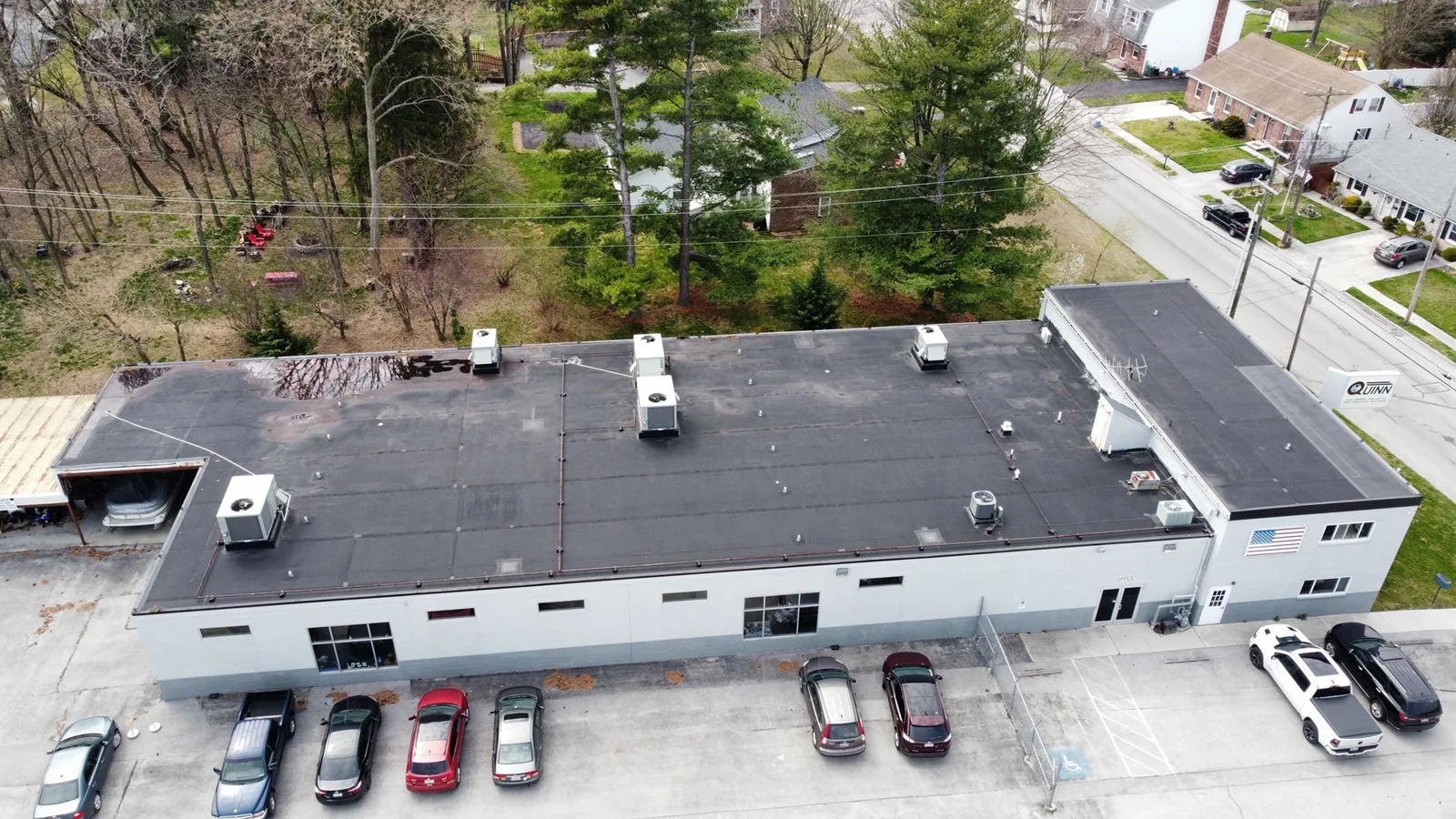
The estimate identifies the roof zone, number of openings, patch dimensions, preparation, material, and adjacent transitions. It also states how access equipment, fall protection, and disposal affect the work. If an opening requires removal of wet insulation, the proposed area and replacement material are described separately. Concealed deck damage, if exposed, is photographed and brought to the owner before the crew proceeds past the approved limit.
Repeated punctures can justify a broader review when the damage pattern reaches multiple sections or when the substrate condition is uncertain. Coating is not a substitute for repairing an open hole. Recover or replacement may be considered only after roof layers, attachment, moisture, drainage, and deck are reviewed. We show which option addresses a confirmed condition and which requires testing or design input.
For a single verified opening, a local repair may be the lowest-disruption approach. The scope still identifies how the crew will reach sound material and protect the building during preparation. A commercial repair proposal can separate the puncture from additional defects discovered on the same visit. Each line item has its own boundary and approval point.
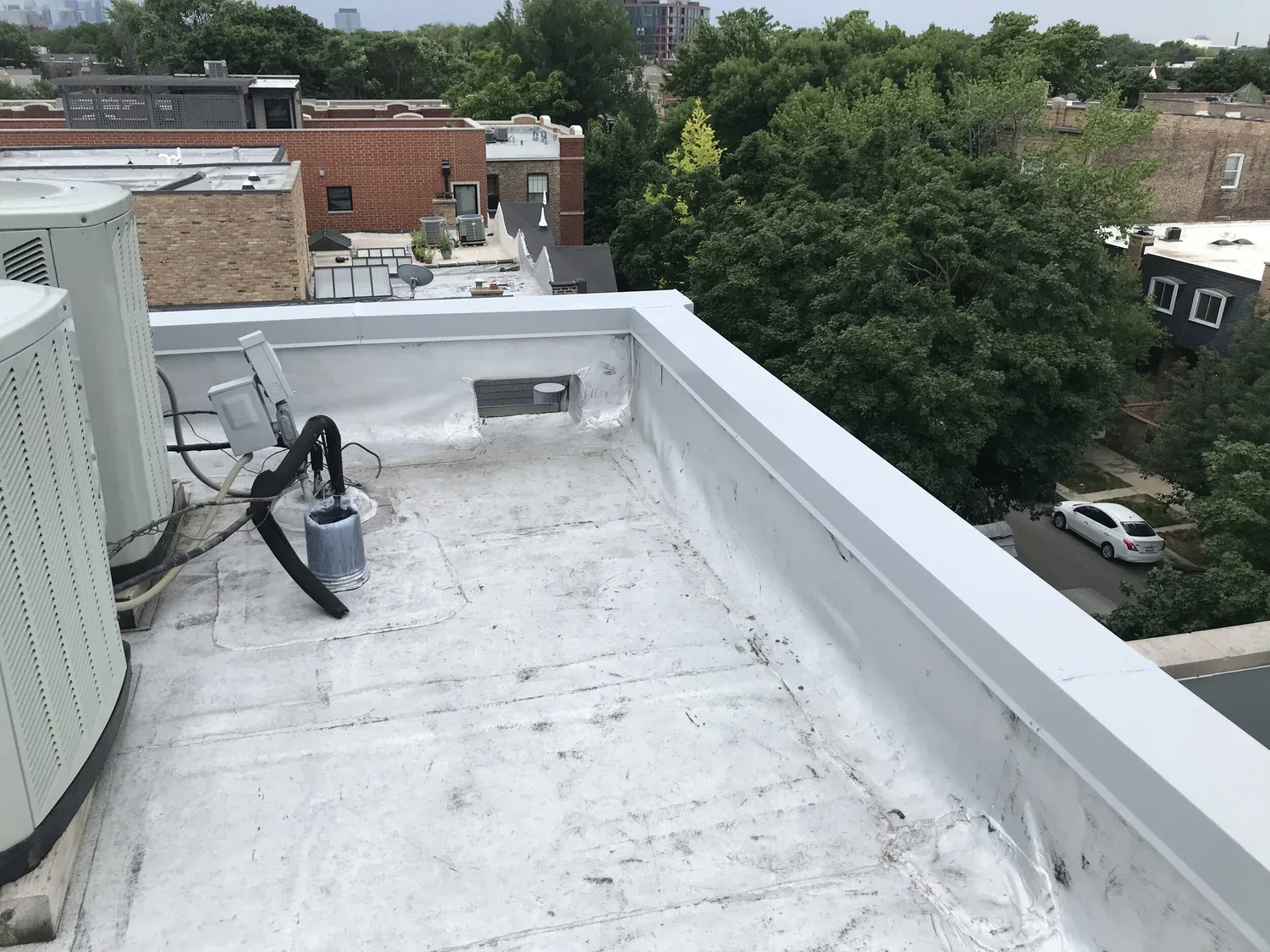
Access: set a safe dispatch window
Roof entry may require a ladder, hatch, escort, badge, or fall-protection setup. The site contact confirms which route is approved and whether rooftop equipment can remain in operation. At a plant or commercial equipment property, the supervisor identifies active work areas and any overhead hazard. We set the dispatch window with those instructions in hand rather than assume the usual entrance is available.
Burnidge Big Timber Industrial Park is one of Elgin’s named employment areas. The owner confirms the actual truck entrance, roof entry, and staging location. A park designation helps orient dispatch, while the building contact supplies current access instructions.
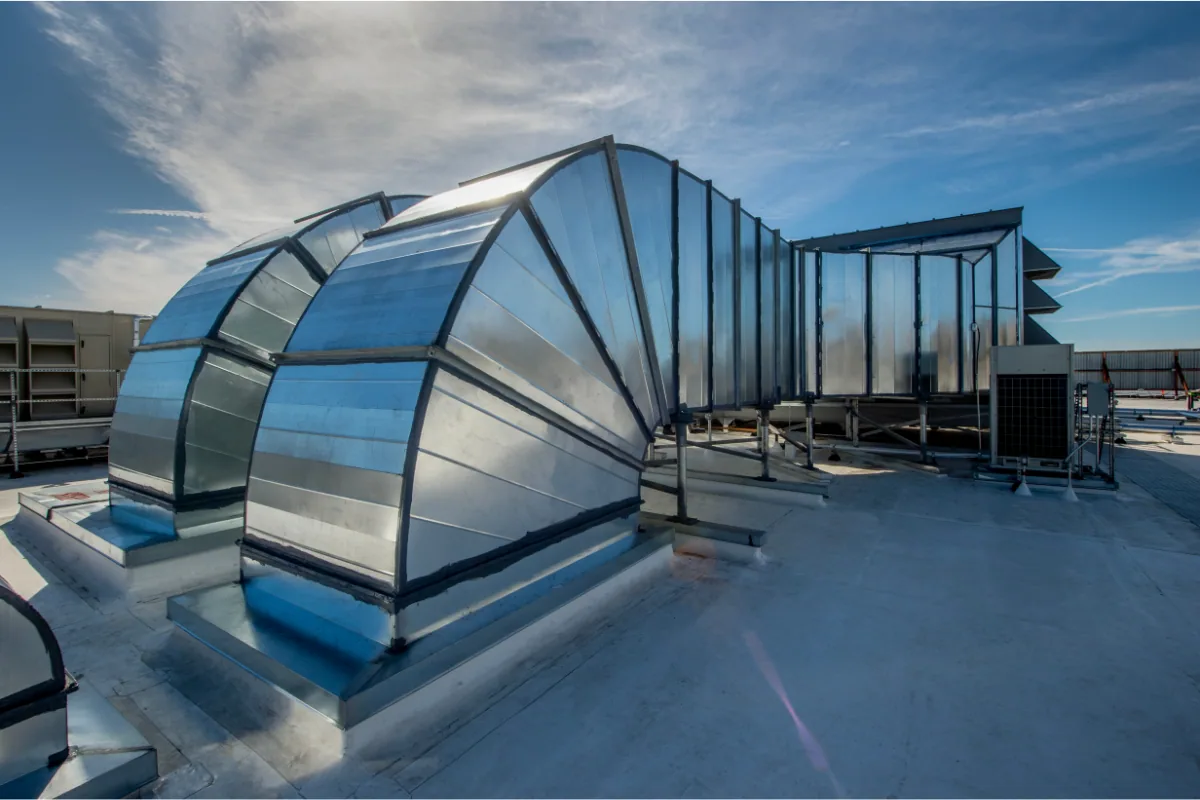
Closeout: retain the puncture record
Closeout photos show the opening before work, prepared area, completed patch, and roof-zone location. The report notes system type where verified, materials used, dimensions repaired, and any moisture or deck concern left for review. If another puncture is found during follow-up, it receives its own photo and scope rather than being folded into an old repair description.
A condition report can keep repair photos and unresolved observations with the building’s roof records. Send the location, reported cause if known, date discovered, interior impact, current water status, access contact, and any maintenance activity near the opening. We will confirm safe entry, testing needs, and the repair authorization point.
Questions About Commercial Roof Membrane Puncture Repair
Can a small puncture cause water damage beyond its size?
Water can travel through roof layers before appearing indoors. We inspect around the opening and compare it with the room report. Moisture testing may be needed to set a responsible removal boundary.
How do you choose a patch for a commercial membrane?
We first identify the installed system and condition of the surrounding material. Preparation, compatible membrane, weld or adhesive method, and patch size then follow the assembly.
Could a puncture be caused by maintenance foot traffic?
It can be one possibility, but the opening alone does not prove its cause. We document visible marks, nearby equipment, prior work information, and the condition of adjacent details.
What if the insulation is wet below the puncture?
The crew records the test or exposed area and stops at the authorized boundary. The owner reviews the added quantity, materials, and schedule effect before removal continues.
Can the crew patch a roof during a freeze or snowfall?
Safe access and a clean, dry repair surface control the method. If the surface is icy, wet, or snow-covered, temporary protection may be considered while permanent work waits.