Commercial Standing Seam Metal Roofing in Elgin, IL
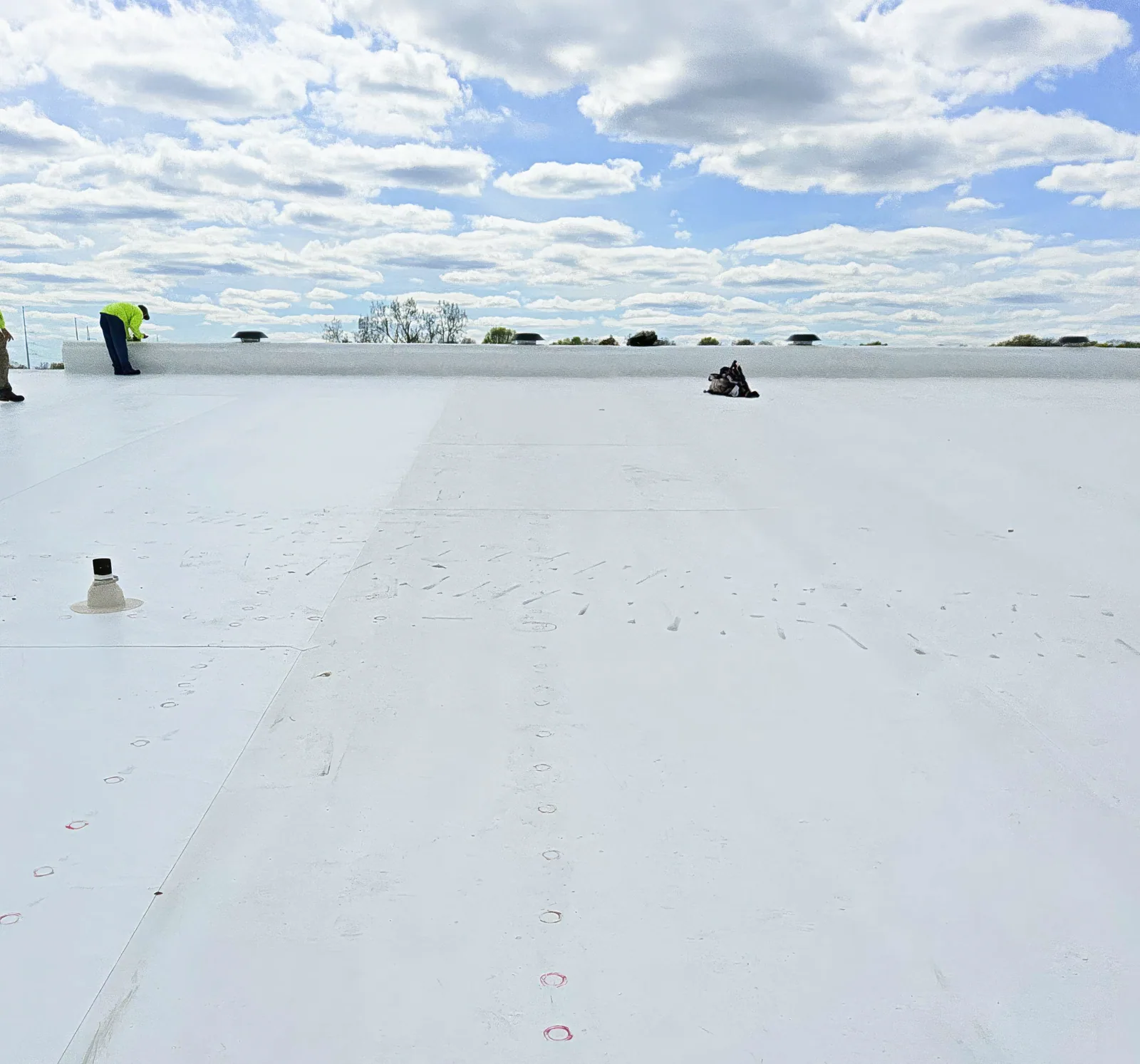
Inspect a standing seam roof
Share panel plans, reported leak area, maintenance history, access contact, and staging limits. We will verify the profile and define repair options.
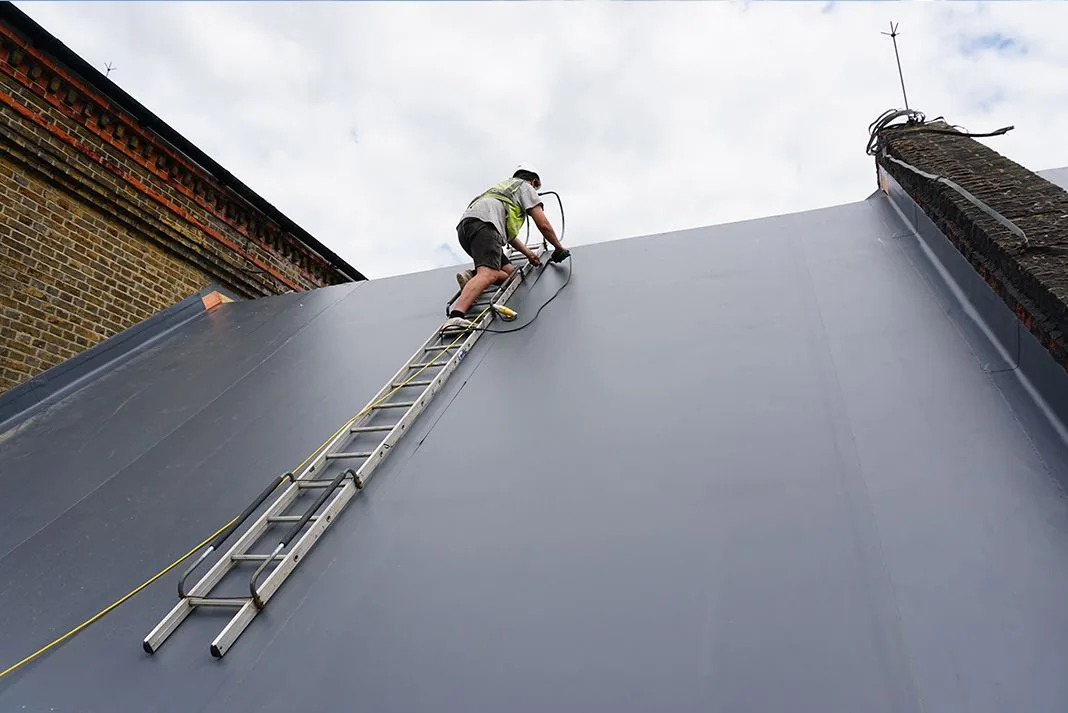
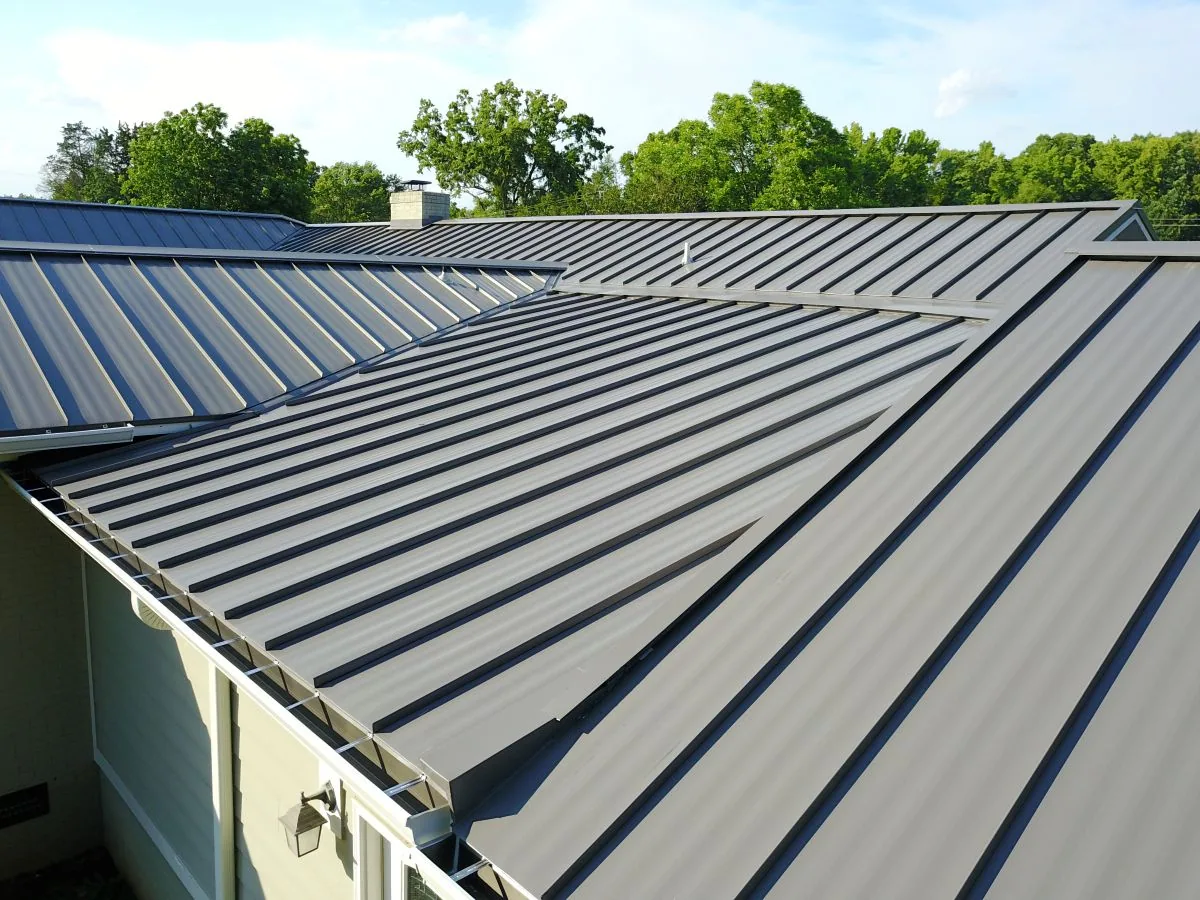
Commercial Standing Seam Metal Roofing
Standing seam panels move as temperatures change. We inspect seams, clips where visible, end laps, flashings, penetrations, and roof-to-wall transitions before selecting a repair. A leak may follow a panel seam or start at a curb farther upslope. Elgin’s cold winters and summer heat make movement and detail condition important review points. The field inspection confirms panel profile and attachment as far as accessible records and conditions allow.
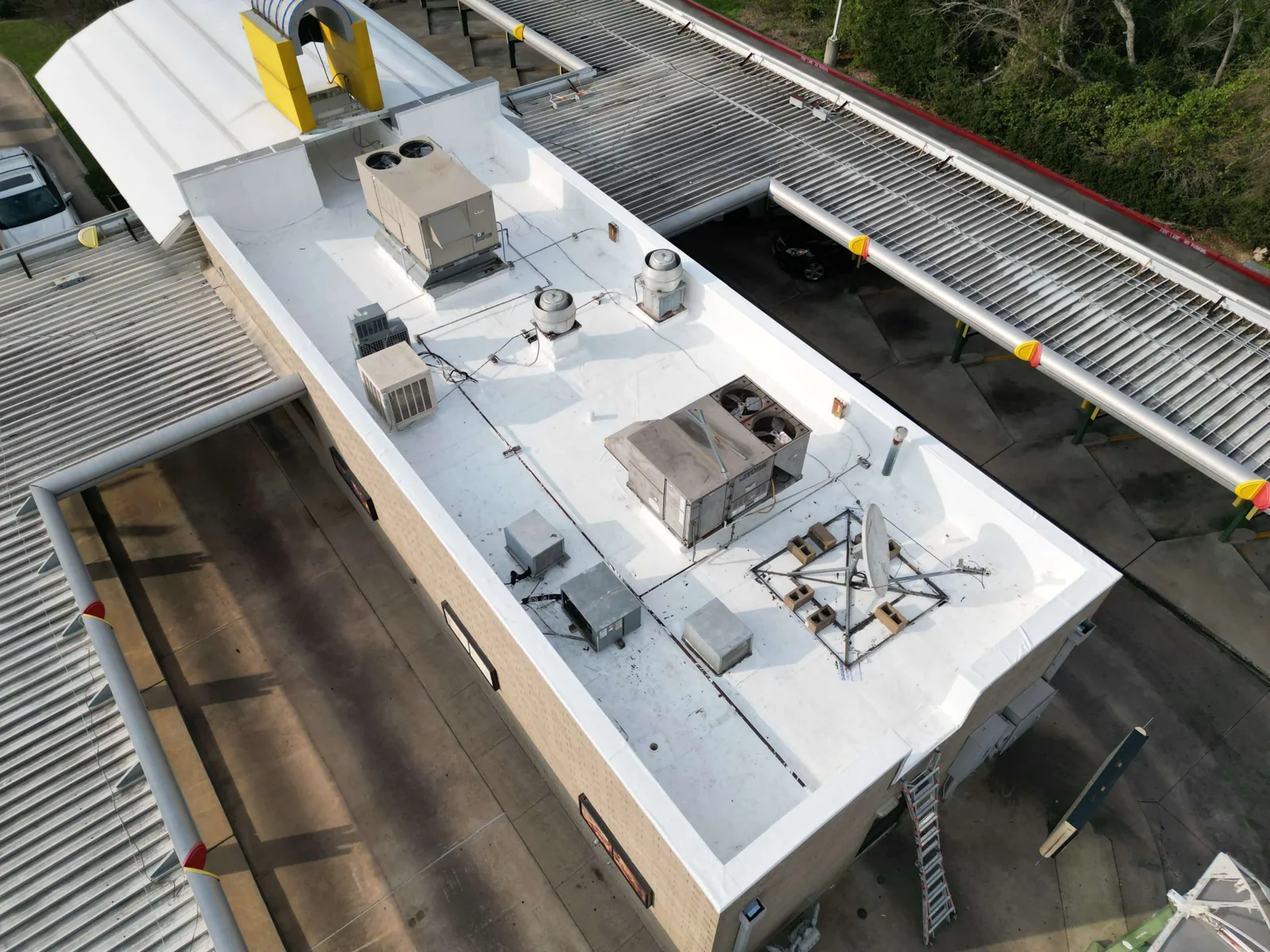
Panel review: identify profile and movement
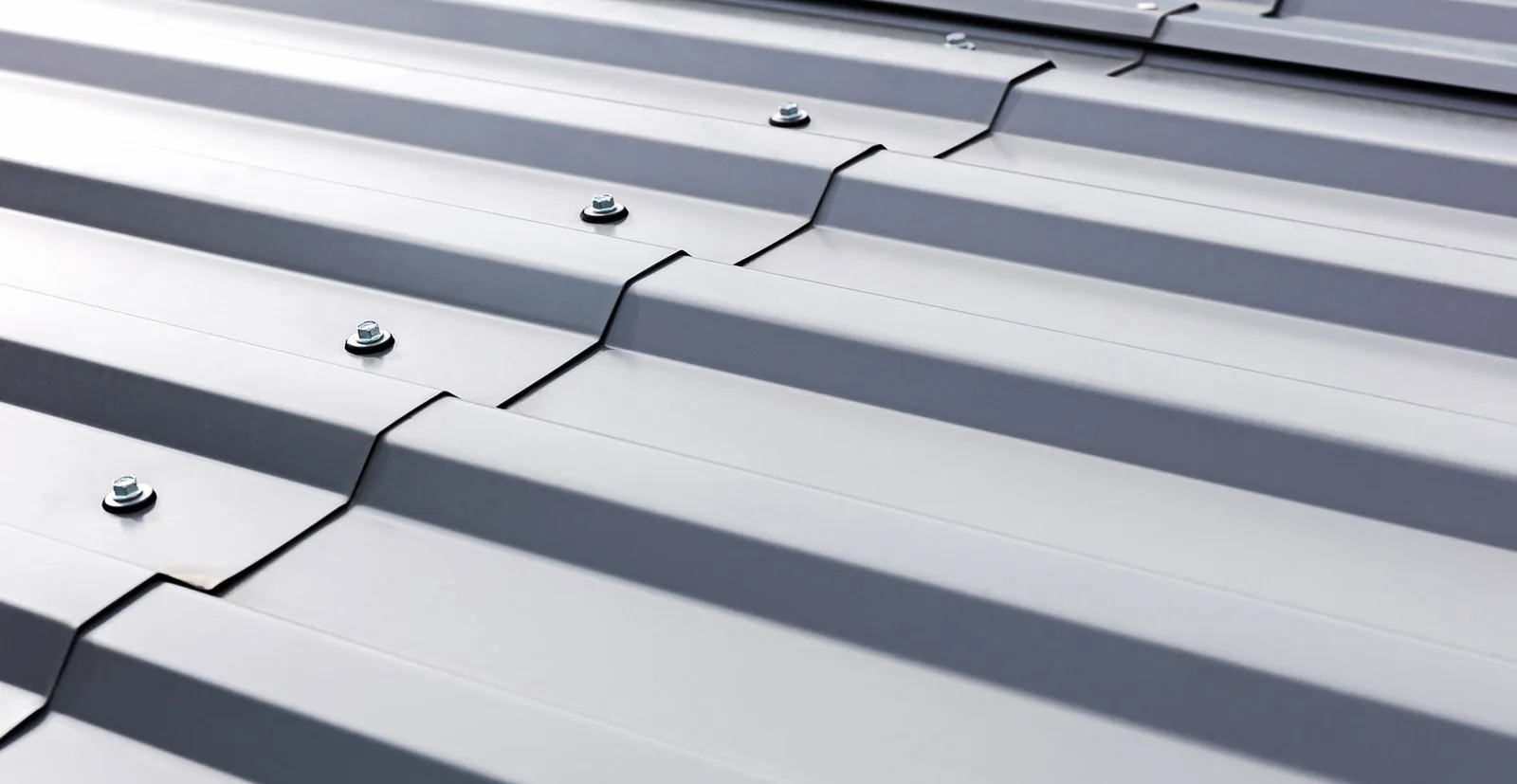
We check rib height and spacing, panel finish, seam engagement, exposed fasteners, closures, and edge conditions. Scratches or finish loss are documented by location. We look for panel oil-canning, displacement, loose clips where accessible, open seams, corrosion, and water marks. A surface wave does not by itself prove a structural problem. The report separates appearance from a verified attachment or flashing concern.
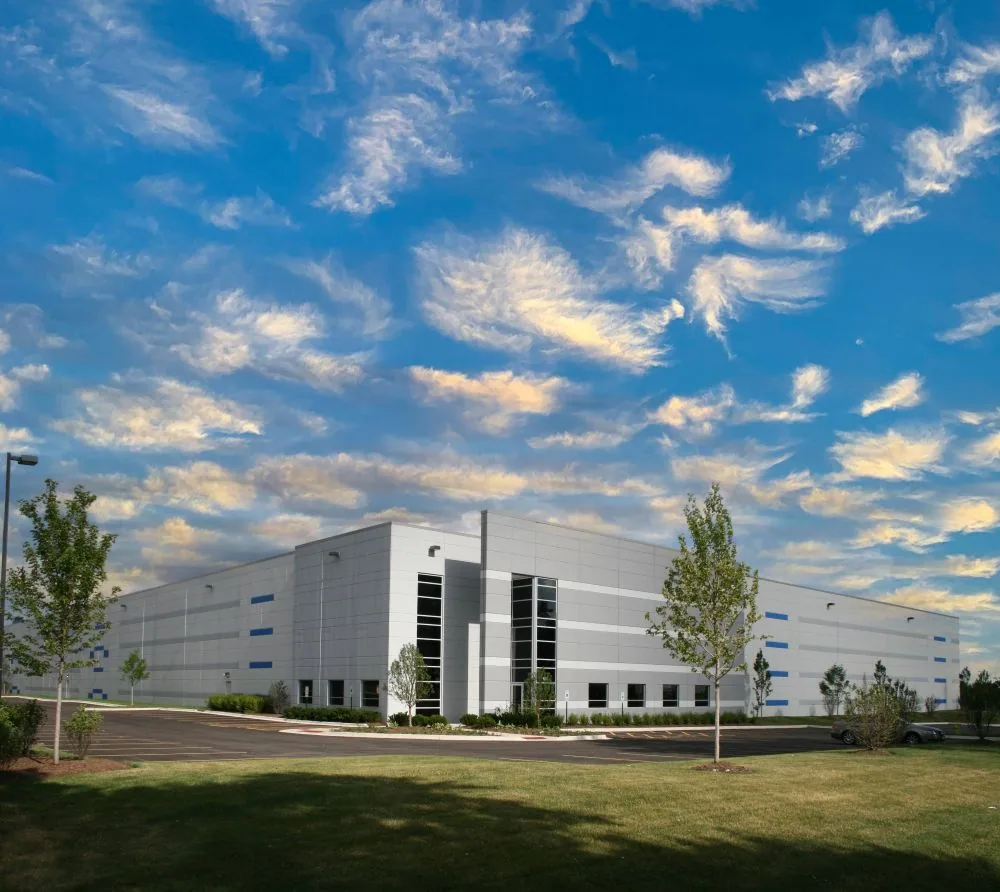
Plans can identify panel gauge, clip system, substrate, and movement allowance. We compare those documents with the roof in place. If the original system is unknown, the owner may need to approve a limited opening or manufacturer review before repair details are set. At Tollgate Industrial Center and North Elgin Industrial Park, roof layout and access vary by building; we confirm each property’s safe-entry plan.
Where the metal covers an older membrane or deck, a repair needs to account for that assembly as well. We do not assume the panels are the only roof layer. A roof inspection can record accessible conditions and identify where further verification is warranted.
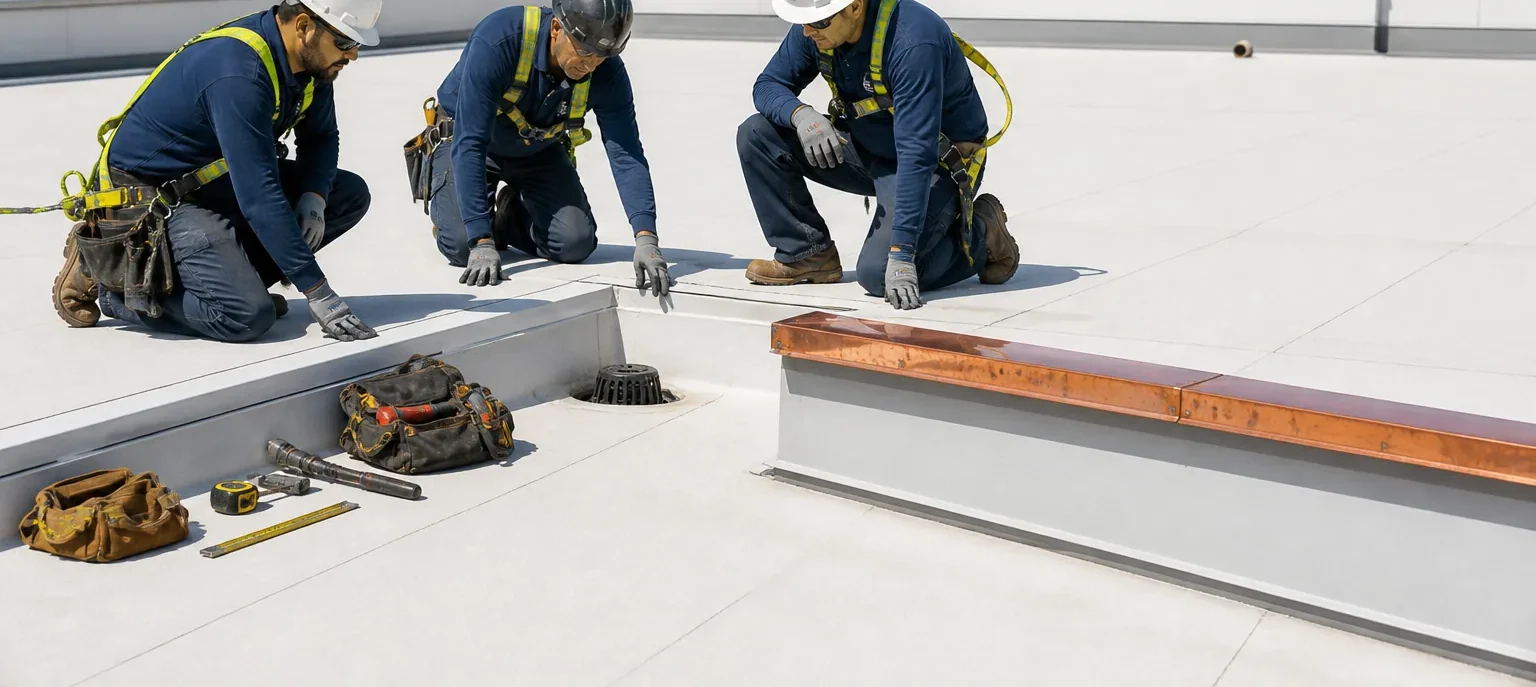
Seams and clips: allow movement without opening the roof
Standing seam systems use interlocking panel edges and concealed clips. Thermal movement depends on panel length, clip type, attachment, and design. We inspect the seam for disengagement, fastener exposure, deformation, or sealant that may restrict movement. Repairs must restore weather resistance without locking a panel in a way that creates new stress.
Clips often sit below the panel and cannot be fully evaluated from the surface. If a clip failure is suspected, an approved opening may be needed. We document the location, protect the roof during investigation, and restore each area after the owner approves the findings. A small visible seam opening does not establish the number of affected clips elsewhere.
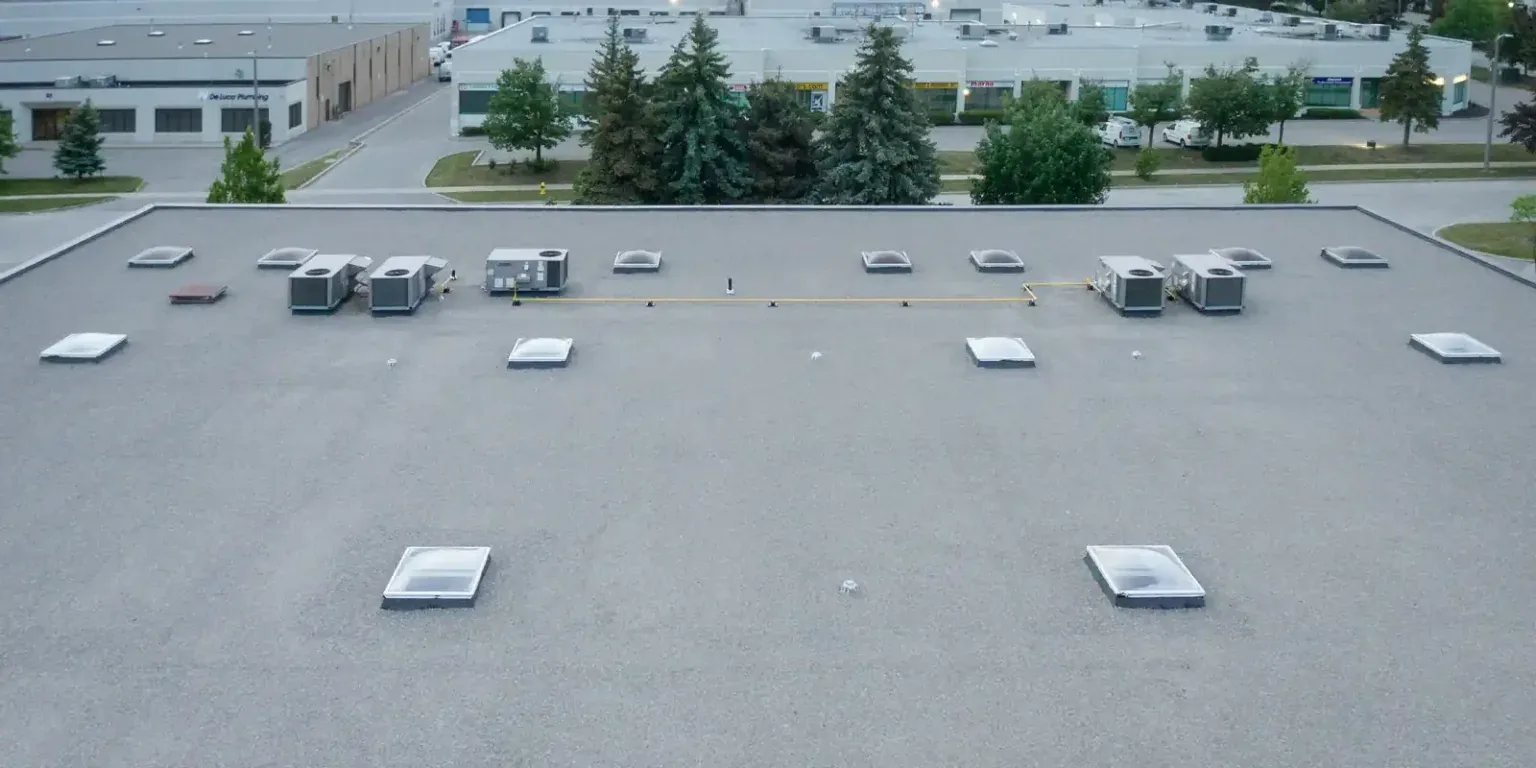
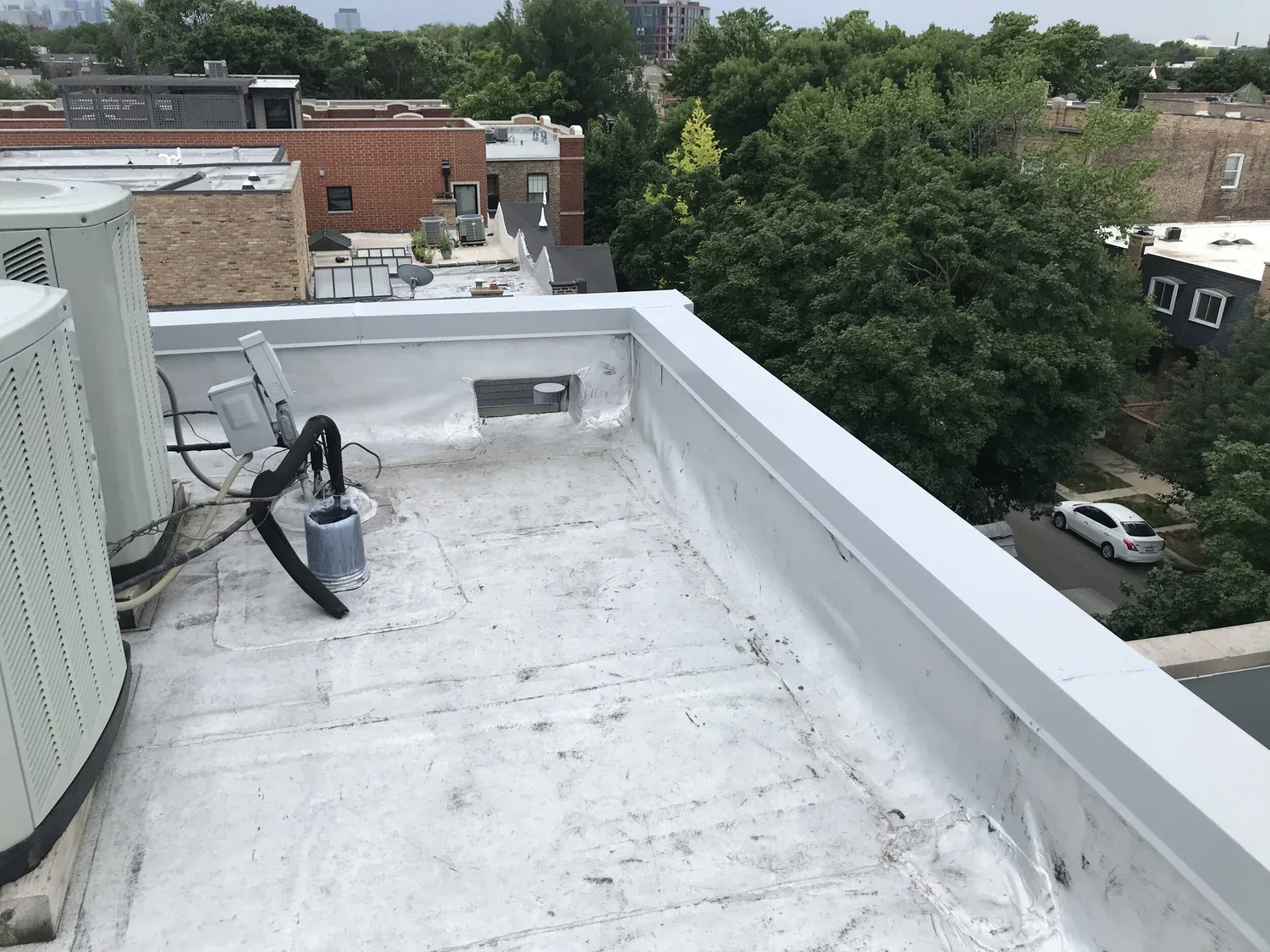
Openings around pipes, skylights, and equipment need compatible flashing and room for movement. A penetration review can check nearby curbs and boots. If the transition meets coping or gutter work, an edge-metal inspection can define the metal interface.
Water management: check eaves, valleys and outlets
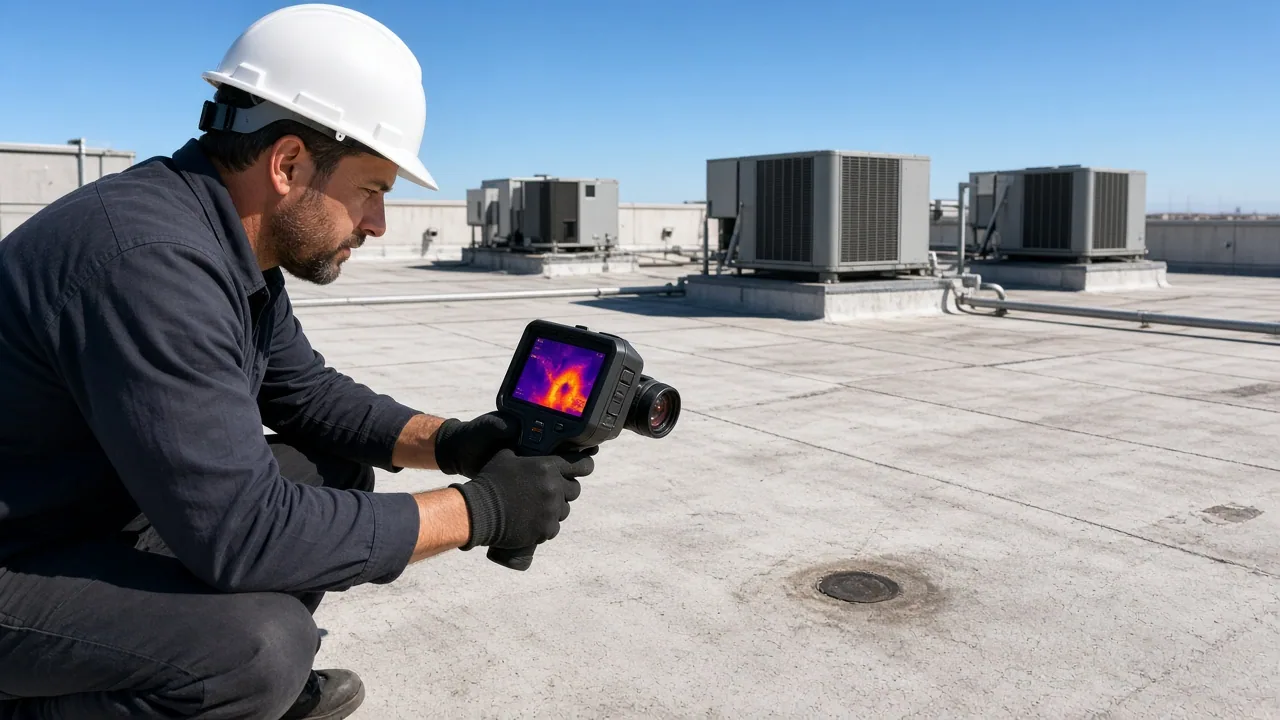
Water can enter at a ridge, valley, eave, rake, penetration, or panel end. We inspect the path from the reported area and check closures, underlayment transitions, gutters, and discharge. Elgin averages roughly 37.76 inches of annual precipitation and 29 inches of snow. That local pattern makes clear eaves and drainage relevant, but it does not identify a leak source on an individual roof.
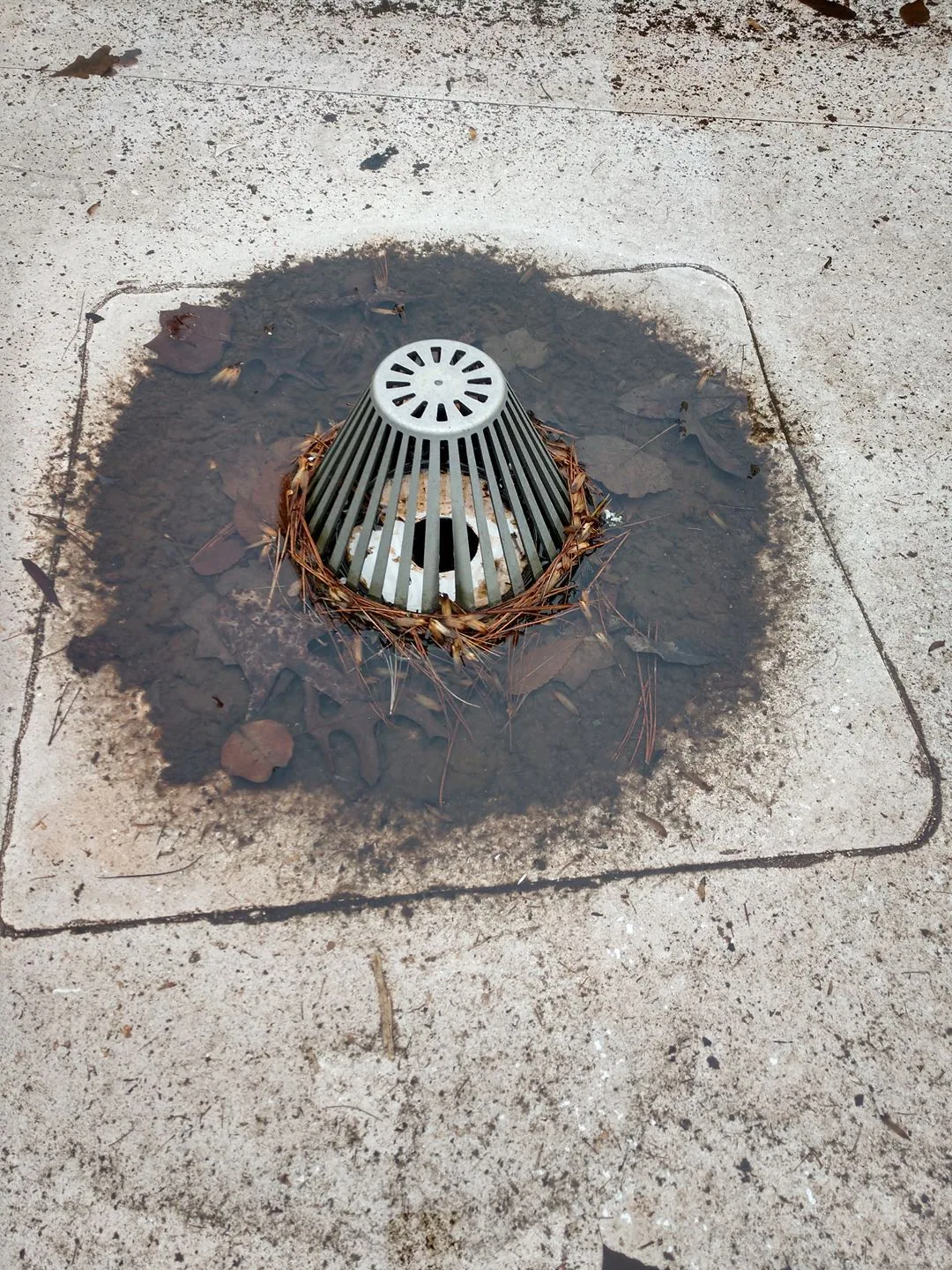
Ice, snow, and debris may obstruct a gutter or hide a fastener. The crew only enters when surface conditions allow safe footing. We document visible blockage and explain when a ground-level review must precede roof access. A drainage check can be added if water is held at a low roof or scupper tie-in.
Metal panels shed water quickly, so we inspect downspout discharge and lower-roof flow. The recommendation separates panel repair from gutter work.
Repair: match panel, finish and attachment
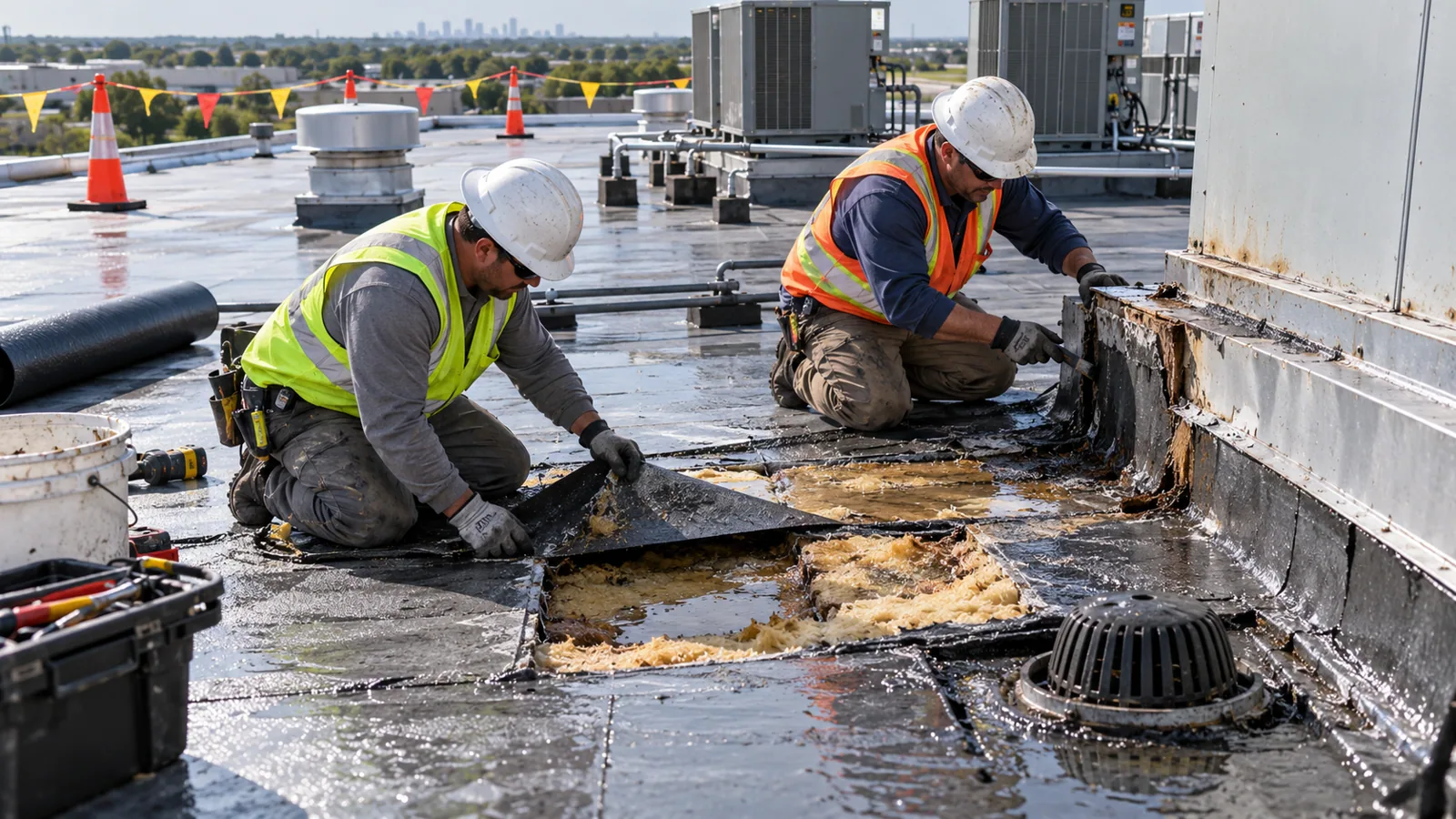
A repair may reset a seam, replace a panel, renew a flashing, install a compatible closure, or address a fastener or clip. The proposal identifies panel profile, finish, length, and connection method when those details can be verified. Replacement metal should match the assembly and account for thermal movement. Generic sealant across a standing seam can trap water or restrict the intended movement.
Color match and coating age may limit the appearance of a new panel. We state that limitation before ordering. If concealed underlayment, clips, or substrate are damaged, the estimate includes an approval point before expanding the work. The owner receives a photo and description of the exposed condition.
For older exposed-fastener systems, a metal retrofit assessment may be more relevant than a panel-by-panel standing seam repair. The systems differ in attachment and water-shedding details. We confirm which system is present before specifying work.
Repair or replace: compare serviceability
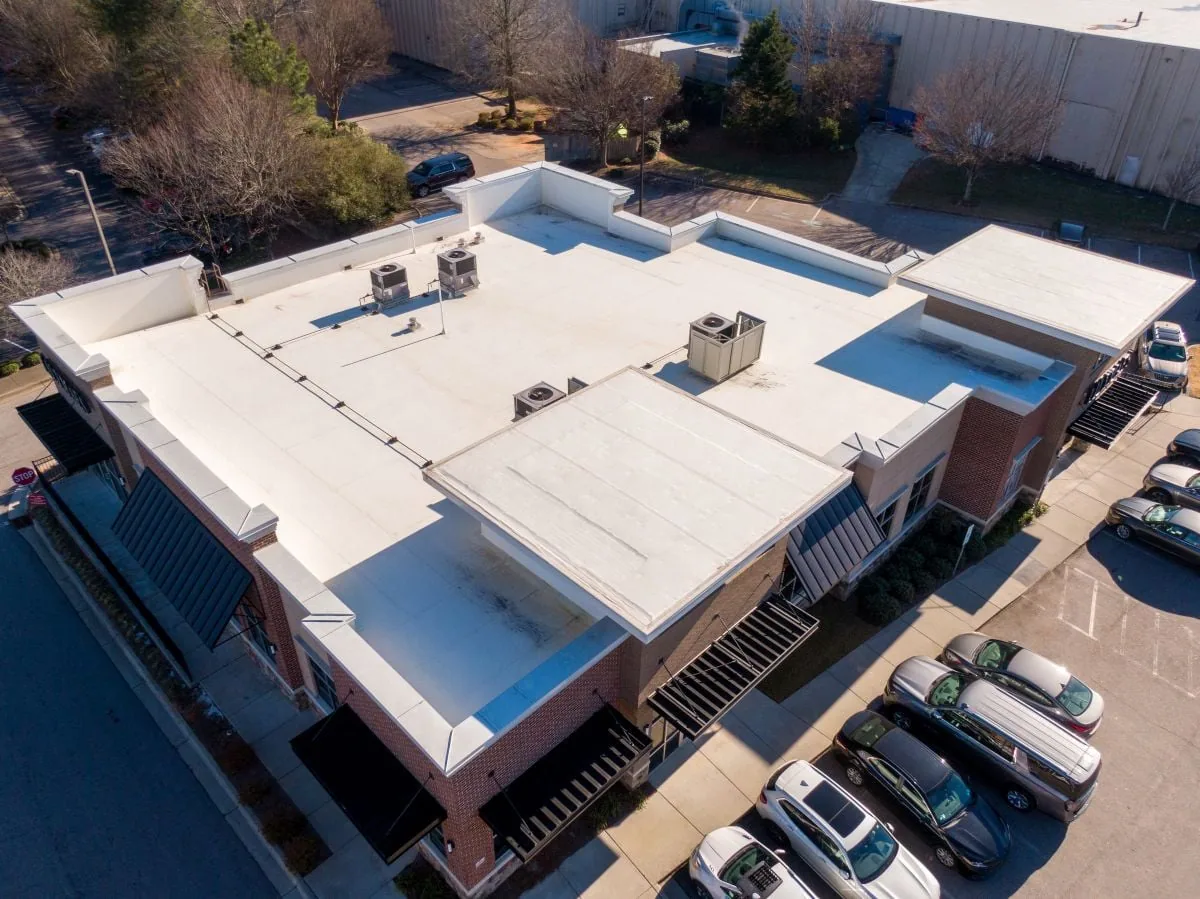
A localized defect can be repaired when panels, clips, underlayment, and substrate remain serviceable. Repeated seam openings, extensive corrosion, or widespread attachment concerns may justify broader work. We compare repair, retrofit, and replacement using documented conditions, remaining access, owner plans, and the cost of repeated mobilization.
Elgin’s annual freeze exposure can make expansion and contraction cycles an inspection consideration. We do not infer failure from age alone. The record should show exact panel locations, transitions, and whether movement appears restricted. A replacement plan can show tear-off, new underlayment, clip layout, insulation, and edge details for comparison.
If the metal roof includes large attached equipment, the scope identifies how each curb or support will be protected. Structural changes and mechanical lifting require the appropriate trades. An owner can review EPDM roofing or a built-up assembly only where building design and project requirements support an alternate.
Installation: protect finish and occupied operations
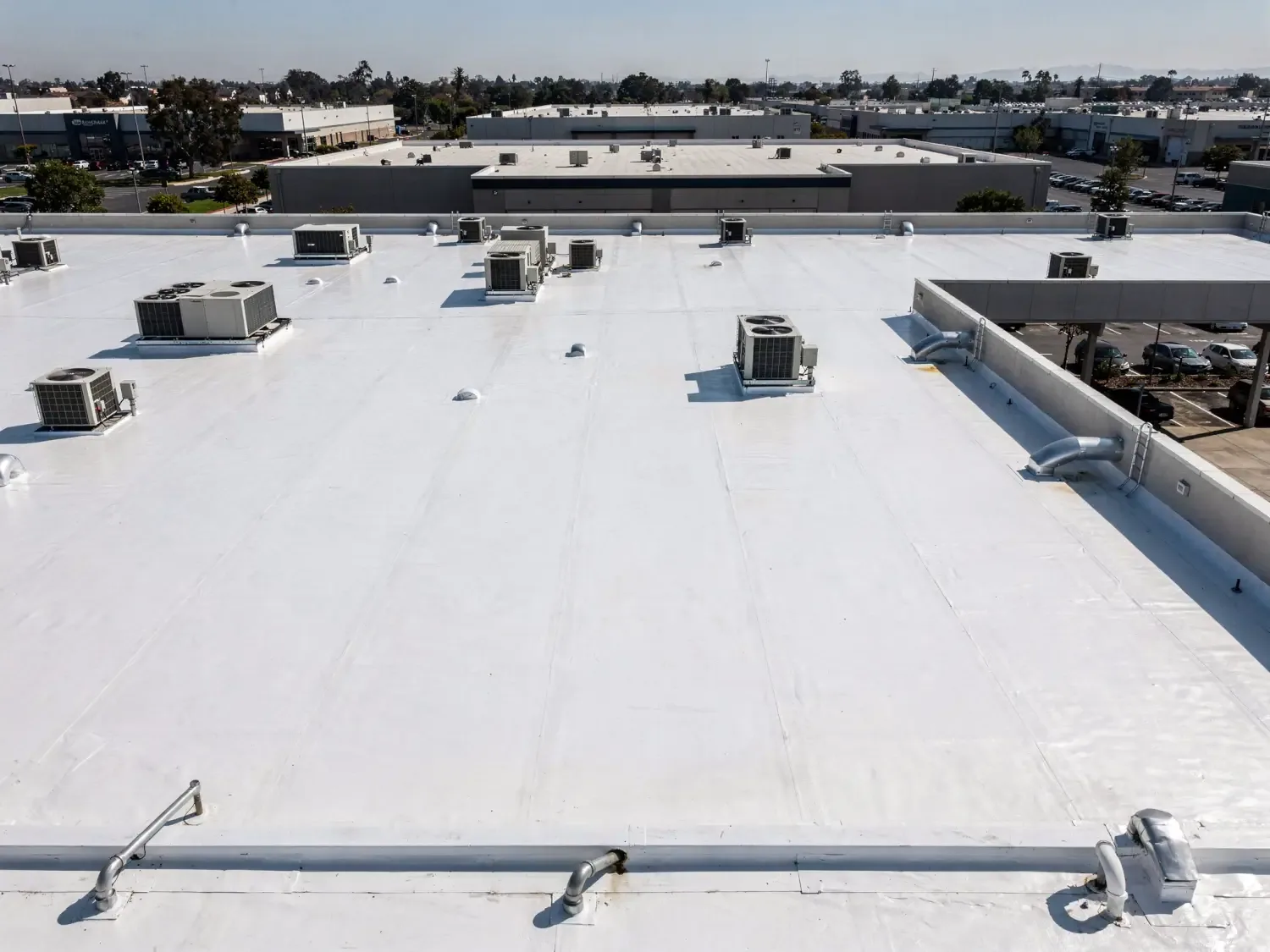
Installation planning covers panel staging, crane or lift access, sharp-edge handling, weather protection, and work near active entrances or docks. The site contact identifies delivery windows and restricted areas. We confirm fall protection and tie-off locations before crew access. No panel bundle is placed where the structure or roof has not been approved for the load.
Wind can make long panels difficult to control, while ice or rain can make a metal surface unsafe. The supervisor checks actual conditions and postpones work when handling or attachment cannot proceed safely. A weather hold includes the secured material, affected zone, and next update.
Near Carpentersville Randall Road Corridor, delivery access and traffic are confirmed with the property representative. Other sites have their own staging constraints. We use a written site plan rather than assume the route from the corridor name.
Maintenance and closeout: preserve the metal-roof record
Maintenance should check exposed fasteners where present, seam engagement, flashings, coatings, gutters, debris, and any work by another trade. Walk paths help limit finish damage. Keep photos tied to panel rows or roof zones so a later report can identify change. New penetrations require an approved flashing detail and a record of who completed it.
A roof asset record can track panel areas, repairs, warranty dates, and inspection history. If a property has more than one roof type, record each separately. An industrial property may have multiple additions; verify panel system at each section before ordering replacement metal.
Manufacturer maintenance requirements and coating care should remain in the closeout file. A visual check does not prove clip engagement under a panel, so report limits should be clear.
We provide repair locations, panel or accessory information when known, photos, and open follow-up items. The owner receives any finish limitation and areas not included in the work. For replacement, the closeout records the approved assembly, installation documents, and warranty information when issued.
Send roof plans, panel records, leak locations, maintenance history, access rules, and delivery constraints before scheduling. We will confirm the field profile and whether an opening or manufacturer input is needed. The repair plan follows the metal system’s movement and drainage details, not a generic approach for every panel roof.
Questions About Commercial Standing Seam Metal Roofing
Can you seal a standing seam instead of repairing it?
Sealant may be appropriate at a specified transition, but it is not a universal seam repair. We identify the panel system and restore details without restricting designed movement.
How do you inspect clips under metal panels?
Visible evidence can suggest movement or attachment concerns, but concealed clips may require an approved opening. We state the test location and limits before proceeding.
Does a wavy panel mean the roof is failing?
Not by itself. We inspect seam engagement, attachment, finish, and water entry. Appearance and a verified defect are recorded separately.
Can one damaged panel be replaced?
Often, if profile, finish, attachment, and adjacent seams allow a compatible replacement. The estimate identifies material match limits and any concealed condition that could change the scope.
What should I provide before a metal-roof inspection?
Share roof plans, panel or clip information, repair history, leak reports, access rules, and delivery constraints. These records help prepare the right inspection and replacement material.