Commercial Roofing in Carpentersville Randall Road Corridor, Carpentersville, IL
Set a Randall Road corridor roof visit
Share the building, work-hour limits, access contact, and reported roof zone. We will confirm dispatch and the next approval step.
Carpentersville Randall Road Corridor, Carpentersville
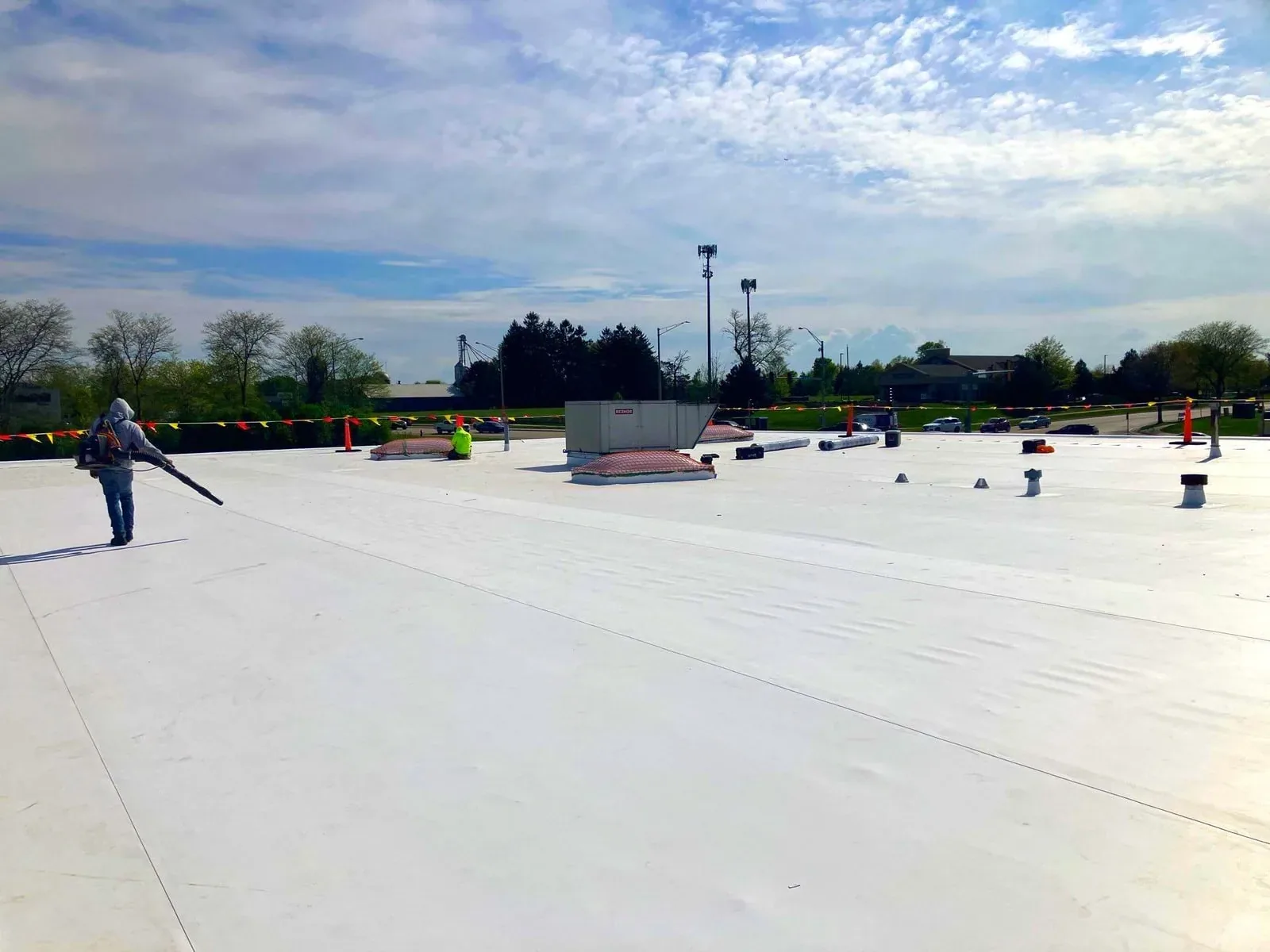
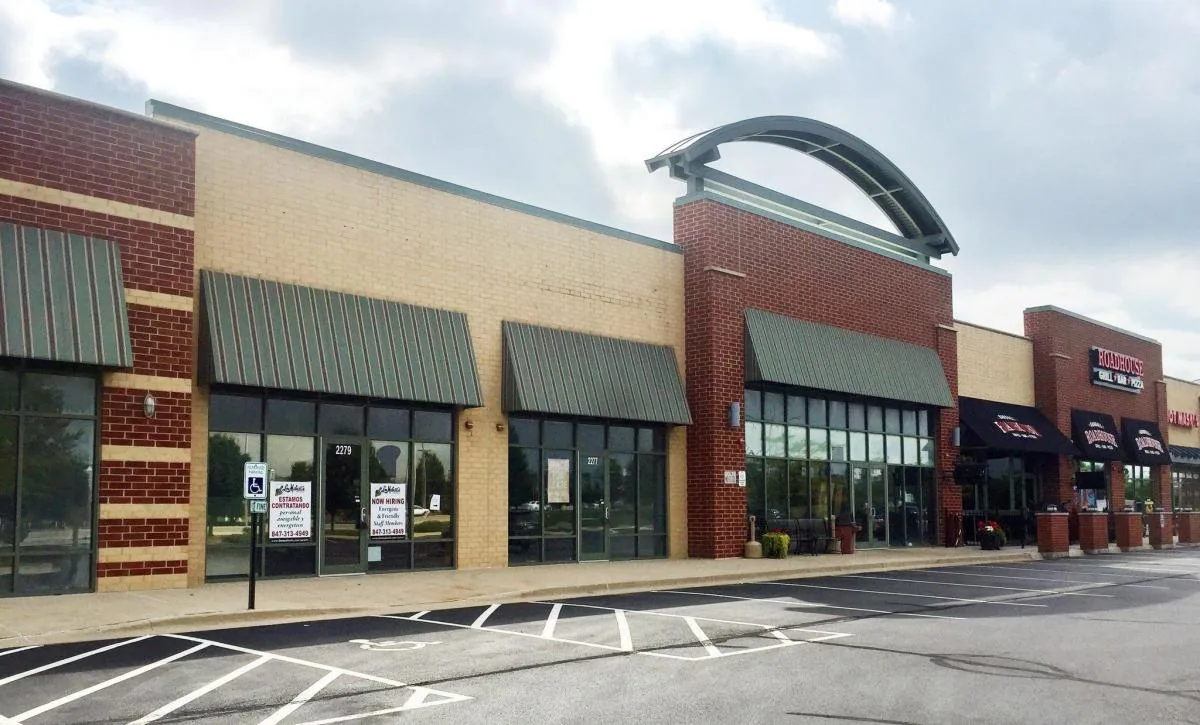
Randall Road is a high-visibility commercial corridor in Carpentersville, serving a broader trade area. Established commercial and industrial districts also sit along Randall Road, Route 31, and Route 25. Roofing decisions still begin with the specific property: who can arrange access, what condition was reported, and which operation sits below the roof zone. We inspect the assembly and define a work boundary before pricing repairs today.
Planned western expansion beyond Randall Road is a separate growth area. That distinction matters when an owner is planning near-term roof work beside future development. We document current building conditions separately from project assumptions. If another trade or redevelopment plan may change the roof, the scope identifies what can be repaired now and what needs coordination before construction starts.
Elgin-area winters bring snow and freezing conditions. A thaw may reveal water held at a low point or an opening that was hidden under snow. Ice can make a roof walk unsafe. We schedule safe entry, record sections deferred by weather, and state the next inspection step. No roof condition is inferred from the corridor's visibility or land use.
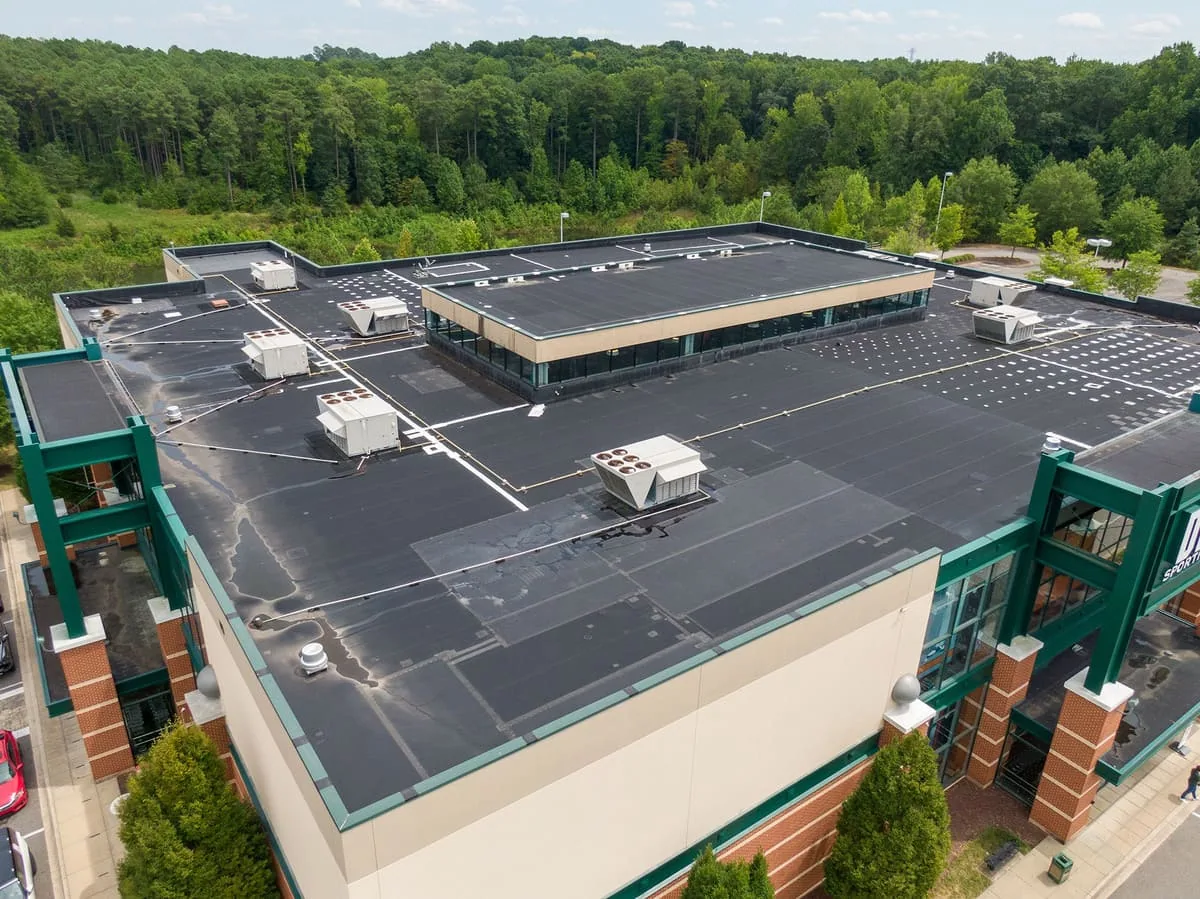
Planning: coordinate public-facing work
A visible commercial corridor can place deliveries, customer access, and roof work on the same schedule. The site contact identifies doors that must remain open, staging limits, delivery periods, and any area needing pedestrian protection. These details guide work sequencing, staging, and the crew’s start time. We confirm lift placement and debris handling before the crew arrives. If a repair will affect a building entrance, the work sequence should show how access stays clear or when a temporary route is required.
High visibility also makes a clean work boundary useful for the owner. The site contact should know where warning controls begin, which entrances remain open, and when material delivery is expected. The crew keeps packaging and debris inside the agreed staging area. If a roof opening cannot be closed before a weather change, the supervisor identifies the protection plan and sends an update. A clear sequence protects customer access while keeping the roof scope accountable.
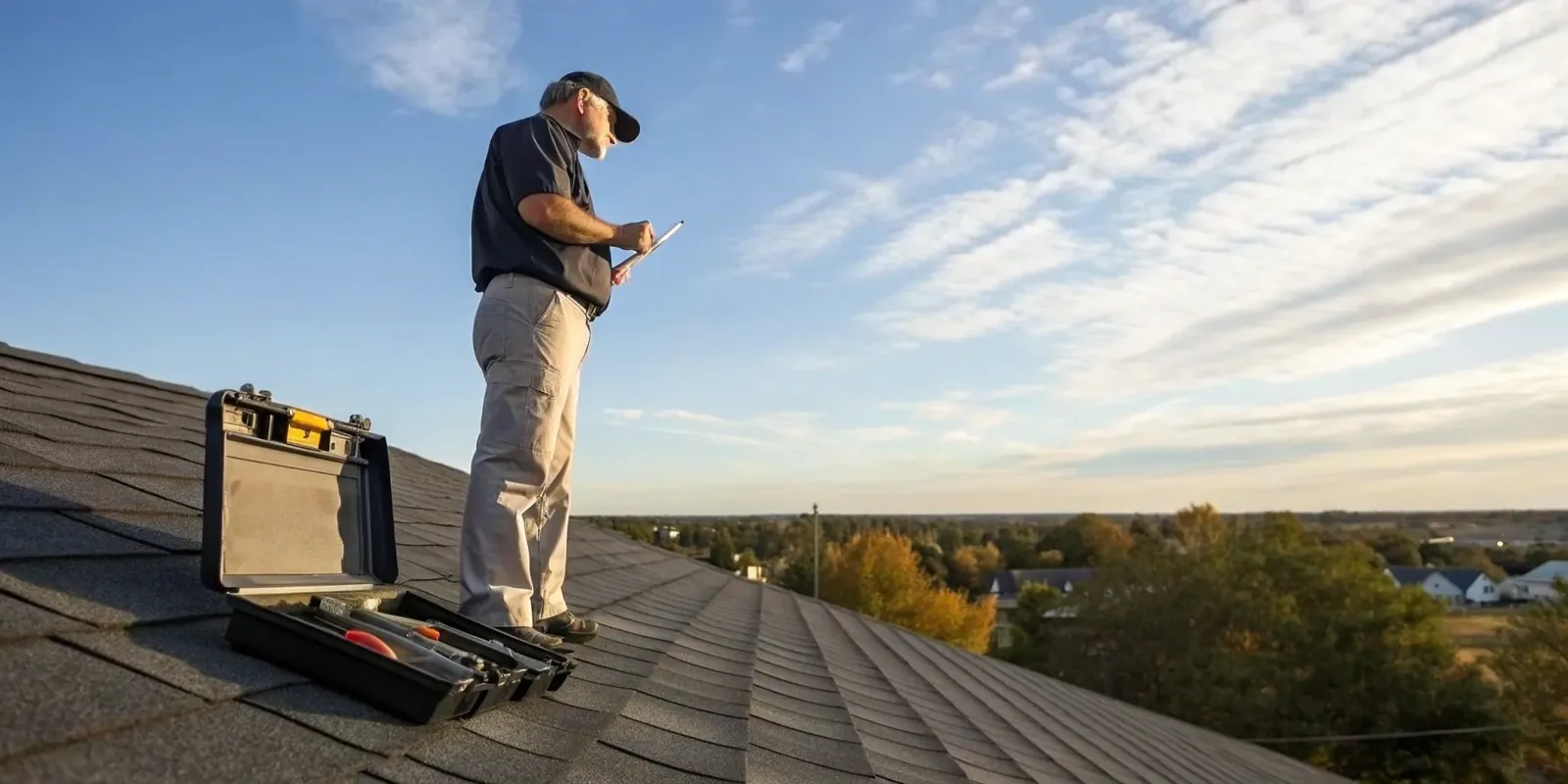
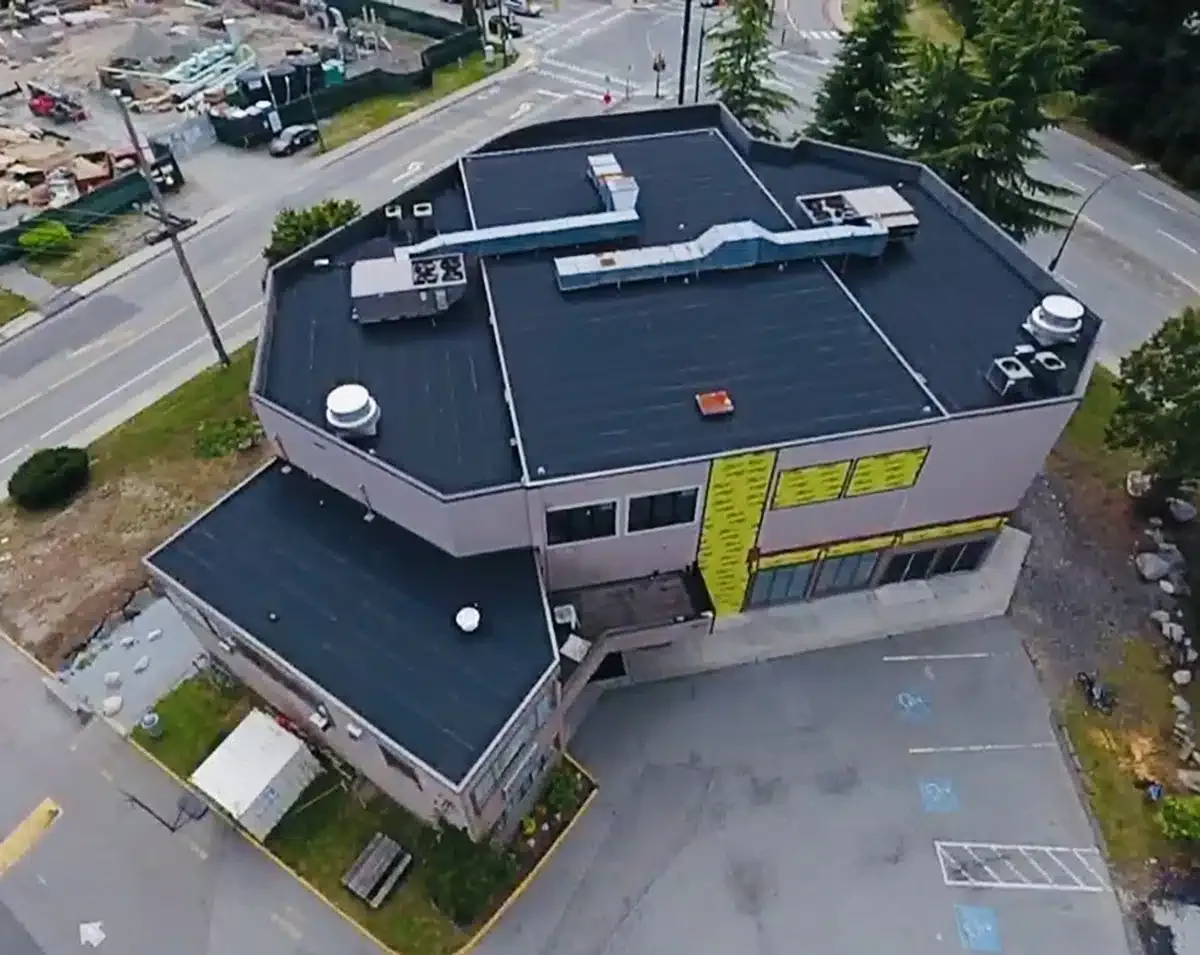
The initial walk follows the reported concern. We inspect roof covering, seams, penetrations, curbs, parapets, drains, scuppers, gutters, edge metal, and prior repairs. A wide photograph locates the detail; a closer image records the defect. If the report is an interior leak, we compare it with the roof's plausible water paths. Water can move through a deck or along a transition before reaching the room where it appears.
Where a second contractor will use the roof, the superintendent confirms timing and how completed work will be protected. Equipment service can disturb membrane or flashing. If an access panel or support detail changes, we record who performed the work and when. That helps the owner separate a roof defect from later trade activity without assigning cause before inspection.
For a building planned for renovation or reuse, the roof survey can establish a baseline before the project changes details. We identify visible system, repair history, areas of concern, and concealed questions. A moisture survey or test opening may help determine whether a limited repair is suitable. The owner sees what the investigation can answer and what remains outside the current scope.
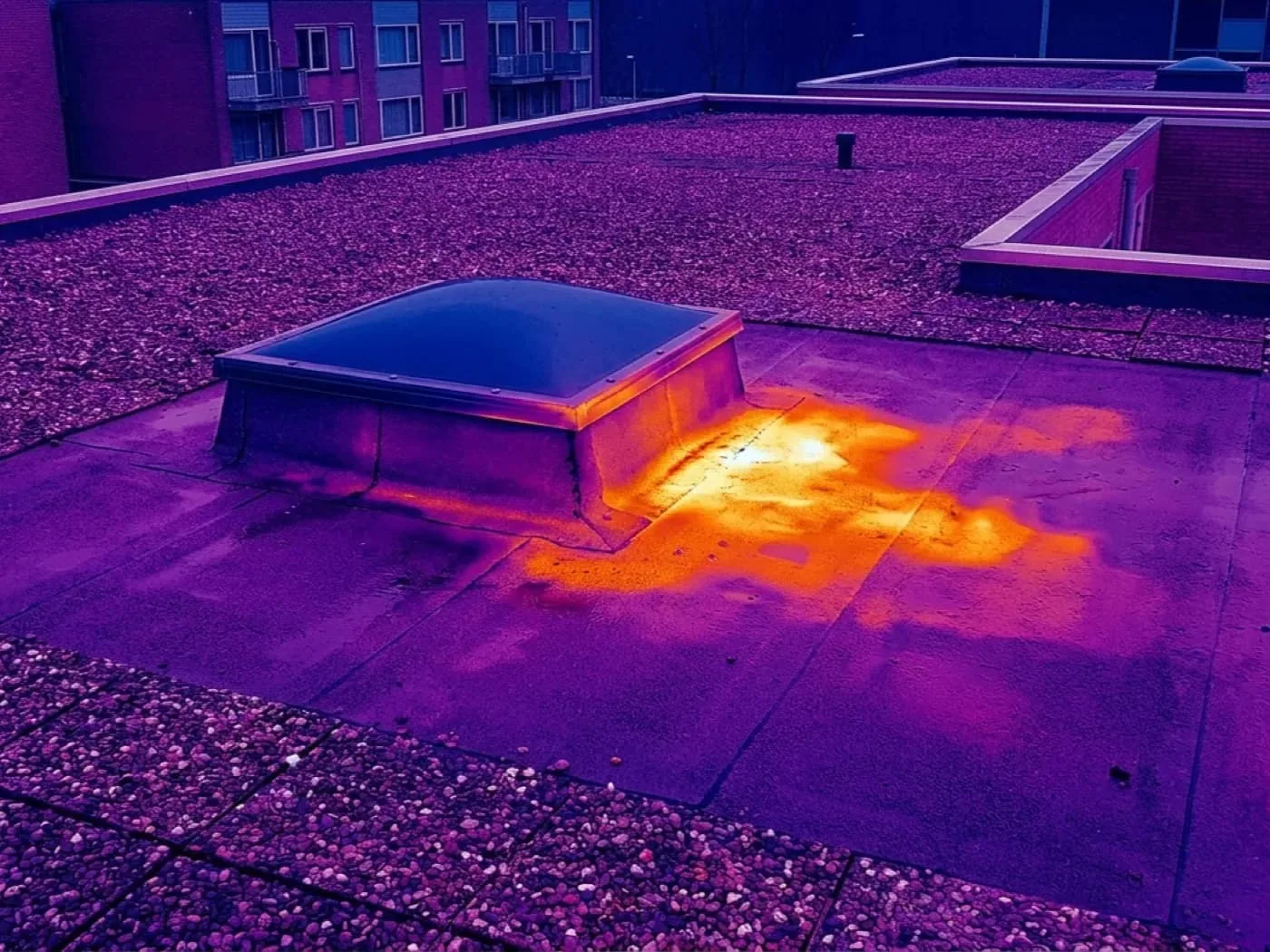
Repair priority: address water and keep limits clear
An active leak takes priority when contents, electrical equipment, or an occupied area are exposed. The site contact identifies the interior location and who can authorize access. We protect the area below, then check the roof route when it is safe. A stain is not proof that the membrane opening sits above it. The crew checks transitions, seams, curbs, penetrations, drains, and edge details before assigning the likely source.
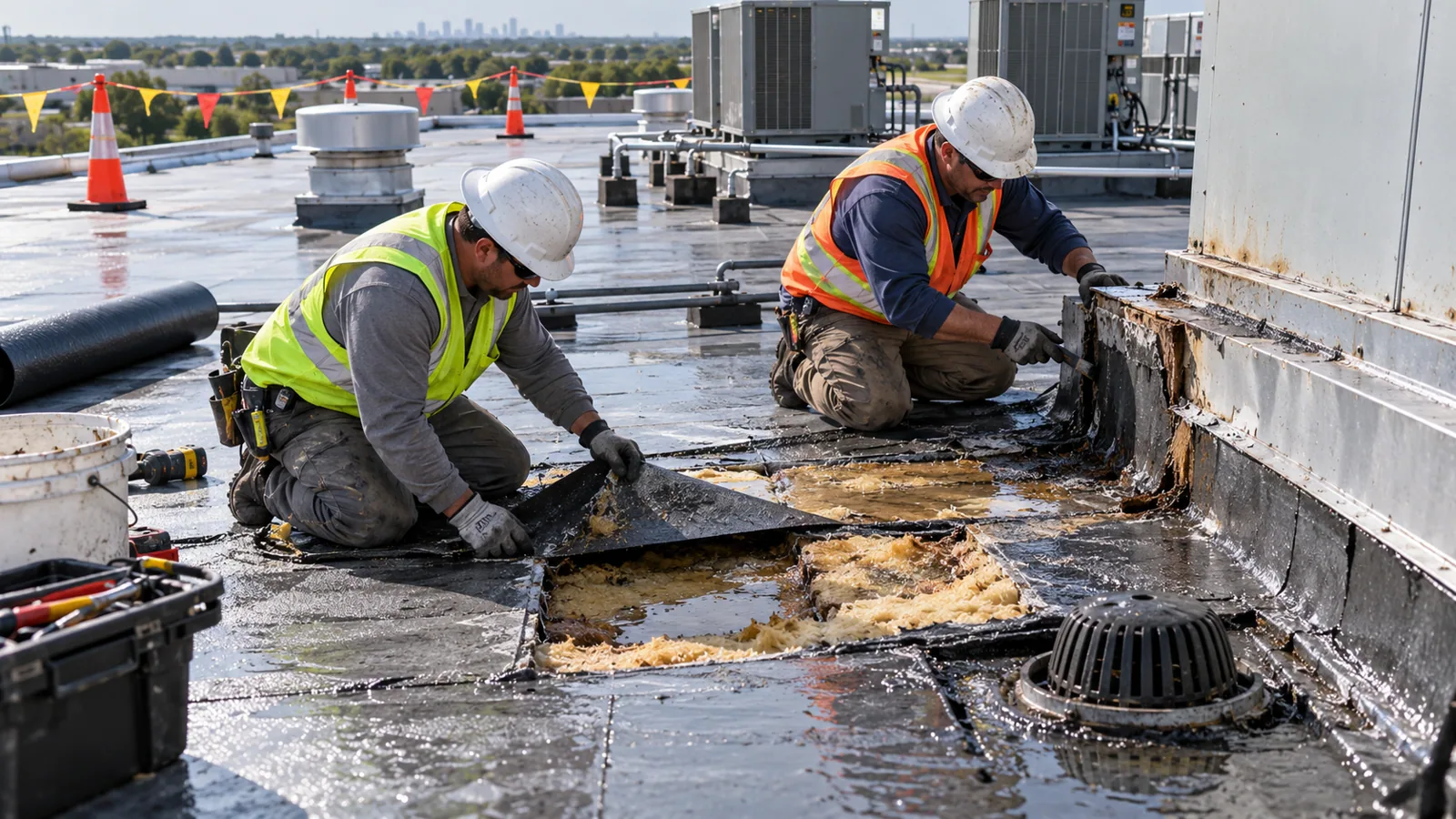
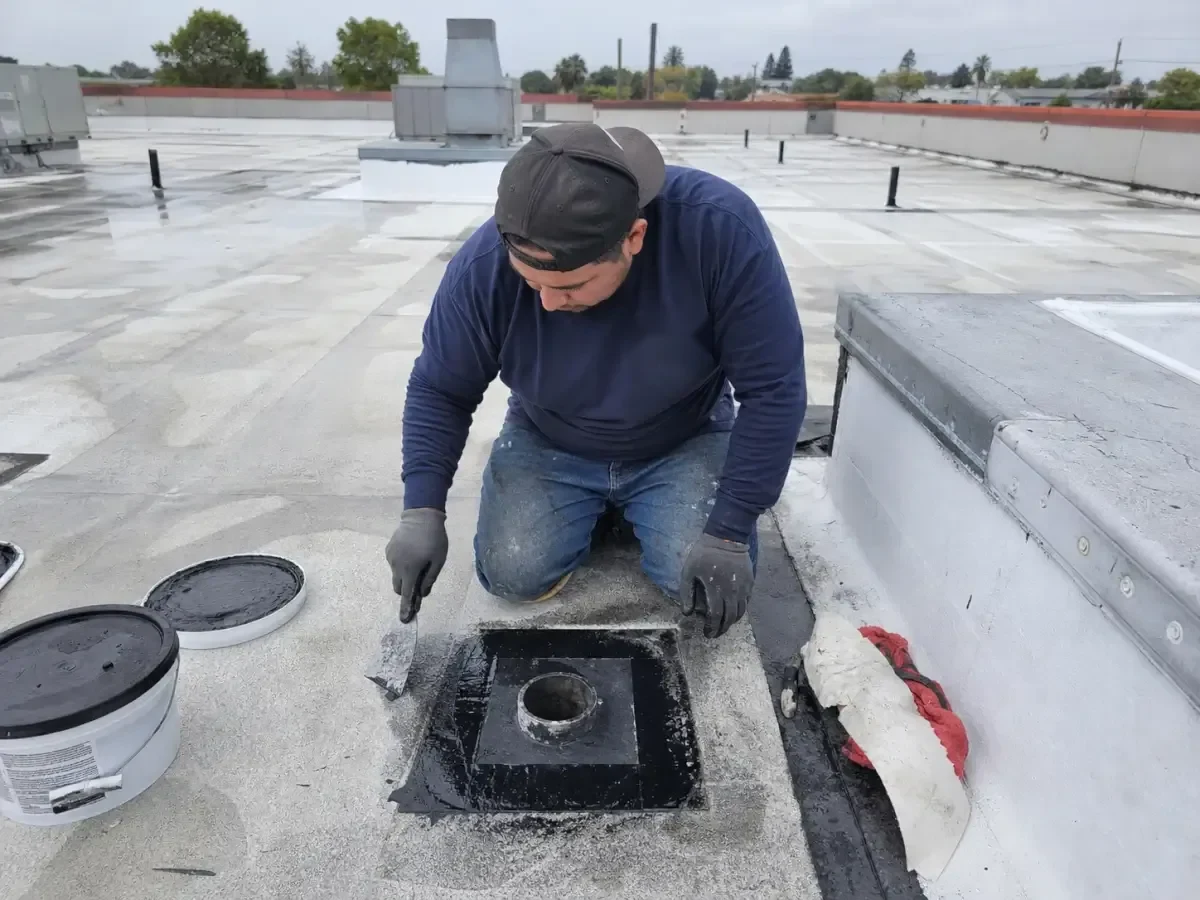
A repair proposal describes the observed defect, preparation, compatible material, tie-in, and perimeter. It says whether temporary protection is needed and when permanent work is expected. If demolition uncovers wet insulation, failed attachment, or a larger split, the crew measures the area and sends the finding to the owner. Added cost and timing are approved before the repair boundary grows.
Carpentersville’s planned growth area beyond Randall Road is separate from the established corridor. At a redevelopment property, a roofing repair may need to align with later equipment, façade, or tenant work. We document roof conditions that other trades should preserve and identify where a future penetration could require new flashing. The repair record notes the current assembly so the next project does not start from an unsupported assumption.
Elgin experienced a July 2023 EF1 tornado that caused roof damage along its route. A Randall Road building still requires a current inspection. We look for displaced edge pieces, torn flashing, punctures, loose equipment supports, and open seams. The written record separates what can be observed from suspected cause. A weather event does not establish that this property was affected.
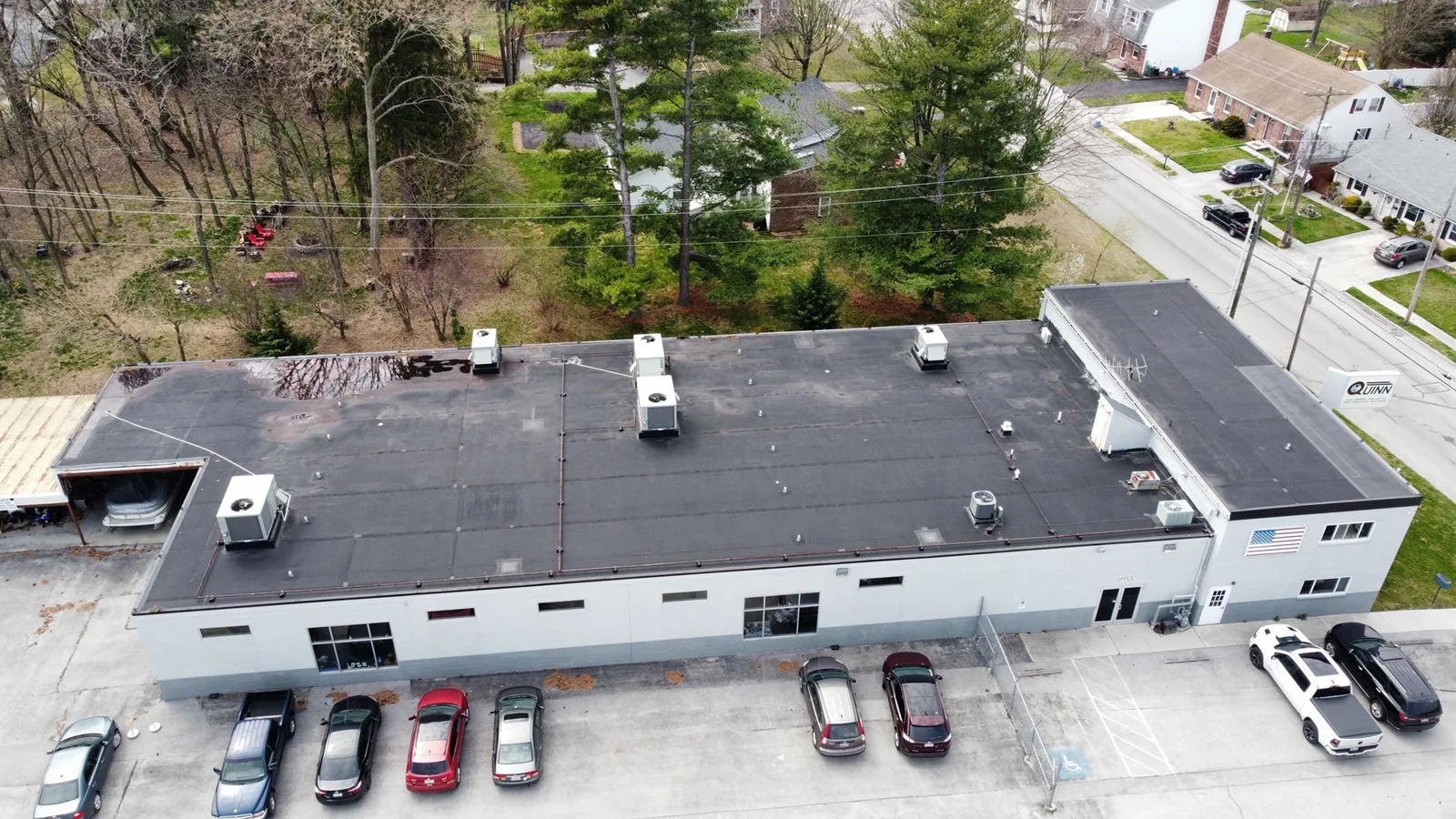
Assembly review: compare options on verified conditions
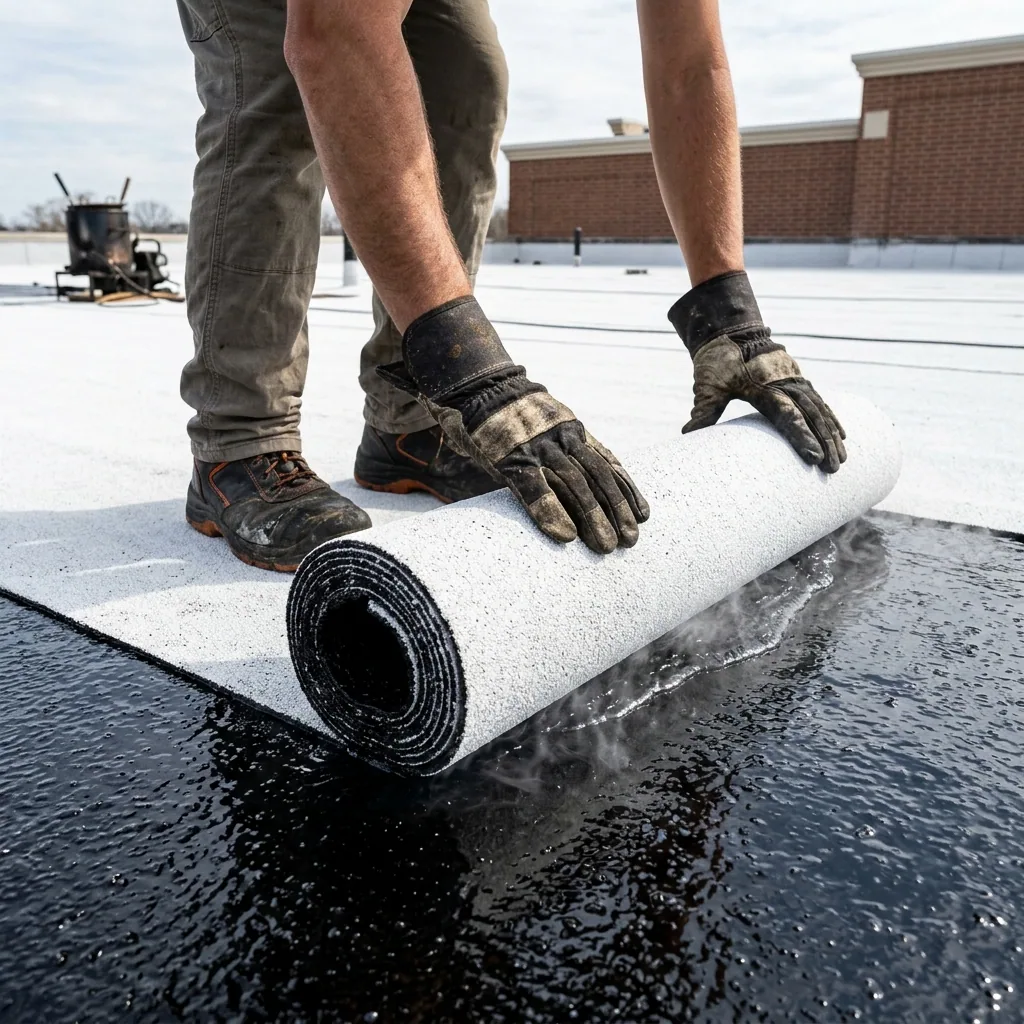
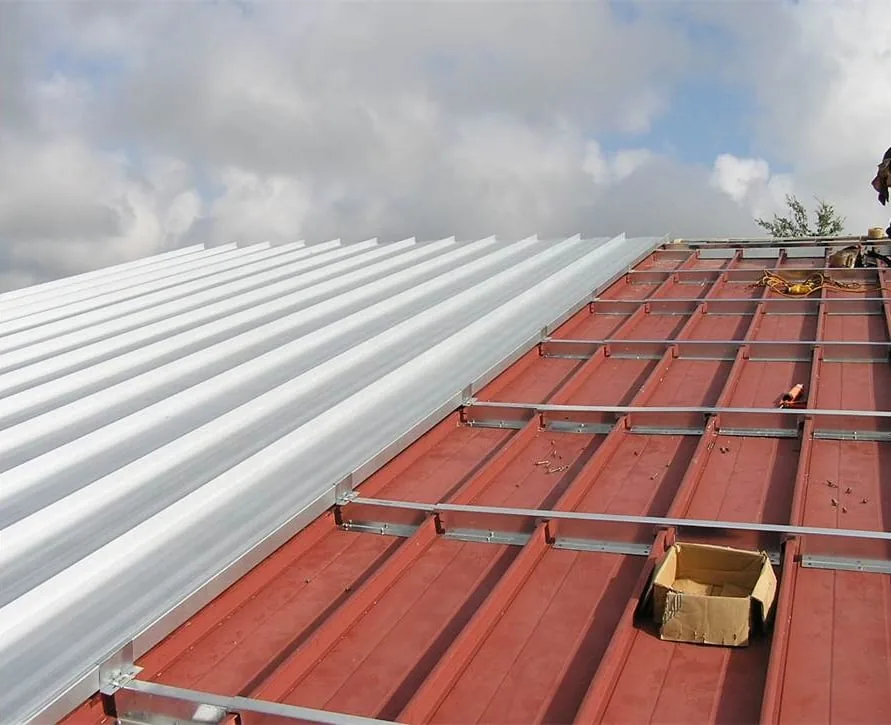
Membrane and metal systems require different repair practices. We identify TPO, PVC, EPDM, modified bitumen, built-up, standing seam, or coating only when the roof evidence supports it. The crew checks seams, surface, attachment, flashing, and the condition of adjacent material. If an overlay or coating hides the underlying system, a test may be needed before choosing a patch or recover method.
A replacement review checks existing layers, insulation, deck observations, attachment, edge height, drainage, curbs, penetrations, and access. Recover depends on moisture, structure, code, and attachment compatibility. The proposal separates measured items from unknown conditions. Tear-off, disposal, insulation, flashing, drains, equipment coordination, staging, and daily dry-in affect price and timing.
Elgin commercial projects use the 2021 International Building Code with city amendments and current Illinois energy requirements. The design team verifies the rules for the specific scope. A TPO membrane and a metal retrofit differ in attachment, edge, and flashing details. Modified bitumen has separate surfacing and tie-in requirements. The existing assembly and project needs determine the proposed system.
A phased project should limit the roof area left open and specify what is secured before the crew leaves. The contact needs to know where deliveries can stage, which areas stay accessible, and when a weather hold changes the plan. If concealed damage may alter the scope, the proposal names the trigger and approval process in advance. That gives ownership a path to respond without losing control of the work.
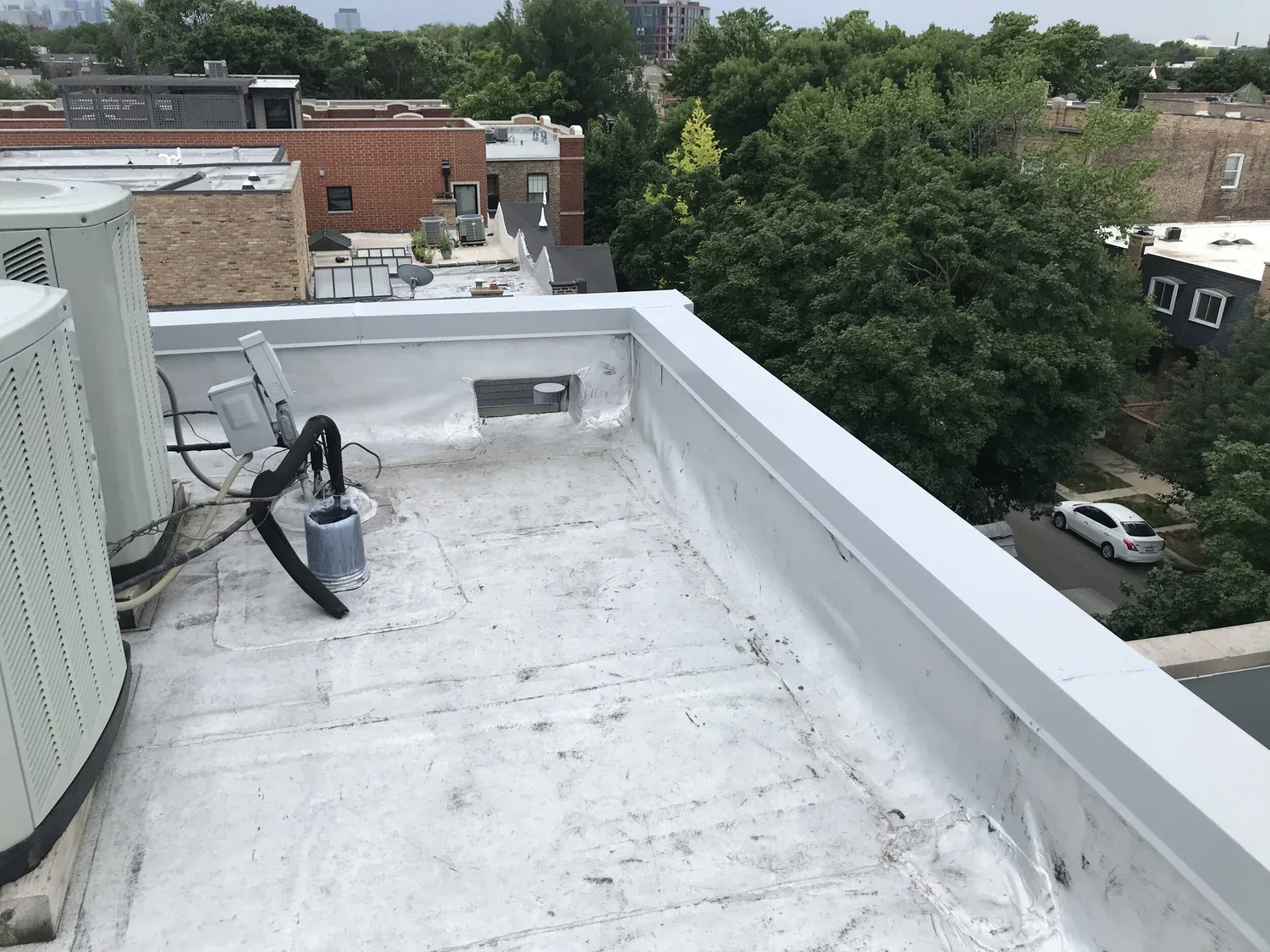
Closeout: make every recommendation traceable
Closeout notes list the building, roof zones, photos, repairs, materials, and work limits. They identify open questions, temporary measures, and sections that were not accessible. If a follow-up visit is recommended, the record states what should be checked. Clear labels help a property manager connect the field report with the next work order.
Routine service can inspect drains, flashing, seams, penetrations, edges, and earlier repairs. A maintenance visit can record those conditions. Condition reports group recommendations by urgency; capital planning can stage a broader project based on verified roof evidence.
Carpentersville identifies Route 25 and Route 31 as separate corridors. Each property's report remains its own record, even when a portfolio schedules both visits together. Downtown Elgin has distinct transit and preservation constraints; no corridor's access plan transfers automatically to another building.
Call with the property, affected area, access contact, operating hours, and any active water. We will confirm a safe dispatch window and send an update with observed conditions, scope limits, and the owner approval required next.
Questions About Carpentersville Randall Road Corridor, Carpentersville
Does Randall Road visibility change how a roof is inspected?
The roof is checked at the property. Visibility can make delivery and pedestrian planning important, which we confirm with the site contact.
How do you prepare for planned renovation?
We document existing roof details, visible repairs, and open questions before other work changes the assembly.
Can a repair be coordinated with deliveries?
Yes. The site contact confirms staging, lift placement, debris handling, access hours, and routes that must stay open.
What if a replacement reveals hidden damage?
The crew measures and photographs it, then obtains approval for any cost or schedule change before expanding work.
Will the planned expansion area beyond Randall Road use the same roof plan?
No. It is a separate growth area. Each building needs its own condition review and operating plan.