Commercial Roofing in Tollgate Industrial Center, Elgin, IL
Schedule the next roof check
Send the building, reported condition, roof access contact, and operating hours. We will confirm the dispatch window and work boundary.
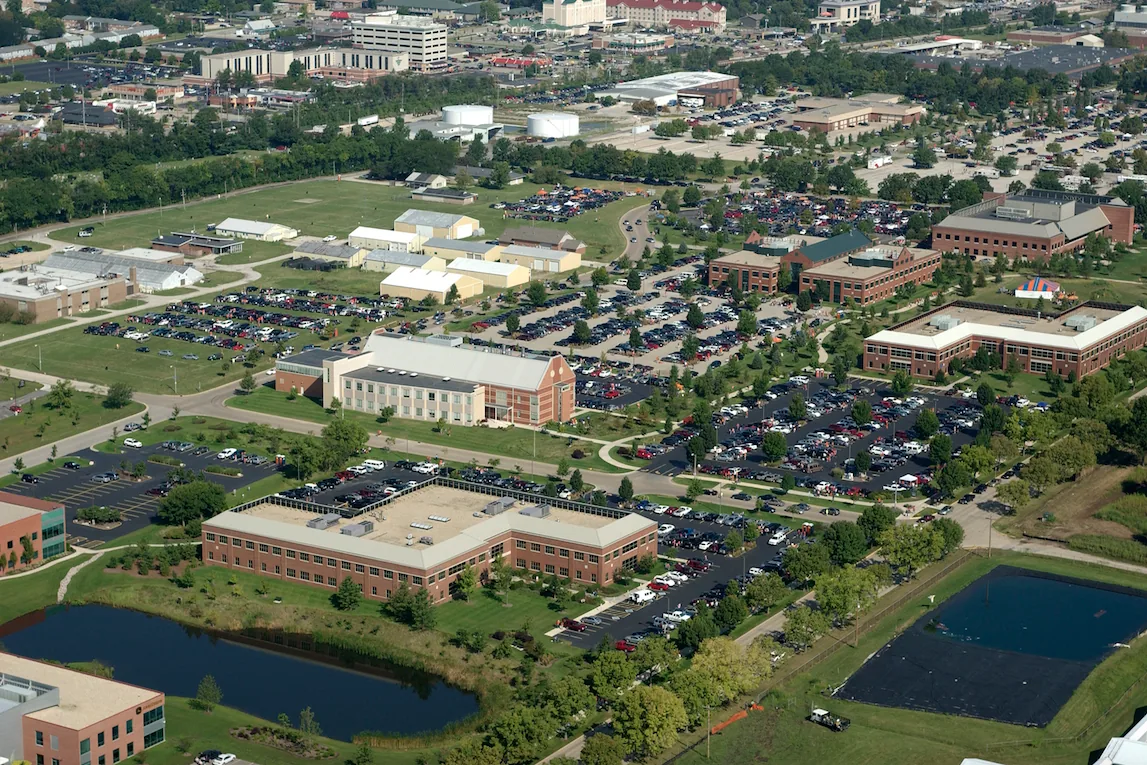
Tollgate Industrial Center
Tollgate Industrial Center is a 20-acre Elgin business area with a GI zoning category. That allows industrial and related business uses, but it does not tell us which operation occupies a building or what roof system is installed. We begin with a specific property, the contact who can authorize access, and the condition that triggered the call. At Tollgate, the crew checks current access after winter weather; Elgin averages 29 inches of snow and 137.9 below-freezing days. A winter leak may appear during a thaw, when meltwater finds a seam, curb, or drainage detail. Snow and ice can also close a roof route. We set a safe dispatch window, identify what can be inspected, and record any area that must wait for a weather change.
The center's compact footprint can simplify planning across visits, but every building has its own roof, access rules, and operating schedule. We confirm those details with the site contact. A property name never substitutes for an inspection. The closeout identifies what was seen, what was repaired, and what still needs an owner decision.
Priority check: decide what needs a dispatch
For an active drip, the first question is whether water threatens people, equipment, inventory, or an occupied area. The site contact identifies the room and any sensitive process below. We help establish temporary interior protection while the roof crew confirms safe entry. If the source is not visible, the first visit records the likely route and what would confirm it, rather than guessing from the ceiling mark.
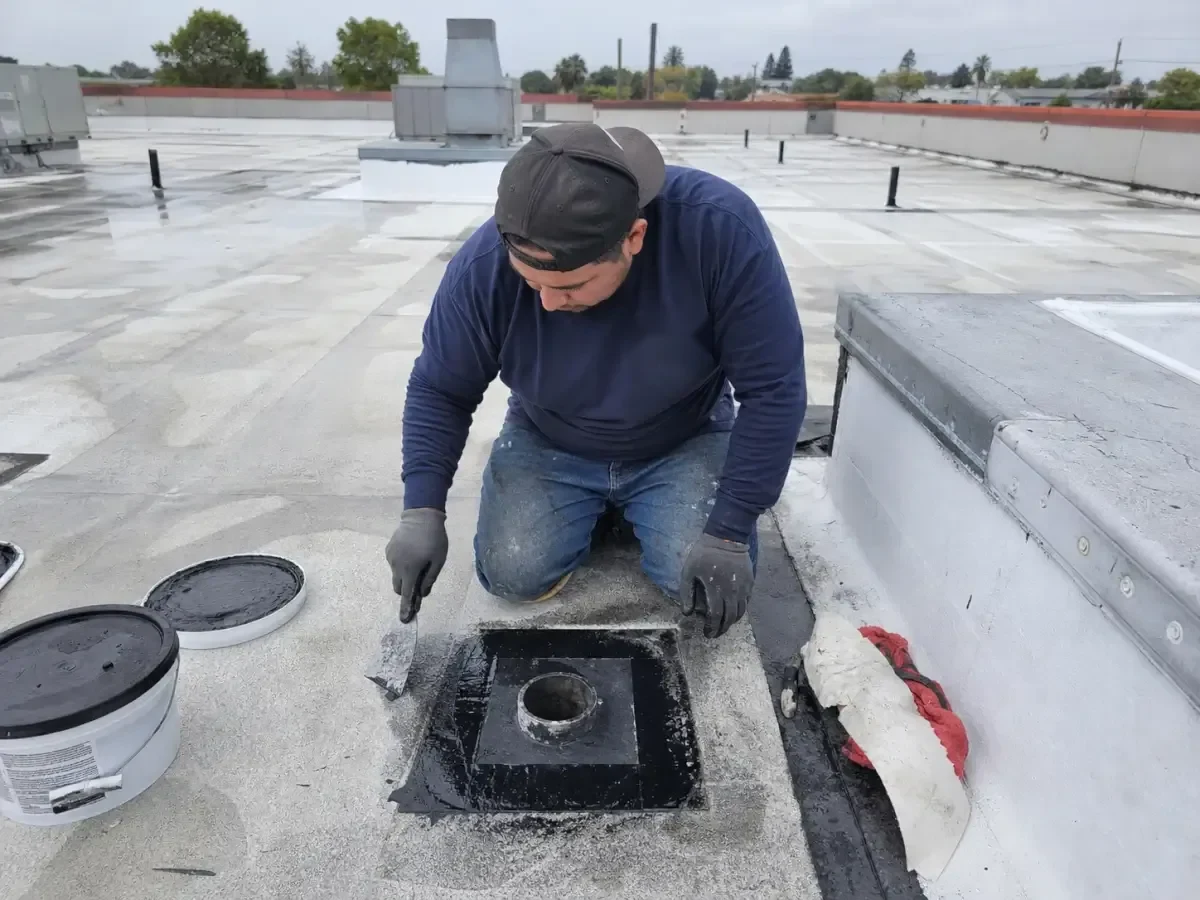
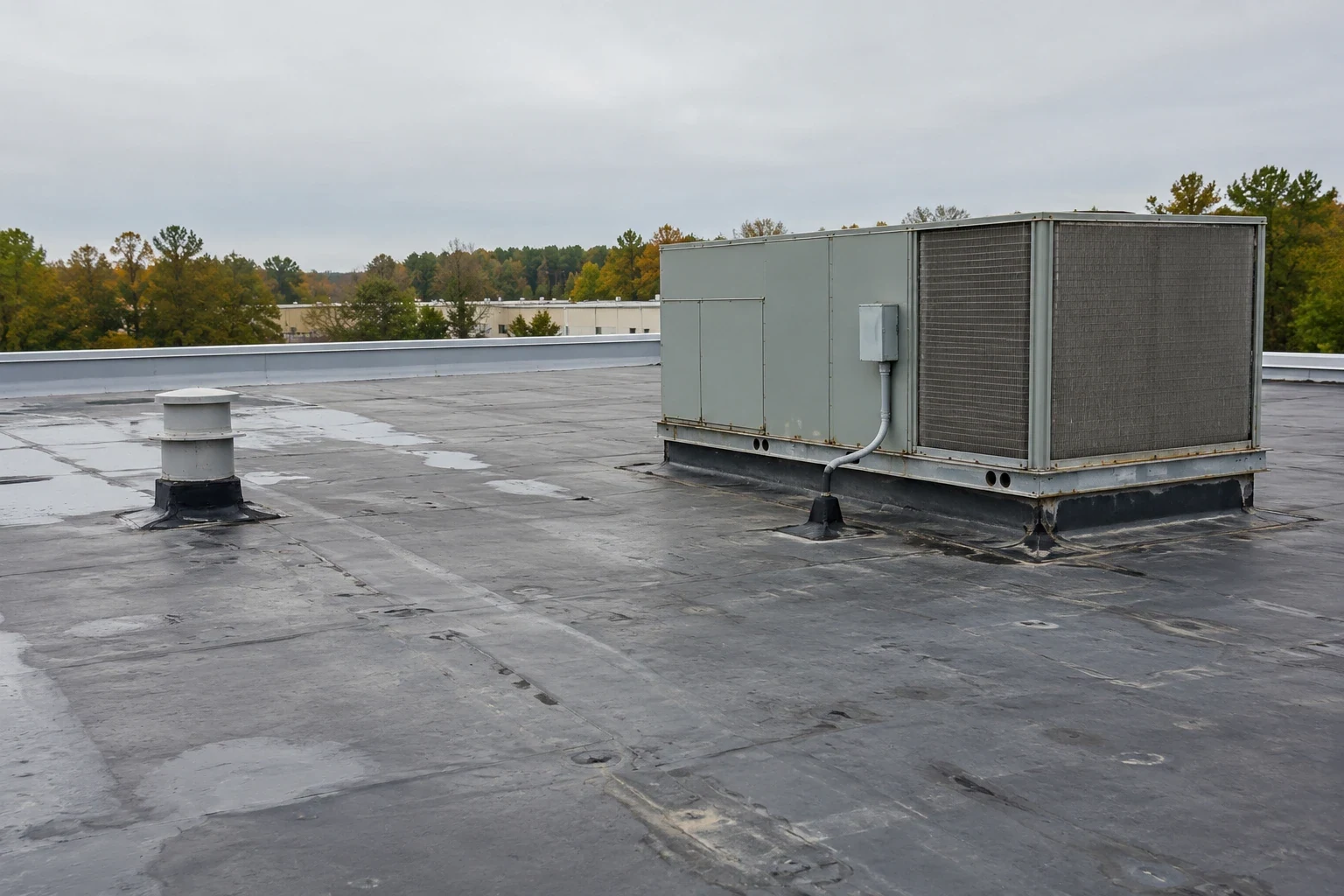
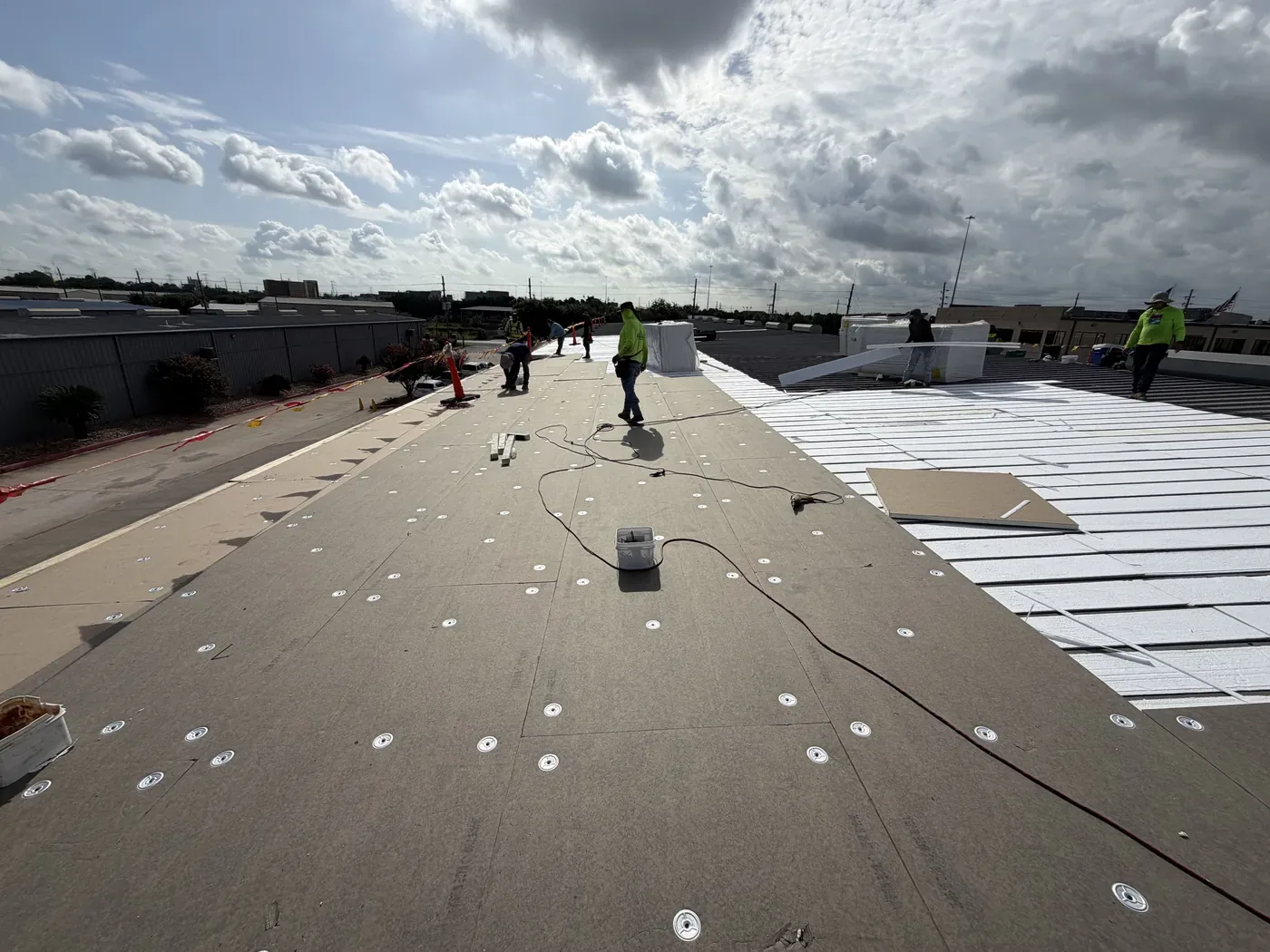
On the roof, we inspect the area above and around the report. That includes the field surface, seams, laps, penetrations, curbs, walls, parapets, drains, scuppers, edge metal, and previous repairs. A defect may be visible at a transition instead of directly above the interior symptom. We photograph the finding with enough context to locate it again and note whether the roof was fully accessible.
Not every visit is an emergency. A planned inspection may focus on aging details, drainage, recurring repairs, or a pending budget decision. We ask what the owner needs to decide after the visit. If the question is whether a patch can last, the crew checks material compatibility and substrate. If the question is replacement timing, we review broader roof condition and likely concealed risks. The report is built to answer that specific decision.
Dispatch notes should record which roof area is involved, what materials or equipment are below it, and whether the condition is changing. A clear report helps ownership distinguish a response call from a planned project and assign the right approval contact. The first visit should answer the immediate question, not promise a larger scope before the roof is checked.
Dispatch can be delayed by ice, high wind, surface temperature, or unsafe entry. The supervisor records the weather hold and secures any exposed area. The update names the next workable visit rather than promising a date the conditions may not allow. For occupied operations, we also confirm delivery, staging, work-hour, and tenant-notice requirements before equipment is moved onto the site.
Repair scope: define the limits in writing
A permanent repair begins with a defect the crew can describe. We identify the roof section, system, preparation, material, attachment, and repair perimeter. If a metal edge is loose, the scope states what edge segment is reset and how it is fastened. If flashing has split, the proposal identifies the transition and tie-in. A generic line for patching several leaks can leave the owner without a clear record of what was addressed.
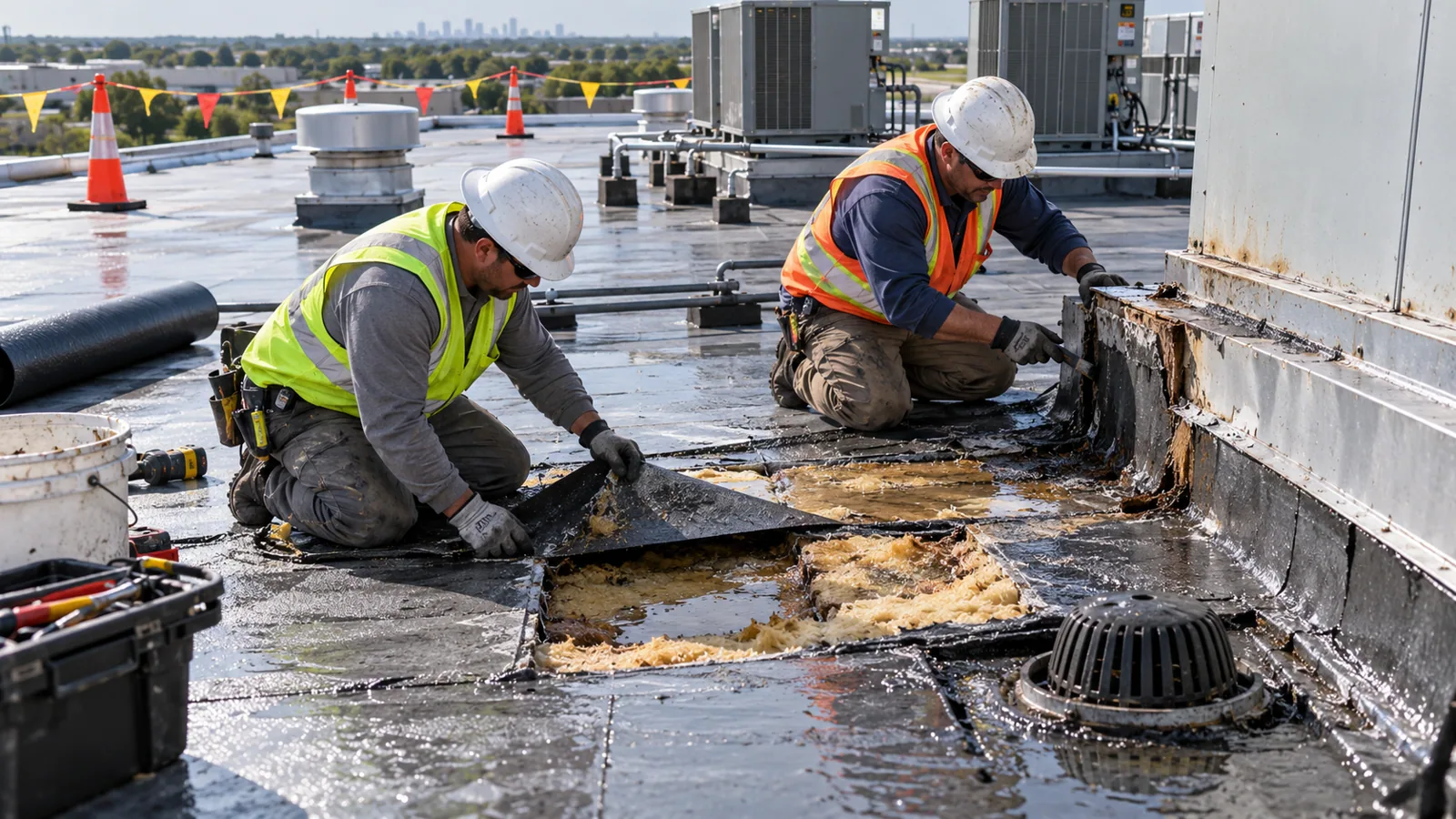
When opening the repair area exposes wet insulation, a deteriorated deck, or a second failure, the crew stops at the approved boundary. It photographs and measures the new condition, then sends the owner the cost and schedule effect. No extra area proceeds until the appropriate contact approves it. This keeps emergency work controlled, even when the roof reveals a broader problem.
Elgin's July 2023 tornado reached EF1 strength and damaged roofs along its route. At Tollgate, we inspect current seams, flashing, edges, and equipment supports before setting any repair scope. We inspect accessible details for displacement, punctures, open seams, torn flashing, and equipment movement. The owner receives observations tied to the building, not an inference drawn from the event date.
Temporary protection has a separate closeout. The record states the area protected, the material used, and when permanent repair is expected. If the roof cannot be reached safely, an interior measure may reduce exposure while access is pending. We label that as temporary and list the remaining work. A future maintenance visit should not mistake a dry-in for a completed permanent detail.
Assembly review: choose a repair that can hold
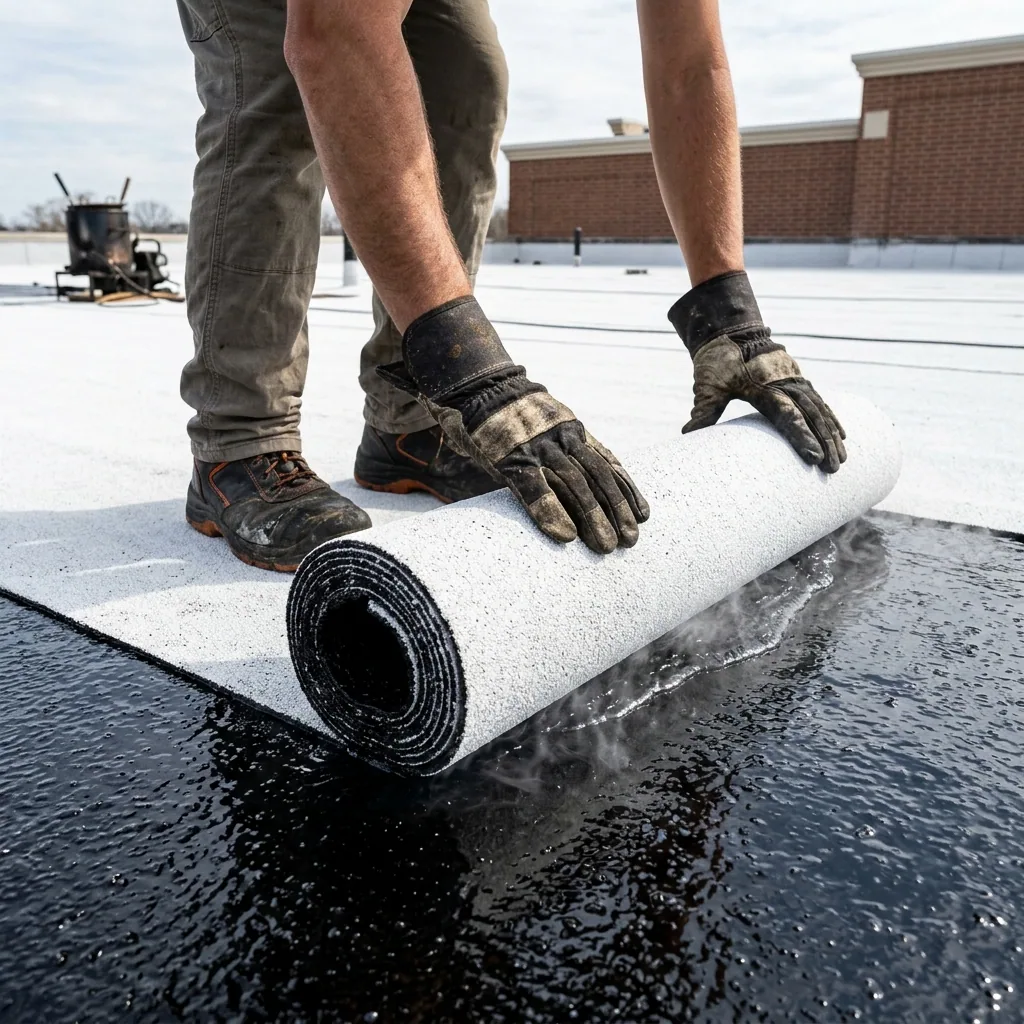
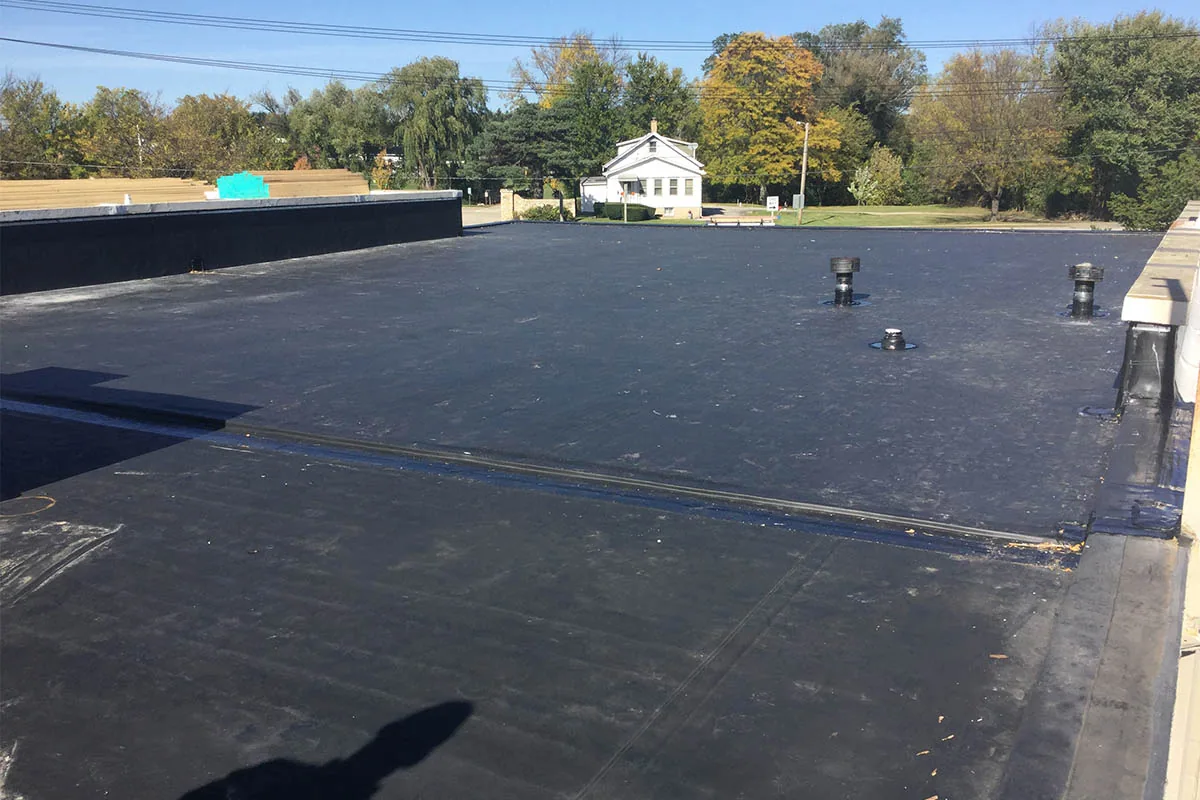
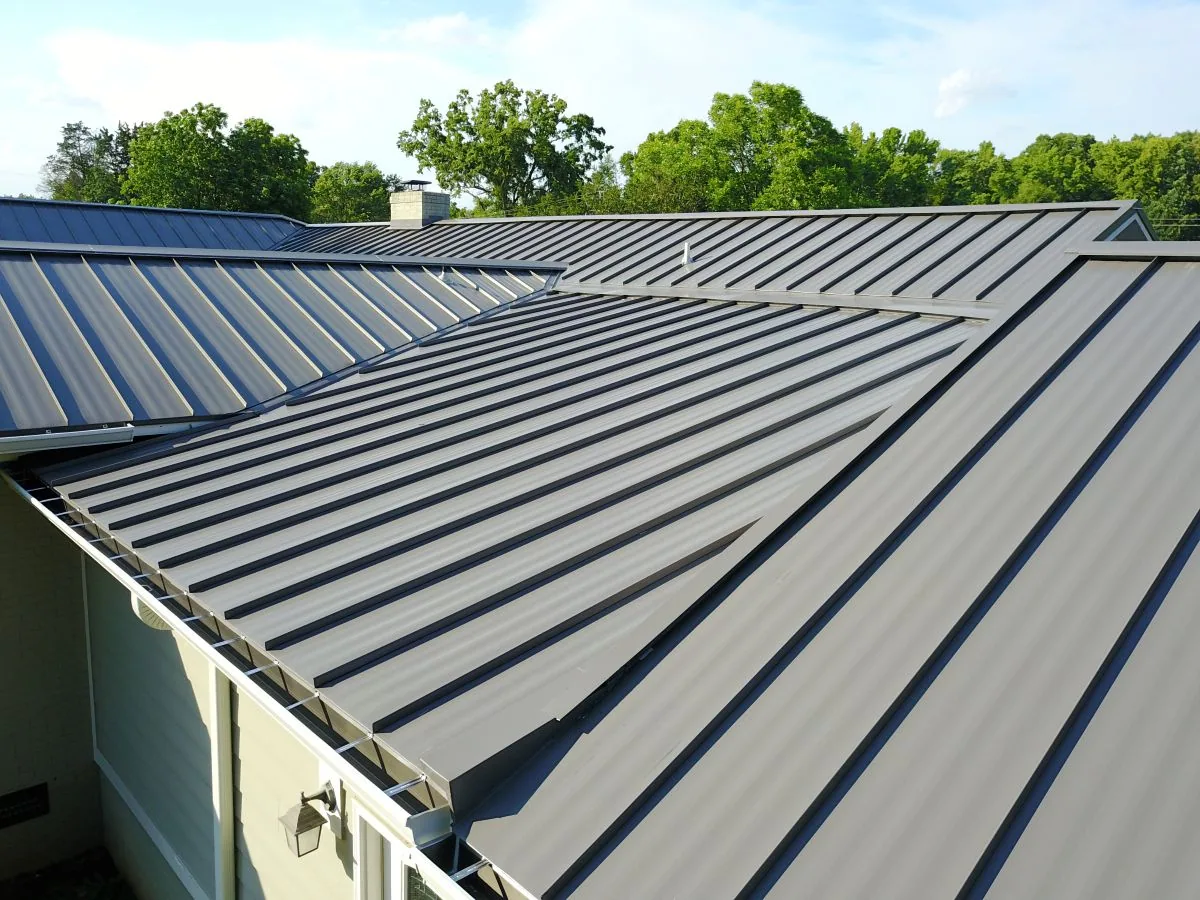
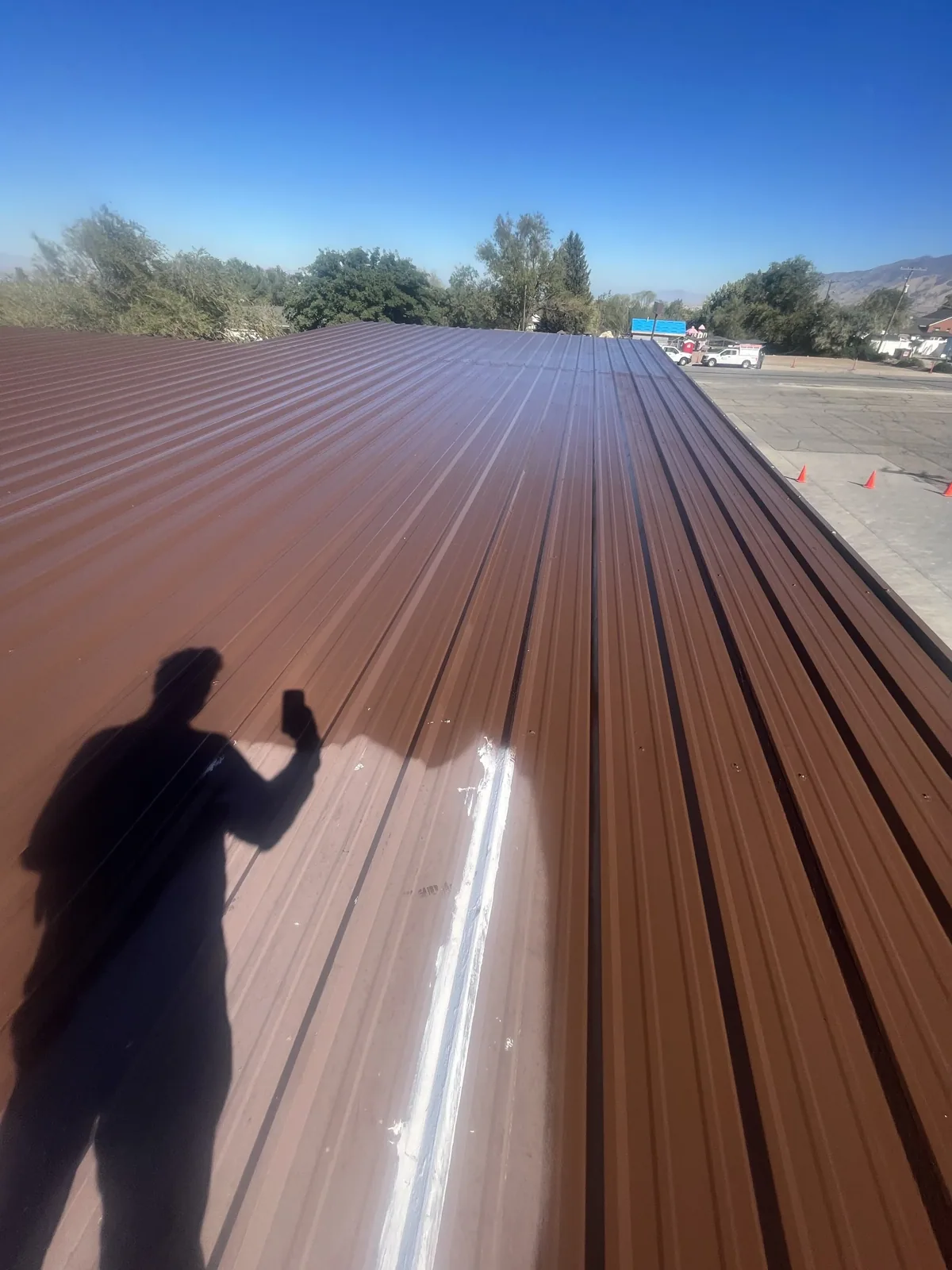
Different systems call for different repair details. TPO and PVC use welded seams; EPDM uses its own seam and flashing materials; built-up and modified-bitumen roofs have layered surfaces; metal systems rely on panel joints, fasteners, and movement details. We verify the assembly where visible and check whether earlier coatings or patches change the preparation. Material selection follows the roof, not a generic product list.
If water is concealed below the surface, a moisture survey or test opening may be worthwhile. The inspection should state where the test occurs and what decision it is expected to inform. A survey can guide repair limits or recover planning, but it does not replace confirmation where readings are uncertain. If the roof has wet layers or repeated failures, a system-level review may compare continued repairs with replacement.
Replacement planning checks deck observations, existing layers, insulation, attachment, edge height, drains, curbs, and code. The proposal separates verified quantities from assumptions about concealed conditions. Tear-off, disposal, deck repair, insulation, flashing, equipment coordination, and phased dry-in drive cost and timing. If the building stays occupied, work staging and daily roof securement should be specified with the assembly.
For Elgin commercial work, verify current Illinois energy provisions and the locally amended IBC edition with the design team before setting system details. A modified-bitumen repair differs from a rubber membrane detail or a standing-seam metal assembly. The existing construction and code review guide the choice, including whether a recover is allowed.
Follow-up: keep each building record distinct
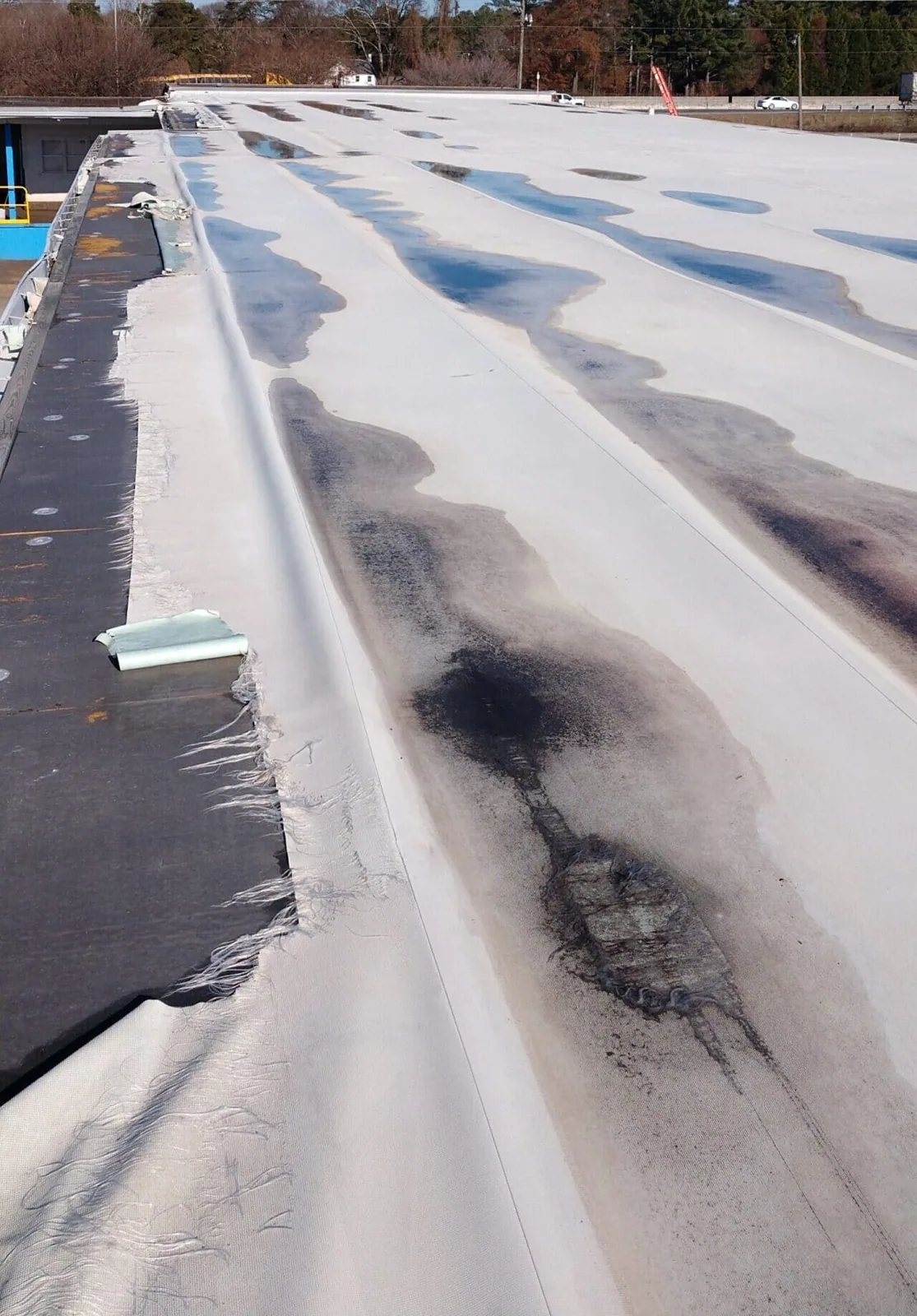
Closeout photos and written notes make the next visit more efficient. We list what was inspected, what was repaired, the materials used, and any unresolved area. If an owner decision or testing remains open, the record identifies the responsible contact and due step. A concise closeout helps a facility manager tell completed work from a recommendation or temporary measure.
A maintenance route can check drains, scuppers, seams, flashings, penetrations, edges, and prior repairs. The findings should be tied to a date and roof zone. If access constraints left part of the roof unchecked, the record says so and gives a return recommendation. A scheduled maintenance visit can help track routine items; roof condition reports organize the findings for budget review.
Elgin Industrial Park and Jaynes Industrial Park are other named business areas in the city. A shared calendar can coordinate roof visits across properties, while separate reports preserve each building's history. For an owner with several assets, asset management records can keep open recommendations, completed repairs, and capital decisions together.
Call with the property, affected roof zone, access contact, and operating limits. For an active leak, include the room and any equipment at risk. We will set a dispatch window and identify the approval needed before repair scope expands.
Questions About Tollgate Industrial Center
Does the GI zoning category identify the current building use?
No. It describes an allowed category, while the property contact confirms current operations and access conditions.
What happens if ice prevents a roof inspection?
The crew records the area deferred, secures exposed work, and arranges a return when safe entry is possible.
How is an added repair condition approved?
We photograph and measure it, send the cost and schedule effect, and wait for owner authorization before expanding the work.
Will a temporary dry-in count as a permanent repair?
No. The closeout labels temporary protection and identifies the permanent correction still required.
What should be included in replacement pricing?
Compare assembly layers, tear-off, insulation, flashing, edges, drainage, access, phasing, and concealed-condition allowances.